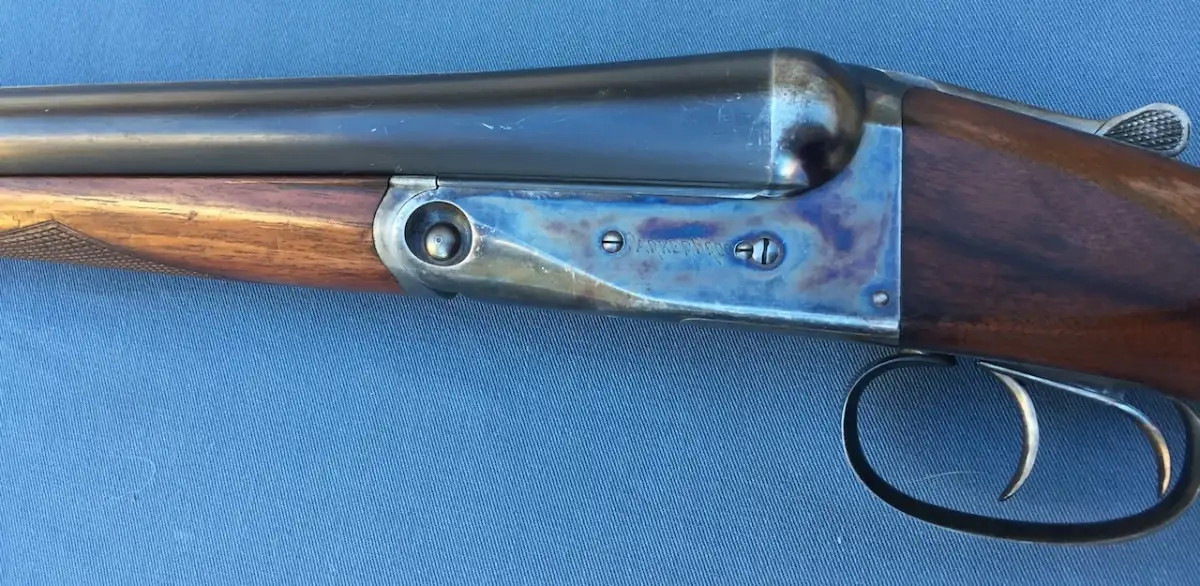
I bought my first Parker the way a lot of us do: with equal parts excitement and ignorance. It balanced like a quail wand, smelled of old oil and linseed, and wore case colors that hinted at a full life. I did not shoot it for a month. I learned from it. If a classic double could teach a class, a Parker Brothers game often ends up as the professor.
This guide stays practical and Parker ‘s-first. You will find the grade language collectors actually use, where to read frame size, what Parker called its barrel steels on the rib, how serials and assembly marks should line up, how to spot ejectors, and what changed as production moved under Remington. Use it to ground your decisions, then let a qualified double-gun smith confirm what your eyes suspect.
Quick Reference: Parker at a Glance
- Common grade names and codes you will see: Trojan; VH or VHE (Vulcan Steel); PH or PHE; GH or GHE; DH or DHE; CH or CHE; BH or BHE; AH or AHE; AAH or AAHE. The suffix E denotes ejectors.
- Rib steel names to look for: Trojan Steel, Vulcan Steel, Parker Special Steel, Titanic Steel, Acme Steel, Peerless Steel, Damascus Steel, Twist, Bernard. Rebluing can soften or erase these.
- Frame size stamp: small number or fraction on the barrel lug and repeated on the frame water table. Typical tendencies only, with exceptions: 12 gauge often 1 1/2 or 2; 16 gauge often 1; 20 gauge often 0 or 1; 28 gauge often 00.
- Serial and assembly marks: serial should appear on the frame water table, barrel flats, and forend iron. You may also find assembly numbers on the front of the wood under the iron.
- Ejectors vs extractors: an E in the grade code indicates factory ejectors. With snap caps, ejectors will kick hulls smartly on opening; extractors will lift them.
A Parker That Teaches You Something
Every good Parker hides a lesson in its details. The engraving wear on a floorplate lines up with the thinning on the guard tang and the screw slots. Barrels that ring like a bell can still show shallow freckles where a damp case sat too long. Stocks tell stories in pores and finish, not just in checkering diamonds. The more you look, the more the gun becomes a conversation, and the less it feels like a spreadsheet.
Focus on what you can verify with your eyes and hands. Learn the vocabulary buyers use to describe Parkers, but only believe what the metal and wood confirm. That is especially true when weighing Damascus versus fluid steel, or when you are sorting Meriden-marked guns from later Remington production.
How Parker Grades Work In Practice
Parkers were built in graded tiers. Higher grades bring fancier wood, sharper checkering, more engraving coverage, and small fit touches that reward slow inspection. Lower grades are plainer, but often the liveliest guns in the rack.
Here is how collectors commonly talk about them, in the terms you will see on tags and in listings:
- Entry model: Trojan. Plain but honest, typically marked Trojan Steel on the rib.
- Utility to mid grades most often seen: VH or VHE (Vulcan Steel), PH or PHE, GH or GHE. G and P grades can be found with patterned barrels in earlier periods.
- Upper grades: DH or DHE, CH or CHE, BH or BHE, AH or AHE, and AAH or AAHE. These can be encountered in higher-trade-name steels like Titanic, Acme, or Peerless, depending on the period.
- Ejectors: an E suffix means automatic ejectors. No E means extractors.
When you read grade as a buyer, do it through condition and correctness:
- Engraving and borders: Honest handling softens edges evenly. Bright patches where you expect patina can mean polish.
- Checkering: Factory work keeps the rhythm and clean borders. Recut diamonds often show tiny plateaus and waviness.
- Wood and fit: Higher grades show figure and tighter inlaying. Gaps or crushed fibers at the head signal stress or a replaced stock.
Grade affects price, but condition and originality decide satisfaction. A plainer VH with the right bones beats a touched-up higher grade every day.
Frame Size: What It Is, Where It’s Stamped, How It Feels
Frame size is the action size behind the barrels. Parker used multiple frames in a given gauge to tune weight and handling. You will feel it before you name it.
- Where to find it: look for a small number or fraction stamped on the barrel lug and often repeated on the water table of the frame. Common stamps include 0, 1, 1 1/2, 2, and 00 for very small frames.
- What it means in hand: smaller frames carry lighter and balance nearer the hinge pin. Larger frames add steadiness and soak up recoil.
- Tendencies by gauge, not rules: 12 gauge often on 1 1/2 or 2; 16 gauge often on 1; 20 gauge often on 0 or 1; 28 gauge often on 00. Always handle the specific gun. A tape and a scale tell the truth.
Damascus vs. Fluid Steel: Parker Rib Names and Real-World Checks
Parker told you a lot right on the rib. Patterned barrels will often be marked Damascus, Twist, or Bernard. Fluid steel ribs are commonly marked with trade names like Trojan Steel, Vulcan Steel, Parker Special Steel, Titanic Steel, Acme Steel, or Peerless Steel. These names also help bracket the period and grade.
- Rib and letter sharpness: original roll marks look crisp without appearing dug out. Heavy polishing before a refinish rounds matting and makes letters wavy or shallow. Reblued ribs can mute or erase steel names entirely.
- Patterned tubes: real Damascus shows figure in the white and the brown. If the figure looks etched only at the surface and repeats too perfectly, be cautious.
- Bores and walls: freckles are common. Deep pits, out-of-round shadows, or thin spots demand a wall-thickness gauge and a professional double-gunsmith.
- Fluid steel finish: period blue reads softer than modern hot-blue gloss. Expect uniformity with the gun’s overall condition.
As for shooting, match ammunition to what the gun truly is after a competent evaluation. Do not fire any vintage Parker until a professional has cleared the barrels and chambers for the intended load.
Originality Clues That Matter on a Parker
The little things tell the truth if you let them.
- Screws: Parker slots are neatly timed and clean. Mixed styles or chewed slots suggest later work. If one is bad, check them all.
- Case colors: exterior colors age to soft smoke, browns, and straw. Neon-bright colors in protected recesses with sharp exterior edges usually mean later work. On most Parkers, the water table is finished bright, not vividly colored.
- Rib mats and letters: over-sharp or rounded rib matting and wavy letters point to polishing before refinish.
- Checkering: factory borders are tidy and consistent. Recutting leaves plateaus at the points and on the fuzzy borders.
- Butt treatment: many Parkers wore hard-rubber buttplates with the maker’s motif; higher grades can show a skeleton-steel butt with checkered wood. Fresh pads on an otherwise old gun are common but should be priced as alterations.
- Forend latch and escutcheons: finish and wear should agree with the guard, tang, and top lever. A reblued latch beside tired barrels stands out.
- Stock head and inletting: remove the forend and inspect for oil soaking, crushed fibers, glass, or fresh wood. These speak to hard use and repairs.
Serials, Assembly Marks, and Ejectors vs. Extractors
Matching internals are a comfort on Parkers. You are generally looking for agreement here:
- Serial number locations: frame water table, barrel flats, and forend iron. Many also carry assembly numbers on the front wood under the iron. Internal consistency is the goal.
- Ejectors: Parker denoted factory ejectors with an E suffix on the grade code. Mechanically, you will see ejector parts in the forend iron. With snap caps, ejector guns kick shells clear on opening; extractor guns lift them.
If you pursue a letter or archival lookup, make sure the configuration in hand matches what the records describe. Paper is a bonus, not a substitute for inspection.
Meriden to Remington: A Short Timeline and What To Look For
The later chapters matter, mostly for markings and small detail shifts.
- Acquisition and move: Remington Arms acquired the Parker shotgun line in the mid-1930s. Production transitioned from Meriden, Connecticut, to Remington’s Ilion, New York, facilities later in that decade.
- Marking cues: later guns and factory-serviced barrels often show Remington and Ilion, N.Y. in the rollmarks. Expect subtle changes in fonts and rib inscriptions. Look for internal consistency rather than chasing absolutes.
- End of regular production: wartime priorities ended regular Parker production in the early 1940s.
Do not talk yourself into a tired early gun just because it says Meriden, and do not dismiss a crisp later example because it mentions Remington. Judge the piece in front of you.
Pricing Reality: Condition First, Story Later
Value is based on grade, originality, condition, and configuration. Condition and correctness trump the rest over time.
- Honest wear beats dishonest shine. Uniform thinning and clean bores carry weight.
- Desirable gauges and barrel lengths help only when the rest adds up.
- Alterations are deductions. Shortened barrels, opened chokes, heavy stock refinish, and non-period screws should be priced as changes.
- Paper helps only if the gun agrees with the paper. Serial and configuration should align.
Field Checks Before You Commit
Bring light, time, and a willingness to walk away.
- Light and magnification: a small flashlight and a loupe show what overhead lights hide.
- Bores and walls: note frost versus pits, dents, or shadows that do not move with the light. Thin spots require a professional wall-thickness check.
- Action and lockup: remove the forend and feel how the barrels sit. Close gently and check for play. With snap caps, confirm consistent strikes and resets.
- Top lever and safety: a tight gun’s lever should not lay left. Safety should move with a positive feel.
- Triggers: check pull quality and weight. Creep or grit deserves attention.
- Stock health: sight along the wrist for hairlines. Press gently around the head while watching for movement.
Chokes, Chambers, and Shooting Thoughts
Many Parkers predate today’s common chamber lengths, especially in 16 and 20-gauge. Measure with a proper gauge and pattern on paper before you build a story around labels.
- Chokes: ask for measured constrictions, then verify on paper. If you are new to patterns, this overview on shotgun chokes and practical testing is a useful primer.
- Chambers: Never assume modern lengths. Confirm with the right tool. A brief explainer on vintage shotshells and chamber lengths is helpful background.
- Loads: after a competent evaluation, favor appropriate pressures and payloads. Soldered ribs and century-old wood are gentle choices.
A Few Words on Care and Living With One
Soft cloths, thin oil, wax on wood, and dry storage solve most problems before they start. If you pull the forend, wipe the flats and knuckles, then reassemble without force. When work is needed, hire a smith who knows classic doubles. Old threads and old finishes reward careful hands.
Parting Thoughts
The best Parkers are coherent. The barrel pattern aligns with the tone of the frame colors. Checkering matches the engraving’s story. Screws, slots, and honest edge wear all add up to a single voice.
Buy with your hands and eyes first, your heart second, and your wallet last. Grades, frame sizes, rib steel names, and production era are tools to understand what you are holding, not just labels to chase. When a Parker makes sense, you will feel it in the first moment and the last look before it goes into the case.