
Remington Model 8 and 81: Browning’s Long Recoil Sporting Rifles
A practical, collector-minded look at Remington’s Model 8 and 81. Calibers, long recoil explained, police conversions, and what to check before you buy.

Call us any time at: (833) 486-6659
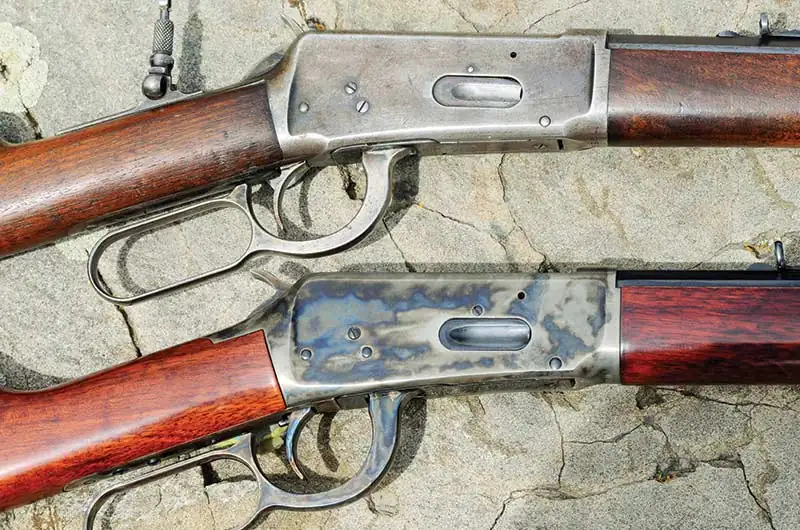
The last Model 94 I pulled off a shop rack had browned edges where blue once shined and a forearm polished smooth by a thousand autumn jackets. Beside it sat a glossy walnut beauty that looked like it had ridden from the factory to the safe and just now stepped into the light. Both were Winchesters, both were Model 94s, and both asked the same question every buyer faces: which one tells the story you want to live with?
That is the tug of the 94. It is both a tool and a touchstone. Winchester calls it the world’s most popular lever action, and there is a reason many hunters still think of the carbine first when they picture a fast, honest rifle in deer woods. But once you start looking, you run into code words: pre‑64, post‑64, AE, top‑tang safety, rebounding hammer, Grade I versus cut checkered walnut, brushed polish versus gloss blue. This guide unpacks that language and walks through how to judge a 94 from the rack, the table, or a set of listing photos, with collectors and practical buyers in mind.
Before talking eras and shopworn romance, it helps to know what Winchester is shipping now. Current production Model 94s come in a handful of configurations, each leaning into a different side of the 94’s character.
The Carbine keeps the quick‑handling feel that made the 94 famous. The modern version wears a 20‑inch barrel and a full‑length magazine tube, and it is a handy package at a listed 6 pounds 12 ounces with a 13.5‑inch length of pull. You will see black walnut stocked in a satin Grade I finish and a brushed polish on the barrel and receiver. Per Winchester’s own specs, the Carbine holds seven rounds in that tube and has the traditional straight‑grip stock buyers expect. It is offered in classic chamberings, including 30‑30 Win. and 25‑35 Win. If your heart wants the familiar silhouette and the least fuss, this is the baseline to study. You can look over the official Model 94 Carbine page for details on finishes and specs.
The Short Rifle trims nothing from the barrel length compared to the Carbine, but it leans into old‑school flair with a button‑rifled 20‑inch tube that Winchester says is triple‑checked for precision. The sights are what many of us grew up with: a semi‑buckhorn rear paired with a Marble Arms gold bead up front. It is also where you will see modern safety features spelled out clearly. The Short Rifle literature points to a top‑tang safety that is easy to see and a rebounding hammer that adds peace of mind when carrying loaded but not cocked. See the current specs on the Model 94 Short Rifle page.
The Sporter is where nostalgia gets a little dressy. Here you get an authentic straight‑grip stock with bordered cut checkering, a satin oil finish, and that lovely 24‑inch half‑round, half‑octagon barrel. The butt wears blued steel in a crescent pattern that plants solidly into the shoulder. This configuration is available in traditional chamberings such as 30‑30 Win. and 38‑55 Win., and the overall look nods strongly to the 94’s early aesthetic while keeping today’s manufacturing where it counts.
At the high end, the Deluxe variants turn up the figure and finish. The Deluxe Sporting headlines Grade IV/V walnut with a grain that pops as you polish it. Winchester notes that this model is drilled and tapped for scope mounts, and a hammer spur extension comes in the box to help reach the hammer around an optic. The sights stay traditional with a Marble Arms gold bead. Details: Model 94 Deluxe Sporting. The Deluxe Short Rifle steps up again with a color case receiver, gloss blued barrel, cut 18 LPI checkering, and Grade V/VI walnut. These are rifles you do not mind shooting but also do not mind admiring on a rainy Sunday.
Those cues get you in the right ballpark fast, even before you dig into serials or model‑specific details.
Sellers love to tag a listing as pre‑64 or post‑64 as if that alone carries the whole story. In collector shorthand it marks a broad dividing line between earlier rifles and later rifles built under different manufacturing approaches. Here is how to make that label work for you without getting lost in lore.
If you want a classic feel for the hunt, or period‑correct features for a display, the label might weigh more heavily. If you plan to run a peep or a low scope and want modern safety touches, it may not matter at all.
Angle‑eject simply means the rifle throws cases more to the side rather than straight up, and that helps clear receiver‑top optics. Whether you like glass on a lever gun or not, Winchester makes room for both approaches in current rifles. Some variants are drilled and tapped for scope mounts from the factory, and the Deluxe Sporting even includes a hammer spur extension to help thumb the hammer with a scope aboard. Others stay iron‑sight focused with a semi‑buckhorn rear and a Marble Arms gold bead front.
Collector note on holes and hardware:
However you set it up, confirm the rifle’s exact drill‑and‑tap status on the product page, since specs vary by model.
Current 94s clearly spell out two features that change the manual of arms slightly compared to some earlier rifles. The top‑tang safety sits where your thumb naturally falls when you bring the rifle up. It is easy to see and operate, and it gives a visual cue the instant the gun is on safe. Alongside it, the rebounding hammer keeps the hammer from resting directly on a firing pin. It is a small feature that many appreciate when they carry with a loaded magazine but are not ready to shoot.
Triggers on today’s rifles are steel, and the feel will vary from rifle to rifle the way it does with any production lever gun. When you are evaluating one in a shop, ask for permission to check the trigger break on safe guns, and work the lever a few times to see how the sear resets and the hammer falls on a snap‑cap. You are not shopping for a match rifle here. You are looking for a clean, consistent break that does not fight you and a lever throw that does not bind.
Lever guns tell their story in walnut and steel. The Model 94 line gives you a clear menu of looks.
On the working end, the Carbine shows Grade I black walnut with a satin finish and a brushed polish on metal. It is easy to live with. Nicks from field use do not stand out too loudly, and the stock shape is the straight‑grip profile that got the 94 through so many seasons.
Step up to the Deluxe Sporting and the stock turns into Grade IV/V walnut with figure worth slowing down for. Winchester’s copy urges you to keep polishing it because the unique grain really wakes up with care. You still get iron sights as shipped, and the barrel is button‑rifled. Importantly, the receiver is drilled and tapped, and the rifle ships with a hammer spur extension in case you want to add a scope that sits low over the bore.
Then there is the Deluxe Short Rifle with its color case receiver, gloss blued barrel, and Grade V/VI walnut with cut 18 LPI checkering. It is the picture of perfection in Winchester’s words, and it wears a shotgun‑style buttplate that is both comfortable and classic. You can feel the step up in dress as soon as you shoulder it.
The Sporter splits the difference: bordered cut checkering, a satin oil finish, and that half‑round, half‑octagon barrel that immediately reads as 94 to anyone across the room. The blued steel crescent buttplate is a small detail, but it matters in the way the rifle anchors when you settle in behind the sights.
Because retailers throw these terms around, let us sketch them in plain language using what Winchester publishes.
Across the family you will see steel receivers, full‑length tubular magazines, and traditional sighting options. Some modern rifles are drilled and tapped at the receiver bridge and ring, which gives you common bases for low‑mounted scopes. Others emphasize irons. Read the individual product page to make sure the rifle in your hand matches the feature set you want.
There is comfort in familiarity, and the 94 keeps it. The Carbine is available in 30‑30 Win. and 25‑35 Win. in the current catalogs, both cartridges with deep roots in the platform. In the fancier corner, you will see chamberings like 38‑55 Win. listed on Deluxe and Sporter models. The Sporter itself is offered in 30‑30 Win. or 38‑55 Win.
There are many reasons to pick among them, from recoil tolerance to nostalgia to the kind of deer season you enjoy most. From a practical standpoint, availability and how you plan to sight the rifle will guide you. If you like a gold bead and leaf on whitetails at woods distances, 30‑30 Win. is the cartridge you find most easily on shelves. If a classic cartridge and a classic look together are your aim, the 38‑55 Win. in a Sporter or Deluxe Short Rifle has a strong pull.
When you are standing under the shop’s fluorescent lights with two 94s on the counter, your eye needs a simple plan. Here is a quick method that works for both buyers and collectors who want to keep their feet on solid ground.
Judging a 94 is less about chasing a single letter code and more about understanding what the rifle was meant to be and whether the specimen in front of you still lives up to it. A clean Carbine with a little honest wear that fits you is often the rifle that fills a tag and a memory. A Deluxe Short Rifle with figure in the forearm and careful blue can be exactly the rifle you look forward to carrying each fall and putting away each winter.
Let me end with two small stories that mirror the choice most of us make.
Ben walked into his local shop looking for a woods rifle to leave by the door in deer season. He shouldered a current‑production Carbine in 30‑30 Win., liked the way the straight‑grip stock put his wrist, and found the bead danced right where he looked. He checked the tang safety, worked the lever a few dozen times, and decided that seven in the tube and a brushed polish finish suited his kind of days. It was not fancy, but it was honest and ready. He bought it and never thought about it again unless it was the week before opener or the day after a walk on fresh snow.
Charlotte spends more time at the bench, and she likes rifles that make her think about how they were put together. Her 94 had to do both. She brought home a Deluxe Short Rifle with a color case receiver, gloss blue, and cut checkering. It is drilled and tapped, and when she wants to work up loads on a sunny Saturday, she mounts a low‑power scope and fits the included hammer spur extension. When it is time to walk a hedgerow, the base comes off and the Marble Arms gold bead is back to catching light. She gets both the look she wants and the flexibility she needs.
Both paths are valid, and that is the strength of today’s Model 94 line. From the classic Carbine to the dressy Deluxe, from iron‑sight purist to low‑glass pragmatist, Winchester keeps the 94 in forms that feel familiar yet ready for use. If the arguments about pre‑64 and angle‑eject swirl around you, let them. Handle the rifle, read the features, and pick the story you want to live with.
If you enjoy the Model 94 for the way it blends tradition and practicality, you might also appreciate a look at another Winchester classic made for work and pride of ownership, our piece on the Winchester Model 12 and what collectors look for. For those drawn to the bigger, box‑magazine side of lever history, I covered that lineage in the Winchester Model 1895 overview as well.
Available
View Item
Available
View Item
Available
View Item
Available
View Item
Available
View Item
Available
View ItemA practical, collector-minded look at Remington’s Model 8 and 81. Calibers, long recoil explained, police conversions, and what to check before you buy.
A collector’s look at Colt’s SP1 and early Sporters, from slickside uppers and pencil barrels to the rollmarks and small changes that hinted at the A2 era.
A practical, story-driven guide to reading JM vs REP barrel marks, understanding pre-safety 336s, Micro-Groove and Ballard-style rifling, and the smart checks to make before you buy.