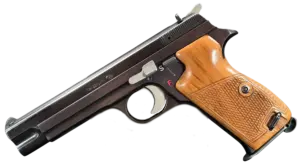

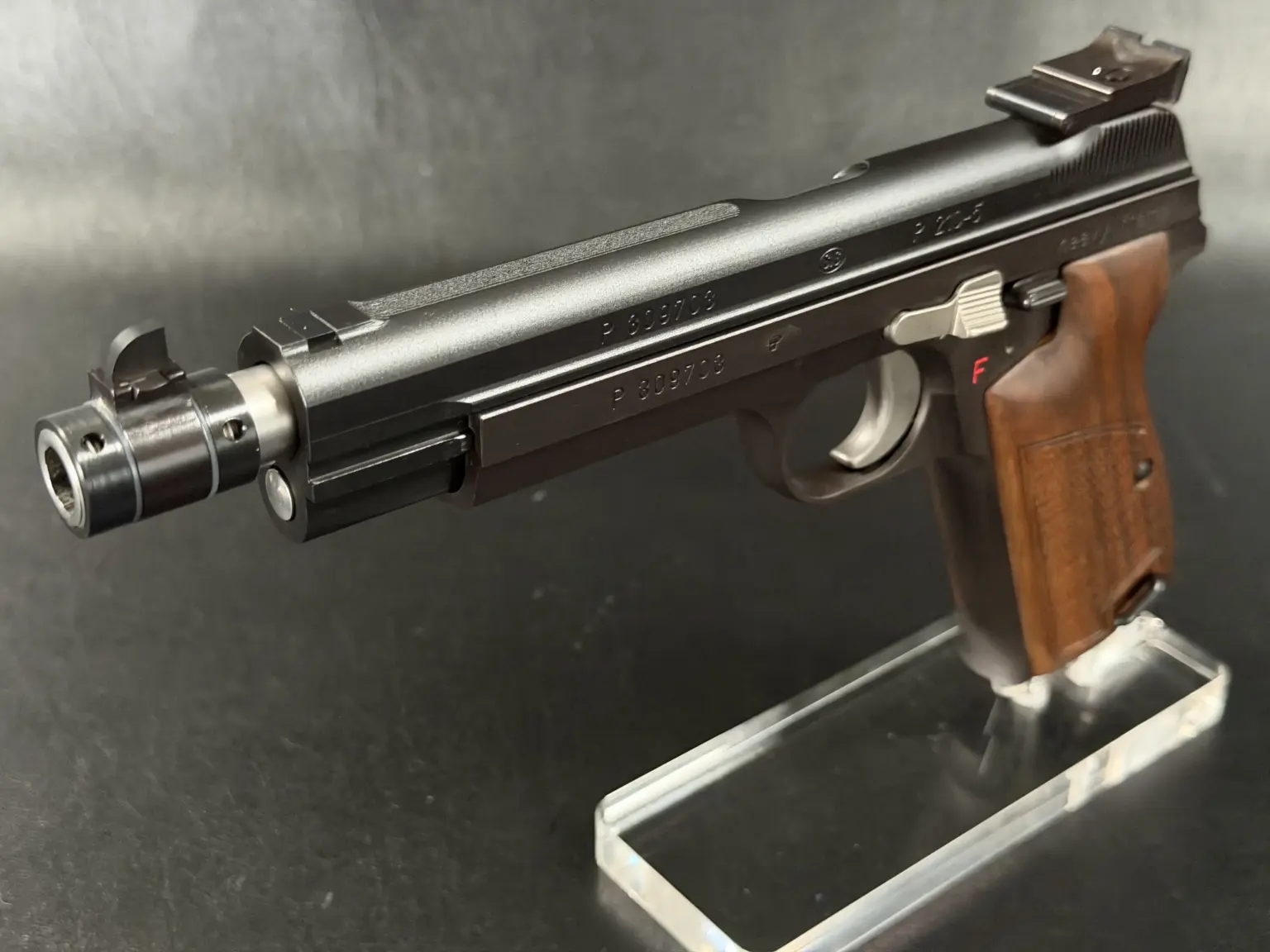
This is the story of how a postwar Swiss sidearm, built around Charles Petter’s locking ideas and seasoned with Browning DNA, became the yardstick for mechanical refinement. Then it left the Alps, picked up modern controls in Germany, crossed the Atlantic, and found a new groove in the United States. Along the way, it won matches, filled duty holsters, and made collectors obsess over stamped numbers and little proof marks. The reasons people love the P210 haven’t changed much. The way you can buy one is.
A service pistol that shoots like a match gun
Plenty of military pistols are accurate enough for combat. The P210 was different because it started life with ambitions that overlapped the world of precision shooting. Swiss production emphasized a slide riding inside the frame on long rails, a low bore axis, and a single-action trigger that breaks cleanly and lightly by service standards. The recipe delivered soft recoil, easy tracking, and consistency that felt more bullseye than battlefield.
Swiss factories even sent many new guns out the door with a signed test target from 50 meters. Those little sheets turned buyers into believers and became part of the pistol’s mystique. It wasn’t just that the P210 could shoot. It was that it did so with a mannered feel that made groups come easily for ordinary hands.
From Petter to P49: the origin story
The groundwork was laid before the war ended. French designer Charles Petter developed a locking system used in the Modèle 1935A. It blended Browning’s tilting-barrel principles with a different way of guiding the slide and frame. After World War II, SIG in Switzerland refined the idea into what became the P210. The Swiss Army adopted it as the Pistole 49, or P49, chambered in 9×19. Denmark followed with its m/49.
In both services, the pistol built a reputation for reliability and shootability. It was not the lightest or the cheapest route to arming troops. It was the route chosen by a country that took marksmanship seriously and had the industrial patience to machine and fit parts the old way. That care was more than cosmetic. It made a mechanical difference you could feel on the range.
Design DNA that makes the P210 special
The P210’s personality comes from several choices that set it apart from its peers. If you are wondering why it feels different in the hand and on the trigger, this is where the answer lives.
Slide inside the frame
Most semi-automatic pistols have the slide riding outside the frame rails. The P210 flips that relationship. Its slide runs inside the frame on long internal rails. That pattern yields a low bore axis and tight control over the slide’s movement. Add precise hand fitting, and the result is a slide-to-frame fit that is famously snug without being sticky. Less wobble in the system makes for a cleaner return to battery and a repeatable lockup. The reward is accuracy you can count on and a recoil impulse that feels more straight back and less flippy.
Browning principles, Peter flavor
Mechanically, the P210 uses a tilting barrel that locks into the slide, a Browning concept that had already proven itself. Petter’s influence shows in the way the frame guides the slide and in the attention paid to bearing surfaces. The interface points are generously long, and the bearing areas receive the kind of surface finish that keeps reciprocating parts tracking smoothly. It’s old-school engineering with a Swiss accent.
The trigger that launched a thousand grins
The P210 is single-action only. When done right, SA triggers can be minimal in take-up and crisp in the break. Swiss-made P210S earned a reputation for exactly that. Shooters who grew up on service-grade triggers from other designs often do a double-take when they press through a P210. That’s not hype. It’s geometry, well-cut sear surfaces, and careful fitting working in concert.
Hand fitting and the numbers that match
Open the grips on an early Swiss P210, and you’ll often see small parts stamped or engraved with the last digits of the serial number. That habit reflects how these pistols were built. Parts were machined closely, then hand-matched and finished to that specific frame and slide. You can argue about how much of the accuracy comes from the design and how much from the bench time. What’s certain is that this approach shaped the legend and fed the lore. Owners still look for matching numbers because it hints at originality and the kind of care that made the P210 famous.
Variants at a glance
Collectors tend to talk about P210S by factory dash numbers. You’ll see references from -1 through -7 on Swiss-era guns, roughly dividing military and police pistols from commercial and target models. The big differences are in the sights, slide and frame weight, safeties, and chamberings.
Military and police variants commonly wore fixed sights and the original heel-type magazine release. Target and commercial models picked up adjustable rear sights, heavier slides or frames, and in many cases, a different chambering. While 9×19 ruled the service side, 7.65 Parabellum was widely used in target versions because it shoots flat and softly in this platform. A .22 LR conversion unit was also offered for economical training and competition practice. Those sets are popular with collectors.
Danish m/49 pistols are their own chapter. Built around service requirements, they typically keep the fixed sights and heel release and carry national property markings. The contract history gives them a clear identity on the secondary market, distinct from Swiss-issue P49S and the tuned commercial target guns. Condition and originality drive interest, and the details matter.
From Swiss benches to German and American revivals
By the 2000s, original Swiss production had run its course. Demand never really faded, though. That’s how the P210 returned wearing different stamps.
In Germany, SIG Sauer reintroduced the pattern as the P210 Legend. The idea was to keep what made it shoot so well, while modernizing the controls for contemporary users. The Legend kept the internal rails and the single action trigger. It added a push-button magazine release and revised controls that speed up administrative handling. Many found the new controls friendlier for range work and competition, while the core mechanical feel stayed in familiar territory.
Next came the American-made P210A line. Built with modern CNC methods, the P210A arrived in Target and Standard trims. The Target version wears adjustable sights and longer target-style grips. The Standard aims closer to service sights with modern visibility. Both use a button magazine release and a beavertail that protects the hand during high, modern grips. The heart is still the same concept: slide inside the frame, careful lockup, and a single-action system that rewards a straight press.
How it shoots: accuracy, recoil, and reliability
The most boring range report for a P210 is also the most flattering. They tend to shoot where you point them with a level of mechanical accuracy that stands out. Feed them standard 9 mm loads, and you get flat, consistent groups. The recoil impulse has a smooth feel thanks to the low bore axis and the way the slide and barrel track in the frame. It’s not a miracle. It’s the design working as intended.
Older Swiss guns sometimes benefit from a refresh before heavy use. Springs age. Magazines collect dings or lose tension. New recoil and magazine springs can tighten up behavior and cure feeding quibbles that show up after decades. Quality magazines matter too. OEM mags are prized. For many variants, Mec-Gar supplies reliable magazines that keep the pistols running without drama. The newer P210A pistols are generally ready out of the box, with modern sights that are easier to read under bright sun or in an indoor bay.
Keep in mind that the original Swiss sights are often fine and unobtrusive, geared toward precise aiming under good light. If you expect big, high-visibility dots, the U.S. models will feel more familiar. The German Legend also split the difference by updating sighting options while respecting the original profile.
Ergonomics: slim, balanced, and a tale of two mag releases
The P210 is a single-stack pistol with a grip that feels slim and elegant. Balance is one of its secret advantages. The frame contours and slide mass make the gun track steadily through recoil. The original heel-type magazine release is secure and very European. It’s not fast if you are chasing split times with modern reload techniques. If quick reloads are a priority, the Legend and P210A bring a push-button release to the party and feel familiar to shooters raised on button-release duty pistols.
Grips vary. Target models wear slabs that fill the palm and give more purchase. Service types are thinner. Aftermarket grips are available for most flavors, so you can tune the shape without permanently altering the pistol.
Maintenance, lubrication, and holsters
The tight tolerances that make the P210 feel special also reward regular lubrication. Keep the rails, barrel hood, and contact points wet with a quality oil before range sessions. Owners who treat them like rattly service guns sometimes bump into sluggish cycling. Treat them like a precision tool, and they run beautifully.
Holsters deserve a note. The P210’s slide-in-frame geometry means many 1911 holsters are close but not quite right. Some fit, some do not, and retention can be off. You will be happier with a holster made specifically for the P210 or one confirmed to fit the inside-rail profile. As for parts and support, there is good news. Springs and magazines are available from factory sources and from aftermarket suppliers. Specialist shops such as Grayguns understand the platform and support tuning and service, especially for legacy models that need expert hands.
Collector corner: how to judge what you are looking at
Part of the P210’s appeal is how much story is locked into small details. Here are the big-ticket items that buyers and collectors watch for.
Originality matters. Many Swiss-made pistols have serialized parts throughout the frame, slide, barrel, and small internal components. Matching numbers suggest the gun is as it left the factory. Look for the original factory test target, spare magazines, cleaning rod, and manual. Those extras raise the appeal for collectors and help set a clear picture of where the gun has been.
Distinguish between Swiss military P49S, Danish m/49s, Swiss commercial target variants, German Legend pistols, and U.S.-made P210A models. Military guns often show service finish and proofing stamps. Danish examples feature national property marks and service features such as fixed sights and heel releases. Commercial target guns feature adjustable rear sights, heavier slides or frames, and sometimes the 7.65 Parabellum chambering. The German and U.S. revivals are easy to spot by their push-button magazine release and modern grip and sight choices.
Watch for refinishing and parts swaps. The P210’s tight mating surfaces can hide wear until you look closely. Inspect the slide-to-frame rails for peening or galling. Check the barrel lockup by pressing down on the hood with the battery in and feeling for play. Dry fire with care while evaluating the trigger. A clean break is expected, but if it feels gritty or inconsistent, that can hint at amateur tinkering.
An original .22 LR conversion unit with the correct case is a sought-after accessory. So are early pattern adjustable sights and target grips in good shape. If you find a package with the test target and all matching numbers, that usually commands a premium.
Legal note: older imported pistols can fall under Curio and Relic categories in some jurisdictions. Magazine capacity rules also vary. Laws change, and there is no substitute for checking local and federal regulations before you buy, sell, or transfer any firearm or magazine.
Buying guide: picking the right P210 for how you shoot
You can think of P210 choices along a spectrum from pure Swiss original to modernized shooter. Your needs will help sort the options.
If you want the classic Swiss service feel
Look for a Swiss P49 or a Danish m/49. Expect fixed sights, a heel magazine release, and that old-world build quality. These feel closest to the pistol that built the reputation. They are lovely range companions, but plan to lubricate generously and possibly refresh springs. Sight pictures are fine, not bold. If collecting is your goal, favor originality, matching numbers, and, when possible, complete kits with test targets.
If you want classic lines with modern controls
The German P210 Legend aims at you. It keeps the P210’s core design while adding a push-button magazine release and updated controls. Many shooters find the Legend easier to run quickly because the handling matches modern habits. It still feels like a P210 on the trigger and in recoil. If you plan to shoot matches that require fast reloads, the Legend makes that practical.
If you want a current-production shooter with support
The American-made P210A in Target or Standard trim is the most straightforward path. You get modern sights, a beavertail that plays nicely with a high grip, and factory support. Accuracy is there, and you can buy magazines and springs without chasing down vintage sources. The Target model’s adjustable sights and palm-filling grips are great for bullseye or slow-fire work. The Standard keeps the vibe of a service sight picture with upgrades that reflect today’s preferences.
Parts, mags, and holsters checklist
- Magazines: OEMs are excellent. Mec-Gar covers many variants well. Confirm compatibility for your specific model.
- Springs: Replace recoil and magazine springs on older pistols. Keep a spare extractor spring if you shoot often.
- Holsters: Choose P210-specific options. Test fit before trusting retention.
- Grips and sights: Target grips transform the hand feel. Adjustable rear focus helps if your eyes want a sharper picture.
- Lubrication: Run the rails wet. The tighter the fit, the more the pistol appreciates oil.
How it stacks up against peers
It’s natural to compare the P210 with pistols like the Browning Hi-Power and the 1911. All three have strong service pedigrees and loyal fans. The Hi-Power brings double-stack capacity and a different grip feel. The 1911 brings a familiar single-action manual of arms and a vast aftermarket. The P210’s calling cards are the slide-inside-the-frame layout, the refined single-action trigger, and the Swiss lineage that placed a premium on hand-fitting. If you want capacity, the Hi-Power lane is attractive. If you want a classic with a control scheme most American shooters know by heart, the 1911 stands tall. If you want a sidearm that behaves like a target pistol without giving up service roots, the P210 answers that question in a very specific way.
Why the cult endures
The P210 stood apart the day it entered service, and it still stands apart now. Part of that is mechanical. The gun simply shoots well and feels refined. Part of it is cultural. Swiss shooting traditions and competition history gave the pistol a stage to prove itself. The rest is the way it has bridged generations. A soldier could carry one. A bullseye shooter could win with one. A modern enthusiast can buy one today with sights and controls that make sense right now.
That uncommon range of roles is why people who meet the P210 tend to become fans. It is not about hype. It is about how it behaves on target, how the slide moves in the frame, and how the trigger tells your finger exactly when the shot breaks. You can chase that feeling with many pistols. The P210 has delivered it reliably for decades. That is why the following remains loyal, and why you still see smiles when someone new presses that first perfect trigger and looks downrange at a tidy little group.