If you are choosing between a Redhawk and a Super Redhawk, you are already in serious-revolver country. This guide keeps it simple: how they differ in build, what the Alaskan is for, chamberings you will actually see, and what to check before you buy used.
Quick take: Redhawk vs Super Redhawk
- Optics mounting: Standard Super Redhawk models include integral scope ring cuts and ship with rings. The Alaskan variant does not include scope ring cuts. Redhawks are set up around iron sights.
- Overall build: Super Redhawks carry extra material around the barrel and top strap for strength with long barrels and heavy loads. The frame window is broader. Redhawks are stout, but lighter in comparable trims.
- Grip feel: The two families use different grip setups and stocks, which changes hand fit and recoil feel. Try before you decide.
- Typical barrel lengths: Redhawk 4.20, 5.50, 7.50 inches. Super Redhawk 7.50 and 9.50 inches. Alaskan 2.50 inches.
- Chamberings: Redhawk most commonly .44 Magnum, with runs in .45 Colt, .45 Colt/.45 ACP convertible, .41 Magnum, and an 8-shot .357 Magnum. Super Redhawk family features .44 Magnum, .454 Casull, and .480 Ruger, including the Alaskan.
- Capacity: Most .44 Magnum and .454 Casull models are 6-shot. Some .480 Ruger Super Redhawks are 5-shot depending on production run. The .357 Magnum Redhawk is 8-shot.
Shared traits
Both lines have the reputation Ruger leans into on its Alaskan page: Potent Strength and Power. These are stainless, big-frame double-actions meant for hard service, from big game season to backcountry carry. Sights are practical, grips are usable, and cylinders are sized to the cartridge rather than to a marketing number.
Design differences that matter
The Super Redhawk is the heavier-built sibling. Its frame extends and reinforces material around the barrel and top strap to support long barrels and full-pressure magnum use. Independent reviews have also noted a reinforced lower barrel area and a slightly wider frame. Standard Super Redhawk models are optics-ready with integral ring cuts; Redhawks are iron-sight focused.
Beyond weight and optics, the grip arrangements differ enough to change how each revolver feels under recoil. Handle both if you can. Your hand will tell you more than a spec sheet.
The Alaskan’s role
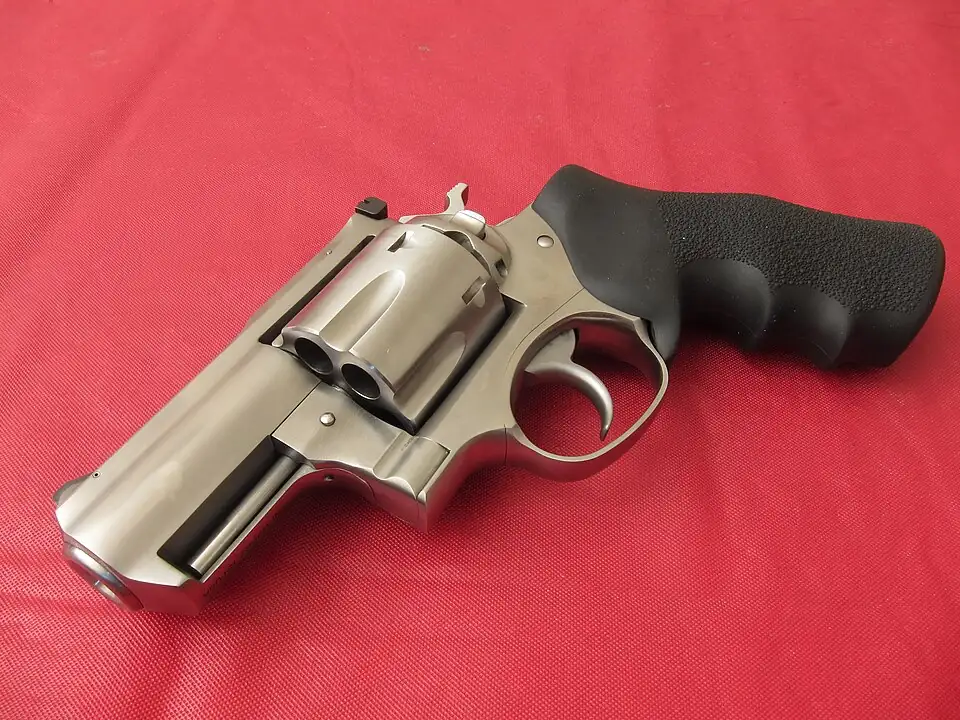
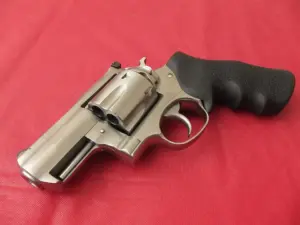
The Super Redhawk Alaskan trims the barrel to about 2.50 inches while keeping the reinforced frame and cylinder. It is a purpose-built backcountry sidearm offered in .44 Magnum, .454 Casull, and .480 Ruger. In .454 Casull trim, it will also chamber and fire .45 Colt for lower-recoil practice or lighter field use. Sights are a simple, tough blade and notch. Recoil with top-end loads is stout, but manageable with good technique and the right grips.
See Ruger’s Super Redhawk Alaskan page
Super Redhawk hunting models
Set the Alaskan aside and you have the classic hunting Super Redhawk. Typical catalog trims wear 7.50 or 9.50 inch barrels in .44 Magnum, .454 Casull, and .480 Ruger. The integral ring cuts and included rings make mounting a handgun scope straightforward. The extra sight radius and forward weight help control and stretch practical range from field positions.
See Ruger’s Super Redhawk lineup
Chamberings and what you will actually see
Here is what regularly shows up on shelves and in the used case. Always confirm rollmarks and model specs on the specific gun in hand.
- Redhawk
- .44 Remington Magnum, 6-shot, commonly in 4.20, 5.50, and 7.50 inch barrels.
- .45 Colt, 6-shot, various barrel lengths in past runs.
- .45 Colt/.45 ACP convertible, 6-shot, typically uses moon clips for .45 ACP.
- .41 Magnum, 6-shot, most often found used.
- .357 Magnum, 8-shot, short-barrel variants exist and are easy to spot by capacity.
- Super Redhawk
- .44 Remington Magnum, 6-shot, often in 7.50 and 9.50 inch barrels.
- .454 Casull, typically 6-shot and also chambers .45 Colt.
- .480 Ruger, produced in both 5-shot and 6-shot configurations depending on era and model. Verify on the gun.
- Alaskan variants in .44 Magnum, .454 Casull, and .480 Ruger with 2.50 inch barrels.
Ruger has also highlighted Redhawk models with sleeve-and-shroud barrels in recent years, a two-piece construction approach seen across the industry. If that matters to you, study the specific model’s spec sheet and inspect barrel-to-frame fit closely.
Durability and shootability
Both families are built for the long haul. The Super Redhawk turns the dial up with more frame around the barrel and long-barrel options that add sight radius and soften recoil. Shorter barrels carry easier and clear clothing faster. Balance your likely carry time against how much recoil you want to tame at the range or from field positions.
Sights, grips, and small details
Ruger equips these with practical sights. Adjustable rears and replaceable front blades are common, and the Alaskan keeps a simple blade-and-notch setup that is tough to knock out of zero. Many owners swap to a brighter front blade for dark timber or dusk.
Grip fit is a big deal on big-bore double-actions. The two families use different grip setups, so plan on trying alternatives. The right stocks can turn a thumper into something you actually look forward to shooting.
Which one for your use
- Range and general field carry without excess bulk: Redhawk in .44 Magnum with a 4.20 or 5.50 inch barrel.
- Hunting from a rest where weight helps: Super Redhawk 7.50 or 9.50 inch with the option to add a scope.
- Backcountry defense under a coat or chest rig: Super Redhawk Alaskan in .44 Magnum, .454 Casull, or .480 Ruger.
- Planning to mount optics or run frequent top-pressure loads: lean Super Redhawk.
Collector notes
Details that define variants include chambering, barrel length, and whether a Super Redhawk is an Alaskan or a long-barrel model with integral scope rings. On the Redhawk side, watch for runs in .41 Magnum, .45 Colt, and the .45 Colt/.45 ACP convertible, plus the distinctive 8-shot .357. On the Super Redhawk side, note whether a .480 Ruger is a 5-shot or 6-shot example. Ruger has also cataloged Redhawks with sleeve-and-shroud barrels, which some collectors specifically seek out.
Used-buy inspection checklist
These quick checks tell you how a revolver has lived. Treat all firearms as loaded while you inspect.
- Overall condition: Even holster wear is fine. Deep gouges, bent sights, or chewed screw heads suggest rough handling.
- Bore and crown: Shine a light from the breech. Rifling should be sharp. Check the crown for nicks.
- Forcing cone and top strap: Look for cracks or severe erosion. Some top strap cutting is normal on magnums; deep cutting is a red flag.
- Cylinder face and gap: With the cylinder closed, check that the cylinder-to-barrel gap is consistent at each chamber.
- Endshake and side play: Gently push and pull the cylinder fore and aft. Movement should be minimal.
- Lockup and timing: Cock slowly and verify the stop drops into the notch before full cock on every chamber. At full cock, light rotational pressure should meet firm lockup.
- Ejector and crane: With the cylinder open, run the ejector rod through a full stroke. It should move smoothly and return fully. Check the crane for signs it has been sprung.
- Trigger and return: Dry fire with snap caps if allowed. Double action should be smooth with a positive return. Single action should break cleanly.
- Sights: Ensure the rear sight adjusts and is not bent. On Alaskans, decide if you want a brighter front blade.
- Grips and screws: Stocks should sit flush and not shift. Fresh tool marks invite questions about recent work.
Upgrades worth considering
- Sights: a higher-visibility front blade for low light.
- Grips: try alternatives. The difference between hardwood panels and a one-piece overmolded grip can be night and day in recoil comfort.
Price, availability, and where to check
Ruger’s listings change, but as a reference point, recent Redhawk .44 Magnum models have shown MSRP around $1,449. Availability ebbs and flows, and exact trims rotate. For current specs, chamberings, and pricing, go straight to Ruger.
Check current Ruger listings
The bottom line is simple. The Redhawk and Super Redhawk are cut from the same cloth. One is just hemmed thicker. Decide how you will carry, what you will shoot, and how much heft you want on your belt, then pick the one that makes you want to lace up your boots and head for the timber.