
Remington Model 8 and 81: Browning’s Long Recoil Sporting Rifles
A practical, collector-minded look at Remington’s Model 8 and 81. Calibers, long recoil explained, police conversions, and what to check before you buy.

Call us any time at: (833) 486-6659

You picked a caliber. Now comes the twist-rate rabbit hole. 1:7 or 1:8? Greenhill or Miller? Skip the forum arguments. Here is a clear way to choose a barrel twist that matches your bullets and distances.
Twist rate is how quickly rifling spins a bullet. A 1-in-8 barrel makes one full turn in 8 inches of bore. Faster twist equals more spin at a given muzzle velocity. More spin helps a bullet fly nose-first rather than yawing or tumbling.
There is no single perfect twist for every bullet. The right answer depends on bullet length and construction, as well as the speed at which you launch it.
Conventional wisdom warned that fast twists can “over-stabilize” lighter bullets. Modern testing has largely debunked this as a practical concern. All else equal, it is better to have too much twist than not enough. The real risks with big mismatches are poor accuracy and, in rare cases, fragile varmint bullets shedding jackets at extreme speeds. For most modern bullets at sane velocities, a little extra spin is a non-issue. Guns & Ammo sums it up and favors erring on the fast side, especially with carbine-length barrels.
Alfred Greenhill’s 19th-century rule of thumb gets you close, fast. It ties twist to bullet diameter and length, which is the big idea shooters need: longer bullets require more spin.
It works surprisingly well up to about 2,800 fps. At higher velocities, many use a slightly larger constant to yield a slower recommended twist. The NRA Shooting Sports Journal walks through it with clear math. Their .223 examples land right where shooters expect:
That is the takeaway: Greenhill is quick, length-driven, and good for a first-pass estimate.
Don Miller’s rule refines Greenhill for today’s bullets by factoring in bullet weight and density, then outputs a gyroscopic stability factor, SG. Instead of only asking “what twist,” you ask “how stable.”
For most rifle bullets, an SG around 1.3 to 1.7 is ideal. Closer to 1.5 gives you margin for cold weather, changes in altitude, or slightly slower lots of ammo. Preferred Barrel Blanks lays out those SG targets and why modeling stability beats guessing. If you like a walkthrough of the concepts, Everyday Marksman also explains Miller in plain language.
We all heard “heavier bullets need faster twist.” Close, but the driver is long. For a given caliber, longer bullets present a greater overturning moment and need more spin to stay nose-forward. Heavier bullets are often longer, which is why weight became a shorthand.
Construction changes the picture. A 70-grain .224 bullet made of copper is longer than a 70-grain lead-core bullet. Same weight, different length, different twist needed. When in doubt, look up the actual bullet length and design.
Spin at the muzzle equals twist rate multiplied by velocity. Chop barrel length or run a milder load, and your spin drops along with speed. That lowers SG. A faster twist can buy back margin.
Air density matters too. Cold, low-elevation air raises the aerodynamic load on the bullet. A setup that is barely stable on a warm, high-elevation day can go wobbly at sea level in winter.
Decades of AR-15 and .223 Remington shooting have mapped out useful ranges. Highlights from Guns & Ammo and long-time match experience:
Real-world note: fast twists do not automatically wreck accuracy with lighter bullets. Many carbines shoot 55-grain FMJ just fine out of 1:7 or 1:8. If a particular bulk load sprays in a fast twist, it is usually bullet quality or an individual barrel preference showing up, not a universal rule.
Use these as starting points. Bullet shape and construction can nudge you up or down a step.
You will see familiar patterns in other calibers:
These are general baselines. As always, bullet length and your velocity window decide the final answer.
For clear math and worked examples, see the NRA Shooting Sports Journal on calculating twist. For prefit selection and SG targets, Preferred Barrel Blanks is a strong reference. For a practical overview that busts the over-spin myth and maps .223/5.56 twists to common loads, read Guns & Ammo’s guide. If you want a plain-language walkthrough of the formulas, try Everyday Marksman.
Big picture: length drives the need, velocity sets the spin, and targets tell the truth. Err slightly fast on twist, and your bullets fly right more often than not.
Available
View Item
Available
View Item
Available
View Item
Available
View Item
Available
View Item
Available
View ItemA practical, collector-minded look at Remington’s Model 8 and 81. Calibers, long recoil explained, police conversions, and what to check before you buy.
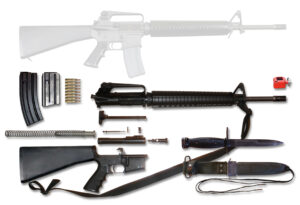
A collector’s look at Colt’s SP1 and early Sporters, from slickside uppers and pencil barrels to the rollmarks and small changes that hinted at the A2 era.
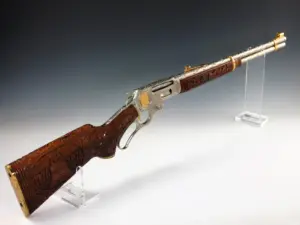
A practical, story-driven guide to reading JM vs REP barrel marks, understanding pre-safety 336s, Micro-Groove and Ballard-style rifling, and the smart checks to make before you buy.