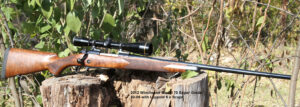

The first good Springfield I ever shouldered was leaning on a folding table at a county show. The wood was honest and the metal was clean, but the price tag was a little proud. Thirty seconds later I knew why. The serial sat north of the safety line, the bolt had that subtle swept-back profile you learn to spot, and the stock had the right inlet for an A3-style handguard ring. The seller watched me trace the clues and just smiled. This family of rifles rewards careful eyes and calm hands. If you are looking at a U.S. Model 1903 or 1903A3, those first few moments tell you more than any tag can.
Heat-treat eras that matter
Before collectors argue about anything else on an ’03, they usually want to know where its receiver falls in the heat-treat timeline. That timeline is not folklore. During the First World War, temperature control in forging and heat treatment was tightened with the installation of pyrometers, and the result was a shift from the early single heat treatment to improved processes and later to nickel steel.
Two cutoffs are the ones everyone memorizes. At Springfield Armory, the change to improved receiver heat treatment happened at approximately serial number 800,000. At Rock Island Arsenal, it came earlier, at about 285,507. Later, both makers introduced nickel steel receivers, at about 1,275,767 for Springfield Armory and about 319,921 for Rock Island. These numbers, compiled by the National Park Service, are approximate by year and serial, but they are the best guide when you are standing in front of a rack trying to make a decision.
There is another layer to this: bolts. Like receivers, bolts went through a shift in heat treatment. As summarized in a collector’s perspective on the Model 1903 Springfield, the early single-treated bolts have a straight, almost vertical bend when you look at them in profile. Later double-treated bolts show a slight sweep to the rear. The change in bolt style roughly tracks the receiver heat-treat change. So a straight bolt is generally correct for rifles from World War I or earlier production, and the swept-back style is what you expect to see on late 1918 and onward.
Safety is not a throwaway line here. The Civilian Marksmanship Program has long discussed low-number heat treatment concerns. They specifically cautioned against firing any Springfield rifle with a single heat-treated low-number bolt. That warning does not tell collectors to discard those parts. Far from it. A straight, early bolt can be historically correct on a First World War rifle displayed as such. It is simply a reminder to separate history from range use and to choose your parts accordingly if you plan to shoot. With receivers, many owners take a similarly cautious approach around the low-number ranges, and they check serials carefully against the cutoffs.
Receivers and bolts: what your eyes can read
In the field, you start with the serial, then let the metal tell you the rest. If you are handling a Springfield Armory receiver numbered above about 800,000 or a Rock Island above about 285,507, you are looking at the improved heat-treat era. If it sits above the nickel steel thresholds noted earlier, you are a step newer. Those are the broad strokes.
Next, look at the bolt handle. The straight-handled, almost vertical bend that seems to drop straight down from the body is the early single-treated style. The later double-treated bolt has that slight sweep to the rear. This is a quick, practical check, and it doubles as an age-appropriateness test. A straight bolt in a very late receiver is not automatically wrong, but it is a flag to investigate. A swept bolt in a World War I serial range is the same kind of flag. Mixmaster parts are part of Springfield life thanks to decades of overhauls and rebuilds, but when things line up, value and confidence go up with them.
There is also the question of who made what. Early receivers came from Springfield Armory and Rock Island Arsenal. During World War II, Remington and Smith-Corona produced the simplified M1903A3 variant. You do not need to memorize every maker’s marking to get your bearings, but it pays to know that Remington and Smith-Corona A3s have their own serial blocks, and that A3 receivers wear a very different rear sight setup than earlier 1903s. More on that in the sights section below.
Barrels and rifling: four-groove to two-groove
Barrels on the 1903 family show their era too. Four-groove rifling was standard until 1942. Wartime production realities then saw the War Department begin installing barrels with two-groove rifling on the M1903A3. According to contemporary summaries, this change did not come with published, across-the-board performance remarks compared to the four-groove pattern that preceded it, but it did become common on A3s. As with receivers and bolts, you want the parts to agree with the story. A two-groove barrel on an earlier 1903 may simply be a later rebuild barrel, which is historically normal. An early four-groove on a very late A3 could be fine too, but it is worth asking when and why it ended up there.
A note for would-be sniper owners: A4 sniper barrels retained the notch for a front sight base in the barrel shoulder, but on true A4s the front sight itself was not installed. That empty notch is one of the many small signs that helps you separate a real A4 setup from a rifle that was changed after the fact.
Sights: 1903 leaf vs A3 peep, and what the A4 lost
The 1903 began life with a refined open rear sight that sits ahead of the receiver on the barrel. It is one of the reasons early rifles balance the way they do. World War II production brought change. The M1903A3 introduced a simpler set of stamped parts and, just as importantly, a new rear peep sight mounted on the receiver. That rear peep is hard to miss and is one of the fastest ways to tell an A3 from a classic 1903 across a table. The A3 front sight also differs from the original pattern, fitting the broader idea that A3s were built to be faster to make, not fancier.
Then there was the M1903A4 sniper. Built on A3 receivers, the A4 carried its own profile. The receiver markings were split on A4s to clear the Redfield scope base, and that base displaced the A3’s rear peep entirely. Scope-wise, A4s were paired with the Weaver 330 or 330C, a 2.75x scope that sat low enough to be practical without being delicate. In production, Remington selected receivers and barrels that measured closest to spec for A4 use. The barrels chosen were essentially A3 profile barrels that met tighter tolerances for sniper assembly. The A4 carried forward into service across the war’s theaters and continued in U.S. service afterward, including Korean War use and some later appearances.
Stocks and cartouches: grooves, inlets, bolts and pins
Stocks carry a lot of the story on these rifles. Early 1903s are famous for grasping grooves on the fore-end, but as production moved and makers changed, so did stock styles. Straight stocks without grasping grooves were used primarily on Remington-made M1903 rifles, and on M1903A3s from both Remington and Smith-Corona. That smooth-sided look is right at home on a correct A3.
There is also a practical way to tell a 1903 stock from an A3 stock. Stocks intended for the A3 have an inlet at the front for the upper handguard ring, a part associated with the A3’s different sighting and handguard arrangement. A 1903 barreled action will drop into an A3 stock. Going the other way is another story. To fit an A3 barreled action into an early 1903 stock requires cutting wood, which is the kind of thing that makes most collectors cringe. Thankfully, A3 stocks are not scarce, and there is little reason to carve up an earlier stock to make something fit.
Inside the stock, the cross reinforcement is another small clue. Most rifles used stock bolts as reinforcements. For a short period, some A3s were assembled with simpler pins instead, a cost and time savings that did not impress soldiers or armorers in hard use. If you see pins, you can expect an A3 context, and you can also expect to look a little closer at the rest of the rifle to see if the rest of the story holds together.
Cartouches and proof marks deserve their own shelf of books, and this is where caution beats confidence. Stocks wear inspection stamps from their original manufacture, and many rifles were stamped again during arsenal rebuilds. That is entirely normal. The trick is making sure those marks make sense alongside the rest of the rifle’s features and date. If a stock shows a later rebuild stamp, you should expect to find some later parts in the metal too. When in doubt, compare the stamp shapes and letter styles against high quality photo references from respected authors and institutions. Do not be shy about walking away from a stock covered in unfamiliar or poorly cut stamps that disagree with the serial, maker, and pattern of the rifle.
A4 sniper specifics: markings, mounts, and what separates real from rebuilt
The M1903A4 occupies a special place because it looks familiar until you set it on a bench and start checking the small stuff. A4s began life as A3 receivers, but before they ever wore wood, they were set aside at Remington as the ones that measured closest to design spec. Barrels received the same treatment, chosen for near-exact compliance to dimensions. These rifles then traded the A3’s rear peep sight for a Redfield base and rings. Because the Redfield base covers the usual location of the receiver roll marks, the A4 receiver’s model name and serial were split to clear the mount.
On the muzzle end, true A4 barrels were not fitted with a front sight, even though the notch for the base remained in the metal. And on top, the typical glass was a Weaver 330 or 330C 2.75x scope. That setup went to war across multiple theaters and carried on in U.S. service after 1945. The pattern was so widespread that you will find photos of A4s in use from Italy to Burma late in the war.
Buyer tip: a rifle that looks like an A3 with a scope is not automatically an A4. The split receiver markings, absence of the rear peep, the Redfield base style, the missing front sight paired with the presence of the barrel notch, and a correct serial block all need to be present before you start getting excited. Reproduction parts exist. So do very nice, respectful recreations built on A3 receivers. Those can be enjoyable rifles, but they should be represented honestly and priced accordingly.
Arsenals, serial ranges, and where rebuild marks fit
It helps to step back and place a rifle in its maker’s timeline. Springfield Armory and Rock Island Arsenal carried the Model 1903 through its prewar and World War I eras. Serial numbers at Springfield climbed into the 1.4 million range by the mid 1930s, with production pauses and resumptions noted by year. At Rock Island, production ran in the early years through 1913, paused, then resumed for the World War I push.
World War II production came from Remington and Smith-Corona. In 1942, Remington produced M1903s approximately from serial 3,000,001 to about 3,348,085. Remington’s M1903A3 production followed in long blocks that include 3,348,086 to about 3,607,999, 3,708,000 to 4,707,999, and 4,992,001 to 5,784,000. The A4 sniper appeared in dedicated blocks as well, including approximately 3,407,088 to 3,427,087, 4,992,001 to 4,997,045, and the Z4,000,000 to Z4,002,920 range. Smith-Corona produced M1903A3s in the 3,608,000 to 3,707,999 band in 1943, and from 4,708,000 to 4,992,000 in 1944. All of these are approximate ranges compiled by the National Park Service, which is to say they are good guideposts, not legal boundaries.
Where do rebuild marks fit in? Everywhere there were armories and depots, rifles were inspected, overhauled, and put back to work. Stocks often picked up overhaul stamps, and parts were updated to current patterns. That is how many early receivers ended up with later bolts and barrels, and how earlier stocks ended up replaced by straight A3 patterns. There is nothing wrong with an arsenal rebuilt rifle. In fact, most of what came back through the Civilian Marksmanship Program over the decades wore some kind of postwar stamp or later parts. The key is simple: the story should be coherent. Dates and features should not argue with each other.
If you want a rabbit hole that pays off, spend time with high quality resources that show the range of original inspection cartouches and rebuild marks. Compare typeface, layout, and placement. Do not chase rare inspector initials blindly. Let the whole pattern of the rifle guide you, and use the serial number ranges above as your skeleton.
A buyer’s field checklist
When I am standing in front of a Springfield, this is the protocol that keeps me from making a rushed call:
- Serial first. Place the receiver relative to the Springfield 800,000 and Rock Island 285,507 heat-treat cutoffs. Note nickel steel thresholds at about 1,275,767 and 319,921 respectively.
- Bolt profile. Straight is early single-treated, swept-back is later double-treated. CMP has cautioned against firing rifles with single-heat-treated low-number bolts.
- Maker and model. Is this a 1903 with a barrel-mounted rear sight, or an A3 with a receiver peep? Do the parts and stock reflect that?
- Barrel mark and rifling. Four-groove was standard until 1942. Two-groove barrels appear widely on A3s. Later barrels on earlier receivers are common from rebuilds.
- Stock traits. A3 stocks have the inlet for the upper handguard ring. Straight stocks without grasping grooves are correct on Remington 1903s and A3s from both makers. Expect stock bolts; occasional A3s will show pins.
- Cartouches and rebuild marks. Look for logical dates and placement. Be skeptical of odd-looking stamps that disagree with the rifle’s serial, maker, and pattern.
- A4 tells. Split receiver markings, Redfield base with no A3 rear peep, Weaver 330 or 330C scope pattern, front sight not installed but notch present, and a correct serial block.
- Function and safety. If you plan to shoot, separate that plan from your desire for era-correct parts. Choose bolts and barrels accordingly, and get a qualified inspection.
Springfields give back what you put in. The more rifles you handle, the more the small differences jump out. A few hours with the serial ranges provided by the National Park Service will do more to calm your nerves than a dozen hurried shows. If you like comparing sight pictures and rifle balance across eras, it is worth reading up on how wartime changes shaped the A3. The wartime usage photos and notes collected in Small Arms Review are a good reminder that 1903s and 1903A3s saw more action than many people assume.
If you enjoy following the training lineage that surrounded these rifles, you may also like our look at America’s .22 training rifles, which lived alongside service rifles on ranges across the country.
One last reminder. Prices have moved, and the days of casual surplus buys are gone, but the joy of finding a coherent, well cared-for Springfield has not changed. If you slow down, read the heat-treat era, study the bolt, feel the stock, and check the sighting arrangement, you will know in those first moments whether your head and your heart agree. When they do, you will never forget the way that rifle lifts off the table.
Helpful serial ranges and change points referenced above are summarized by the National Park Service here: Springfield Armory’s M1903 production by year.