
Remington Model 8 and 81: Browning’s Long Recoil Sporting Rifles
A practical, collector-minded look at Remington’s Model 8 and 81. Calibers, long recoil explained, police conversions, and what to check before you buy.

Call us any time at: (833) 486-6659
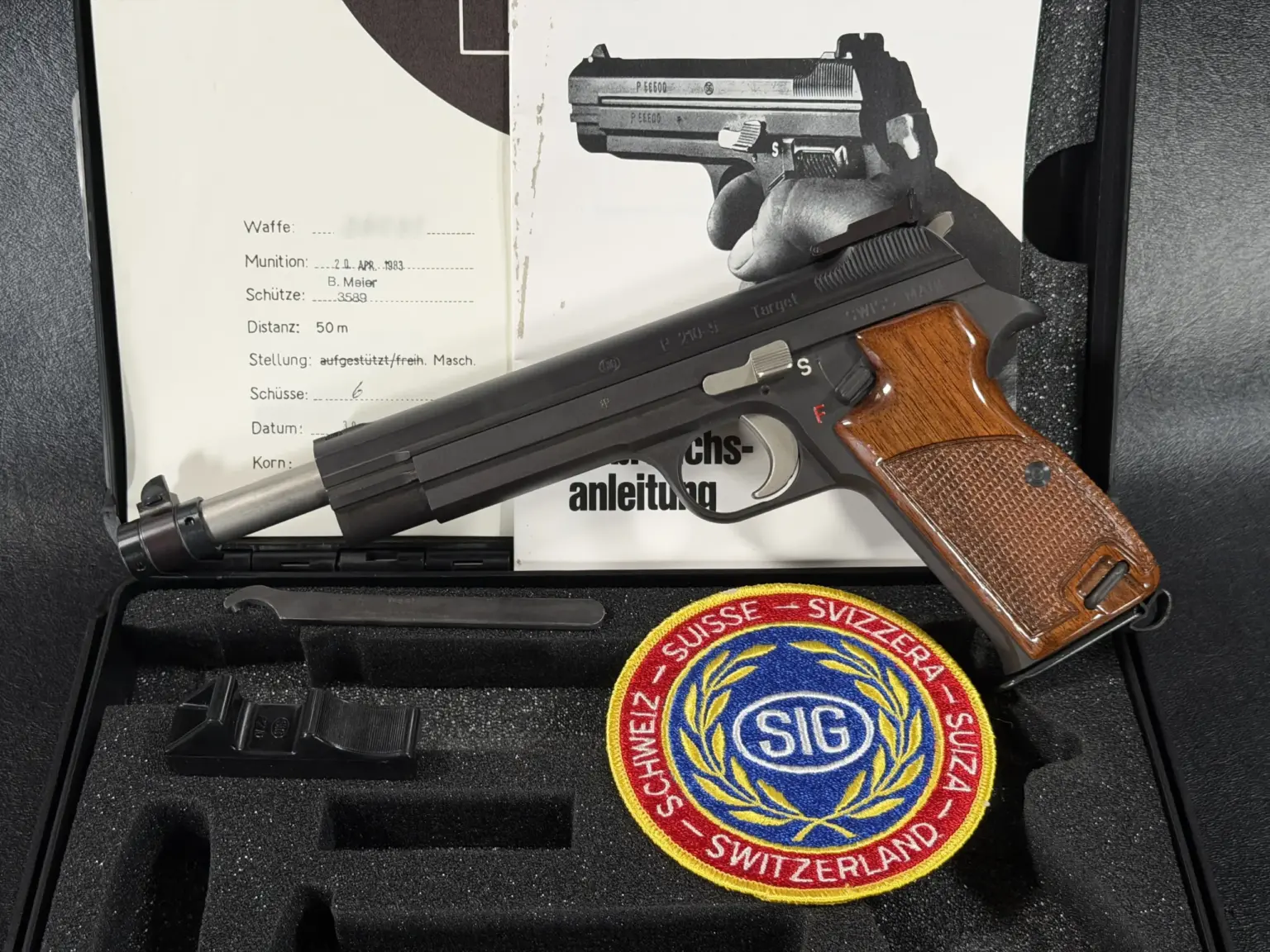
The first time you press a P210’s trigger, there is a small, telling pause in your brain. The front sight does not waver the way you expect from a service pistol. The slide glides like rails on glass. And then the shot breaks, crisp and consistent. A lot of pistols try to sell you on heritage. The P210 never had to. It earned its reputation one ten-ring at a time.
The story starts years before the official P210 name. In the late 1930s, Schweizerische Industrie Gesellschaft at Neuhausen am Rheinfall, better known to most of us as SIG, acquired rights to French designer Charles Petter’s Model 1935A. SIG reworked it to 9 mm Luger, refined the safety placement down onto the frame, and replaced Peter’s barrel linkage with a milled cutout integral to the barrel. Prototypes were ready by 1944, including both single-stack and double-stack versions. The Swiss evaluated them and, favoring practical accuracy and feel, chose the single-stack path.
Formal adoption was delayed by the end of the war, but enthusiasm did not fade. According to the Forgotten Weapons profile of the P210, Swiss target shooters and the Danish Army helped bring the design to life as the SP 47/8 in 1947. Two years later, the Swiss military officially accepted the pistol, and the name P210 stuck. That short two-year span, from a promising SP 47/8 to a formally standardized P210, shaped how shooters still experience the gun.
Mechanically, the P210 follows the Browning short-recoil system with a tilting barrel, but it does a few things differently from much of the field. The slide runs inside the frame, giving more bearing surface and a low, locked-in feel when it cycles. The trigger group is modular and easy to remove, a boon for maintenance and tuning. The magic, though, lives in the fitting. Parts were matched and mated with a level of care that made even standard service pistols behave like match guns.
Contracts tell you where a pistol really served. The Swiss military’s 1949 adoption is the headline. The Danish Army’s earlier interest helped get the ball rolling in 1947. For law enforcement, the P210-1 served as a standard, fixed-sight, blued pistol with wood grips for Swiss police.
The military side settles another question: caliber. As Forgotten Weapons notes, military contracts were in 9 mm Luger. Civilian buyers, however, could also find commercial P210S in .30 Luger, a nod to European tastes and target shooters of the era.
The variant list on a P210 can read like a collector’s shorthand, so here are the cues that matter most when you are staring at one across a counter or table.
Finish on classic P210s is typically a matte blue, not a phosphate. That detail alone can save you headaches when comparing refinishes or trying to place a gun among its peers. And while 9 mm dominates the contracts and much of the market, do not be surprised by commercial .30 Luger examples.
Plenty of pistols have tidy groups on paper. The P210’s legend is about how predictably it produces those groups across shooters and conditions. Several ingredients come together.
First, the slide-in-frame layout creates a tight, guided cycle. More bearing surface is not automatically better, but on a pistol fitted like a P210, it yields a consistent return to battery and a controlled feel under recoil. Second, the barrel lockup and integral camming cut bring repeatable barrel position shot to shot. Third, the modular fire control group lets SIG tune and armorers maintain a clean single-action trigger without reinventing the wheel each time.
There is also the human factor. During trials, the Swiss favored the single-stack version because it sat better in the hand and produced better results in real shooting. Ergonomics matter. A trigger that breaks where you expect and a frame that lets your hand do the same thing every time are not esoteric design notes. They are why a P210 keeps putting holes in the right place.
Fast forward. The P210 disappeared from regular Swiss production years ago, and for a while, shooters in the States looked at them like artifacts. Then SIG SAUER revived the model in the United States, starting with a purpose-built target variant and, more recently, a carry version.
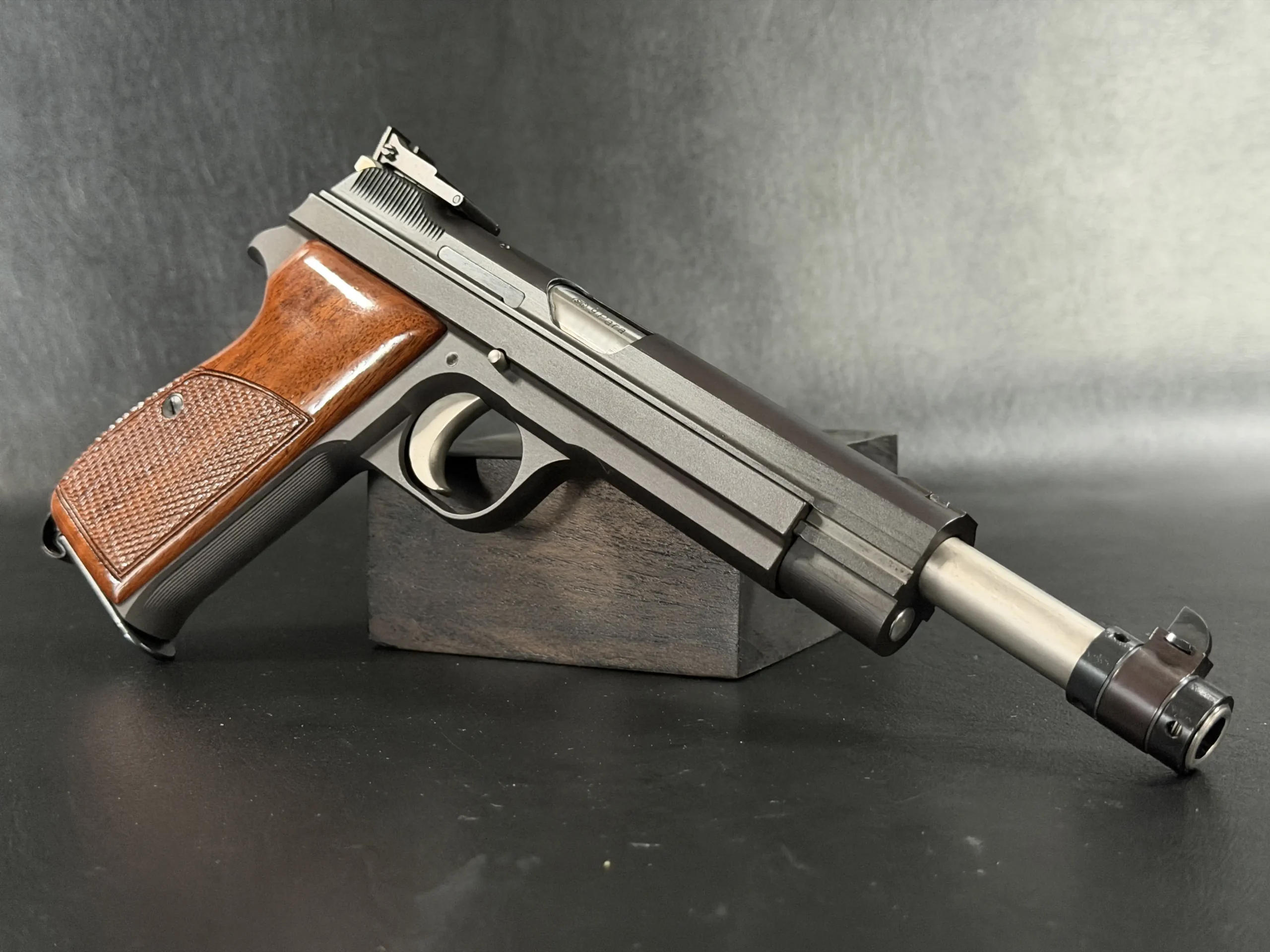
The SIG SAUER P210 Target keeps the spirit while trading hand-polished bluing for modern stainless steel and Nitron treatment. It is a full-size, single-stack, 9 mm with a 5-inch barrel, single-action-only operation, and a target-grade trigger. From the factory, you get an adjustable rear and a fiber optic front sight, two 8-round steel magazines, and handsome walnut target grips. The weight lands at 36.9 ounces, giving the pistol a planted feel many shooters appreciate for slow-fire or timed rapid strings. The slide and frame are stainless, the trigger is tuned for clean breaks, and the grips fill the hand without being bulky.
There is also a P210 Carry, which brings the same basic ergonomics in a smaller, lighter package. SIG’s own overview places the P210 Carry alongside the Target as part of the same family, aimed at different roles. If your focus is range work and traditional target stages, the Target is the straightforward pick. If you are curious about a trim, all-steel single-action for daily carry, the Carry is the one to handle first. Specifications vary, so check current factory details for dimensions and features if you are comparing them for concealed use.
One note from SIG worth highlighting: these current P210S include a manual safety. As always, safe handling habits matter. A safety is a mechanical device, not a substitute for attention or training.
On the bench, the modern P210 Target looks every bit a descendant of the Neuhausen original. On the line, it feels familiar but not identical. The stainless construction and Nitron finish bring a different slickness to cycling and a different hand texture compared to an older blued gun with service grips. The target trigger breaks cleanly with a short reset, rewarding patient trigger work. Balance is closer to neutral than you might expect in a steel single-stack, thanks to the slender slide and five-inch tube. SIG’s own description mentions that the pistol is meant to balance well in one or two hands, which matches what many shooters report after their first magazine.
Magazine changes have that satisfying, straight-up-and-in feel common to single-stacks. The sights track well, with the fiber optic front lifting from the notch in a repeatable arc. You can burn through drills with it, but the truth is this pistol invites a more deliberate pace. Slow is where you notice why the P210 name still carries weight.
Shopping for a P210 splits into two very different experiences. Vintage Swiss-made guns are pieces of history that also happen to shoot like a dream. The modern P210 Target and Carry are current-production pistols with warranties and readily available parts and magazines. The way you evaluate them is different.
If you appreciate SIG’s broader approach to building loyal followings around duty pistols and match-worthy triggers, you might also enjoy our piece on how SIG built so much loyalty around the P226. It sets a useful backdrop for understanding why the company brought the P210 back at all.
Collectors love neat serial charts, but P210 history rewards a careful eye more than a single table. Here are grounded pointers you can use without overreaching.
Could you pin a serial into a narrower window with factory documentation or dedicated collector references? Sometimes. Without that, the best practice is to let features and conditions drive your evaluation, keeping serial in a supporting role.
There is a reason the P210 keeps showing up on the line at Bullseye leagues and range days. It gives you something honest every time you press the trigger. If you want the Neuhausen-era experience, a well-cared-for Swiss example can still compete with your best groups. If you want the experience without the hunt, the U.S.-made P210 Target gives you stainless steel durability, precise machining, and factory support, while keeping the feel that made the original so highly regarded.
For duty use, history has already written that chapter. The Swiss carried it. Police carried it. For modern concealed carry, SIG’s smaller P210 Carry answers the call for those who prefer an all-steel, single-action pistol with classic lines. For most buyers, the decision is less about which one is objectively better and more about how you plan to shoot. If your heart leans toward slow-fire groups, that Target model will make you smile. If you want a piece of sidearm history that still rings steel with poise, an older P210 will never feel out of place at the range.
The market changes, and plenty of polymer pistols will do things the P210 was never asked to do. But when a pistol’s calling card is precision that you can feel, the P210 still has very few peers. The first shot tells you why. The tenth confirms it.
Available
View Item
Available
View Item
Available
View Item
Available
View Item
Available
View Item
Available
View ItemA practical, collector-minded look at Remington’s Model 8 and 81. Calibers, long recoil explained, police conversions, and what to check before you buy.
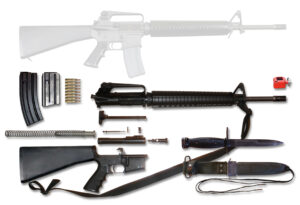
A collector’s look at Colt’s SP1 and early Sporters, from slickside uppers and pencil barrels to the rollmarks and small changes that hinted at the A2 era.
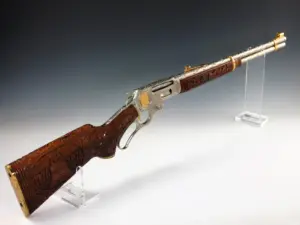
A practical, story-driven guide to reading JM vs REP barrel marks, understanding pre-safety 336s, Micro-Groove and Ballard-style rifling, and the smart checks to make before you buy.