
Remington Model 8 and 81: Browning’s Long Recoil Sporting Rifles
A practical, collector-minded look at Remington’s Model 8 and 81. Calibers, long recoil explained, police conversions, and what to check before you buy.

Call us any time at: (833) 486-6659
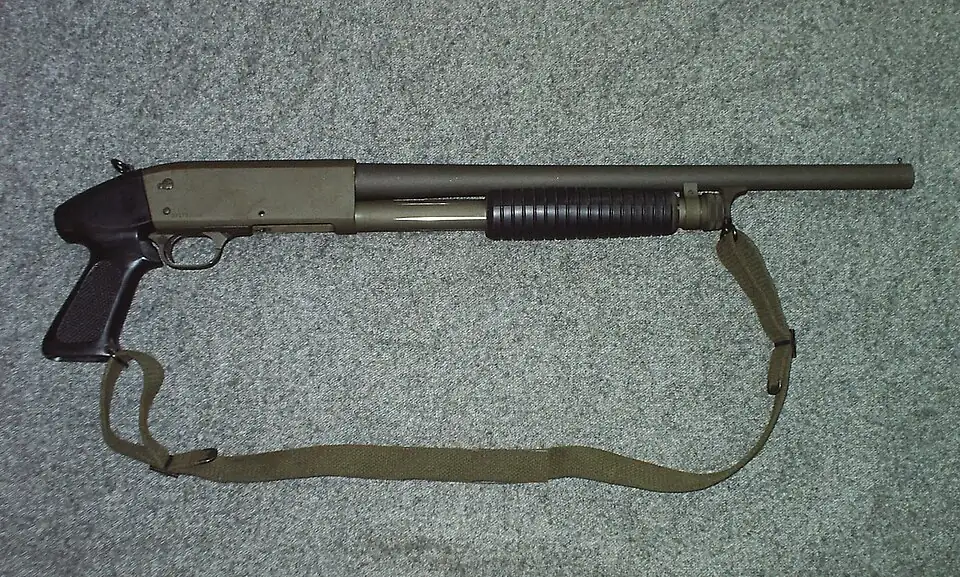
The first time you run a Model 37 hard in the field, you notice two things: empties land at your boots and the stroke is glassy if the gun is in tune. For many of us, it was the farm gun behind the mudroom door or a clean police trade. Either way, the Ithaca Model 37 is a pump that earns respect the honest way.
The Model 37 traces to a 1915 John Browning patent that became Remington’s Model 17. Ithaca’s 1937 launch refined that idea for durability and easy manufacture. More than two million have been built in the United States, which says plenty about the design’s staying power. A key mechanical detail separates it from most pumps: the bolt locks by tipping up into a recess in the stressed steel receiver rather than into a barrel extension. That smart lockup helps explain the 37’s trim weight without exotic materials and its long service life.
The Model 37 feeds and ejects from the bottom. That keeps the receiver sides closed to grit, drops empties clear of left-handed shooters, and in the rare case of a case head failure directs gas downward rather than across your face. In dirt, corn stubble, and blinds full of debris, the closed receiver earns its keep.
When it debuted, the Model 37 was billed as the Featherlight. In 12 gauge it still weighed a bit over seven and a half pounds, light for a steel-receiver pump of the era. Later, Ithaca built an aluminum-receiver Ultra Featherlight in 20-gauge at about 4.5 pounds. Today’s production Featherlight keeps the DNA and adds practical updates: a 28 inch vent rib barrel with a TruGlo front sight, three choke tubes, 3 inch chamber, 4+1 capacity, AA walnut, Pachmayr pad, and a crisp 4 to 6 lb trigger. Current catalog guns are listed at an MSRP of $2,799 and the full spec is posted on Ithaca’s Model 37 Featherlight product page.
As slug-only deer zones grew, Ithaca leaned into accuracy. The Deerslayer pairs rifle sights with a slug barrel for repeatable point of impact. The Deerslayer II goes further with a fixed, threaded-in barrel for tighter groups and consistency. Ithaca’s current catalog also includes the Deerslayer III for dedicated slug hunters. If you are paying a premium, confirm barrel markings and correct sights to separate factory Deerslayers from later barrel swaps.
Across its run the Model 37 has appeared in 12, 16, 20, and 28 gauge. You will encounter Skeet and Trap versions with longer ribs, English straight stocks, New Classic and Deluxe Vent Rib trims, Turkeyslayer and Waterfowler field models, and Youth offerings. Barrel length often telegraphs purpose, from 20 inch riot guns to 30 inch trap and duck guns. The 20 gauge Ultra Featherlight is the outlier that carries like a wand.
The Model 37 did more than ride the uplands. Ithaca built trench, riot, and training versions for the U.S. government and the gun saw service in World War II, Korea, and Vietnam. It was issued widely in American law enforcement, including the New York Police Department, Los Angeles Police Department, and Los Angeles County Sheriff’s Department, with countless smaller agencies following suit. Riot guns typically wore 20 inch barrels and plain beads. A compact Stakeout variant with a pistol grip and about a 13 inch barrel was built for undercover work and even turned up on television in the 1980s. Genuine factory Stakeouts are scarce and regulated; later short-barrel conversions require careful legal due diligence.
The steel receiver gives recoil a solid shove instead of a slap. The gun carries flat, cycles in a straight line, and mounts repeatably. Southpaws appreciate the bottom ejection, and right-handers do too when empties pile neatly at their feet. With a Deerslayer barrel and rifle sights, the same action settles behind the sights with confidence.
If a seller is asking a premium for police or military provenance, ask for documentation. A rack number or a story is a lead, not proof.
For a representative set, consider a clean Featherlight, a Deerslayer or Deerslayer II, a 16 gauge for charm, and a correct 20 inch riot configuration. Clones have been produced abroad, including Chinese and Argentine copies. They are curiosities but not the same as an Ithaca-built gun, so study receiver markings and overall finish before committing.
Ithaca still builds the Model 37 and supports it with parts and service. That makes refreshing a family gun or pairing a modern barrel with an older receiver straightforward. Start with the company’s site for current offerings and support info at ithacagun.com. For a well-sourced history and variant overview, see American Rifleman’s writeup on the Model 37 Featherlight: American Rifleman article.
Since 1937 the Model 37 has stayed true to what it is: a bottom-ejecting, steel-receiver pump that shrugs off grit and keeps running. Whether you want a new Featherlight with modern touches, a deer-ready Deerslayer, or a solid field gun with history, the platform makes the choice simple. Shoulder it, check the barrel and sights against your use, and buy with confidence.
Available
View Item
Available
View Item
Available
View Item
Available
View Item
Available
View Item
Available
View ItemA practical, collector-minded look at Remington’s Model 8 and 81. Calibers, long recoil explained, police conversions, and what to check before you buy.
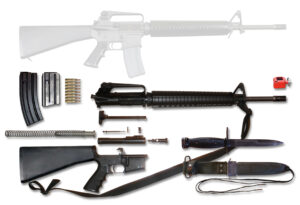
A collector’s look at Colt’s SP1 and early Sporters, from slickside uppers and pencil barrels to the rollmarks and small changes that hinted at the A2 era.
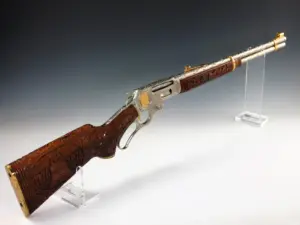
A practical, story-driven guide to reading JM vs REP barrel marks, understanding pre-safety 336s, Micro-Groove and Ballard-style rifling, and the smart checks to make before you buy.