

The first time you shoulder a Nylon 66, the surprise isn’t just the weight. It’s the way a rifle that looks like a Friday-night experiment from 1959 actually feels tight and sorted, as if it was born modern. Remington bet the farm on plastic before plastic felt respectable, and the Nylon 66 paid that bet back by the truckload.
For buyers and collectors, it’s also one of the few rimfires where color, trim, and little add-ons do more than change the vibe. They tell you exactly what you’re holding. If you’ve ever stood at a gun show table trying to remember the difference between an Apache Black and a Black Diamond, or wondered why one has a deflector and a little chain loop on the side, this guide is for you.
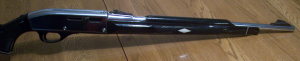
A plastic rifle that made wood nervous
When the Nylon 66 hit racks in 1959, it looked like a dare. Stocks weren’t walnut, they were DuPont’s structural nylon, with checkering and even diamond inlays molded right in. It wasn’t the first time anyone tried a synthetic stock on a sporting arm, but it was the first popular .22 semi-auto to make the material itself the headline. Reception could have gone sideways. Instead, shooters found a .22 that ran well, resisted the usual warping and swelling misery, and shrugged off rough handling that would make a good beech stock cry.
Remington didn’t get there by accident. The company leaned on its ties to DuPont and the developing family of Nylon 66 plastics, landing on a compound known as Zytel Nylon 101 for the stock-and-receiver shell. That name link is part of the lore. The rifle you know as the Nylon 66 used a member of the Nylon 66 family of resins for its core structure, and Remington doubled down by making the look part of the pitch. Mohawk Brown stocks wore a grainy, wood-like swirl. Checkering was molded in. So were decorative diamond inlays and spacers in an ivory tone that popped against the brown or black base. Stocks were also offered in Seneca Green and, later, Apache Black, which didn’t so much nod at walnut as kick the door shut on it.
How did the market take it? Well enough that a field rep named Tom Frye spent two weeks in October 1959 turning a media stunt into a milestone, breaking a shooting record with a Nylon 66 and giving Remington a story that still follows the rifle. The bigger story, though, is the way this gun ushered in the idea that a sporting rifle could be something other than steel and lumber without feeling cheap or disposable.
What Zytel meant, and why Remington gambled on it
Remington’s leadership had a simple problem in the 1950s: they needed a mid-priced semi-auto .22 that didn’t cost mid-priced money to build. Barrels wouldn’t give up savings. Receivers and stocks might. With DuPont’s Zytel on the table, engineers pushed the idea further than a simple stock swap. The Nylon 66’s receiver shell and stock were one structural unit molded from nylon, then capped by a steel receiver cover that handled the sights and protected the moving parts. The combination cut production cost and weight without gutting durability.
One practical upside was performance in cold, damp places. Nylon doesn’t swell or shrink like unfinished wood, and the design could run with very little in the way of added lubricants. That mattered to folks who used their .22s as truck guns or ice-fishing companions. It also mattered to anybody who had ever watched a varnish-soft, oil-soaked .22 become an unreliable rattletrap by midsummer.
If you like tracing Remington’s semi-auto lineage, the company’s earlier self-loaders were very traditional machines with very traditional furniture. For a look at that lineage from the classic era, see our collector’s field guide to the Remington Model 8 and 81.
Feeding system: the tubular way
One of the defining functional choices on the Nylon 66 is its tubular magazine. That decision put it in a different camp than detachable box-magazine .22s, and it gave Remington room to play with capacities for different loads. The Gallery Special version, for instance, was built around .22 Short and carried twenty of them in the tube. Later, Remington spun off the Nylon 77, which borrowed heavily from the Nylon 66 pattern but used a five-round clip rather than a tube. For buyers, that’s the quick sanity check: if it’s a detachable-magazine rimfire in this family, it’s not a Nylon 66.
Tube magazines are simple, they keep the rifle’s lines clean, and they protect the ammunition from getting lost in a jacket pocket. For many of us, they also just feel right on a plinker meant to spend its life walking fence lines and cracking cans.
Sights, scope grooves, and factory glass
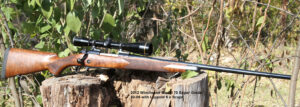
Standard Nylon 66 rifles wore leaf sights and a grooved receiver so you could clamp on a scope without a gunsmith. That grooved receiver is handy today, because a lot of these rifles grew up during the 4X rimfire glass era and saw scopes come and go. Remington even packaged some of them that way from the factory.
Two factory scope tie-ins matter to collectors:
- Nylon 66 MB Mohawk Brown models were offered with a Universal MUA 4X scope and mount from 1975 through 1983. Published figures put that scoped package at 30,113 sold.
- Nylon 66 BD Black Diamond rifles were marketed with a 4X scope option from 1978 to 1983.
Scopes can be switched, and mounts get lost, so don’t treat glass as proof of anything by itself. But boxes, paperwork, and mounts that match the period do sweeten the story of a particular rifle.
Colors, inlays, and how to read a Nylon 66 at a glance
The Nylon 66 didn’t just wear colors. It wore names. That was marketing, yes, but it also became a quick reference guide for collectors.
Here are the big three stock shades offered across the line:
- Mohawk Brown – the classic look, with a brown, wood-like swirl pattern and ivory-toned diamond inlays and spacers. Think of it as the default, because it was by far the most common and ran for almost the entire life of the model.
- Seneca Green – a striking green stock used early on. It shares the same basic features as the Mohawk Brown models from that period.
- Apache Black – black nylon stock paired with bright metal on certain versions, and often the most visually dramatic in the room.
Those ivory-colored diamond inlays that pop on the pistol grip and forend are molded details, not add-ons. The checkering is molded too. When you see a black rifle without bright trim and without contrasting inlays, you may be looking at a later Black Diamond variant, which swaps ivory accents for black-on-black diamonds.
The variants you’ll actually encounter
Remington built out a healthy family around the base rifle. The dates and features below come from period catalogs and published tallies. Different sources sometimes round numbers differently, but this will steer you right across a gun show aisle.
Nylon 66 MB Mohawk Brown – 1959 to 1987. Brown stock with blued barrel and receiver plates. This is the backbone of the line, and the one most people learned on. Published sales tally: 678,473. Offered with a Universal MUA 4X scope package from 1975 to 1983, with 30,113 of those scoped sets sold.
Nylon 66 SG Seneca Green – 1959 to 1962. Same pattern as the Mohawk Brown rifles but with a green stock. Production was short, which helps explain interest today. Published tally: 44,979 sold.
Nylon 66 AB Apache Black – 1962 to 1983. Black stock paired with chrome-plated barrel and receiver cover. Bright, bold, and easy to spot from across a room. Published tally: 220,564.
Nylon 66 BD Black Diamond – 1978 to 1987. Black stock with black diamond inlays rather than the earlier ivory contrast. These were also offered with a 4X scope option from 1978 to 1983. Production figures vary by source, but this is a later, visually distinct version that appeals to folks who like a monochrome look.
Nylon 66 GS Gallery Special – 1961 to 1981. Built for .22 Short only with a twenty-shot magazine, a spent shell deflector on the right side of the receiver, and a small chain retainer for shooting-gallery counters. Most were Mohawk Brown with blued metal. This is the one where little parts matter, because the deflector and the chain retainer are easy to spot and are part of what makes it a Gallery rifle. Published counts place this variant at 16,474 made, mostly in brown.
Nylon 77 – Not a Nylon 66 variant, but the sibling you will see in the same racks. It borrows the workhorse Mohawk Brown look but feeds from a detachable five-round clip rather than a tubular magazine. If a seller has it tagged as a Nylon 66, look twice.
Remington introduced the family in 1959 and kept at it through the 1980s, with different sources placing the wind-down at slightly different dates for the standard rifle and individual submodels. It’s fair to say the Mohawk Brown and Black Diamond ran to 1987, Apache Black into 1983, and the Gallery guns into 1981, while published histories generally bracket the overall Nylon 66 era from 1959 through the late 1980s.
If you want a solid, narrative overview of the timeline and how Remington named and trimmed these guns, the period capsule on the Nylon 66 at Shooting Times lines up well with what turns up in the wild. For a focused look at the Zytel material, colors, and the Gallery Special’s unique purpose-built gear, the American Rifleman writeup, Throwback Thursday: The Remington Nylon 66, is a helpful snapshot.
Production eras and when things changed
Thinking in terms of eras helps when you’re trying to place a rifle without pulling out your phone:
- Launch years, 1959 to early 1960s – Mohawk Brown is everywhere. Seneca Green appears, then exits by 1962. Leaf sights and grooved receivers are standard. The rifle is still a shock to traditionalists, but shooter interest is building.
- Mid-run diversification, 1961 to mid 1970s – The Gallery Special appears in 1961. Apache Black joins in 1962 with its bright metalwork. These are the years when the Nylon 66 becomes a fixture in hardware stores and farm trucks.
- Late-run trims and packages, late 1970s to 1980s – The Black Diamond lands in 1978. Remington offers factory 4X scope packages on select trims. By the mid to late 1980s, the standard colors and trims begin to wind down, with most Nylon 66 production ending by the late 1980s.
When in doubt on dates, let the combination of color, trim, and features lead you. Black Diamond styling can’t predate 1978. Seneca Green won’t show up after the early 1960s. The Gallery gun’s .22 Short chamber and right-side deflector are the giveaways there.
Markings and tells: spotting originals vs. mixed parts
Because the Nylon 66 uses a molded stock and receiver shell with a separate steel cover, parts-swapping can happen over a 60-year lifespan. Some practical tells help you keep originals and marriages straight:
- Receiver cover finish – Apache Black rifles were built to show off their bright, chrome-plated cover and barrel. If the cover looks brushed or bead-blasted or is a dull blue on an otherwise Apache Black rifle, ask questions.
- Diamond inlays – The early look paired ivory-toned diamonds with Mohawk Brown or Apache Black. The Black Diamond variant switches to black-on-black inlays. Painted or glued accents are a red flag.
- Gallery hardware – A real Gallery Special has a right-side shell deflector and a small chain retainer point. Those are tough to fake cleanly and easy to overlook. If they’re missing, you’re not looking at a complete GS, even if it wears a short-only barrel.
- Scope grooves and mounts – All standard Nylon 66 rifles have the grooved receiver for rings. A period 4X scope and mount can be a nice touch but isn’t proof of a factory package by itself.
As for rollmarks, the nylon shell is where the eye goes, but the rifle’s personality is as much about its cover, sights, and trim. When a gun looks like a greatest-hits album of several versions, assume it is exactly that and price accordingly.
Buyer and collector tips that save headaches
There’s a reason these rifles turn up in rough ranch racks and in velvet-lined display cases. They’re easy to like. If you’re thinking about buying one, a few simple habits make life easier.
- Start with purpose – Do you want a shooter you don’t have to baby, or a color-trim variant to round out a rimfire row? Mohawk Browns are the easiest path to a reliable range buddy. Seneca Greens and true Gallery Specials pull in collectors who like rarer trim. Apache Blacks and Black Diamonds hit the middle: visually strong, with good availability.
- Let color guide expectations – Published counts suggest roughly 678,473 Mohawk Browns, 220,564 Apache Blacks, 44,979 Seneca Greens, and about 16,474 Gallery guns. Availability in your area will reflect those ratios more than Internet folklore. Greens and Gallery guns garner extra attention because there were fewer to begin with.
- Check the small stuff on Gallery guns – A short-only barrel without the deflector and chain retainer doesn’t tell the whole story. The charm of a GS is in the purpose-built bits. If they’re not present, treat it as a parts gun or a conversion and price it like a standard shooter.
- Condition over cleverness – Molded nylon ages well, but bright metal can show its years. Chrome covers should look like chrome. Blued covers shouldn’t look like they met sandpaper. The molded checkering should be crisp. Dings and gouges happen, but repairs and paint touch-ups stand out.
- Mind the magazine system – The Nylon 66 is a tubular-magazine design. If you’re after a detachable magazine model from the same family tree, you want the Nylon 77. Don’t pay Nylon 66 money for a 77 because a tag was sloppy, and vice versa.
- Scope mounts and period glass are a bonus, not gospel – A clean 4X of the right era on a Mohawk Brown or Black Diamond is a nice nod to how many of these were actually used. But treat mounts and scopes like you would on any 60s or 70s rimfire: replaceable trim that sweetens the deal without proving anything by itself.
- Ask before tinkering – The Nylon 66 has a different internal layout than wood-stocked .22s with steel receivers. If you haven’t had one apart, ask a gunsmith for help before chasing a gritty trigger or a sluggish return spring. It’ll save you parts and patience.
Why the Nylon 66 still matters
The Nylon 66 sits at a neat crossroads. It was a commercial gamble that changed how we think about sporting rifles, and it doubled as a real tool that earned its place in barns, cabins, and clubhouses. For collectors, the draw is twofold: legitimate historical interest and a fun matrix of colors and trims that you can actually learn to read across a table.
If your heart leans toward history, the fact that Remington brought DuPont’s Zytel from the lab into American rimfire life is the hook. Stocks in Mohawk Brown, Seneca Green, and Apache Black show how bold that decision was in plain sight. If your heart leans toward utility, the Nylon 66’s tubular magazine, simple leaf sights, and grooved receiver still make for one of the easiest-to-live-with rimfires around.
And if you’re the kind of buyer who likes a story more than a spreadsheet, that’s fine too. Start with a clean Mohawk Brown and let the rifle win you over. Then keep your eyes open. One day you’ll spot a green stock under a row of duck guns, or a chrome cover glinting three tables over, and you’ll start matching features to names in your head. That’s how collectors are made.
Just remember the two rules that have saved me money and grief for years. First, buy the rifle, not the tale that comes with it. Second, let the features tell you what you need to know. On the Nylon 66, the features are the tale.