
Remington Model 8 and 81: Browning’s Long Recoil Sporting Rifles
A practical, collector-minded look at Remington’s Model 8 and 81. Calibers, long recoil explained, police conversions, and what to check before you buy.

Call us any time at: (833) 486-6659
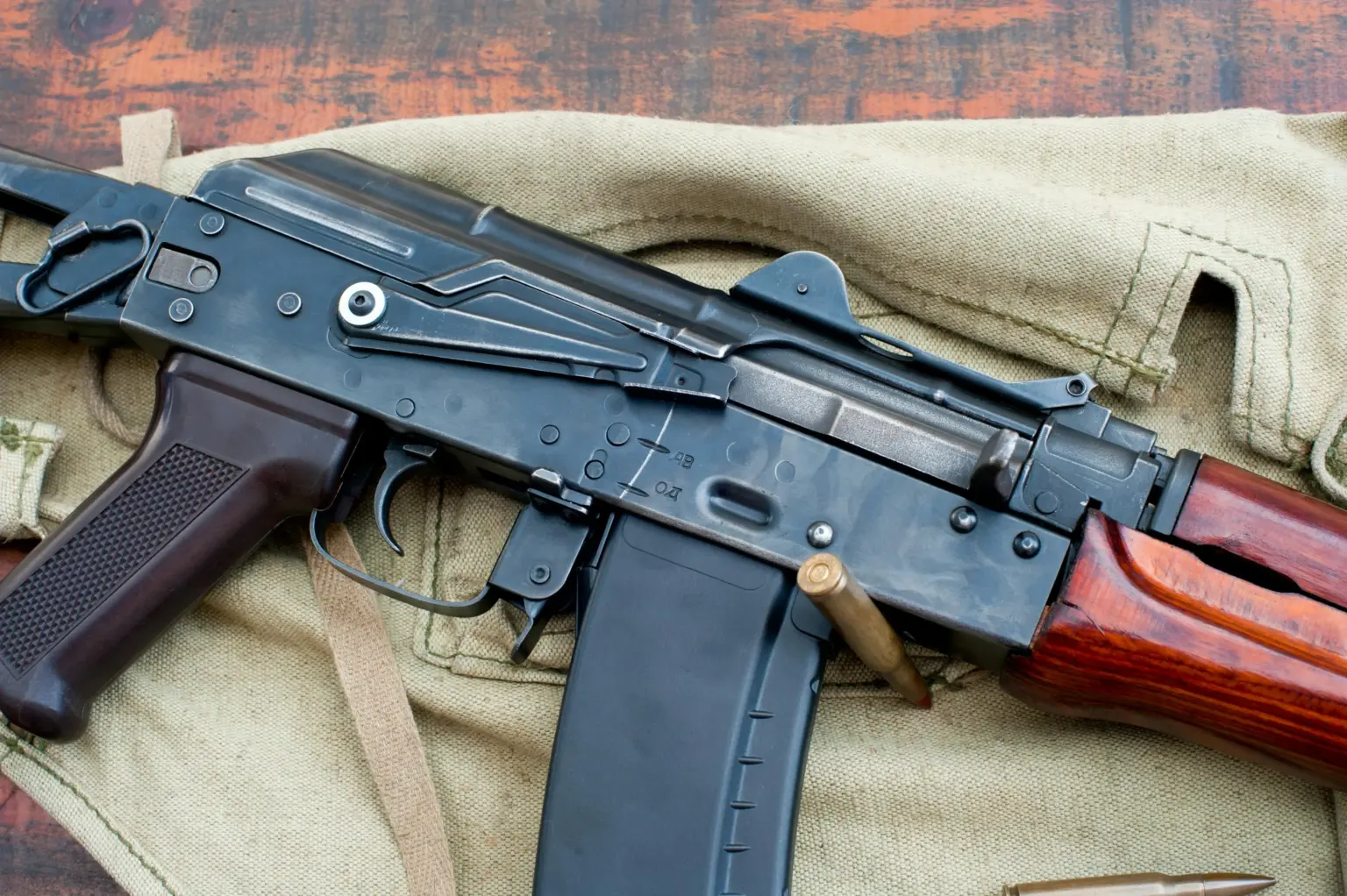
I had three Kalashnikovs on a table one afternoon, each one whispering a different piece of the same story. A milled Type 3 that felt like it was carved from a single bar of history. An AKM with its pressed receiver and ribbed cover, light on the shoulder and light on the budget of the factory that made it. And a black polymer AK-74M that looked like it had finally stepped into modern service. If you set them side by side, the shape barely changes, but the choices behind those shapes tell you everything about how countries build rifles, train soldiers, and pay for both.
AK stands for Avtomat Kalashnikova, Kalashnikov’s automatic rifle. The number is the year that model was finalized, which is why the original took the 47 suffix, the modernized 7.62 version became the AKM in 1959, and the 5.45 rifle adopted in 1974 is the AK-74. That simple convention clears up a lot of confusion, especially in places where every curved-mag rifle with a gas tube gets called an AK-47. The platform’s broad popularity made the name shorthand, but the details matter if you’re buying or collecting.
If you want a quick refresher on the naming and the early production sequence, a clear walkthrough of AK designations and why the early rifles shifted back and forth on receiver types can be found in a plain-language overview of what AK stands for and how the family grew. The short version: the name is straightforward, the family tree is not.
The first production AKs came in three phases between 1948 and 1959. Type 1 used a stamped receiver but ran into manufacturing headaches with the way guide rails were welded. Rejection rates were high, and the Soviets did what good factory managers always do when deadlines loom: they switched to a process they trusted. Type 2 and Type 3 used a milled receiver. Those milled guns were robust, weighed in at about nine and a half pounds empty, and set the mental image many of us still carry when we hear the word “Kalashnikov.”
What you’re looking at with those early rifles is an industrial compromise. Stamping was the dream because it is faster and needs less machining. Milling was the reality because it brought fewer production failures at the time. The AK was always meant to be a soldier’s rifle and a factory worker’s friend, but the factory had to catch up first.
When people say AK-47 today, they usually mean AKM. The AKM is where the design’s philosophy finally lined up with its manufacturing. Stamped steel construction made the rifle cheaper and quicker to produce across Soviet factories, while also shaving weight over a milled Type 3. Barrel length and overall length stayed familiar, but the gun felt more agile in the hands. More important than the ounces saved was the consistency that stamping brought to mass production. It set the pattern for the millions of rifles that followed, both in Soviet service and across the many countries that built their own.
If you like peeking behind the curtain, there’s a practical reason why the AKM is the face most of us see: stamped receivers can be produced with simpler pressing equipment and minimal machining. That encourages standardization, and it meant the Soviets could arm a lot of conscripts quickly and train them on a rifle that can be broken down into major parts in about half a minute with no tools.
Milled receivers start as a solid block and get shaped by machine tools. You pay for machined time and leave chips on the shop floor. The result has a certain heft and old-world charm, and many collectors love it for that feel alone. Stamped receivers start as sheet steel, pressed and riveted into shape. You pay for dies and presses, but cycle times drop and consistency rises once the tooling is dialed in.
Neither approach is sacred. The Soviets went milled when stamping gave them grief, then moved back to stamping as their factories matured. Decades later, you can argue the romance of milled all you want, but the stamped AKM is the one that showed up in photos from almost every conflict you can name. The rifle’s global story is inseparable from the way it was built.
In 1974, the Soviet Union shifted to a smaller 5.45×39 cartridge and fielded the AK-74. The change fit broader trends in service rifle thinking at the time: lighter ammunition, controllable bursts, and more rounds carried for the same weight. Production of the new rifle and its cartridge started to move through Eastern Europe, but the collapse of the Soviet Union slowed that spread and left plenty of factories straddling two calibers.
When Russia modernized the line in 1991, the AK-74M arrived. It is often the gun you picture when you think of a black-stocked Kalashnikov on a sling. The updates were practical: a lighter bolt and gas piston to soften the rifle’s manners, polymer furniture, a side-folding stock, and simplified production. It kept what worked and trimmed what didn’t, which is how successful service rifles stay in uniform for a long time.
For buyers, the AK-74 story has a market footnote. In the United States, the 5.45 segment has always been comparatively small. Imports were fewer, and many shooters stuck with the familiar 7.62×39. That affected what turned up on shelves and in safes, and it still colors what parts and magazines you actually find without hunting.
By the mid-1990s, Kalashnikov’s design DNA fed into the AK-100 series. These rifles borrowed cues from the AK-74M and were built for Russian service and export, giving many countries a modernized Kalashnikov without needing to design one from scratch. If you ever handle a 7.62×39 rifle that looks like a black-stocked 74M but feeds the older cartridge, you are probably looking at a member of that extended family.
Russia’s current standard service rifle chapter carries the AK-12 name, with the 7.62×39 sibling known as the AK-15. On the support side, the RPK-16 light machine gun introduced a modular approach with replaceable barrels. The company behind the name has also stretched the platform in other directions, like the Saiga smoothbore shotguns, which share the basic operating ideas with a very different mission.
Even if you never plan to buy a Russian-built example, it helps to understand this trajectory. The lineage explains why certain modern rifles keep the familiar long-stroke piston and rotating bolt while trying out new stocks, furniture, or rails. The core stays simple because simple is reliable, and changes happen at the edges where users actually feel them.
You can hand two AKs to a new shooter and they’ll say they feel the same. Hand them to a collector, and they’ll count the ways they don’t. The base design varies little, but the devil shows up in springs, trigger parts, and production details. The Soviet AKM, for example, introduced a rate-reducing retarder that helped tighten up burst fire. Many Chinese Type 56 rifles use an AK-style fire control group without that AKM retarder, so their behavior under full-auto differs from the Soviet pattern. That is the kind of detail that never shows on a spec sheet, but it changes how the gun runs.
There is also the big question of licensing. When a factory has a license, it also has the original technical documentation for processes and materials. That typically helps with quality and long service life. Unlicensed builds can be excellent or disappointing because materials and processes are often locally chosen. If you are shopping in a market where country-of-origin AKs show up, read closely on how and where a specific rifle was made. For a helpful overview, see a practical look at the differences between country-made AKs and licensed production.
Israel took the base AK idea and reworked it into the Galil family, and later the Galil ACE, which are some of the most extensive reinterpretations of the platform. Romania and Serbia stretched the concept in another direction by chambering it in 7.62×54R to create a bridge between a battle rifle and a designated marksman role, combining elements of the AK with the cartridge of the SVD. Finland, China, and Ukraine experimented with bullpup layouts, trying to keep the guts while changing the form factor. Those bullpup attempts never took over the category, but they show how adaptable the basic action can be.
Within Europe, Poland and Romania built rifles that many American buyers know well. They are not one-to-one Russian copies, but they often make solid bases if you are looking for a European pattern. Poland’s 5.45 lineage includes the well-known Tantal, while Romania’s long line of 7.62 rifles filled racks on this side of the Atlantic for years. In the Balkans, Zastava’s path ran from early milled-receiver M70s to later stamped versions like the M70B1 and M70AB2, reflecting the same broad move that the Soviets made from machined to pressed receivers decades earlier.
If you want a single-page tour of who built what and how those patterns split by region, a compact guide to AK variants and regional differences helps connect model names to factories and countries without getting lost in the weeds.
The Kalashnikov’s big trick is not accuracy contests or flashy design. It is the way it keeps soldiers and shooters moving. The long-stroke piston and rotating bolt work in filthy conditions. The rifle breaks down without tools and goes back together in seconds. That simplicity is not an accident. Every part was shaped with the factory in mind as much as the foxhole. When the AKM brought stamping back, it cemented a pattern of production that let the platform spread everywhere from arsenals to cottage industries. That global diffusion is why a rifle designed in the late 1940s still shows up in service photos today.
Most of the factory-level changes show up in how a rifle feels and how it was put together. Here are a few practical signposts you can use when you are standing at a counter or a gun show table:
None of these are guarantees, but they are reliable starting points. If you collect, you already know the small parts make the story. If you are buying your first Kalashnikov-pattern rifle, these tells help you ask better questions.
The AKM became the de facto face of the Kalashnikov for a simple reason: stamped steel democratized the platform. Factories could hit quotas, rifles got lighter, and the design was rugged enough that countries could adopt it without babying the guns. When you see rows of rifles on training grounds around the world, they are often AKMs or direct descendants. In the civilian market, especially in North America, AKM-pattern rifles in 7.62×39 remain the default choice for most buyers because they work and because the ammunition and magazines have never been hard to find.
Caliber choices in the AK family mirror the periods they came from. The 7.62×39 cartridge pairs a modest case with a bullet weight that feels familiar if you grew up on mid-century carbines. It hits with authority inside the distances most people can actually shoot. The later 5.45×39 trades bullet weight for speed and flatter handling in automatic fire. That made sense for doctrine and logistics in the 1970s, and many who train hard with the 74 platform appreciate its softer recoil and consistent manners.
On the American commercial side, availability matters. 7.62×39 is common, and that shows in the rifles that sell quickly. The 5.45 rifles have a dedicated following, but the market has always been smaller here, which is worth remembering when you think about long-term parts and magazine sourcing.
Look across the world and you see the same action dressed up a dozen different ways. Some countries built as close to Soviet patterns as possible. Others tweaked the small stuff to suit local doctrine or factory habits. Still others took the idea and made it their own, like Israel’s Galil line or the Balkan-heavy Zastava path from milled to stamped. There have even been bullpup experiments in Finland, China, and Ukraine that show how far designers can push a receiver and gas system while keeping the action intact.
That varied family is why you might find an AK-74 copy with a folding stock next to a no-frills 7.62 stamped rifle at the same show. The through line is the operating system and the way the rifle goes together, not the color of the furniture or a particular muzzle device.
For all the changes, the Kalashnikov is still a long-stroke piston rifle with a rotating bolt, a gas tube over the barrel, and field-stripping you can do with cold hands. The latest Russian models still aim for the same qualities that won the rifle its place in line: durability, simplicity, and speed in both production and use. Newer models add user-facing touches and material changes, but the core measurements of success remain practical. Can a factory make a lot of them. Can a soldier clean one easily. Can an armorer keep them running for years.
Here is a boiled-down sequence that puts the big transitions in order without getting lost in model codes:
Handle a milled Type 3 and then an AKM back to back and your shoulder will tell the story before your eyes do. The milled gun feels like a single piece of steel. The AKM is trimmer, and the balance shifts a little closer to the center of the gun. Pick up a 74M-style rifle and you notice the polymer furniture and the side-folding stock that tucks the package down for transport. Run the charging handle a few times and you might feel differences in carrier mass if you move between 7.62 and later 5.45 models. These are small cues, but they add up to why the rifles were built the way they were.
If you are hunting for a specific pattern or a rifle from a certain factory, pay attention to who stamped the trunnion and who stamped the paperwork. Licensed production brings original documents for materials and processes, which tends to keep quality consistent. Unlicensed factories can do excellent work, but they are also free to substitute materials or tweak processes to suit local economics. If you want a reliable shooter, there are good examples in both camps. If you want a historically faithful rifle, those licensing lines help narrow the search.
I have a soft spot for the milled guns. They feel like someone’s grandfather worked late to finish them and left a bit of pride in the metal. But when I’m honest about which rifle represents the Kalashnikov best, it is the AKM, because it married the design philosophy to the factory floor. The AK-74 shows how doctrine pulls a rifle forward, and the AK-74M shows how simple updates keep a platform relevant without throwing out what works. The AK-12 and its siblings carry that pattern into the present.
Line them up on a table and the silhouettes match. Look closer and you see a history of production choices, training needs, and national habits baked into steel and polymer. That is why the AK family keeps the attention of buyers and collectors: it is one rifle that tells a lot of stories, and it still has a few chapters left.
Available
View Item
Available
View Item
Available
View Item
Available
View Item
Available
View Item
Available
View ItemA practical, collector-minded look at Remington’s Model 8 and 81. Calibers, long recoil explained, police conversions, and what to check before you buy.
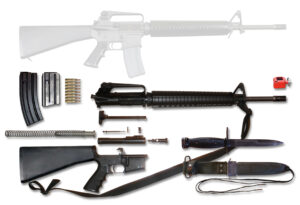
A collector’s look at Colt’s SP1 and early Sporters, from slickside uppers and pencil barrels to the rollmarks and small changes that hinted at the A2 era.
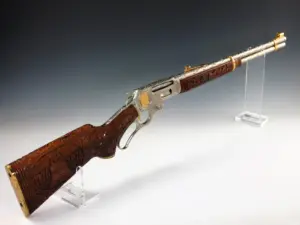
A practical, story-driven guide to reading JM vs REP barrel marks, understanding pre-safety 336s, Micro-Groove and Ballard-style rifling, and the smart checks to make before you buy.