
Remington Model 8 and 81: Browning’s Long Recoil Sporting Rifles
A practical, collector-minded look at Remington’s Model 8 and 81. Calibers, long recoil explained, police conversions, and what to check before you buy.

Call us any time at: (833) 486-6659

Some rifles arrive with ceremony. Others slip into your life so quietly that one day you realize they’ve taught you most of what you know. The Ruger 10/22 sits in that second camp. A friend’s farm, a tin of .22s, a fence post for a rest, and a small mountain of empty boxes later, and you get it. This little autoloader is less a single model and more a platform you grow with.
There are bigger, faster, louder rifles. Yet for more than half a century, the 10/22 has been a first rifle, a training tool, a pest-control partner, and a quiet Saturday afternoon ritual. It fires the same humble .22 Long Rifle cartridge folks used to learn on two generations ago, and it still finds new ways to be useful. From the 1964 carbine to today’s takedowns and heavy-barrel target trims, the design stayed true while stretching into many roles.
Ruger introduced the 10/22 in 1964 as a handy, semi-automatic carbine chambered in .22 LR. The idea was simple: give shooters a reliable, easy-handling rimfire that felt like a real rifle, not a toy. The original carbine kept the lines trim, the length manageable, and the parts count friendly to production and maintenance.
Two core traits arrived on day one and never left. First, a simple blowback action that runs on the mild recoil of the .22 LR. Second, the now-famous detachable 10-round rotary magazine. Instead of stacking cartridges nose-up in a straight line, Ruger routed them around a spool. That unique rotor separates cartridges and helps feed them smoothly, and the little magazine sits flush to the stock, so the rifle carries well in the hand. Ruger still highlights those qualities in its current lineup for good reason.
If you want the company’s quick snapshot of where the family stands now, the Ruger 10/22 overview page is the best official three-minute tour.
Strip away the paint, and the model names, and every 10/22 follows the same script. A lightweight receiver houses the bolt, guide rod, and spring. The charging handle pulls the bolt back to start things off. A crossbolt safety blocks the trigger. The barrel pins into the receiver using a V-block system that has proven both stout and easy to swap. On top is room for sights or an optic rail, depending on how the rifle left the factory.
That core is why the 10/22 spans so many roles without losing itself. Change the barrel profile, and you can go from a walkabout 5-pounder to a stable bench gun. Change the stock, and you can make it youth-friendly or competition-stiff. Keep the simple controls and the low recoil, and it remains one of the easiest ways to get new shooters going. The heartbeat is the same, and that’s the point.
Talk to a few 10/22 owners, and you will hear phrases like early carbine, later production, and older metal parts versus newer polymer. Over the decades, Ruger adjusted materials and small parts. Sights evolved on some trims. The magazine release many of us remember as a little lever on the front of the trigger guard became a larger, easier-to-use piece on many current models. Stocks moved through hardwood and synthetic, with patterns ranging from classic carbine to sporter-style, with a cleaner fore-end.
The big picture is steadiness with pragmatic updates. The footprint of the action, the way the magazine fits and feeds, and the rhythm of the manual of arms all stayed familiar. That means a carbine bought in the 1970s can still sit on the bench with a brand-new Target or Takedown model, and you would not need to relearn anything.
Ruger builds far more than a single 10/22 these days. Instead, the family splits into trims aimed at distinct uses. The current catalog breaks them into clean buckets like Standard, Competition, and more, and it even includes a scoped package for folks who prefer to buy one box that is ready to head to the range. Ruger also lists limited and commemorative runs at times. The current models page lays out what is shipping now.
Here is how those buckets feel from behind the stock:
You will also see threaded muzzles on several modern 10/22 trims. That is handy for training muzzle devices or, where legal, attaching a rimfire suppressor. Ruger’s catalog shows dedicated rimfire suppressors alongside the rifles, a sign of how common that pairing has become.
The Takedown models are a simple idea done well. Press a lever, twist, and the barrel and forend separate from the receiver and stock. The compact halves ride in a small case that fits into a backpack or behind a truck seat. Reassembly is quick and repeatable with a positive lockup. For hikers, folks with limited storage space, or anyone who wants a tidy training rifle that is easy to bring along, it is a welcome branch of the family tree.
There are practical perks beyond portability. Cleaning is easier when you can work from each end of the bore without snaking around the receiver. Swapping among different barrels and forends is also straightforward within the Takedown system. If your uses range from trail walks to a quiet plinking session in camp, the Takedown covers that ground without fuss.
Accuracy-focused 10/22s shift the balance from featherweight handling to steadiness. Heavier barrels resist heat growth, reduce whip, and tend to settle nicely on a bag. Stocks on these models give you a more repeatable cheek weld and a grip angle that feels right when you are behind glass for a while. Triggers on some factory target trims are crisper than those on plain carbine units, and the receivers come ready for optics.
If your idea of a good Sunday morning is a coffee, a bench, and a stack of rimfire targets, these factory variants save you the hassle of sourcing every part one by one. They also show off the 10/22 design’s headroom. It can play the slow-fire game when asked, not just ring steel fast.
Part of the 10/22’s charm is how easy it is to make one your own. Over the years, an enormous ecosystem of parts grew up around the platform. That world is not just for tinkering. It is also a set of tools that let you fit the rifle to a specific job or shooter. If you are new, here are the common places owners tweak:
Two notes of caution help keep projects smooth. First, be clear about which pattern you own. Standard and Takedown barrels and stocks are not interchangeable. Second, pick parts with a goal. Changing everything at once can make it hard to see what helped. The platform rewards patience.
If you are curious about why rimfires still matter to so many shooters, even in a world full of centerfire choices, you might enjoy our take on why.22 rifles keep earning their place. The 10/22 is a big part of that story.
There is no single right 10/22. There is a right starting point for how you live and shoot now, and a long list of ways to tweak later if you want. A few practical paths:
Ammo matters with rimfires. Every .22 LR rifle has its likes and dislikes. Buy a few different loads and see what your rifle prefers. The 10/22 tends to run with a wide spread in ammo thanks to its rotary magazine and simple action, but accuracy and cleanliness vary widely across brands and bullet weights.
“Collector” and “10/22” are broader categories than they used to be. Early carbines with clean wood and original sights always draw interest. So do factory sporter-stocked rifles and the full-length stock versions Ruger has offered over the years. Anniversary-marked runs, distributor exclusives, and models with uncommon finishes or barrel profiles also attract attention when they are in crisp condition with their boxes.
There is no need to obsess over production numbers to buy wisely. Instead, think in terms of condition, correctness, and the story the rifle tells when you handle it. Do the parts match the trim as it left the factory? Are the sights right for the era? Is the stock finish honest? These are the questions that keep you from paying target-model money for a carbine with a few swapped parts.
Two practical tools from Ruger help here. The company provides instruction manuals and a serial number lookup on its site, which can help you determine a rifle’s production timeframe. That is useful context when you are comparing sights, markings, and small parts across years. If you are shopping for a commemorative or a special run, be patient. The right box-and-papers example comes along often enough if you are not in a rush.
The 10/22 earned its reputation for reliability and easy upkeep. If you are new to the platform, a few habits go a long way:
Feed a 10/22 decent ammunition, treat the magazines kindly, and keep the action from turning into a tar pit, and you will get the kind of run time most semi-auto rimfires dream about.
The 10/22 is not just popular. It is useful in ways that make it hard to outgrow. The original 1964 carbine blueprint still anchors the family, and the branches that grew from it feel natural rather than forced. A Takedown model makes a case for riding along on more trips. A Target or Competition trim lets you stretch what a .22 LR can do when you chase tiny groups. And a plain carbine, the kind that leans in the corner next to a tin of ammo, will always have a job teaching someone new or brushing up basic skills.
Ruger leans into that mix today with a catalog that covers the spectrum, from simple to specialized, and the aftermarket ensures you are never stuck if your needs change. Millions of these rifles are in circulation after all these years, and that number speaks to the platform’s place in American shooting. If you have room for one rimfire, the 10/22 will give you more than one reason to keep it.
If you enjoy the design backstories that shape how we shoot, the American Rifleman’s historical feature on the 10/22’s design arc is a rewarding read alongside Ruger’s own pages. And for the current factory lineup, Ruger’s 10/22 overview sums up the family well.

Available
View Item
Available
View Item
Available
View Item
Available
View Item
Available
View Item
Available
View ItemA practical, collector-minded look at Remington’s Model 8 and 81. Calibers, long recoil explained, police conversions, and what to check before you buy.
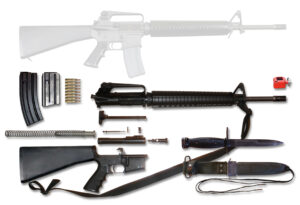
A collector’s look at Colt’s SP1 and early Sporters, from slickside uppers and pencil barrels to the rollmarks and small changes that hinted at the A2 era.

A practical, story-driven guide to reading JM vs REP barrel marks, understanding pre-safety 336s, Micro-Groove and Ballard-style rifling, and the smart checks to make before you buy.