
Remington Model 8 and 81: Browning’s Long Recoil Sporting Rifles
A practical, collector-minded look at Remington’s Model 8 and 81. Calibers, long recoil explained, police conversions, and what to check before you buy.

Call us any time at: (833) 486-6659
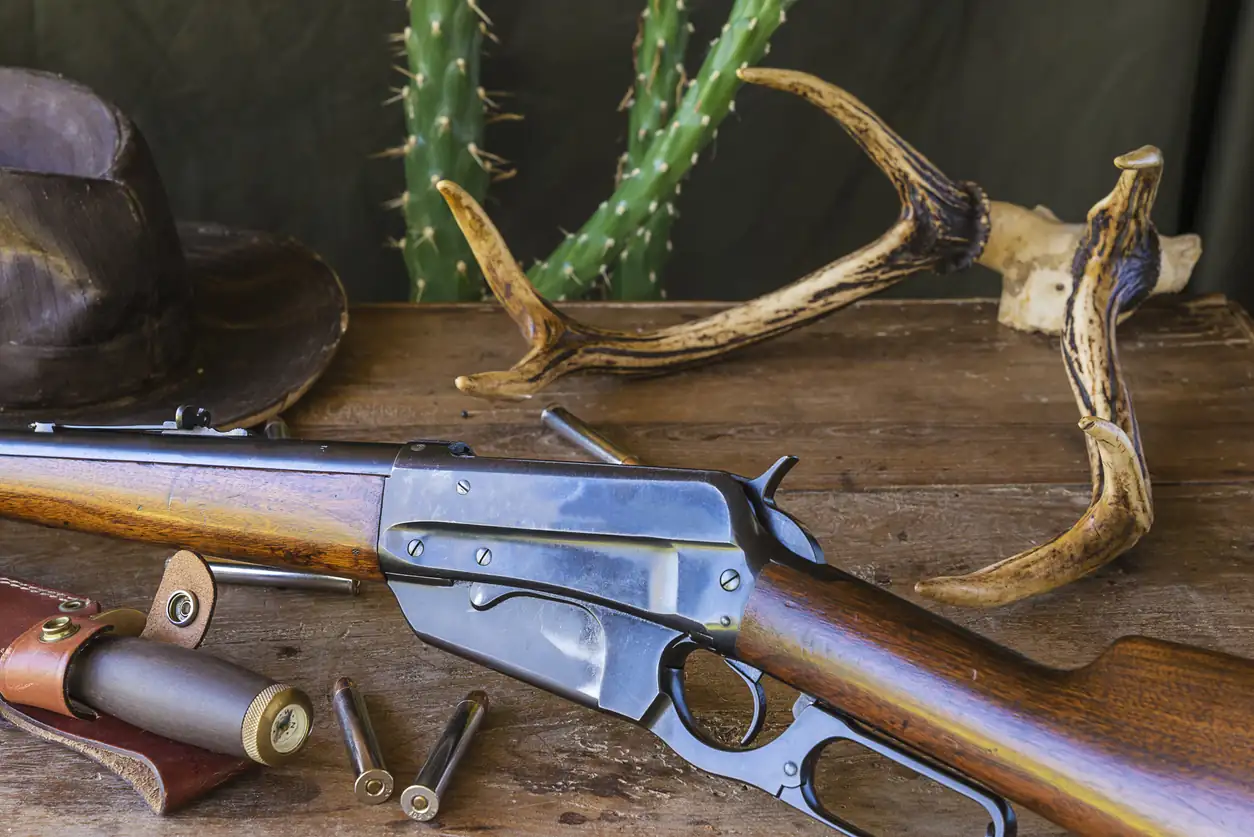
Pick up a Winchester Model 1895 and work the lever once. The motion feels familiar, but the rifle does not. There is no tubular magazine under the barrel, no cartridge gate in the receiver wall. Instead, there is a stout, square-shouldered action sitting over a fixed box. It looks like a lever gun that grew up in a hurry, which is exactly what it is.
The first time I shot an original 1895 in .30-40, I remember being surprised by how modern it felt. The top of the action is open and businesslike, the bolt runs on rails, and the rifle feeds from a non-detachable magazine that stacks cartridges vertically. It is still very much a Winchester in the hand, but the 1895 carries itself like a bridge between the last of the black powder lever guns and the coming century.
John Browning had already given Winchester a string of hits by the 1890s. The company asked him for something different this time. Smokeless powder was rewriting the rules, pressures were jumping, and pointed bullets were in fashion. The old formula of a tube magazine and a flat-nose slug was not going to cut it for everything people wanted to do anymore. Browning responded with a lever rifle that did not behave like earlier models because it was built for a different era.
Plenty of earlier Winchesters survived the transition to smokeless only because their actions were generously made. The Model 1895 was designed specifically for smokeless powder. It used stronger steel and a locking system designed for higher working pressures, and it loaded its cartridges from a five-round box rather than a tube. That change seems minor today, but it was a leap for a lever action in the 1890s.
The fixed-box magazine also did something critical: it allowed for pointed bullets. In a tubular magazine, the nose of one cartridge rests against the primer of the next. That limits you to round or flat noses, which is fine for many tasks but not ideal if your goal is maximum reach and better external ballistics. By stacking cartridges one on top of another, the 1895 could safely feed spitzers. As Forgotten Weapons has summarized, Winchester and Browning went all in on a lever-action rifle for the new smokeless world.
The 1895 did not just give lever-action fans a different look; it changed how they could use a lever rifle. With a box magazine and smokeless-rated action, you could chamber truly modern rounds. Some of those were rimmed, some not, and the rifle took to both with a minimum of fuss. You could choose a flat-shooting military cartridge or a thumper meant for big game, and the rifle was sturdy enough to handle either job.
Winchester also gave the model a distinctive profile that shooters still recognize: the scalloped receiver flats, the two-piece lever with a pronounced hinge boss, and a slender fore-end that often ends in a Schnabel tip. Those styling notes survive on present-day production rifles, and they give even a new 1895 the same stance that made the original stand out on the rack.
The Model 1895’s catalog tells a story all by itself. When it launched, Winchester hedged its bets by offering both smokeless and black-powder loads. You could get the rifle in .30-40 caliber, and Winchester also listed .38-72 and .40-72 for shooters not quite ready to leave the old propellant behind. As smokeless took over, the lineup expanded.
Before long, the 1895 appeared in cartridge form, becoming part of American sporting history. Winchester chambered it for .35 WCF, for the .405 Winchester that would become famous in the hands of Theodore Roosevelt, and later for the transitional .30-03 and then .30-06 that defined early twentieth century service ballistics. Winchester also cataloged .303 British. For the American sporting market, about three-quarters of commercial sales were in .30-40, which tells you just how well that round suited the rifle’s purpose.
The numbers matter to collectors, but they help buyers too. Different chamberings hint at different roles and different shooting experiences. The .30-40 version tends to feel like a capable, mild pressure all-rounder with history baked in. The .405, by contrast, has a reputation for authority on target and on the shoulder. Roosevelt wrote in 1910 that the .405 in his 1895 was, for him personally, the medicine gun for lions. It is a vivid line that captured the rifle’s place in his time, and it still echoes today. The .30-03 and .30-06 show how quickly the 1895 adapted to new standards, which is one reason this model is a favorite among people who like transitional designs that kept moving forward.
All of that paints a picture of a great sporting arm, but the Model 1895’s largest chapter was written in uniform, not tweed. In 1915, the Russian Imperial government went shopping for rifles. The war was consuming small arms faster than domestic factories could supply them, and Russia placed orders in the United States. Remington and New England Westinghouse took on production of Mosin-Nagant bolt actions. Winchester got a different brief. The company agreed to produce 300,000 Model 1895 rifles in 7.62x54R, the standard Russian service cartridge of the time.
That single order reshaped the picture of total production in 1895. By some tallies, roughly 425,000 Model 1895s were made in total, and nearly 300,000 of them were built to that Russian specification. You can feel the scale of it in any gathering of original 1895s. Sporting guns show up with their honest wear and their personal stories, but the sheer number of Russian contract rifles ensures you will find military furniture and wartime scars over and over.
Spotting one is not difficult when the bayonet fittings are present, and the rifle still wears its military stock. Look for the long, straight profile and the hardware that sets a service musket apart from a sporting rifle. Many lived a hard life. Some were arsenal maintained and later carried by other forces over a long century. Others survived quietly in storage. Each one sits at the fork where Winchester’s story crosses a European war, and they carry interest because of it.
If this slice of history is your focus, a closer look at the Russian contract features is a handy study companion when handling a candidate rifle. It will not replace firsthand inspection, but it will tune your eye to what is typical.
No discussion of the 1895 escapes the gravity of Theodore Roosevelt’s African safari. His crates held plenty of guns, but the .405 Winchester in a Model 1895 became part of the legend. He called it his Big Medicine, and it saw the veldt in the hands of a man who wrote about nature and hunting in a way that still reads cleanly more than a century later. It is easy to slip into nostalgia here. Better to say that the rifle performed the jobs asked of it at that time, and that history carried the story forward.
Collectors gravitate to that chambering for obvious reasons. Buyers who want a shooter should be honest about recoil, stock fit, and the limits of their shoulder. The rifles are not punishing by nature, but the .405 carries authority. Many shooters today gravitate to .30-40 or .30-06 for a gentler day on the range, while the .405 holds the marquee spot in the glass case.
Purely as a machine, the 1895 has a feel all its own. The lever throw is positive, the magazine feeds rimmed cartridges reliably, and the action locks with a reassuring clack. The open top makes loading and clearing simple. If you are used to a Model 94, the 1895 feels more square in the hands and slightly more massive at the receiver. That weight helps with recoil in the stouter chamberings. It also helps the rifle settle on the bags.
Iron sights are the rule with originals. Scopes are a modern question, and not all 1895s are friendly to them. Top ejection leaves little room for a conventional mount, and many collectible examples have not been drilled or tapped. That is part of the reason the model remains such a fine iron-sight rifle. Learn the notch and bead, and the 1895 rewards you with an honest sight picture that belongs to its era.
Original 1895s vary widely. Some were working rifles that saw seasons in all weather. Others lived in closets and came out only for special trips. Here are the checks I keep in mind at the bench or the show table. They are not exhaustive, but they will keep you out of the worst trouble.
There is no replacement for putting hands on multiple examples and building a mental library of what is normal. If your collecting tastes swing toward Winchester in general, a study of graded finishes and original details on repeaters like the Model 12 pays dividends across the brand. Our overview of Model 12 variants and what collectors look for shows how finish, configuration, and condition weave together in Winchester collecting.
Originality matters more and more as years pass. The 1895 lived long enough to see many fads come and go. Some rifles were drilled for mounts, some had their stocks shortened, and some had barrels set back or replaced. None of those changes make a rifle bad, but they need to align with your goal. If you want a shooter, a neatly drilled receiver may not bother you at all. If you want a piece that tells Winchester’s story cleanly, untouched screw holes and uncut wood will do more for your heart.
Be cautious about sweeping claims. The 1895 served in places and times that flavored guns with all sorts of extra stamps and stories. Verify what you can with careful comparison to documented examples, and be comfortable walking away if two or three details feel off.
One of the joys of the 1895 is that it is still a practical shooter. Recoil feels different across the line, but the ergonomics are consistent. The straight stock points naturally. The trigger is typically serviceable rather than target grade, which fits the rifle’s character. Feeding is happiest when you load with a straight thumb and let the follower do its job. Work the lever with intent and timing instead of force, and the rifle rewards you with smooth cycles and a grin you cannot quite hide.
A word on ammunition is in order. Many 1895s handle cartridges that remain part of the shooting landscape. Some of those, like .30-40, require a little more planning. It is wise to check the current availability and quality of components or factory loads before buying a rifle you plan to shoot often. Handloaders tend to love the 1895 because it bridges eras and rewards careful recipes. Keep published data on the bench, respect pressure, and resist the urge to chase speed for its own sake in a vintage rifle.
Winchester has kept the spirit of the 1895 alive with current production models that echo the rifle Roosevelt carried while using modern materials and machining. The cataloged rifle in .405 Winchester shows how the company sees the model today. It wears a 24-inch barrel, carries four rounds in a blind box, weighs about eight pounds, and comes with a straight grip walnut stock set off by a polished blue finish. The receiver is not drilled and tapped for a scope, which aligns with the model’s iron-sight roots. For buyers who want a brand-new 1895 experience with classic lines, it is worth a look at Winchester’s Model 1895 page.
It is always good to remember that a new rifle is not a substitute for an original, and an original is not a substitute for a new one. They speak different dialects of the same language. The new gun gives you predictable performance, a factory warranty, and wood that has not seen a century of weather. The old one gives you the history that only time can make. There is room in the cabinet for both.
The Model 1895 is easy to admire because it is honest. Browning and Winchester did not try to stretch a 1870s pattern into a 1900s role. They built a lever rifle for smokeless power, gave it a magazine that made sense, and chambered it for the cartridges that mattered in its day. Hunters took it around the world. Soldiers carried it across a continent. Collectors and shooters keep it alive because it still feels right when you run the lever.
If you are looking for one, start with your goal. A sound shooter in a common chambering, a clean sporting rifle with tidy edges, or a scarred Russian-contract piece with a story to tell. Learn the feel of a good magazine, the look of honest metal, the signs of stress around the tangs. Be ready to ask questions and listen to the answers the rifle gives you when you take it apart and look inside.
There are fancier Winchesters. There are rarer Winchesters. But there is only one Winchester that stands exactly at the moment when lever rifles met smokeless power and shook hands. The Model 1895 is that handshake. Work the lever once, and you will know it.
Available
View Item
Available
View Item
Available
View Item
Available
View Item
Available
View Item
Available
View ItemA practical, collector-minded look at Remington’s Model 8 and 81. Calibers, long recoil explained, police conversions, and what to check before you buy.
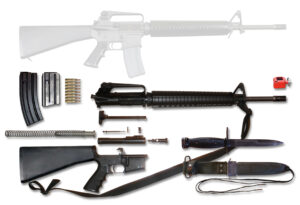
A collector’s look at Colt’s SP1 and early Sporters, from slickside uppers and pencil barrels to the rollmarks and small changes that hinted at the A2 era.
A practical, story-driven guide to reading JM vs REP barrel marks, understanding pre-safety 336s, Micro-Groove and Ballard-style rifling, and the smart checks to make before you buy.