
Remington Model 8 and 81: Browning’s Long Recoil Sporting Rifles
A practical, collector-minded look at Remington’s Model 8 and 81. Calibers, long recoil explained, police conversions, and what to check before you buy.

Call us any time at: (833) 486-6659

Ask a gun counter crowd to name the over-under they measure others against, and two names come back fast: Superposed and Citori. Same lineage, two eras, and one idea carried forward well. This guide traces how Browning got from the B-25 Superposed to the Citori, how the designs differ where it counts, what the grades signal, and the checks that help you buy with confidence.
John M. Browning believed that stacking barrels to create a single sighting plane helped shooters mount and point more naturally than side-by-side barrels. Browning’s own materials still make that case clearly. The theme is consistent across both models: natural presentation, predictable swing, and geometry that rewards repetition.
The B-25 Superposed was not the first over-under ever built, but it was the first to successfully appeal to a worldwide shooting market. Its calling cards were balance, relatively lightweight, and finishing standards that stood above the norm. Over its long run, it appeared in multiple gauges and configurations that served bird hunters, skeet shooters, and trap shooters alike.
Fit and finish helped define it. Period coverage highlights hand-engraved receivers and high-grade walnut with hand-rubbed finishes. Grade designations ran from field to progressively more elaborate levels, such as Grade V, with wood, engraving, and overall flourish rising with each step.
Mechanically, the Superposed used a stout boxlock receiver and full-length barrels with integral lumps. A top lever operated an under-bolt that engaged bites in those lumps for a firm lockup. The result was a solid, reliable closing feel that endeared the design to hard-use shooters.
The Citori joined Browning’s line in 1971 as the fifth generation of the Superposed concept. Browning describes it as a direct descendant of the B-25, built to exacting tolerances, heat-treated for strength, and hand-fitted using traditional lampblack-and-file methods for precise steel-to-steel fit. Wood-to-metal fit is a point of pride. The Citori is offered across gauges, with models, stock dimensions, and embellishment packages tailored to hunting and the clay games.
For background direct from the source, see Browning’s Citori overview and history pages:
Two design choices define why many Citoris feel tight after years of shooting:
Add a steel receiver and careful hand fitting, and you get the reputation summed up by a line you will hear often on the range: a Citori wears in, not out.
Superposed:
Citori:
The Superposed earned its reputation for balance and a lively feel between the hands. Well-fitted examples point where you look and carry lightly through a day in the field.
The Citori speaks the same language with a modern edge. The single-sighting plane, consistent geometry, and model-specific stock dimensions make it quick to mount and predictable to swing, whether you pick a light-field gun or a dedicated clay model.
It is common to find Citoris that have seen years of targets yet still lock up tight. That is the design paying dividends.
For hunters who favor classic lines and an exceptionally balanced carry gun, a well-fitted Superposed can be a lifetime companion and a collector’s piece.
For high-volume target shooters, the Citori’s durability features, model-specific stock options, and broad parts support make a strong case. Browning positions it as the category standard and notes it as the best-selling over-under in the world.
Collectors will find more to study in Superposed grades and engraving, while Citori collectors often zero in on model variants and early production features. In both cases, originality and condition rule value. Buy the best condition you can and buy a fit that lets you shoot it well.
Keep the hinge and locking surfaces lightly lubricated, wipe off fouling from the ejector works, and avoid letting oil soak into the stock head. Store dry. Open fully and close under control rather than snapping shut. If the gun’s feel changes at any point, a competent gunsmith can often correct wear before it becomes a problem.
For factory details, specifications, and current variants, start here:
Browning also notes the B-25 Superposed as the first over-under to win over a worldwide market and a continuing favorite with hunters and clay shooters for its balance and light weight. That is the blueprint the Citori carries forward.

Available
View Item
Available
View Item
Available
View Item
Available
View Item
Available
View Item
Available
View ItemA practical, collector-minded look at Remington’s Model 8 and 81. Calibers, long recoil explained, police conversions, and what to check before you buy.
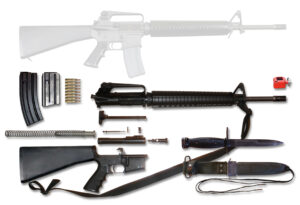
A collector’s look at Colt’s SP1 and early Sporters, from slickside uppers and pencil barrels to the rollmarks and small changes that hinted at the A2 era.

A practical, story-driven guide to reading JM vs REP barrel marks, understanding pre-safety 336s, Micro-Groove and Ballard-style rifling, and the smart checks to make before you buy.