Why Sako rifles feel different
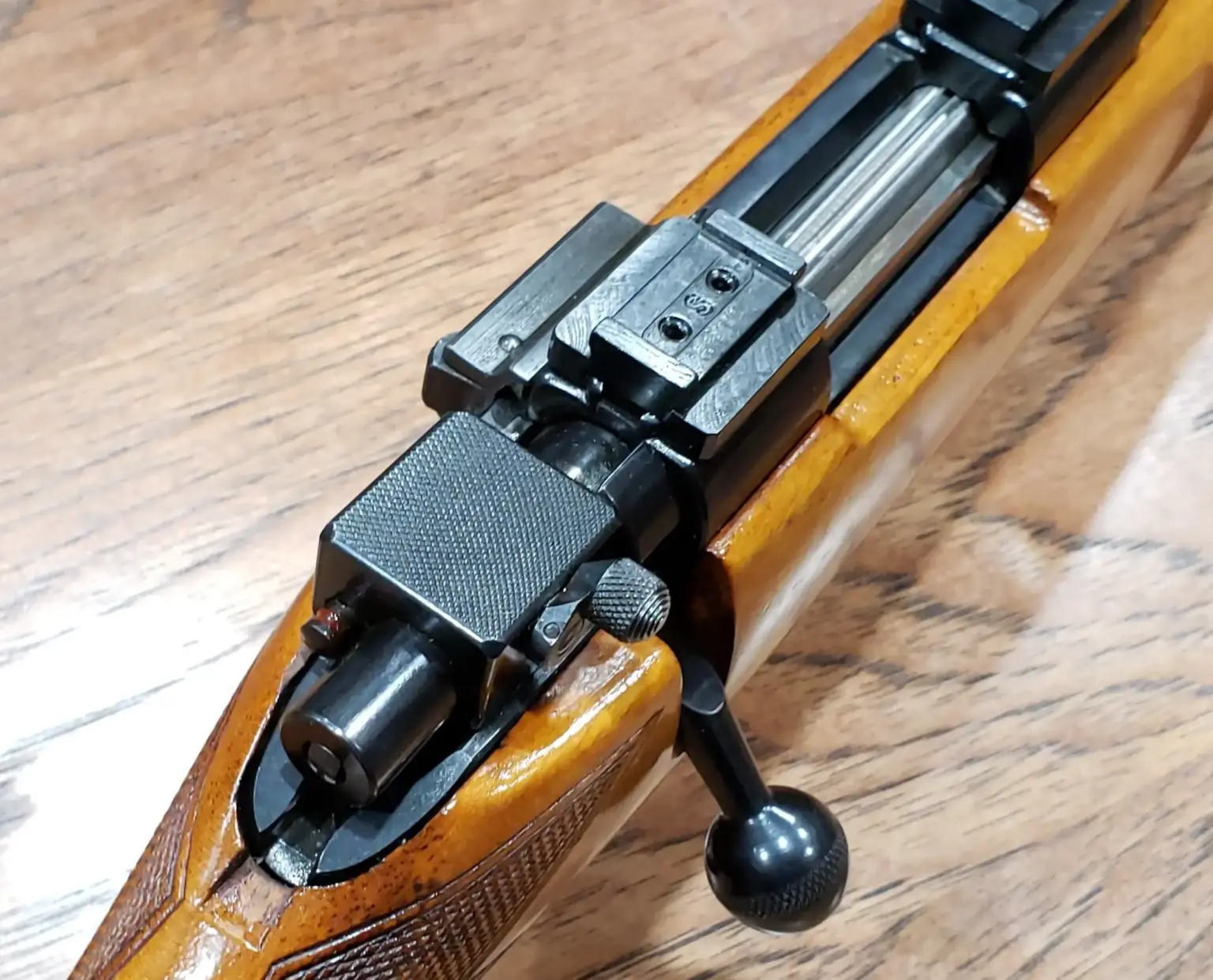
Run a Sako bolt, and the brand makes sense fast. The glide in the raceways, the positive safety, the clean trigger break, they show up the same way on a tidy postwar L46 as they do on a new 90. Shapes and stocks change, but that rhythm is familiar.
That consistency comes from one place and a long line of practical choices in pursuit of accuracy and reliability. The path runs from the little L46, through the long-action Finnbear era many hunters remember, through the TRG’s hard-use precision world, and into today’s Sako 90 family.
Origins and the move to Riihimäki
Sako began as a Civil Guard repair workshop and became economically independent on April 1, 1921, the date the company marks as its birth. In 1927, it moved from Helsinki to Riihimäki, adopted the shortened Sako name, and began building rifles and ammunition on the same site where it still operates.
Early production included the m/28 Pystykorva and the start of cartridge manufacture, both of which built Sako’s reputation. After the war, the company pivoted decisively back to firearms.
Source: Sako history highlights by decade, history by year.
L46: the small action that set the tone
In 1946, Sako launched the L46, a trim field rifle that sold well in Finland, the Nordics, and Western Europe. Pick one up today, and the scale tells the story. It is light, tidy, and practical. The action shows the company’s early focus on controlled geometry and smooth cycling.
For buyers, an honest L46 is more than nostalgia. It is Sako’s early modern DNA in a small package. When shopping, prioritize a bright bore, correct headspace, healthy extraction and ejection, and a magazine that seats and feeds properly. Period parts exist, but can take patience to source.
Source: Sako history highlights by decade.
Growth years and the Finnbear era
The 1960s saw ownership by major Finnish industrial groups, growth in sporting-rifle production, and increasing scale. American hunters got to know Sako’s long-action offerings as Finnbears, remembered for walnut and blued steel paired with a bolt that felt fitted.
Those years taught Sako to build at volume while protecting the details that shooters noticed. That foundation set up the precision branch and, later, the 75- to 85- to 90-degree arc of modern hunting rifles.
Source: Sako history by year.
TRG influence on function under pressure
Sako’s TRG family was built for precision roles in military and law enforcement. Its priorities, strong extraction, consistent ejection, and repeatable accuracy in rough conditions, filtered into the hunting line.
A clear example is ejection. The 90 Series uses a robust dual-plunger ejector arrangement drawn from the TRG rifles, which kicks fired cases cleanly out of the port. That matters most when you do not have room for drama.
From the Sako 75 and 85 to the 90 Series
The 75 family in the 1990s reset Sako’s sporting-rifle lineup and put the brand on a long run with high-end bolt actions. In 2006, Sako marked its 85th anniversary with the Sako 85, which refined the 75 and, in many chamberings, added controlled-feed behavior. Around this period, Sako also invested heavily in production machinery and capacity under Beretta Holding ownership starting in 2000.
By 1997, the success of the 75 allowed Sako to streamline older offerings. In 1989, Tikka production was consolidated to Riihimäki, further focusing rifle manufacturing expertise in one place.
Sources: Sako history by year.
What the 90 Series changes and keeps
The Sako 90 is a careful evolution of the last 25 years. It keeps the fast-cycling three-lug bolt with a 60-degree lift and leans into TRG-inspired reliability with dual plunger ejectors. Compared with the 85, the 90 drops controlled-feed behavior yet gains more decisive ejection. Independent testing has noted broach-cut receiver raceways and a port geometry shaped to reduce receiver flex, both of which support accuracy.
Across the 90 line, you get match-grade cold hammer forged barrels, precisely recessed crowns, and action sizes matched to cartridge families. The locking lug surface area is optimized for each caliber group. Every rifle is CIP proof-tested with two high-pressure shots before shipping, and Sako states that the bolt operation has been validated through millions of cycles.
Sako describes the 90 as smoother, lighter, and more accurate, and it is offered in seven distinct models tailored to mountain and backcountry roles across traditional game-hunting disciplines. Source: Sako 90 launch.
Barrels, crowns, and accuracy
Sako’s match-grade cold-hammer-forged barrels are a throughline. Hammer forging creates a smooth, straight, uniform bore surface, and Sako pairs that with a precisely crowned and recessed muzzle. The company’s claim is straightforward: CHF barrels that do not require a break-in regimen and deliver strong out-of-the-box accuracy. That claim tracks with independent range results that reported multiple sub-MOA factory loads in a lightweight 90 variant.
Choosing among 90 variants
The 90 family shares core mechanics. Stocks, barrel contours, and features are tuned to the job. Practical guidance:
- For ounces on the trail, pick the lightest-stocked, shorter-barreled options. Expect more muzzle movement, so pair with forgiving loads.
- For stands or driven game, a bit more weight and a recoil-soaking stock help steady follow-ups.
- For open-country shots, a medium or heavier contour stabilizes heat and point of impact through strings.
- Match action length to your cartridge to preserve the short, quick bolt feel in shorter rounds.
Either way, you get the three-lug, 60-degree bolt, slick raceways, dual plunger ejection, and Sako’s CHF barrels. Magazines are designed for reliable feeding and allow practical top-loading through the port.
Buyer pointers for older Sakos
If a classic calls your name, a clean L46 or a Finnbear-era rifle rewards careful shopping. Focus on:
- Straight, bright bore and healthy locking surfaces over cosmetics.
- Smooth cycling through the full stroke, clean extraction, and energetic ejection.
- Correct magazine fit and feed. Avoid nose dives or rim lock.
- Proper ring and base fit. Sako mounting patterns vary by era.
- Parts reality. Small, period-correct bits can be scarce; price accordingly.
- Legal compliance in your jurisdiction before you commit.
Plan on a competent inspection, then test a few quality loads. When a Sako finds a load it likes, groups tend to settle in fast.
Collector timeline highlights
Quick context to read the roll marks:
- 1921: Sako becomes an independent company. 1927: moves to Riihimäki and starts building rifles and ammunition.
- 1946: L46 launches and sells across Europe.
- 1960s: growth and modernization under major Finnish owners, long actions gain popularity with hunters.
- 1989: Tikka production consolidated to Riihimäki.
- 1997: The success of the Sako 75 leads to the retirement of older models.
- 2000: Sako joins Beretta Holding. 2006: Sako 85 launches for the 85th anniversary.
- Today: Sako 90 family in seven distinct hunting-focused variants.
Sources: history by decade, history by year, Sako 90 launch.
Why the lineage still matters in the field
The spec sheet reads as follows: CHF barrels with protected crowns, three-lug bolts, optimized lug surface area, dual-plunger ejection, CIP proof, and bolt operations verified through millions of cycles. On the range and in the field, it shows up as clean feeding, emphatic ejection, and predictable accuracy without a fussy break-in.
For buyers, that reduces guesswork. Choose a 90 trimmed for your use and expect a strong baseline. Choose a well-kept L46 or Finnbear, and you get the same core idea from earlier chapters. That is the Sako feel, carried from the workshop days to the modern 90s on the rack.