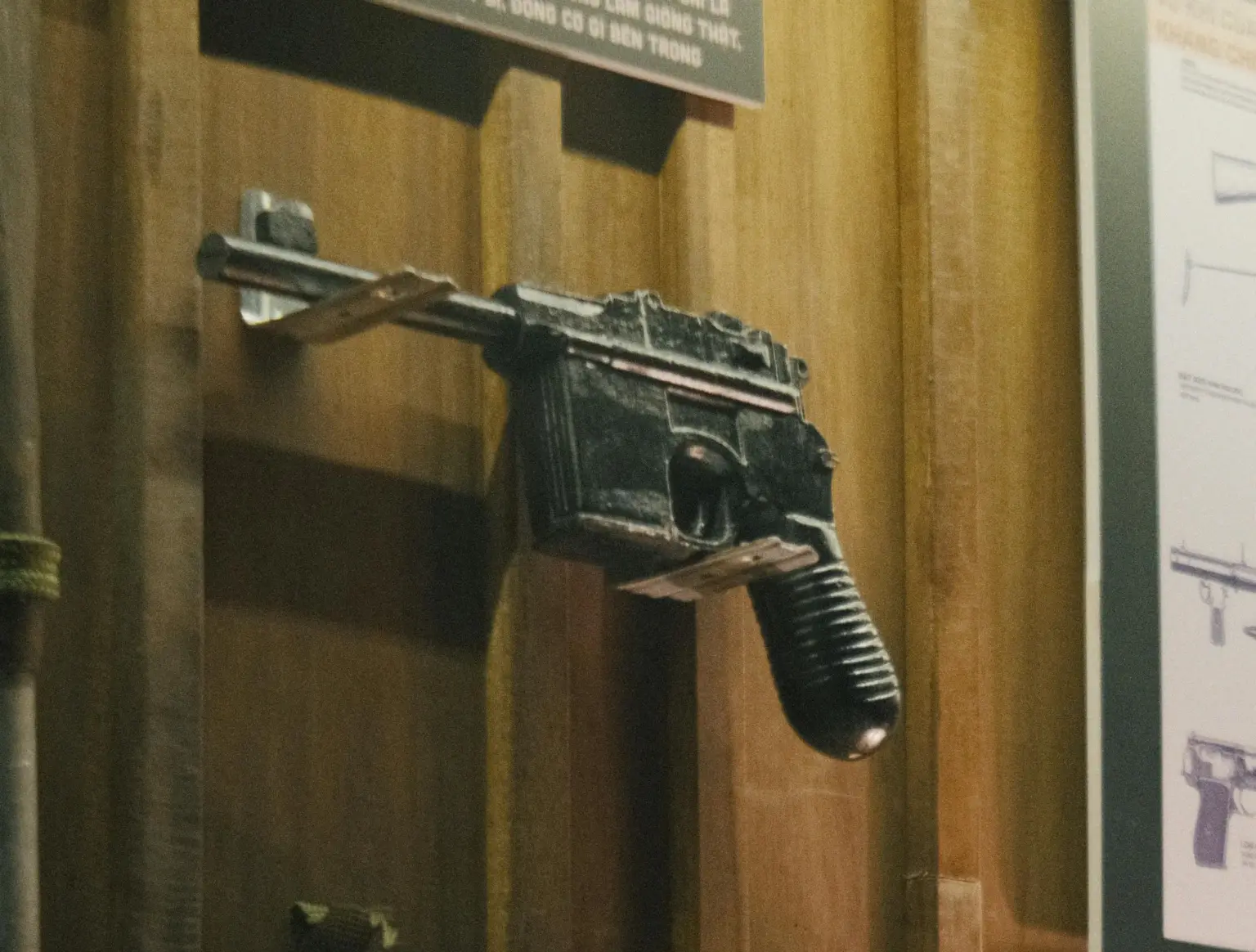
You learn to spot them from across the hall. The blocky receiver. The slab sides. That broom-handle grip that looks like it belongs on a carpenter’s bench more than a pistol case. At a show last fall, a friend waved me over to a glass-top counter where a Mauser C96 lay with a shoulder-stock holster beside it. The grips wore a big, red-painted 9, and the tag promised all the right words: matching, honest, and scarce.
That is where many C96 stories begin, and where many collectors’ regrets are born. The Broomhandle has been around long enough to gather not just history and wear, but also swapped parts, fresh bluing over old sins, and enthusiastic stories that may or may not match the metal. This guide keeps the spotlight on what buyers need most: how the major variants differ, what contract markings can suggest, and how to judge condition and originality with a cool head.
Why the C96 still grips us
Even if you have handled dozens, a good Broomhandle never stops being interesting. It sits at the crossroads of late-19th- and early-20th-century handgun design. There is the long, integral barrel and the top-loading internal magazine that takes charger clips. There is the provision for a wooden stock that doubles as a holster, turning the pistol into a compact carbine. And there is the unmistakable profile that made it as recognizable in photographs and films as in arms books.
Mauser’s name still carries weight for traditional steel and workmanship in its modern sporting rifles as well. If brand heritage matters to you, Mauser’s current lineup underscores that theme in the MAUSER 12 overview, a reminder that the banner on a C96 receiver ties into a long-running design philosophy.
A field guide to C96 variants
The C96 family is large. You will see a broad spread of features across the years. Collectors use a few convenient handles for the bigger branches. The point here is to help you recognize what you are looking at on a table.
Early commercial pattern
Early commercial C96 pistols present the classic long barrel, small sights by today’s standards, and the long grip with narrow panels. Hammer and safety shapes evolved across production. These pistols are most often chambered for the bottleneck cartridge commonly called .30 Mauser, typically marked 7.63.
Interwar short-barreled pistols were often nicknamed “Bolo”
Shorter-barreled C96 pistols became a recognizable sight after the First World War. They carry the same basic layout with a handier look up front. When you see a compact C96 with the usual top-loading magazine, you are likely in this family. They can feel lively in the hand while still reading as a true Broomhandle.
9 mm German-contract pattern with the red grip marking
If you see a large red-painted numeral inlaid on each grip panel, you are looking at the most famous contract-marked C96 variant among many buyers. The red 9 was a quick visual cue for 9 mm chambering. Many pistols have picked up red-painted grips over the decades, so treat the paint as a conversation starter, not a conclusion.
Later commercial “M30”-type pistols
By the period generally associated with the 1930s, you start seeing late commercial C96S, often bearing Mauser’s banner logo and a simplified pattern grouped under an M30 umbrella. These retain the core architecture with incremental updates. Many surface in crisp condition, which makes them popular with buyers who prize finish and legible markings.
The select-fire detachable-magazine branch
You will also encounter the select-fire C96 family known in collector shorthand as the Schnellfeuer or 712. These accept detachable magazines and feature a selector lever. They are their own chapter, technically and legally. Research them carefully and be cautious about assumptions. Laws governing select-fire firearms and specific configurations are strict and vary widely by country and, in the U.S., by state.
There are more sub-branches, including foreign-made pistols that mirror the C96 look and layout. For a first pass at a show, keeping these broad buckets in mind helps you frame questions and decide what you want to examine more closely.
What counts as a contract pistol
When collectors talk about contract pistols in the C96 family, they mean pistols delivered to a government or institution under a defined order, often with distinctive chambering, markings, or grips. Some carry crests. Some wear markings in languages other than German. Others look like standard commercial guns but show acceptance or property marks tucked into nooks that only a careful inspection will spot. The best way to approach a contract claim is to ask the pistol to teach you its story, not the other way around.
How to approach contract claims on a Broomhandle:
- Start with chambering. A 7.63-marked pistol, wearing a contract reputation usually tied to 9 mm, warrants questions. A 9 mm pistol, with a strictly commercial life, deserves a closer look at its markings.
- Study the grips. The famous red-painted numeral is a cue for that well-known 9 mm pattern, but the paint itself is not proof. Check how the inlay was cut, how deep the channels go, and how the paint has aged into the wood.
- Look for crests, acceptance marks, and property stamps. Have the seller point out each one they believe matters. Then consider whether they make sense together and with the serial range.
- Inspect the shoulder-stock lug and stock. Contract pistols turn up with old stocks that are not numbered to the gun. A stock can be a period and still not be the pistol’s stock.
There are excellent references dedicated to individual contracts and their accepted features. For buyers, the critical move is resisting the urge to let a stamp or a legend do too much work. Ask it to line up with the rest of the pistol.
Original or married parts
C96 pistols are built with many numbered components, which is both a blessing and a trap. It helps you see whether a gun was built up from parts, but it also tempts people to swap bits until they have a matching example. Do not let a neat row of numbers hypnotize you.
Common numbered parts include the frame, barrel extension, bolt, locking block, hammer, and other small pieces. Expect factory-style numbers in a consistent font and depth. Hand-stamped or uneven characters are a red flag. Scrubbed surfaces with a new number applied are a bigger one.
When a pistol and stock share a number, that can be special. It can also be forced. Look closely at how the number sits on the wood and on the stock’s metal. Uneven spacing, fresh cuts in old wood, or a number applied where you would not expect it are reasons to slow down.
Finish, edges, and small-part colors
Many C96 pistols have been refinished. Some were done decades ago and have aged into an honest look. Others carry glossy blue over pitting or softened edges. Your eyes and fingertips tell you a lot here.
- Edges: The long flats and sharp corners show wear first. A refinish often rounds those off. Run a fingernail along the receiver’s edges and around the sight base. If everything feels melted, be skeptical.
- Stampings: Original rollmarks and proofs are crisp. Over-buffing before a refinish can leave them shallow or smeared.
- Color cues: On many period pistols, small parts were originally carried in hues different from the main blue, a result of heat treatment and finishing steps. On a C96, you may see straw-yellow on some controls and bright blue on small pins or screws. Treat color as a supporting actor, not the lead.
- Under the wood: If you have seller permission, pull the grips. Hidden surfaces tell the truth. A pistol that looks deeply polished on the outside but shows an old finish and honest wear under the panels deserves more questions.
Stocks and stock-holsters
The wooden stock that doubles as a holster is one of the C96’s charms and a common trap. Original stocks were fitted well at the factory. Reproductions range from decent to crude. Old wood picks up a lot of life after it leaves Oberndorf, and many stocks have been refinished.
What to check first:
- Fit to the lug: The iron should seat fully and securely. Slop and wobble are not normal. A too-tight fit can be just as telling, especially on a pistol that shows wear elsewhere.
- Numbering and marks: If a stock is numbered, does the style match the pistol’s serial stamps? If there are cartouches or crests, do they make sense for the pistol’s story?
- Hardware and hinge: Screws show history. Mangled slots on a mint stock, or brand-new screws in old wood, earn a raised eyebrow.
- Wood finish: Old oil and shellac age in a particular way. Fresh varnish over dents looks wrong. Look inside the stock. It often keeps its secrets there.
Legal note: Attaching a stock to a pistol may be regulated where you live. In the U.S., certain historic pistol-stock combinations are treated differently from modern conversions, but rules change, and details matter. Before you attach any stock to any pistol, verify the current law in your jurisdiction.
Mechanical condition that matters
The Broomhandle is a tough pistol, but it has areas that deserve careful attention. Even if you buy primarily for history, a mechanically sound example is easier to own.
- Bore: Shine a light. Crisp rifling with light frost is common on old pistols. Heavy pitting near the chamber or a dark, rough bore suggests wear or poor storage.
- Locking block and bolt stop: These carry real stress in use. Cracks or battered faces are trouble. Replacement parts exist, but swapping them changes the conversation about originality.
- Extractor and firing pin: Chips and peening indicate heavy use. They matter for function and price.
- Safety and hammer engagement: The safety should engage firmly. The hammer should show a consistent sear shelf. Slipping or creepy engagement is a red flag.
- Magazine well and follower: The internal magazine should present rounds smoothly. Dents or roughness inside the well can be hard to fix and often reflect rough handling.
Red flags: what trips up buyers
Most trouble falls into a few buckets. Knowing them ahead of time keeps your pulse rate low when you find that dream pistol on a Sunday afternoon.
- Fresh finish on old pits: Blue can hide a lot. Pitting under blue, especially on the flats, suggests a refinish that covered rather than preserved.
- Buffed edges and soft stamps: The most common giveaway of a heavy refinish. Dish-shaped screw holes from aggressive polishing are another tell.
- Force-matched parts: Numbers that are too crisp or fonts that do not match other factory stamps. Under a loupe, uneven depths and shapes give them away.
- New stories on old steel: A crest or paint added to a pistol that otherwise reads as a different pattern. Always ask for the line from chambering to markings to serial to grip details.
- Stocks that do not belong: A nice old stock can be paired with any pistol. That does not make them a set. If numbers and marks do not tie them together convincingly, price it as a married pair.
- Legal gray zones: The select-fire branch and stock rules are not where you want to learn by experience. If something about a configuration makes you hesitate, do not rush.
Handling a Broomhandle at a show: a simple checklist
Use this flow when you get permission to examine a C96. It keeps you from falling in love with a marking before you earn it.
- Step back and take the whole pistol in. Does the finish sheen look uniform? Are the edges sharp? Does the wear pattern make sense?
- Check major markings in good light. Are the banners, legends, and proofs crisp? Any double-stamping or smeared edges.
- Verify the serial on the frame and barrel extension. Where allowed, look for numbers on the bolt, locking block, hammer, and other key parts. Do font and depth match?
- Inspect the bore and crown. Use a light and go slow.
- Work the action gently. Feel the locking, the trigger reset, and the safety engagement. Note gritty movement or odd friction.
- If a stock is present, check its fit on the lug, its internal condition, and any numbering or marks. Ask permission before mounting it.
- Revisit the story after the inspection. Does the pistol you handled support the claims on the tag?
Care, ammo, and living with a C96
A C96 is happiest with thoughtful handling. Clean it with patience. Old grips and old screws reward gentle tools. Keep oil out of the stock wood if you use the stock as a holster. If you intend to shoot your pistol, consult a knowledgeable source about ammunition suited to its age and condition. Many owners choose moderate-pressure loads out of respect for springs and locking faces that have lived full lives.
Spare parts exist for many wear items, but they are not equal. Replacing springs and small pins to keep a shooter running is different from building a collectible. If the pistol will be a shooter, document what you swap and keep every original bit labeled in a small bag.
Parting thoughts on choosing your C96 story
The best Broomhandle for you is the one that matches your taste and your tolerance for risk. Maybe that is a clean late commercial example with bright markings. Maybe it is a 9 mm contract pistol with the famous red grip marking that has seen some life. Perhaps it is a short-barreled interwar gun that simply feels right in the hand. Or you could be the type who hears the siren song of the detachable-magazine select-fire branch, complete with all the research and legal diligence that path demands.
Whatever you chase, remember these two questions that protect buyers better than any slogan. Does the metal tell a consistent story, and does the price reflect what the pistol is, not what the tag wishes it were? Answer those cleanly, and the C96 will reward you the way it has rewarded a century of owners, with a combination of engineering charm and history you can hold.