I’ve stood over more than a few folding tables with a flashlight and a rag, brushing aside cosmoline while a seller watches me trace marks on an SKS receiver. If you’ve been there, you know the feeling: Is this a Russian? A Chinese with early Soviet lineage? Maybe a Yugoslav with the signature launcher snout? Sorting country variants is half the fun. It’s also how you avoid paying Russian money for a Romanian, or walking past an Albanian, because the stock looks tired.
What makes an SKS an SKS
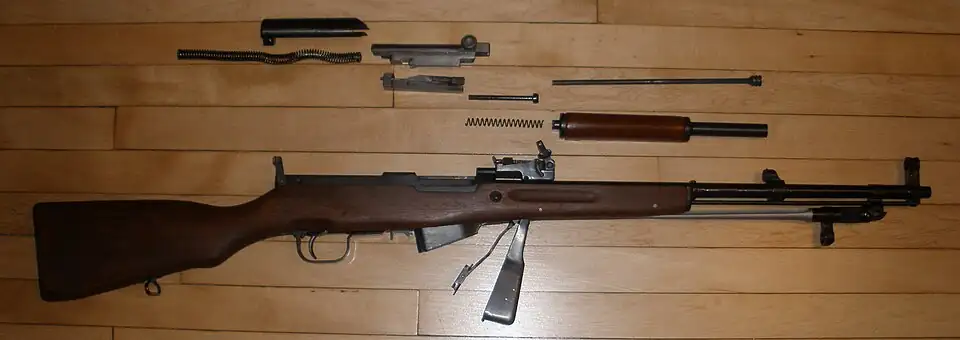
The SKS is a semiautomatic 7.62×39 carbine with a short-stroke gas system, tilting bolt, a typical 20.5-inch barrel, a fixed 10-round magazine, and a folding bayonet. Those shared bones make the small details your best tell when you are ID’ing one on a rack. For a concise spec refresher, see this overview of SKS history and specs.
How to read an SKS: where the clues hide
Think like a detective and work front to back.
- Muzzle and front end: look for a grenade launcher assembly or lack of one, bayonet type and finish, and the front sight base style.
- Handguard and gas tube: length and shape can be distinctive, especially on Albanian rifles.
- Receiver and markings: Arsenal emblems, factory codes, serial formats, and import marks tell the story.
- Rear sight ladder: the battle setting character can hint at the country. Common marks include Russian “П,” Albanian “D,” and Romanian “I.”
- Stock: wood type, sling swivel location, and buttplate features help separate cousins.
Across many SKS production lines, serial numbers appear on multiple parts. That helps when you’re judging originality. Just remember that some countries refurbished rifles before export, which can mix finishes and small parts.
Russian SKS-45: Tula, Izhevsk, and early tells
Russia’s guns are the root of the family tree and still what many collectors hold up as the reference standard. They are often considered the gold standard for collectors, with handsome birch stocks and Tula or Izhevsk arsenal marks called out on the receiver cover and receiver (see the model overview).
Practical tells:
- Arsenal marks: look for Tula or Izhevsk arsenal marks on the receiver cover.
- Serial style: Russian serials typically begin with one or two Cyrillic characters followed by digits, sometimes with a Cyrillic suffix.
- Bayonet type: the earliest 1949 series had a cruciform spike bayonet; later Russian production standardized on a blade bayonet.
- Sling swivels: Russians use bottom sling swivels on the stock.
Many Russian SKSs were arsenal-refurbished before import, which can introduce non-original features like a blued bolt or bayonet. Clean refurb examples often draw strong interest despite not being factory-original in every small part.
Chinese Type 56: from Sino-Soviet charm to commercial twists
Most SKSs you handle will be Chinese. Early production closely tied to Soviet patterns is often called “Sino-Soviet” and is well regarded for its fit and finish. Later imports, including many branded by Norinco for the commercial market, built the rifle’s reputation as a value-packed shooter.
Practical tells:
- Bayonet type: Chinese rifles are famous for their spike bayonets. That cruciform spike is often the fastest way to suspect you’re holding a Type 56.
- Factory codes: look for a numeric factory code inside a geometric cartouche, commonly a triangle, on the receiver’s left side. A classic example is triangle 26, which collectors associate with Jianshe. Treat the code and the serial pattern as a pair when estimating period and origin, and verify with a chart in a dedicated guide (Chinese SKS identification guide, PDF).
- Commercial conversions: many Chinese rifles reached the U.S. with features tailored for the market. You’ll see shortened 18.5-inch and even 16.5-inch barrels, models cut to accept AK-style magazines, and receivers with professionally installed scope rails (Quick SKS ID guide, PDF). If you encounter an SKS with a short barrel, an optics rail on the receiver, or native AK mag acceptance, the odds are strong that you’re looking at a Chinese export configuration from the late twentieth century.
If your goal is to pin down a specific Chinese factory and its likely production window, use a code chart rather than guesswork. The Chinese system is broad, with exceptions, and import stamping can add digits. A focused identification resource is worth its weight here.
Yugoslavian M59/66: the launcher that gives it away
Some SKS rifles look like they’ve swallowed a trumpet at the muzzle. That is your immediate tell for the Yugoslavian M59/66, which carries an integrated rifle grenade launcher and flip-up ladder sights. These rifles tend to be heavier than their peers and are built with rugged construction. The front-end hardware is so distinctive that a quick glance in a dim shop can separate an M59/66 from the pack.
Yugoslav models generally use a blade bayonet, which also keeps them in visual step with Russian patterns rather than the Chinese spike.
Albanian Model 561: the long handguard and that hook
Albanian SKS rifles are a rare sight on a U.S. rack. When you do see one, it often takes two seconds to confirm because the upper handguard stretches the full length of the gas tube rather than stopping short. Combine that with a few other distinctive traits, and you can make a positive ID quickly.
Practical takes from field notes:
- Handguard: elongated, covering the entire gas tube.
- Bayonet: tri-lobed blued spike, a unique look compared to Chinese spikes.
- Charging handle: AK-style hooked handle.
- Sling swivel: side-mounted on the buttstock on all matching examples.
- Buttplate: two trap doors.
- Rear sight: “D” battle sight setting.
- Serial pattern: typically below 011000 and commonly suffixed with a two-digit year, usually between 67 and 78. Example: 02571-78.
Romanian M56: almost Russian, with a serial that gives it away
The Romanian M56 can fool a lot of folks at first glance because it closely tracks the Russian pattern. If the stock wood looks a bit different and the markings do not scream Cyrillic, pause and read the serial carefully.
Practical tells:
- Serial format: two Roman alphabet letters, followed by one to four digits, then a dash, and the year of manufacture. Production years commonly seen run from 1957 through 1960. Example: RC241-1960.
- Rear sight: look for a capital “I” on the battle sight position.
Scarcer variants worth knowing
There are corners of the SKS map that are rarely charted at U.S. gun counters. If one appears, it is either because someone held on to it for a long time or because it came back in a duffel.
- East German Karabiner S: prized and very scarce. A detail that collectors mention is a K98-style sling-slot arrangement, which is a helpful visual cue.
- Polish KS: documented examples exist, but do not surface often here. These are coveted for their scarcity.
- Vietnamese and North Korean SKSs: rifles in this lane are often associated with veteran bringbacks. Documentation, when present, matters greatly.
With these, authenticity is the whole ballgame. Paperwork and careful inspection count more than usual, and prices chase rarity accordingly.
Bayonets, stocks, and sights: the fast visual tells
When time is short and the line behind you is long, a few cues help you separate variants fast.
- Bayonet type and finish:
- Blade bayonets show up on Russian and Yugoslav rifles.
- Spike bayonets are the Chinese hallmark.
- The earliest Russian 1949 pattern used a cruciform spike.
- Albanian rifles use a distinctive tri-lobed blued spike.
- Rear sight battle setting:
- Albanian sights show a “D.”
- Romanian sights show a capital “I.”
- Russian sights often show the Cyrillic “П.”
- Sling hardware:
- Russian stocks wear bottom swivels.
- Albanian rifles have a side swivel on the buttstock when all parts match.
- Examples from East Germany are associated with a K98-style slot arrangement.
- Handguard length:
- Albanian handguards run the full length of the gas tube.
- Most others stop short of the gas block.
Factory codes, dates, and serials: practical notes
This is the part that turns a good hunch into a confident ID. Two angles matter here: where to look and how to verify.
Where to look:
- Receiver left side for country-specific arsenal or factory markings. On Russians, that is the Tula or Izhevsk arsenal mark. On Chinese rifles, look for a numeric factory code inside a geometric cartouche.
- Receiver cover for Arsenal emblems, especially on Russian rifles.
- A rear sight ladder for the battle setting character, which can be country-specific.
- Stock butt and sling points for pattern differences.
How to verify:
- Serial style and year formats can be country-specific. Romanians, for instance, show the year right in the serial (e.g., RC241-1960).
- Chinese factory codes require a reliable chart. Some numbers and shapes are well documented and tied to specific facilities and eras. Cross-check against a code list rather than guessing from a single photo (Chinese SKS identification guide, PDF).
- Expect exceptions. Refurbishment and service life can shuffle parts and finishes. A Russian with a blued bolt or bayonet is not automatically a red flag; many were refinished before import.
For deep identification, two resources stand out. The Collector’s Guide to the SKS by George Layman notes that over four million SKSs were imported into the U.S. and includes an extensive serial and factory code database compiled from newly available materials. For Chinese rifles specifically, the linked Chinese SKS identification guide (PDF) outlines factory code conventions and the caveats that accompany them.
Field checklist: what buyers and collectors should examine
Here is the short list I use at shows and shops. It keeps the process consistent and reduces regrets. For a printable version, see our surplus rifle buying checklist.
- Confirm the country first. Use the fast tells: bayonet style, front-end hardware, handguard length, and the rear sight battle setting letter or character.
- Read the markings. Note arsenal or factory codes, serial format, and any date elements. Photograph the receiver’s left side and the receiver cover, if possible.
- Scan for refurbishment cues. Russian refurbs can show blued bolts or bayonets. It is not a problem; just know what you are getting.
- Look for commercial alterations. Short barrels around 16.5 inches, receiver-mounted scope rails, and native AK mag acceptance strongly suggest a Chinese variant configured for the U.S. market in the late twentieth century (Quick SKS ID guide, PDF).
- Check the condition honestly. Bore, crown, and gas system first; stock repairs second. If cosmoline is heavy, plan on a full strip and clean with our SKS cosmoline removal guide.
- Mind the import mark. It helps confirm the import era and sometimes the configuration story. Placement and style vary by importer. If you are new to these, our import marks explainer walks through common formats.
- Document anything exceptional. If a rifle is represented as a bringback or a scarce-country variant, paperwork and photographs are your friends.
Parting thoughts from the bench
The SKS is one of those platforms that rewards the curious. From a distance, they can all look alike; up close, they are full of personality. Russian rifles stand apart with their Cyrillic serials and arsenal marks. Chinese Type 56s run the gamut from early, Soviet flavored charm to later commercial configurations that kept the rifle on American ranges for decades. The Yugoslav M59/66 all but announces itself at the muzzle. Albanians are the elegant oddballs with the long handguard and hook. Romanians hide in plain sight until that two-letter serial and year step into the light. And the truly scarce variants, East German, Polish, Vietnamese, North Korean, are the ones you make a couple of extra calls about before you shake hands.
If you are serious about building a lineup or simply want to accurately identify a rifle before you buy, it is worth keeping two digital bookmarks: a robust Chinese SKS identification guide for factory codes and serial conventions, and a collector-grade reference that compiles the bigger picture, from declassified notes to serial databases. They turn a guess into a grounded answer when you are staring at a rack full of Cold War history.
Resources worth bookmarking:
- Chinese SKS identification guide (PDF)
- The Collector’s Guide to the SKS by George Layman
- Quick SKS ID guide (PDF)