Why double-action revolvers keep a seat at the table
The first time I watched an old patrolman run a worn service revolver, the lesson wasn’t about speed. It was about certainty. Six shots. Six chambers. A trigger that did the same thing every time. He didn’t fuss with malfunctions or wonder if a particular load would cycle. He pressed and the gun worked. That quiet confidence is why double-action revolvers still matter to buyers and collectors today.
There are faster ways to put a lot of rounds on target. There are lighter ways to carry. But few handguns combine mechanical honesty, ammunition flexibility, and a lineage you can trace through history like a good double-action wheelgun. If you want a sidearm that lives comfortably on a nightstand, in a chest rig on the trail, or in a collector’s case with a story attached, this format keeps delivering.
What makes a revolver double action
Simple definition, big implications. A double-action revolver is one where a single press of the trigger both cocks and releases the hammer. That is the double-action shot. Many models are DA/SA, which means you can also thumb-cock the hammer for a lighter, single-action press on the first shot or any shot you choose. Some modern carry guns are DAO, or double-action only, with no single-action notch at all. DAO removes the exposed single-action step and keeps the trigger pull consistent.
This system is about controllable complexity. The ammunition sits in a rigid cylinder. There are relatively few moving groups. The gun doesn’t depend on slide velocity to function, so it tends to ignore limp-wristing or power variations that can trip up some semi-autos. If a round fails to fire, the next trigger press rotates to a fresh chamber. That does not mean a revolver is impossible to stop. Debris under the extractor star, a high primer, or timing problems can tie up the action. But for many users, especially under stress, the tradeoffs favor the format.
From break-tops to swing-out cylinders: a short history
Double-action didn’t arrive yesterday. Nineteenth-century British and American makers chased faster shooting and easier loading long before the modern era. Names like Adams and Webley on one side of the Atlantic and Colt on the other straddled the change from percussion to metallic cartridges and from single-action to double-action triggers.
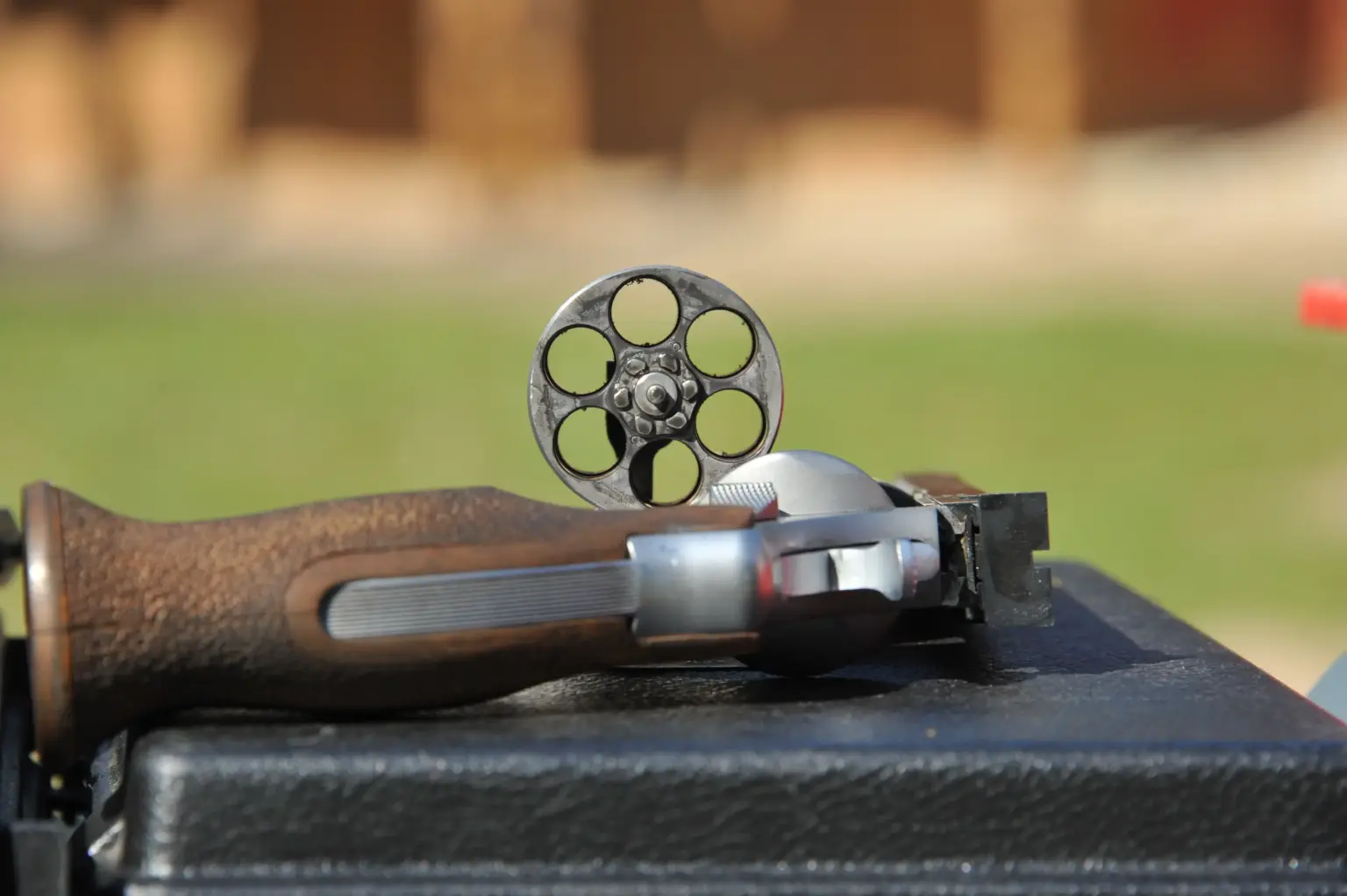
Early DA revolvers often used break-top or hinged frames to allow loading and extraction. They worked and were issued widely, but as cartridges became more powerful, makers leaned toward stronger solid frames. The late 1800s brought the leap most of us picture today: a solid-frame revolver with a cylinder that swings out to the side. Press a latch, pivot the cylinder, and a star-shaped extractor kicks empties free in one motion. That star extractor and the swing-out system from companies like Smith & Wesson and Colt established a pattern that still rules service and sporting revolvers.
Safety milestones: hammer blocks and transfer bars
Early 20th-century revolvers were functional and strong, but their internal safeties could lag behind modern expectations. Post war refinements changed that. Two systems dominate modern double-actions. One is the hammer block, seen in many Smith & Wesson designs. It interposes a barrier between the hammer and firing pin unless the trigger is held fully to the rear. The other is the transfer bar, popularized by Ruger. When you press the trigger, the bar rises and transfers energy from the hammer to the firing pin. Let go, and the bar drops. Both systems allow safe carry with all chambers loaded on modern DA designs because the firing pin cannot be struck unless the trigger is deliberately pressed.
Those mechanical steps are not marketing fluff. They reduce the chance of a discharge if the revolver is dropped or the hammer is bumped. Still, always confirm the specific features on the model in your hand and read the maker’s manual. There are still older guns in circulation that predate these changes.
Frame size is destiny
Revolver makers sort frames by size classes, and those sizes usually hint at role. Smaller guns carry easier. Bigger guns shoot hotter cartridges and soak up recoil. Capacity typically runs 5 to 8 rounds depending on frame and chambering.
- Small or compact frames: Think 5-shot or 6-shot snubs built for concealment. Short barrels, minimal sights, light weight. These are the pocket and ankle-gun class, as well as today’s minimalist belt guns. Examples include the well known J-frame class and similar patterns from other makers.
- Medium frames: The everyman size. Six round classics in .38 Special and .357 Magnum live here, along with seven-shot .357s on some slightly beefed-up frames. Good for duty, range, and early competition. K and L frames from Smith & Wesson or D and I frames from Colt fit the picture, along with Ruger’s older Security-Six family.
- Large and super-large frames: Built for magnums and endurance. Here you find six, seven, and eight-shot .357s and the .44-caliber guns that hunt and protect in bear country. Think S&W N-frames, L-frame seven-shooters, and Ruger GP100 and Redhawk class guns.
As size grows, so does sight radius and controllability. As size shrinks, concealment improves. Your hand matters too. The right stocks or grips can make a small gun feel bigger and a big gun feel better.
Calibers and compatibility, from .22 LR to .44 Magnum and .327 Federal
The double-action platform shines for caliber choice. Common chamberings include .22 LR for training and trail, .38 Special and .357 Magnum for defense and duty, .44 Special and .44 Magnum for field work, and .45 Colt in some big frames. There is also the .327 Federal Magnum family, which deserves a closer look because it layers compatibility.
A magnum-chambered revolver often accepts the shorter, lower-pressure cartridge in that family. The famous example is .357 Magnum revolvers firing .38 Special. Done within SAAMI guidelines and the maker’s manual, this is a big advantage. It lets a new shooter practice with soft .38 wadcutters and load warmer .357 only when needed. The same idea holds for .44 Magnum and .44 Special. Always match headstamps to the markings on your barrel and cylinder and follow the manufacturer’s guidance on +P and specialty loads, especially with older aluminum frames.
.327 Federal Magnum brings a different twist. Revolvers built for it can typically chamber .32 H&R Magnum, .32 S&W Long, and .32 S&W. That gives you a staircase of recoil and performance in one cylinder. As always, check the manual for your specific model before mixing families.
Rimless cartridges like .45 ACP can run in certain revolvers with the help of moon clips. This practice dates back to the U.S. Model 1917 service revolvers and continues today in both defense and competition circles. Moon clips also speed reloads by keeping rounds together, even when the cartridge itself has a rim. If you are curious about fast reloads, they are worth exploring on compatible models.
Where double-actions still shine
Home and personal defense: A DA revolver is always ready. Load it, holster it or stage it safely, and there is no magazine to seat or slide to rack. The manual of arms under stress is press the trigger while confirming sights. Clearing a dud typically means pressing again. Modern .38 and .357 defensive loads perform well even from short barrels, and .38 wadcutters remain superb for controllable practice. For home use, many people prefer a medium frame with a 3 to 4 inch barrel, good sights, and stocks that fill the hand.
Outdoors and trail: There is a reason large-frame revolvers keep showing up in photos next to camp stoves and trout nets. You can tailor loads to the job. Heavy hard-cast bullets for penetration in big-bore revolvers. Soft .38s or small-bore .22s for small game and general use. The platform tolerates a broad range of ammunition power without slide timing or spring changes. That makes one gun a flexible trail partner.
Sport and competition: Double-actions remain popular in revolver-specific games like ICORE and the revolver divisions of IDPA. These sports make a shooter fluent in a smooth DA press and consistent reloads. Power factors, barrel lengths, and reload gear are governed by rules, so read the rulebooks before you set up a gun. The takeaway is simple. If you enjoy improving skills that transfer to carry and field work, a match can be a fun and sobering teacher.
Triggers and how they really feel
People get tangled up in numbers for pulling weight. What matters more is the feel of the stroke. A good double-action press is smooth, stacks predictably at the end, and breaks without grit. Some brands and eras are famously slick. Others benefit from careful spring choices and light polish by a qualified smith. The goal is to maintain reliable ignition with all the ammunition you plan to use. Chasing the lightest main spring until primers go untouched is a fool’s errand. Reliability first, feel second, speed third.
Modern lockwork often uses MIM parts. There is a lot of heat on that topic, most of it misplaced. Properly made MIM parts work. Plenty of current production revolvers with MIM hammers and triggers have clean strokes and long service lives. If you are chasing a particular era of fit and finish for collecting, fair enough. If you simply want a reliable shooter, judge the individual gun by feel and function.
Design and manufacturing today
Today’s double actions are the product of hand-fitting where it matters and CNC everywhere it helps. Cylinders lock up on multiple points. Barrels are pinned or torqued in, depending on make and era. Safeties sit quietly inside doing their jobs. You will see blued carbon steel, bead-blasted or polished stainless steel, and modern coatings that resist sweat and weather. Finish quality affects looks and corrosion resistance. It also influences collector interest. Polish depth, even roll marks, and correct-era grips can turn a solid shooter into a desirable period piece.
Durability is a calling card. Large-frame double actions like S&W L- and N-frames or Ruger GP100 and Redhawk families are known for digesting magnums year after year if you keep them clean and check parts. Medium frames manage a reasonable diet of .357, with some caution around very hot loads. Historically, certain K-frame .357s showed wear at the forcing cone with a steady diet of light-bullet magnums. That is a reminder to balance practice ammo choices and to inspect the gun between range trips.
Buying by role: carry, range, field
Carry: A small-frame 5-shot or a slim 6-shot snub is still a practical carry piece. Prioritize a smooth DA trigger, sights you can see, and grips that fill the web of your hand without printing under a cover garment. Barrel lengths from 1.8 to about 3 inches cover most needs. Check that your chosen model is rated for the ammunition you intend to carry, including +P if that is your plan.
Range and home: A medium-frame with a 3- or 4-inch barrel is easy to shoot well and maintain. Fixed-sight .38s offer classic charm and low recoil with wadcutters. Adjustable-sight .357s open the door to precision zeroing for different loads. A six or seven-shot cylinder gives you a bit more on tap without making the gun unwieldy.
Field and hunting: Step into large frames if you want .44 Magnum or heavy .45 Colt. Longer barrels add sight radius and velocity. Look for robust lockup, adjustable sights you can see in low light, and a grip that spreads recoil across your palm. Stainless steel or a tough coating can be worth it when the gun rides in rain and dust.
Collector relevance: eras, finishes, boxes, and letters
Collectors latch onto details. For Smith & Wesson fans, the pre-1980s period of pinned barrels and recessed magnum chambers often marks a dividing line. Those traits do not automatically make a gun better. They do define a look and a way of building that many people prize. Colt fans talk about older Polish and handwork. Royal Blue finishes on vintage Pythons remain a high bar for cosmetic appeal. New production from Colt shows careful CNC work and improved internal geometry, while wearing modern stainless steel, which has its own draw.
What else matters if you want a revolver with a little extra provenance? Original boxes with matching labels. Correct-era stocks or grips, medallions, and sight blades. Matching numbers that a maker used. Factory letters from the archives services that can confirm ship dates and destinations. These documents add context. They can also prevent a lot of guesswork and internet myth chasing.
Notable families and models
You could fill a bookshelf with model names, but a few families anchor the landscape:
- Smith & Wesson K, L, and N frames: The Model 10 in .38 Special is the archetypal service revolver. The Model 19 carried magnums into the K-frame. The Model 27 and 28 put .357 into the big N frame with gravitas. The L-frame 586 and 686 split the difference with strength and shootability, including seven-shot variants.
- Colt D, I, and E frames: The Detective Special defined the 2-inch snub on a small frame. The Official Police and their kin were duty staples. The Python is the headline piece, old or new, with careful lockwork and a look that still turns heads. Modern reintroductions keep the gene line alive, along with the Anaconda in .44 Magnum.
- Ruger families: The Security-Six series gave way to the GP100, a rugged medium-large platform that handles magnums gracefully. The SP101 sits below as a stout small-frame. The Redhawk line takes on big-bore work with thick walls and solid construction.
- Modern compact stainless entries: The Kimber K6S family, for example, shows how a new maker can build a small-frame DA revolver with strong metallurgy, visible sights, and a smooth factory pull. Brazilian and Turkish entries round out the market with budget-minded choices that still cover core roles.
None of these is the only answer. They are reference points that help you decide what size, caliber, and feature set match your needs.
Inspection checklist for buyers
Revolvers reward a careful look at the counter. A few minutes here can save a trip back to the factory later. If you are new to this, do not be shy. Ask the shop to show you how to check these items safely with the gun unloaded.
- Endshake: Push and pull the cylinder fore and aft when the action is at rest. Excess play can signal wear. A little is normal. A lot is not.
- Barrel to cylinder gap: Shine a light. The sliver of space between the cylinder face and the barrel should remain consistent throughout the rotation. Too tight and it can bind. Too loose and you bleed gas and speed.
- Timing and carry-up: Slowly press the trigger and watch or feel the cylinder stop engaging. The chamber should be fully locked before the hammer falls. Late carry-up is a fixable problem, but it is a problem.
- Headspace: With the cylinder closed on empty cases, check for excessive fore-and-aft movement. If you are unsure, ask a smith. This one matters for safety.
- Forcing cone: Look for erosion or cracks, especially on older medium frames fed a steady diet of light, fast magnums. A clean, even cone is your friend.
- Extractor star and under-star area: Look for grit and unburned powder. Debris here can freeze a gun that is perfect otherwise. Cleaning fixes most issues.
- Ejector rod tightness: Make sure it is snug. A rod that backs out can tie up the cylinder.
- Yoke or crane fit: Open the cylinder and gently wiggle. Excessive sideplay or a bent feel suggests a hard life. The crane should swing freely and close without rubbing.
- Sideplate screws and general fasteners: Check for buggered screw heads. It is a clue to past visits under the hood.
Running the gun: reloads, speedloaders, and moon clips
Reloads reward rhythm. The classic method is to punch the ejector rod with the muzzle up so gravity helps empties fall free, then bring the gun down to feed with a speedloader or a moon clip. The key is consistency. Align the cylinder, seat the rounds as a unit, twist or press depending on the loader, and get back on target. Products like HKS and Safariland Comp II or Comp III have been around for decades for a reason. They work when you practice.
Moon clips are fastest in the hands of shooters who use them regularly. They can also be fussy if bent, so keep a few spares and a small tool to strip and load them. If you want a classroom for reloads, spend an afternoon watching experienced revolver shooters at an ICORE match or an IDPA club match. You will leave with a notebook full of small fixes that shave seconds without making the gear the star of the show.
Ammunition choices that make sense
.38 Special wadcutters are still a secret handshake among revolver folks. They cut clean holes in paper, recoil lightly, and let you run long practice sessions without fatigue. For defense from short barrels, modern .38 and .357 loads have come a long way, with bullets designed to expand at lower velocities. In the field, heavy-for-caliber, hard-cast bullets in .44 and .45 calibers have a track record of performance on tough targets where penetration matters. As always, match your ammunition to the markings on your revolver and follow published pressure guidance.
Care and service
Most user-level care is easy. Keep the area under the extractor star clean. Brush the cylinder charge holes so the cartridges seat fully. Wipe fouling from the forcing cone and top strap. Check the ejector rod for tightness. Light lubrication on the crane and cylinder ratchet pays dividends. Resist the urge to take sideplates off unless you know what you are doing. Timing and hand fitting live under there. If the gun needs that kind of attention, a trained smith or the factory service department is worth every dollar.
Parts availability varies by brand and era. Current production models from major makers are simple to keep in service. Older classics with discontinued parts are still worth owning, but factor in the time it might take to source springs, hands, or sideplate screws. That is part of the charm and part of the homework.
Safety and legal notes to keep it smart
Always match ammunition to the barrel and cylinder markings. Follow SAAMI specifications and ask the manufacturer about +P or specialty loads, particularly on older or lightweight frames. If your gun is chambered for a magnum, it usually accepts the shorter, lower-pressure parent cartridge. Do not reverse that logic. A .38 Special revolver is not a .357 Magnum. The same caution applies across families.
For rimless cartridges in revolvers, use the correct moon clips as specified by the maker. For .327 Federal family compatibility, check the manual for your model. Local laws on carry, transport, and hunting ammunition vary widely. Learn them before you carry afield or on the street. Safe storage matters too. A revolver’s readiness is a strength, which means it should be secured from unauthorized hands when it is not under your direct control.
Why the format endures
Spend time with a good double-action revolver, and its appeal starts to sneak up on you. The mechanics are legible. The gun does not ask much from you beyond consistent trigger work and the discipline to practice reloads. It handles a wide span of cartridges, from soft training loads to heavy hitters for the backcountry. It arrives with a family tree that is both useful and collectible.
Maybe that is why, even with a market full of polymer pistols and micro compacts, the big names keep making wheelguns. Colt, Ruger, Smith & Wesson, Kimber, and Taurus continue to ship new designs and revised classics. Buyers keep finding reasons to bring them home. Some go straight into a belt holster or a nightstand safe. Others sit in a case next to a factory letter and a set of numbered stocks. Both paths make sense. A double-action revolver does steady work and tells a good story. That is a hard combination to pass up.