
A government sidearm that refused to stay in its lane
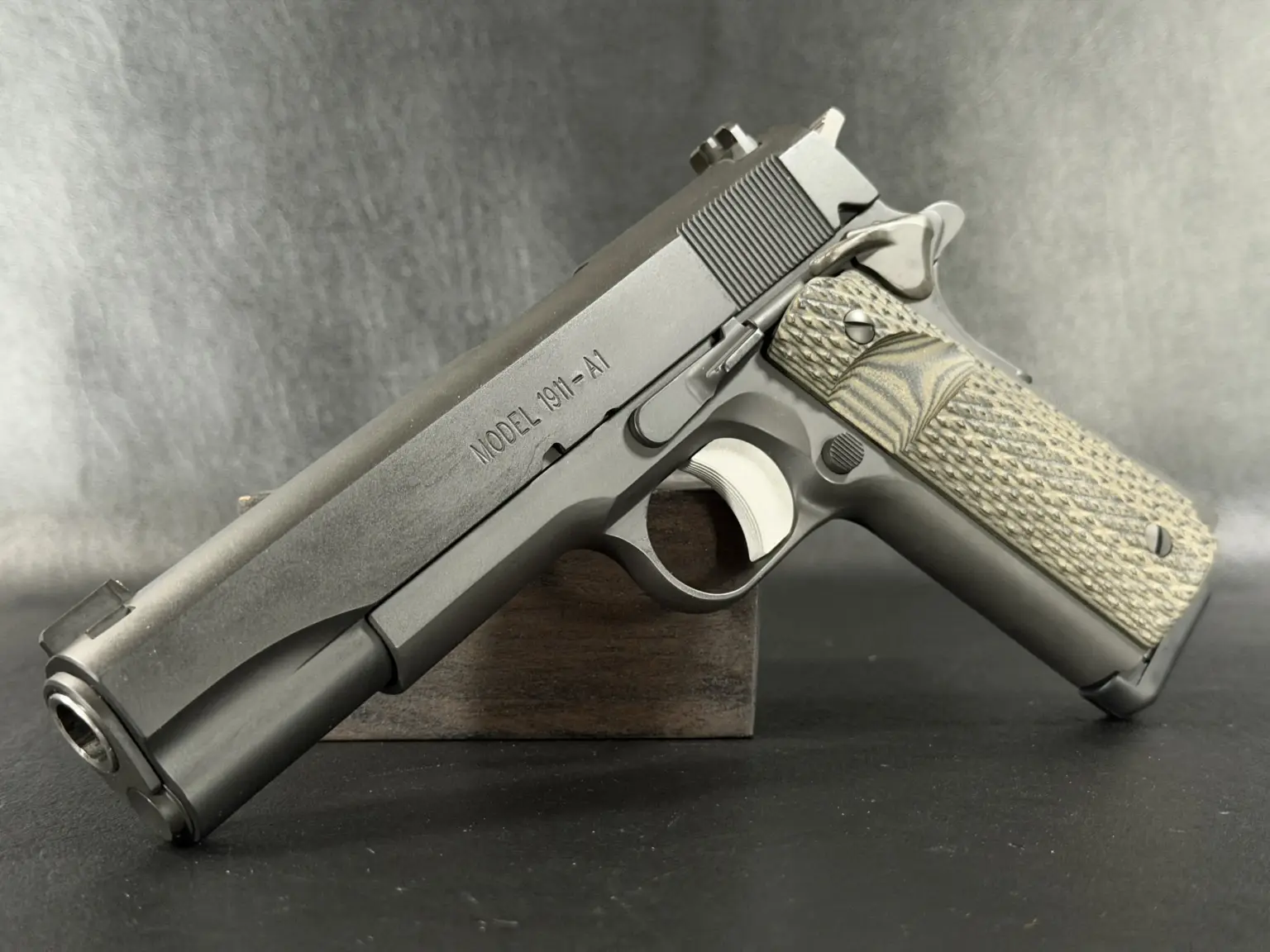
When people ask why the Colt 1911 endures, I start with a simple idea. It works like a machine that was meant to be worked on. That is not romance. It is a conversation between parts. Single action trigger with a straight pull. Slide and frame rails with generous bearing surfaces. A short recoil, tilting barrel system that locks and unlocks with a visible logic. Browning built a pistol that rewards careful fitting and forgives field grime. That mix wrote the first half of its story in uniform and the second half everywhere else.
The 1911 did its proving on a government calendar. Adoption came after tough trials, the kind that broke other designs. It went to Europe in one war, to the islands in another, and into decades of holsters after that. Then something interesting happened. The same traits that made it serviceable made it shootable, and the people who care about how paper targets look after a string took notice.
Why the 1911 hit so hard, so early
You can thank design bones. The 1911 wears ergonomics that do not fuss. Grip angle that points naturally for many. A frame that keeps the bore axis reasonable. Controls where hands want to find them. A thumb safety you can ride, a slide stop you can reach, a magazine release that is quick without being easily bumped. And the trigger matters most. Single action means a short, clean break with minimal movement. Shooters who had been wrestling double action triggers on early autos or heavy revolvers felt the difference.
The original pattern also shipped with sights that were, by modern tastes, tiny. But even with a sliver of a front blade, the gun had manners. Balance and weight took some sting out of recoil, especially in the original .45 ACP. Time on the range turned that into confidence. Confidence sent the pistol places its procurement office never imagined.
From trenches to ten-rings
By the 1920s and 1930s, civilian and service shooters were leaning on the 1911 for formal target work. If you have ever stood at Camp Perry and felt wind push a sight picture around, you understand why consistency becomes a religion. The 1911 was a willing convert. Armorers and early pistolsmiths learned where the gun wanted attention. Barrels and bushings that mated more closely. Triggers tuned to break like snapped glass instead of crushed chalk. Tightened slide to frame fit, but not so tight the gun choked when shooting dirty. Magazines that actually agreed with the feed path.
Government arsenals and commercial shops both played roles. National Match programs elevated the idea that a service pattern could put up precision numbers. Colt took notice and produced pistols that acknowledged the sport in their names and features. Those factory moves did not happen in a vacuum. They followed what unit armorers and independent smiths were proving on score sheets.
Gunsmiths make the 1911 their canvas
By the mid century, a handful of names were quietly changing how a 1911 should feel in the hand. You can chart the evolution through their benches. Armand Swenson with beavertails and extended thumb safeties that allowed a high grip without hammer bite. Jim Clark Sr. and Alton Dinan building heavy-slide pistols that tracked like trains and held the ten-ring in slow fire. Frank Pachmayr and the Los Angeles school turning out reliable, accurate customs for police and competition. Bob Chow in San Francisco fitting barrels and tightening groups for generations of shooters.
Their recipes became shared language. Throating and polishing feed ramps to handle modern hollow points. Fitting match bushings and barrels until lockup sounded like an oath. Stippling or checkering frontstraps and mainspring housings so the gun stuck to the hand without tearing it up. Adding adjustable rear sights with white outlines you could see in dim light. Trigger lengths chosen to match hand size. Long triggers came back into style for many shooters even though the 1911A1 era had introduced a shorter trigger and frame relief cuts for service use. The parts catalog grew because the pistol welcomed it.
Colt’s factory nods to the new reality
Colt, the name on the dust cover of so many originals, did not ignore the crowd at the target line. Prewar Commercial Government Models were often finished to a high polish that collectors still chase. After the war, the company leaned into accuracy-minded variants. The National Match name found its way onto production guns. Later the Gold Cup arrived with adjustable sights, a lighter slide with a distinct top rib on some eras, and a trigger tuned for bullseye stages. Those features read like a parts list cribbed from match benches.
Another swing in the 1911’s arc came with the Commander. Postwar requirements called for a lighter officer’s sidearm. Colt answered with a shorter barrel and slide around 4.25 inches and an aluminum frame that cut weight. The steel-framed version that followed, often called the Combat Commander, offered the same shorter package without the alloy frame. Shorter 1911s were no longer custom-only territory.
Collectors and shooters still talk about Series 70 and Series 80. The Series 70 era brought the collet bushing, a spring-fingered bushing meant to center the barrel consistently. Some love how it shot, some remember broken fingers and replace them. The Series 80 introduced a firing pin safety system that blocks the firing pin unless the trigger is pressed. It added small parts and a different feel to the trigger. People have opinions. The key is to understand what you are buying and why it was built that way. For collectors, rollmarks, polish, and correct small parts define originality. For shooters, the features and how they affect the trigger and reliability tend to matter more than the series name.
The action pistol boom and the 1911’s second wind
In the 1970s and 1980s, a new style of competition pushed handguns hard. Practical shooting asked for speed and accuracy together. If bullseye was a chess match, action pistol was more like a biathlon sprint with penalties for sloppiness. The 1911 arrived with a few natural advantages. A crisp single action trigger. A frame that could be modified for faster reloads. Room for better sights. A slide that cycled reliably even when the recoil impulse was tuned for faster recovery.
Soon you saw beavertail grip safeties as standard fare, because a higher grip helps you control recoil and reduces hammer bite. Extended thumb safeties gave the support hand a ledge. Magazine wells were funneled and blended. Triggers could be set to a consistent weight that survived long match days without growing gritty. Compensators and long dust covers showed up in Open division builds. Meanwhile, single stack divisions kept the classic outline while pushing speed.
Power factor rules pointed many shooters toward .45 ACP or .38 Super, which made major scoring and ran well in tuned 1911s. That fed an aftermarket that is still unequaled in the handgun world. Entire catalogs exist just to support this one design. Today, USPSA and IPSC single stack lines remain peppered with 1911s, and countless range days have been shaped by that culture.
Special units and the long tail of service
Even after new service pistols took over general issue, the 1911 stayed on with select groups that wanted its trigger, controllability, and known behavior. Specialized military and law enforcement units had armorers who could keep them running, and the platform rewarded careful hands. Precision shops built them with match-grade barrels, tuned extractors, and sights that suited low light. The Marine Corps fielded updated .45s for certain roles long after the general switch to other calibers. Federal teams carried customs from respected makers. None of that was hype. It was a recognition that a known tool, in skilled hands, solves real problems.
For our purposes as buyers and collectors, this history matters because it drove a long parade of small changes. You will find forged frames and slides from one maker fitted with barrels from another and safeties from a third. There are armorer stamps and rebuild marks that tell a story of careful maintenance. There are also parts-bin specials that are less coherent. Knowing the difference is half the fun.
Why the aftermarket never sleeps
Most pistols live and die with factory parts. The 1911 is different. Its parts interface points are accessible, which attracts both honest craftsmanship and the occasional headache. Here is the short version of why the ecosystem is so deep.
- Barrels and bushings respond to fitting with real gains. Proper upper lug engagement and a consistent lockup pay off in accuracy.
- Triggers can be tuned without making them unsafe when you understand sear and hammer geometry. Clean breaks build shooter confidence.
- Extractors and ejectors are user-serviceable. Tension, hook profile, and ejection pattern can be set by someone with patience and a bench block.
- Sights are easy to upgrade on many slides, and sight regulation can be tailored to a load.
- Ergonomics are modular. Safeties, mainspring housings, grip panels, and mag catches all influence how the pistol fits a hand.
The result is a platform that can be tuned for bullseye, carry, steel matches, or a stand at the safe where wood and blue steel still rule the eye. You can assemble a parts list that makes sense. You can also assemble one that fights itself. The difference usually comes down to purpose and the experience of the person doing the work.
Calibers beyond .45 and what they changed
The original chambering, .45 ACP, is a big part of the 1911’s identity. It feeds well in a proper 1911, has an easy-going pressure curve, and makes major power in many competition rules. That said, the platform did not stop there. .38 Super arrived early in the commercial life of the pistol and became a favorite among action shooters for its ability to reach major thresholds with lighter bullets and flat trajectories.
Nine millimeter versions are now common. A 9 mm 1911 often feels like a range cheat code. Low recoil, high shootability, and slide stop lockback that just works when tuned correctly. The magazines are different, the feed ramp geometry demands care, but when done right they turn the 1911 into an all-day practice partner that costs less to feed.
Other stops on the caliber map include 10 mm Auto, which brings energy for hunters and backcountry users at the cost of recoil and spring tuning. There are .45 Super builds that run hotter loads in strengthened pistols. Some historical curiosities, like 9×23 or .40 S&W in certain competitions, pop up as well. Barrel and extractor choices follow those changes. Caliber experimentation is part of how the 1911 kept pace with new roles.
Buying and collecting: what matters and what does not
Let us talk straight about two very different 1911 markets. One is for shooters who want a reliable, accurate pistol that fits their hands and purpose. The other is for collectors who care about dates, rollmarks, finish, and originality. There is overlap, but the priorities look different.
If you are after history
Original military Colts and other wartime contractors attract attention. Small details can mean the difference between a correct example and a parts gun. Look at:
- Serial number ranges and matching period features. Frame and slide should make sense together.
- Finish and marks. Arsenal rebuild stamps tell a real story, but original finish typically carries more collector interest. Be wary of refinishes that blur edges or wash out markings.
- Correct small parts. Triggers, sights, mainspring housings, and safeties changed over eras. A short trigger and arched mainspring housing suggest 1911A1 configuration. Relief cuts behind the trigger on the frame are an A1 hallmark.
- Documentation. Provenance that can be verified helps. Be cautious with grand stories that come without paper.
Postwar Commercial Government Models have their own gravity. Pre-Series 70 pistols often show high polish blue that turns heads. Series 70 rollmarks and the collet bushing are period correct features. Series 80 brings the firing pin safety and different internal levers. For collector value, originality tends to trump modifications. That beavertail that felt great in 1985 might subtract from historical interest now.
If you are after a shooter
Think about purpose first. Target paper at 25 yards, steel at speed, or concealed carry under a jacket will steer choices.
- Barrel and bushing fit should be snug with smooth lockup. No binding at the lugs. Muzzle crown clean.
- Trigger should break cleanly with a safe weight for the role. No creep, minimal overtravel, and reliable reset.
- Extractor tension set correctly. Cases should eject consistently without getting chewed. The hook should not gouge rims.
- Feed path geometry that matches your ammo choice. Properly polished frame ramp and barrel throat, with correct angles.
- Magazines from makers known to work in your variant. A lot of 1911 trouble starts and ends with magazines.
- Sights you can actually see. Big, black target blades for bullseye, clear notch and post with tritium or fiber for carry and speed games.
- Reliability proven by your own hands at the range. Put rounds through it, clean it, repeat, and watch for patterns.
On used customs, the signature on the slide can be a good sign, but inspect the work. Even respected names had apprentices. Fit and function matter more than a rollmark. And if local regulations apply to features or magazine capacity, know them before you bring a pistol home.
Getting a 1911 to run well for you
The design rewards a little attention. It also tells on you if you rush. Here are practical notes that help most 1911 owners.
- Springs are consumables. Recoil springs tired out by heavy loads can cause nose-dives and sluggish return to battery. Replace them at sensible intervals for your round count and load.
- Extractor tension is not set once for life. If your ejection turns erratic, check it before you chase other gremlins.
- Magazines are the lifeline. If problems show up, rotate in a known-good magazine first. Keep them clean.
- Do not polish geometry away. Feed ramps and throats benefit from being smooth and correctly angled. Removing metal blindly often makes things worse.
- Safety checks matter. With the pistol unloaded, confirm the thumb safety and grip safety block the sear and trigger as they should. A nice trigger is worthless if it is not safe.
- Aim small on lubrication. Rails, barrel lugs, bushing surfaces, link pin, and a drop on the disconnector track help. You do not need to drown it.
For 9 mm builds, pay attention to magazine geometry and ramp dimensions. For 10 mm, build around heavier springs and a firing pin stop that slows initial slide opening. The good news is that for almost any role, there is a known path that others have walked. The 1911 community never stops sharing what works.
Why it still matters
Ask five shooters what the 1911 means and you will get seven answers. For some, it is polished blue steel and walnut in a box with a key. For others it is a single stack holster on a match belt and a ritual of taping targets between stages. For a few it is a clean break at four pounds that lights up a center hit, and the way that makes them feel settled behind the sights.
The truth sits just beneath all that. The 1911 became more than a service pistol because it invited people in. Armorers could tune it for new goals. Competitors could push it to higher standards. Factories could listen and adjust. Tinkerers could turn parts into confidence. Collectors could trace small hands-off details back to a moment in time. The platform carries all of those stories without losing the original one stamped on its slide.
I still think about that first rattly Colt. The front sight was too skinny, the finish was mostly gone, and the trigger had a spot of grit right before the break. But the rounds went where I asked. It did its job, then it hinted at what else it could be with a little care. More than a service pistol, and also exactly what a service pistol should be. That is the 1911 way.