
Two tables down at a show, an honest SP1 sat next to a box-fresh carbine with a detachable handle. Same Colt on the left, very different parts story. If you do not know pins, blocks, and markings, it is easy to mix eras or buy a project you did not plan on.
This is the table-side decode I wish I had more than once. We will walk the Colt AR-15 lineage in plain language, from slab-side to what Colt sells now. You will see what to check for pin sizes, sear blocks, upper and barrel markings, BCG tells, LE rollmarks, model codes, and how to inspect one without rushing.
What Colt Sells Now: AR15A4, CR6920, and M5/EPR Highlights
Colt’s current commercial and agency lines give you a clear snapshot of where the brand sits today:
- AR15A4: 5.56×45 NATO, 20 inch barrel, rifle-length gas, forged 7075-T6 receivers, removable carry handle with A2 sights, fixed A2 stock, standard dual heat-shield handguards, and a 1:7 twist flat-top setup under the handle. It is the A4 pattern that takes irons or optics cleanly.
- CR6920: 5.56 NATO carbine with a 16.1 inch chrome-lined barrel, black anodized aluminum receivers, collapsible stock, A2 birdcage, A2 front sight, detachable carry handle, and 30 round STANAG magazine. The familiar M4-style layout many buyers expect.
For current specs and SKUs, see Colt commercial rifles.
On the agency side, Colt’s M5 and Enhanced Patrol Rifle materials highlight free float M-LOK rails with a continuous 12 o’clock rail, pinned low-profile gas blocks, properly staked gas keys, and fully ambidextrous controls on M5-pattern lowers. See the 2024 snapshot: Colt Law Enforcement overview (PDF) and the current Military & LE lineup.
Note: some M5/EPR configurations use 11.5 inch or 14.5 inch barrels. Short barrels or certain muzzle devices can require NFA compliance. Know your local and federal rules.
Reading Receiver Eras: Slab-Side, A1, A2, A4
Colt commercial rifles broadly mirror service-pattern eras. Use these quick cues at the table:
- Slab-side look: nickname collectors use for early lowers without a magazine release fence. Early uppers share a simple profile that draws SP1 fans.
- A1-era: forward assist present, no case deflector, simpler rear sight with windage only.
- A2-era: case deflector added, A2 birdcage, more complex rear sight with elevation, A2 furniture pattern.
- A4 pattern: flat-top upper with a removable carry handle so optics mount directly. Colt’s AR15A4 is the clean example. Most modern 16 inch Colts, including the CR6920, are flat-tops with a detachable handle.
Pin Sizes: What Fits What and How to Check
Colt’s long commercial run means you can encounter both sizes. Do not guess by nickname, measure.
- Front pivot pin: small about 0.250 inch, large about 0.315 inch.
- Fire control pins (trigger and hammer): small about 0.154 inch, large about 0.170 inch.
- Where to look: front pivot is the forward receiver joint; fire control pins live in the lower’s trigger pocket.
- How to verify: calipers are best. If you cannot measure, ask for a straight-on photo with a ruler. Do not test-fit parts without permission.
- Era guidance: many older commercial Colts use larger dimensions; recent commercial models are commonly small-pin. Always confirm if compatibility matters.
- Adapters: a simple bushing bridges a large-pin lower to a small-pin upper at the front pivot. It is common and reversible.
Sear Blocks and High Shelves: How to Spot Them
Some Colt commercial lowers include anti-conversion features. Expect one of the following:
- Raised web or shelf cast or machined into the receiver floor behind the trigger area.
- Pinned cross block spanning the lower behind the trigger pocket, visible from both sides.
- High shelf lowers that leave less room above the safety area.
How to identify: with the upper off, look into the fire control pocket. A cross pin where other AR lowers are open, or a raised pad reducing interior space, indicates a block feature.
What it means: these do not affect normal semi-auto use. Some drop-in triggers are designed to clear a raised shelf; pinned cross-block lowers may limit certain housings. Choose parts marketed as compatible. Do not alter a receiver.
Markings That Matter: Uppers and Barrels
Colt markings help you confirm chamber, twist, and the right parts in the right place.
- Typical barrel strings: examples include “C MP 5.56 NATO 1/7” or older “C MP CHROME BORE.” Confirm that chamber and twist make sense for the model in hand.
- Where to look: often at 12 o’clock forward of the FSB on fixed-sight guns or on exposed barrel between gas block and muzzle. Free float rails can hide marks; ask before disassembly.
- Upper cues: modern flat-tops usually have T-marked rails (T2, T4, etc.) that help repeat optic placement. Small forging marks near the rear lug or forward assist identify the forging source, not the assembly date.
BCG and Bolt: In-Hand Checks That Count
Colt’s LE and EPR materials emphasize assembly details tied to reliability. When inspecting a used rifle, verify what you can see:
- Gas key staking: look for metal displaced into both key screws. Colt calls out proper staking in agency literature because it keeps screws from backing out.
- Pinned gas block on enhanced models: noted in Colt’s LE descriptions and a solid alignment cue.
- Carrier wear: even rail wear is normal; deep gouging or odd tracks are not.
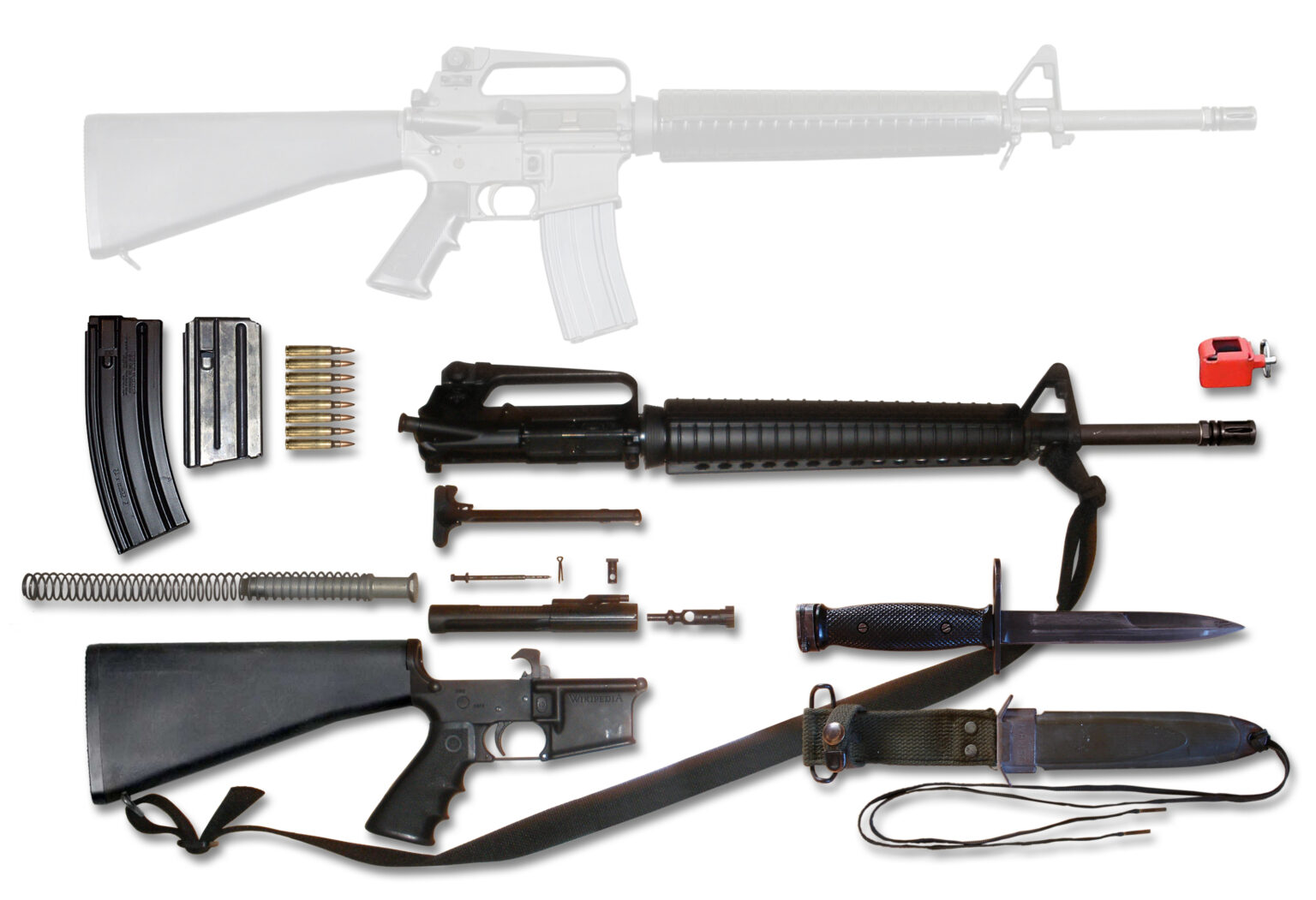
- Extractor and spring: control the extractor when removing its pin. Check the hook, spring tension, and buffer.
- Gas rings: stand the BCG on the bolt face with the bolt extended. If the carrier collapses under its own weight immediately, rings may be tired.
- Bolt lugs and face: look for cracks, heavy peening, or unusual gas erosion relative to overall wear.
For correct field stripping and cautions like leaving the ejector installed during routine cleaning, see Colt’s manual: Colt Advanced Law Enforcement Carbine Manual (PDF).
About steels: Colt’s public materials focus more on assembly features than steel callouts. If a seller advertises specific bolt or carrier steels, ask for factory documentation; otherwise judge the part by the checks above.
LE Rollmarks and Model Codes: Quick Decode
Model codes double as a quick lineage map:
- LE6920: LE channel 16 inch M4-pattern carbine.
- CR6920: current commercial-channel code for a similar setup.
- EPR: Enhanced Patrol Rifle packages with free float rails and other updates in Colt’s LE literature. You will see codes like LE6920EPR.
- Trooper: appears as LE6920-R in Colt press language, pairing a 16.1 inch barrel with a free float M-LOK forend as a value entry.
LE rollmarks: during the federal ban years, many Colt lowers carried “RESTRICTED LAW ENFORCEMENT/GOVERNMENT USE ONLY.” Those lowers show up used and draw collector interest. The rollmark does not change function. Read the lower in hand rather than assuming from the box.
Calm Tabletop Inspection: A Step-by-Step Flow
Use the same sequence every time so nothing gets missed:
- Safety first: clear the rifle, verify chamber and mag well empty, keep the muzzle in a safe direction.
- Match story to metal: read the lower model code and rollmarks, then confirm the upper configuration fits that claim.
- Upper to lower fit: slight play is normal; unusual wobble or binding mid-pin merits questions.
- Pin sizes: if you plan to swap uppers or triggers, measure pivot and fire control pins.
- Barrel and crown: check crown symmetry and bore condition. On CR6920, expect a clean chrome-lined bore.
- Gas system alignment: fixed FSB should stand straight; free float rails should not reveal a canted block.
- Handguard integrity: on M-LOK rails, look for cracks near slots; on standard guards, check heat shields and delta ring tension.
- BCG checks: confirm gas key staking, even carrier wear, healthy extractor, and normal gas ring behavior.
- Feed ramps: should be smooth and even at the barrel extension.
- Receiver extension: on collapsible-stock guns, look for a properly staked castle nut.
- Controls: run the selector, mag release, and bolt catch; confirm last-round bolt hold-open with an empty mag.
- Magazines: inspect feed lips and followers so you do not chase mag-related issues.
Compatibility Notes and Simple Fixes
- Front pivot mismatch: use a bushing if a large-pin lower meets a small-pin upper. It is a common, reversible fix.
- Fire control pins: buy a trigger sized for your lower. Measure first, then order.
- Optics and irons: AR15A4 and CR6920 flat-tops keep it easy. Run the detachable handle for irons or mount an optic directly to the rail.
Where Colt Is Headed: Free Float and Ambi
Colt’s direction is clear in its Military & LE literature:
- Free float M-LOK handguards with continuous 12 o’clock rails.
- Ambidextrous controls on M5 lowers for selector, mag catch, bolt release, and charging handle.
- Pinned gas blocks and staked gas keys as baseline assembly details on enhanced builds.
- Folding backup sights on select EPR packages for clean optic plus irons setups.
Quick-Reference Cheat Sheets
Pin sizes
- Front pivot: small ~0.250 in, large ~0.315 in
- Trigger and hammer: small ~0.154 in, large ~0.170 in
- Tip: many recent commercial Colts are small-pin; older commercial guns often are not
Barrel and upper markings
- Barrel examples: “C MP 5.56 NATO 1/7” or older “C MP CHROME BORE”
- Locations: 12 o’clock forward of the FSB, or exposed barrel ahead of the gas block; free float rails may hide marks
- Uppers: T-marked rails help repeat optics; small forge marks do not date the build
Model codes
- LE6920: LE channel 16 inch carbine
- CR6920: commercial 16 inch carbine
- EPR: Enhanced Patrol Rifle package
- LE6920-R: Trooper variant with free float M-LOK forend
BCG checks
- Gas key staked well into both screws
- Even carrier rail wear, healthy extractor and spring
- Gas rings pass the stand-up test
- Do not remove the ejector for routine cleaning; see Colt’s LE6940 manual
Why the Lineage Still Matters
Colt’s AR-15 family spans decades, which is why one rollmark can cover very different details from one serial to the next. If you can read pin sizes, sear block types, upper and barrel markings, and BCG cues, you will shop with confidence. Modern staples like the CR6920 and AR15A4 cover most needs, and Colt’s M5 and EPR lines show a steady push toward free float rails and ambidextrous controls for duty users.
Useful source links while you shop: Colt commercial rifles, Colt Military & LE, 2024 LE overview (PDF), and the LE6940 manual (PDF).