
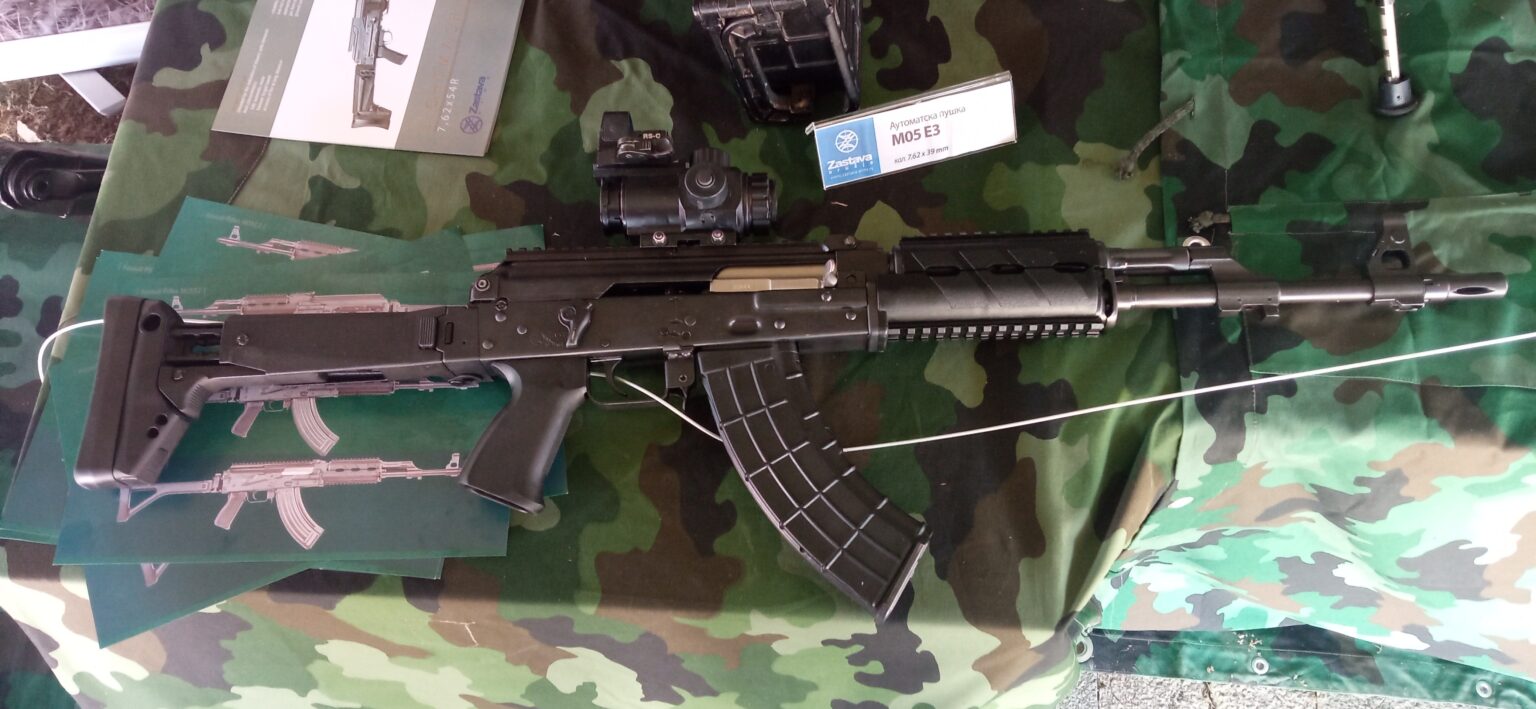
Few brands bridge pre‑war Mausers and modern AKs as neatly as Zastava. The name ties together Kragujevac steel, Yugoslav design choices, and today’s ZPAP rifles on American racks. If you know how to read the marks and model lines, the story gets a lot clearer.
Kragujevac, 1853 – the factory that anchored a brand
Zastava’s roots run to the state armory founded in Kragujevac in 1853, a shop that became the cradle of Serbian industry. The company highlights early adoption of modern manufacturing and even medals at the 1889 Paris World Fair. The through line matters: one factory served the Kingdom of Serbia, the Yugoslav period, and modern Serbia. For a concise timeline from the source, see the official importer’s Zastava Arms history.
Zastava Arms USA – what the modern importer does
Commercial Zastava products started appearing in the United States in the 1980s through various importers. In 2019, Zastava opened its U.S. subsidiary, Zastava Arms USA, which handles distribution, warranty, repairs, and parts from a domestic warehouse. New AK rifles are built in Serbia, then imported by Zastava Arms USA, which adds the required U.S.-made parts for 922(r) compliance. Browse current offerings on the Zastava Arms USA site.
From Mausers to M70 – the design habit that stuck
Zastava’s pattern has long been to take proven foreign ideas and build them locally with its own twists. That runs from FN-based Mausers to MG42 influences to the SKS, and ultimately to the M70 Kalashnikov family. American Rifleman’s overview of the ZPAP M70 captures this independence streak and the details that set Yugoslav rifles apart. See the American Rifleman review for context and specs cited below.
The M70 pattern and today’s ZPAP – what carries over
Yugoslavia moved to a Kalashnikov-type rifle in the late 1950s and Zastava’s M70 added local features, including a mechanical bolt hold‑open device and a built‑in rifle‑grenade system. That DNA carries into today’s ZPAP M70 semi‑autos for the U.S. market.
According to American Rifleman, the ZPAP M70 uses a stamped receiver and the Kalashnikov long‑stroke piston with a rotating bolt. Current rifles feature a cold hammer‑forged, chrome‑lined barrel, M14x1 left‑hand threads, and a 1:10 right‑hand twist. The selector/safety lever has a notch that retains the bolt to the rear for show‑clear handling at the range. See American Rifleman for those details, and check the Zastava AK page for current trims and furniture.
PAP family decoded – PAP, N‑PAP, O‑PAP, ZPAP
The acronyms confuse buyers. Here is the fast way to sort them on the M70 pattern.
- PAP – Early U.S. imports of sporting‑configured Zastava AKs. Specs varied with era and importer.
- N‑PAP – Typically lighter M70 pattern with a 1.0 mm receiver and standard, non‑bulged front trunnion. Earlier furniture and stock interface differ from later guns.
- O‑PAP – Heavier M70 pattern with a 1.5 mm receiver and bulged front trunnion. Often closer to military spec in feel and weight.
- ZPAP – Current U.S. line. Built in Serbia, imported by Zastava Arms USA, with chrome‑lined, cold hammer‑forged barrels and the M70‑style bulged trunnion and 1.5 mm receiver on most rifle variants.
Other current Zastava AK‑pattern models worth knowing: the M90 in 5.56 NATO, the M77 in 308, and the compact ZPAP92 7.62×39 and ZPAP85 5.56 pistols. Check the official Zastava Arms USA catalog for availability and specs.
Yugo-pattern compatibility notes that save you trouble
- Receiver and trunnion – Many M70‑pattern rifles use a 1.5 mm receiver with a bulged front trunnion. Handguards, gas tubes, and some muzzle devices are not 1:1 with standard AKM parts.
- Furniture length – Yugoslav handguards and gas tubes are typically longer than AKM pattern. Use Yugo‑specific furniture and gas tubes for proper fit.
- Stock interface – Fixed‑stock tang geometry differs on many M70 rifles. Choose Yugo‑pattern stocks or adapters.
- Magazines – Zastava/Yugo mags commonly use followers that hold the bolt open on empty. The bolt closes when you remove the magazine.
For model‑by‑model shopping help, see our ZPAP M70 buyer’s guide and the broader AK buyer’s guide.
Quick ID – common importer marks by era
Importer marks are your first dating and provenance clue. They are required by U.S. law and usually include company and city/state.
- 1980s to early 1990s sporting/bolt guns – Interarms imports of Zastava Mauser‑type rifles often read “INTERARMS ALEXANDRIA, VA.” The same actions appeared as Interarms Mark X and Whitworth.
- Early 1990s surplus – Mitchell Arms brought in Yugoslav Mausers and other Zastava products, commonly stamped “MITCHELL ARMS SANTA ANA CA.”
- 1990s to 2000s AKs and pistols – Century Arms markings often read “CAI GEORGIA, VT” or similar Century formats.
- 2000s to 2010s mixed imports – PW Arms marks typically show “PW ARMS REDMOND, WA.” Ohio Ordnance Works appears as “OOW CHARDON, OH.”
- 2019 to present – ZPAP rifles imported by Zastava Arms USA are marked with the company name and U.S. location, for example “ZASTAVA ARMS USA DES PLAINES IL” depending on production run.
For a deeper walkthrough of importer stamp styles and what they imply for value, visit our import‑marks explainer.
Where to find marks on Zastava rifles and pistols
Locations vary with the model and era, but these spots are common:
- Receiver flats – Left or right side behind the mag well for the importer stamp and model line.
- Barrel – Near the muzzle or on the shank. Some importers tucked small stamps under the handguards on the barrel.
- Trunnion and front sight block – Serial or partial serials, plus proof marks.
- Under furniture – Look beneath the handguards and on the stock inletting for arsenal numbers, inspector stamps, and cartouches on older Mausers.
- Dust cover and bolt carrier – Electro‑penciled or stamped assembly numbers on surplus guns.
Factory codes, crests, and serial conventions
Older Yugoslav‑era markings can look busy, but a few anchors help:
- Factory identifiers – “Preduzeće 44” is a post‑war Yugoslav factory code associated with the Kragujevac works and appears on some Mauser‑pattern rifles and other arms.
- Crests – Expect variations by era, from Yugoslav state crests on military rifles to Zastava rollmarks and commercial crests on export bolt guns.
- Serials – Letter prefixes and number blocks denote series or refurbishment batches. Matching major parts on surplus rifles is a value factor. Commercial ZPAPs use clear, modern serial formats.
- Proofs – Expect standard proof and test marks indicating the gun passed required trials before release.
For a practical guide to today’s serials, proofs, and factory codes, Zastava Arms USA published a helpful reference: how to read Zastava serial numbers and proof marks. For official product context from Serbia, see Zastava‑Firearms.com.
Global footprint – Interarms Mark X, Whitworth, Remington 798
Zastava’s reach goes well beyond the U.S. AK market. Its Mauser‑pattern actions were exported worldwide and sold under other names:
- Interarms Mark X – Zastava‑made actions and rifles distributed globally by Interarms.
- Whitworth – Premium variants based on the same Zastava actions.
- Remington 798 – U.S.‑market bolt rifles built on Zastava actions and branded by Remington for a period.
Outside the United States, Zastava rifles and pistols have moved through national distributors and regional partners for decades, often with local model names. The common thread is Kragujevac manufacture with export‑market branding layered on top.
Buyer tips for shooters and collectors
- Shooter’s shortlist – For a durable, authentic‑feeling M70‑pattern rifle, the ZPAP M70 checks the essentials. Confirm straight sights, clean rivet work, and smooth mag fit.
- Markings matter – Photograph receiver flats, barrel shank, trunnion, and any crests as‑received. Keep the box and importer paperwork. It helps with future value and provenance.
- Surplus sanity check – Expect honest wear, stock repairs, and occasional part swaps. Prioritize mechanical health and matching serials on major components.
- Parts and support – Zastava Arms USA maintains a parts department and warranty support, a welcome change from earlier importer eras.
For model comparisons and accessories that fit the Yugo pattern, see our AK buyer’s guide and Mauser ID checklist for older bolt guns.