
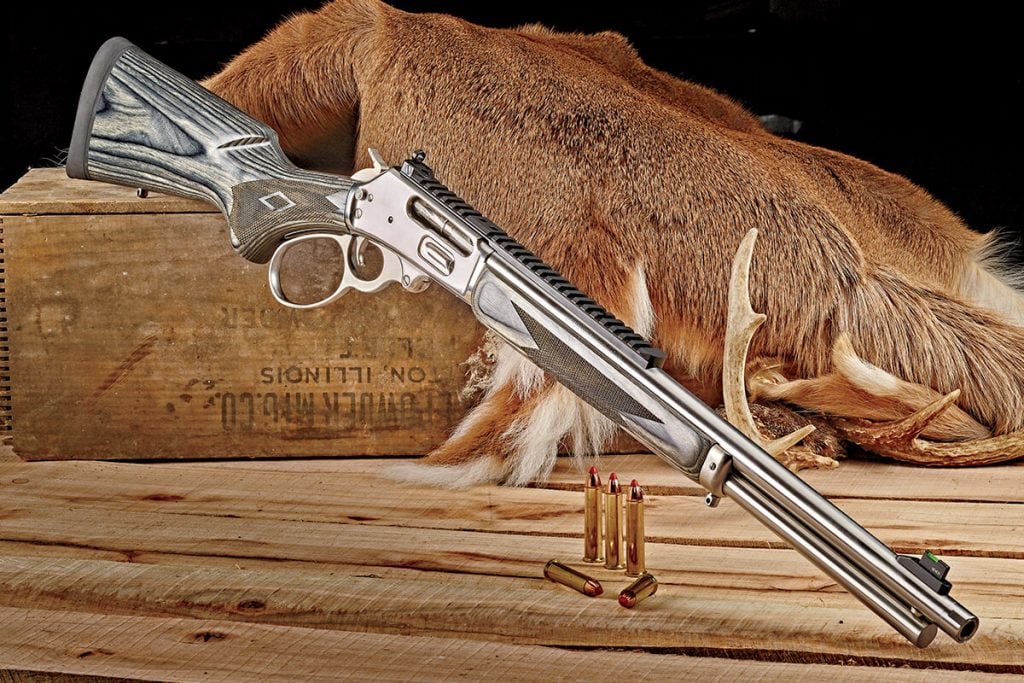
The first time I heard a Marlin lever close, it felt like a page turning. If you’ve stood at a gun counter with an older 336 in your hands, you know the rhythm. The questions that follow are practical: what do the stamps mean, which rifling is in the barrel, what safety setup does it have, and what should you inspect before you buy?
This guide keeps it simple and useful for anyone eyeing the 1893 pattern through the Model 336 and big-bore 1895. We’ll decode JM vs REP barrel marks, Micro-Groove vs Ballard-style rifling, safety features by era, sights and wood to expect, and a hands-on inspection checklist you can run right at the counter.
Quick model snapshot: 1893, 336, 1895
Marlin’s lever line runs from the 1893 pattern into the Model 336 and on to the big 1895. The 336 is the classic side-eject, solid-top deer rifle many of us grew up with. The 1895 carries the look and feel into heavier hunting roles. Most rifles you’ll see on a rack today are 336s or 1895s, but the lineage and handling across the family are closely related.
Barrel stamps: JM vs REP and what they mean
At shows and shops you’ll hear, “Is it a JM or a REP?” They’re talking about small proof/inspection stamps near the receiver on the barrel.
- JM mark: A small JM stamp typically near the receiver. Collectors associate it with earlier, Marlin-era production.
- REP mark: An oval-style stamp with REP, associated with the period when barrels were proofed under Remington’s umbrella.
These stamps help place a rifle in a broad production era. They don’t guarantee accuracy by themselves, but they do speak to the period’s machining and finishing norms. Use a small light and rotate the barrel to catch the stamp glare. If the rifle was rebarreled, the mark dates the barrel, not necessarily the receiver, so treat it as a clue rather than a verdict.
Rifling: Micro-Groove vs Ballard, how to ID at the counter
Marlin barrels show up with two common rifling styles:
- Micro-Groove: Many shallow, closely spaced lands and grooves. Under a bore light it looks fine and tight.
- Ballard or conventional: Fewer, deeper grooves. The pattern looks broader and bolder at a glance.
Some barrels are roll-marked for rifling type, others are not. If you are unsure, run a dry patch and look again with a proper bore light. Either style can shoot well when paired with ammo it likes. For buying decisions, note which style it has so you can match loads later and keep the rifle’s story straight in your records.
Safety checkpoints by era: cross-bolt, hammer positions, and using the manual
Many 336 and 1895 rifles have a cross-bolt safety. The factory describes a button that shows a red band when off safe, and no red band when on safe. Earlier rifles may rely on hammer positions rather than a cross-bolt. Before you evaluate anything, confirm the rifle is clear and learn how that particular example’s safety features work.
The official Marlin manual for the 336 and 1895 lays out a simple, safe routine to confirm empty:
- Keep the muzzle pointed in a safe direction.
- Open the action by rotating the lever down/forward until the bolt is fully rearward.
- Engage the safety by moving the button fully to the shooter’s right so the red band is not visible.
- Visually check the chamber, loading port, and magazine to ensure the rifle is completely unloaded.
- Look into the ejection port and ensure the firing pin tip is not protruding from the bolt face.
If you plan to remove the lever and bolt for cleaning or a deeper look, follow the manual step by step. It shows how to partially stroke the lever, back out the lever screw, and ease the bolt free only after confirming the rifle is empty and on safe. When in doubt, default to the manual’s exact instructions and illustrations.
Model 1895 and Model 336 factory manual: safety and maintenance
Sights to expect and what to check
Most 336 and 1895 rifles wear practical irons: a rear open sight and a front bead or post on a ramp. When inspecting, verify the rear elevator is present, the blade stands straight, and the front sight sits tight in its dovetail. A front sight hood, if present, should be centered and snug. Receiver-mounted apertures and swapped rear sights are fine if installed cleanly. Note any extra holes and whether they fit your preferences for originality.
Stock and wood: fit, cracks, and finish tells
Furniture ranges from plain working wood to walnut with pressed or cut checkering. Focus on condition and fit:
- Wood-to-metal fit should be even with no proud edges or gaps.
- Check for hairline cracks at the tangs and around the lower tang screw. Use a flashlight and change viewing angles.
- Inspect the fore-end tip for dings or compression from the band or cap. Honest wear is normal; structural cracks are not.
- Pressed checkering should be crisp without smeared borders; cut checkering will show cleaner edges. Evenness matters more than style.
Oil-darkened areas around tangs and the comb nose are common on used hunting rifles. Note them, but focus on structural integrity and correct, well-fitted parts.
Inspection checklist: action feel, bolt, and internals
After you confirm the rifle is clear and on safe, run this quick, table-friendly check:
- Lever throw: Cycle slowly. It should move smoothly without grinding. A little spring noise is normal.
- Lockup: Close the lever. Upward pressure at the lower tang should feel firm with minimal vertical play.
- Trigger: With permission and the rifle confirmed empty, ease the trigger to gauge feel. You’re mapping travel and grit, not testing pull weight.
- Hammer: Cock and lower with care. Movement should be smooth with positive notches.
- Ejector: With the action open, press the spring-loaded ejector lightly. It should move and return freely.
If the seller agrees, and only after re-checking clear, you can remove the lever screw and ease out the bolt to view the bolt face and extractor. Use a properly fitting screwdriver and follow the factory steps.
Barrel, crown, and bore
Bore condition matters. A bright bore with even rifling is ideal, but light frosting does not always doom accuracy. Check:
- Crown: Under strong light, look for a clean, symmetrical crown without nicks.
- Rifling: Note Micro-Groove or conventional appearance. Look for worn spots or cleaning damage.
- Throat: With a bore light from the breech, glance at the leade if you can. Excess erosion is uncommon on typical sporting use but worth noting.
- Exterior: Scan for flat spots, kinks, or rust under bands and the fore-end where grime hides.
Magazine and loading gate
Small problems here can undo a good day on the range:
- Magazine tube: Ensure the forward cap or band is tight. Look for dents that could bind the follower.
- Follower tension: With a dummy round if permitted, press through the loading gate. It should move smoothly.
- Loading gate: The gate should spring back flush. A gate that sits low can mark cases during loading.
- Carrier: While cycling, watch through the loading port. The lifter should rise square without dragging.
Bench function checks with dummies
With the seller’s okay, dummy cartridges reveal a lot without live fire:
- Feeding: Rounds should rise, angle, and chamber without nose dives or rim hang-ups.
- Extraction and ejection: The extractor should hold the case until the ejector kicks it cleanly.
- Last round: The final dummy should behave like the first. If not, look at the follower and spring.
Today’s Ruger-made Marlins and where to find official info
Today, Marlin firearms are manufactured by Sturm, Ruger & Co., Inc. The current lineup continues the 336 and 1895 names among others, and the factory literature covers safety controls and maintenance in detail. For official info, owner’s manuals, and current production updates, start at the company site below.
Wrap-up: choosing condition, era, and use
When I’m comparing a few Marlins on a table, I jot: barrel stamp and rifling type, safety setup, sights present and aligned, wood fit and any cracks, bore and crown, magazine tube and loading gate behavior, and how it cycles. Those notes outvalue shiny stocks every time.
JM versus REP is part of the story, not the whole book. Let condition, fit, and function lead. If you plan to shoot often, pick the one that runs smoothly with a healthy bore. If you collect by era, slow down and verify the details. Either way, follow the factory’s lead on safety: keep the muzzle in a safe direction, confirm clear before any work, and wear eye and ear protection.
Model 1895 and Model 336 factory manual: safety and maintenance
Official Marlin site for current production and brand information