
I still remember a small dealer table at a New England show where three Colts sat shoulder to shoulder like chapters torn from a history book. On the left, a lean five-shot percussion revolver with that unmistakable early profile. In the middle, a businesslike Single Action Army with holster wear that told its own stories. And on the right, a slab-sided 1911 that looked ready for another hundred years of service. One brand, three eras, and the same thread running through all of them. That is the pull of Colt, and it starts earlier than most folks realize.
Paterson beginnings and a revolving idea that stuck
Samuel Colt’s first successful run at a repeating handheld firearm took shape in 1836. That year he received a U.S. patent for a revolving-cylinder pistol and founded the Patent Arms Manufacturing Company in Paterson, New Jersey. His earliest commercial long arm was not a pistol at all but the First Model Ring Lever rifle, which went into production in 1837. Shortly after came the five-shot Paterson pistols themselves, some with folding triggers and later with loading levers, a clever way to keep the gun slim in the belt while still offering real firepower by the standards of the day.
The Patersons did not spring from a total vacuum. Revolving guns had been explored for centuries. Less than 250 examples of the Collier system are estimated to have been produced in the early 1800s, and there were other American attempts like James Miller’s revolving arms. Colt capitalized on the concept with a design that was manufacturable at scale and, just as important, marketable. For buyers and collectors today, that Paterson chapter forms the prologue to everything that followed, from Hartford to Hollywood.
Paterson itself was a tough proving ground. Making guns with parts that truly swapped across guns was still a young idea. Quality control and cash flow were constant fights. But the seed had been planted, and Colt’s name was becoming linked with the repeating sidearm in the minds of soldiers and frontiersmen who saw what five quick shots could do in a world used to one.
Walker’s big .44 and Colt comes roaring back
The connection that really turned the tide for Sam Colt came on the Texas frontier. Captain Samuel H. Walker of the U.S. Army knew the Paterson and thought a stronger, larger revolver could change mounted fighting. In 1847 he and Colt collaborated on just that. The resulting six-shot .44, commonly called the Walker, was enormous by handgun standards, and the U.S. government ordered 1,000 of them for mounted troops. With no operating factory at the time, Colt had the guns built by Eli Whitney in Whitneyville, Connecticut, a stopgap that got the revolvers out the door and into service.
That Walker order did more than keep a small maker afloat. It showed that a revolver could be a serious martial arm. It also put Colt back on a path that would lead straight to Hartford and to the brand’s long relationship with government contracts and civilian demand moving in tandem.
Hartford, interchangeable parts, and a global stage
Colt founded a new company in 1855, Colt’s Patent Fire Arms Manufacturing Company, and built the Hartford factory that would anchor the brand for generations. In this period, Colt was at the forefront of making large runs of guns with interchangeable parts and of organizing true assembly line work. He even demonstrated the approach on a global stage. At the Great Exhibition in London in 1851, Colt showed off his arms and cultivated European interest, setting up a London factory soon after. The Hartford plant, though, remained the beating heart of the operation.
Those years were a flood of percussion models that became familiar later in movies, museums and, for some of us, reloading benches. The 1851 Navy, 1860 Army, and several pocket models all carried the idea forward. In the post-Civil War era, metallic cartridges took over and Colt converted percussion guns while developing new cartridge revolvers. The foundation was in place for the model that would carry a nickname everyone knows.
The Peacemaker era
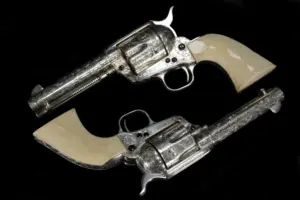
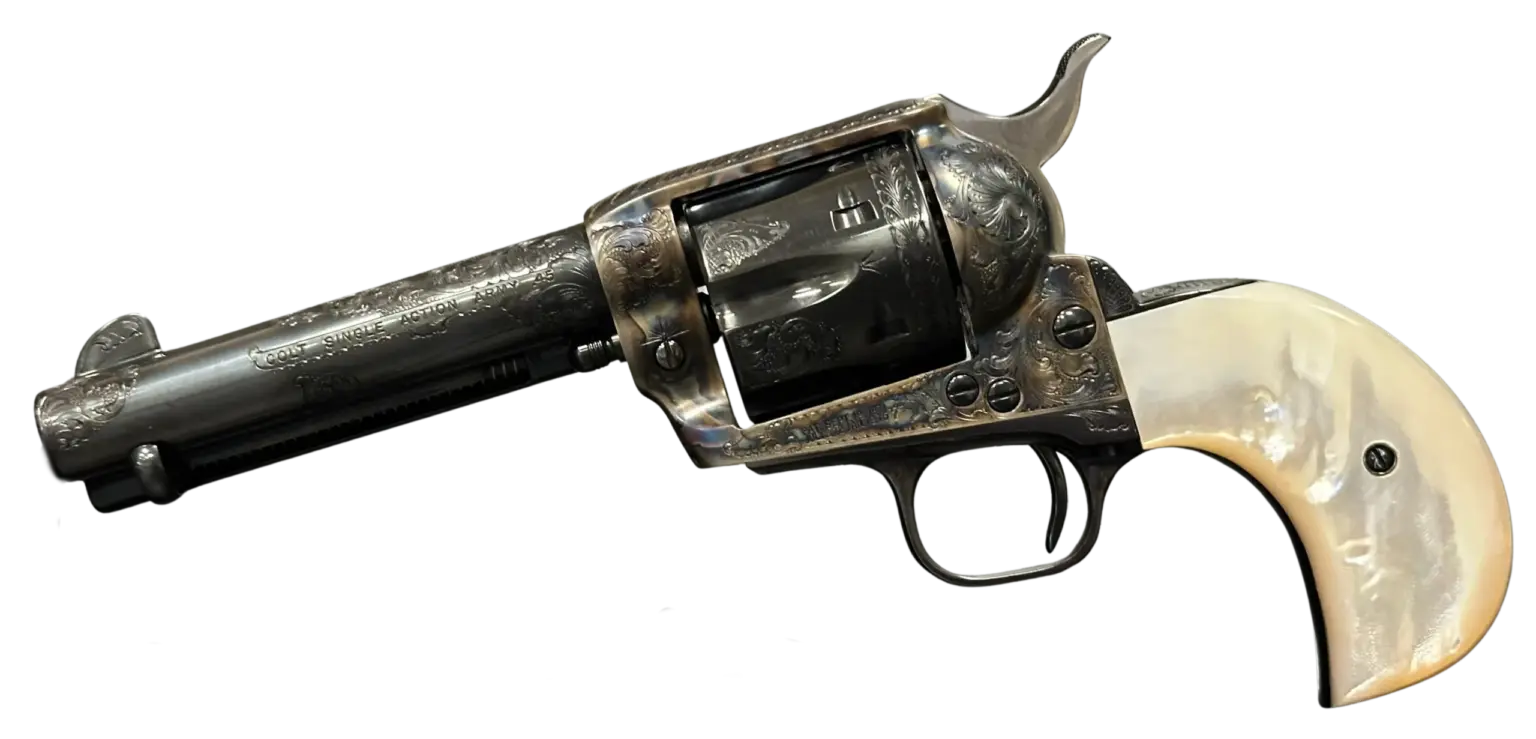
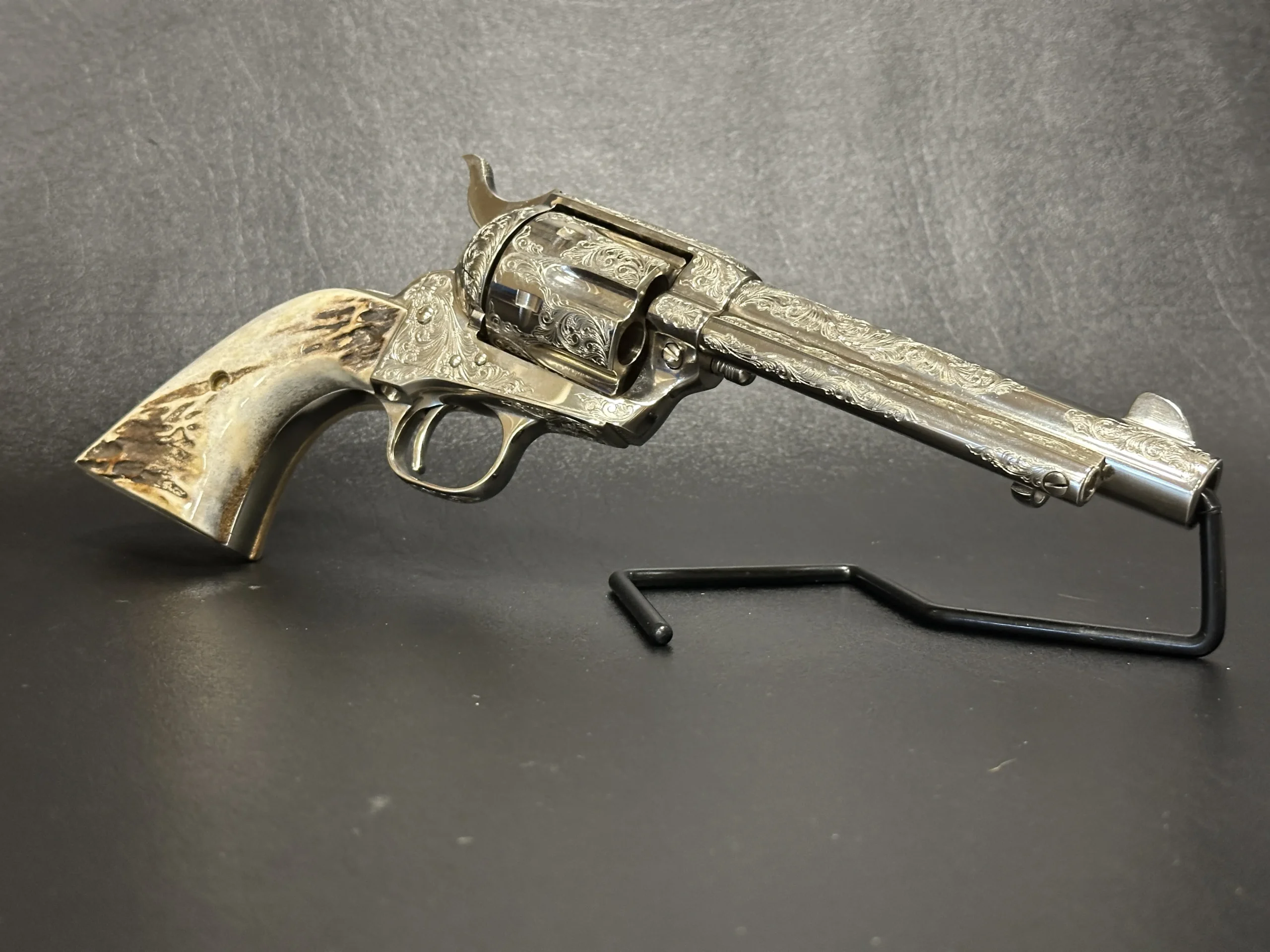
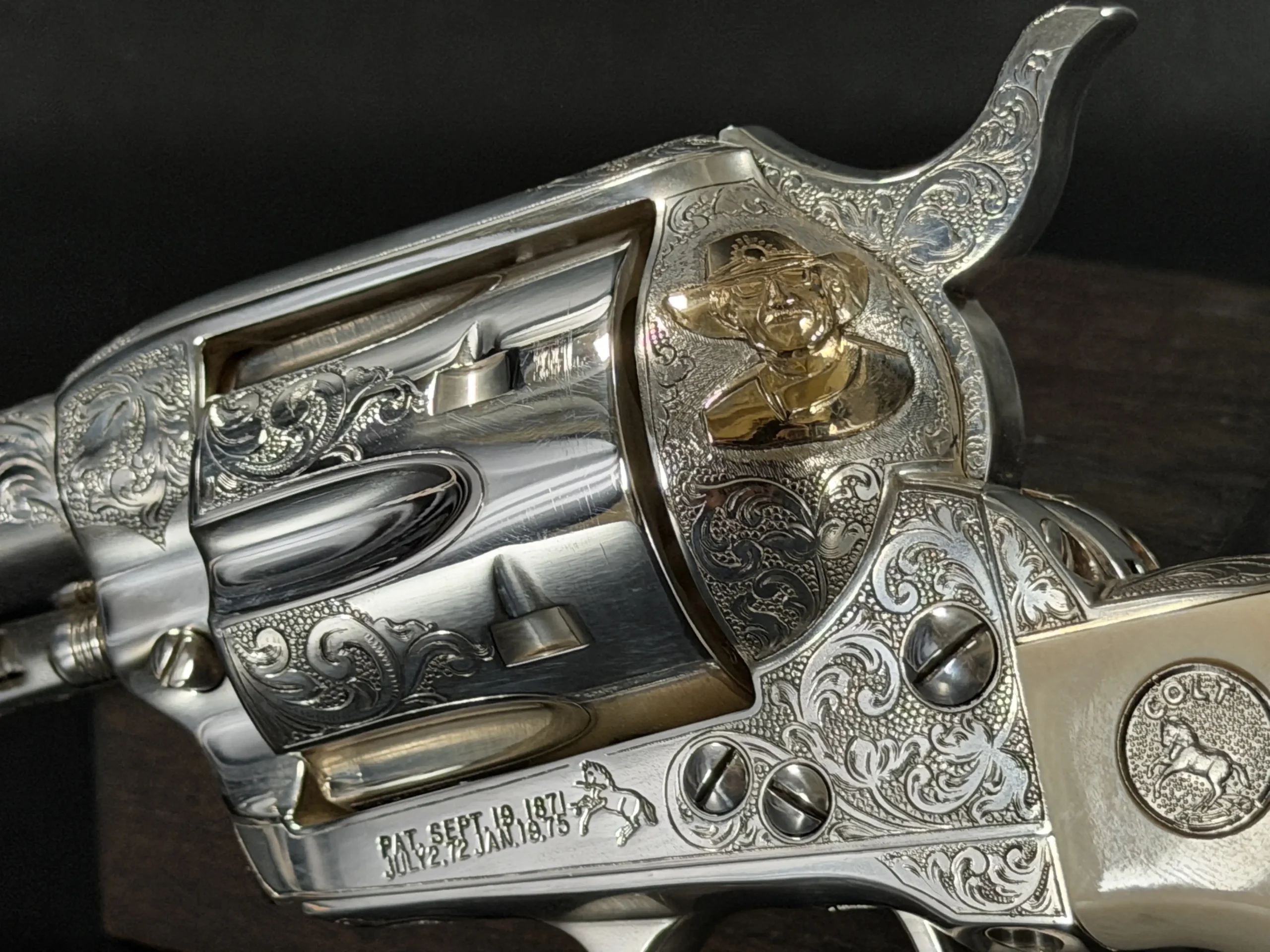
Colt designed the Single Action Army for government trials in 1872, and the U.S. Army adopted it in 1873. The gun has been known by many names, but the Peacemaker stuck in the culture. It was produced in numerous chamberings and barrel lengths, with the 7.5 inch cavalry pattern being the classic service form. The Army carried it until 1892, and the revolver’s reach into civilian life was even broader. Ranchers, law officers, and people far from towns bought them because they simply worked and worked the same way every time.
Collectors often split SAA talk into early and later production periods, but one thread runs across them all. The gun’s profile has barely changed since 1873. That continuity is part of why the SAA remains compelling. It can be carried and shot like it was intended to be, and it can also sit in a display and instantly read as American history. If you collect or buy to shoot, the Peacemaker earns attention for both reasons.
From double actions to Browning’s automatics
Even as the Peacemaker became iconic, Colt pushed in multiple directions. The company built smaller defensive guns, experimented with double actions in sizeable calibers, and introduced slide action rifles to compete in a market long dominated by lever guns. That willingness to try things did not always win the market, but Colt did not stand still.
Then came John Moses Browning. The Utah inventor worked with several manufacturers, but at Colt his designs helped shift the company into the age of the automatic pistol. His early single-shot rifle patent predated this partnership, yet when it came to pistols he delivered a family of designs that went from pocket guns to a full-size military sidearm. Colt made compact Browning pistols that found homes in coat pockets and desk drawers, and at the other end of the scale lay the design that would wear a U.S. service stamp for decades.
1911 adopted and the war years
After years of trials and endurance tests, the U.S. military adopted Colt’s Model 1911 in 1911. Designed by Browning and built by Colt, the pistol replaced the .38 caliber service revolvers and quickly drew a reputation for reliability and authority. A 1913 Navy-marked 1911 in the NRA’s collection captures the type as it first went to sea and field, and the basic format would carry through two world wars with only evolutionary changes. During World War I, Colt increased production of 1911 pistols and also produced Colt-Vickers machine guns to support the war effort.
The 1911’s longevity owes a lot to clear design priorities. The controls are simple. The single-action trigger is clean. The locked-breech tilting barrel keeps things safe and consistent. For shooters and collectors, that means the archetype still feels right in the hand today and still brings strong demand across original service guns, commercial production, and later variants.
The snake guns and the language of smooth double actions
Ask a revolver fan to say Colt and they might reflexively answer Python. Over the second half of the 20th century, Colt named several double-action revolvers after snakes. Python, Diamondback, King Cobra, and Anaconda are all on the roster, and each model developed its own following. The idea was simple. Build handsome double actions that shot well and carried a certain flash on the hip or range. Shooters responded. The Python in particular became shorthand for a tuned Colt double action, and that aura still colors the market today.
When buyers handle older double actions, they listen for timing, feel for carry-up on slow cocking, and check lockup at full cock. Colt’s older lockwork has a different feel than some competitors. If you are new to them, handle several and pay attention to the cylinder start and stop. Some buyers adore that silky staging, others prefer a different cadence. Neither camp is wrong. That is the beauty of choice.
If your interest runs to compact double actions, it is worth spending time with Colt’s small-frame family as well. Detective Special, Police Positive, Cobra, and Agent cover a lot of ground across steel and alloy frames and decades of production changes. We have a separate guide that walks through generations, shrouds, and inspection tips that are specific to these D-frames, which can help when you are standing at a counter with a magnifying glass and a flashlight.
What buyers and collectors should look for
Colt’s history invites both romance and rigor. The romance is obvious. The rigor is where decisions get better and money stretches further. A few practical thoughts that apply across eras.
- Define your lane. Are you after a representative example to shoot, an early variation with specific markings, or a factory letter candidate to anchor a display? Lanes prevent impulse purchases that do not fit your story.
- Condition and originality. On percussion Colts and early cartridge revolvers, original finish and sharp edges drive value. Refinished examples can still be wonderful shooters, but be honest with yourself about goals.
- Mechanicals first. On double actions, test timing carefully by slowly cocking and letting the hand carry the cylinder to lock. On single actions, look for excessive endshake and over-rotation scars. On autos like the 1911, check barrel lockup, slide-to-frame fit, and examine small parts for later replacements.
- Learn model-specific tells. Peacemaker barrel lengths, ejector rod heads, and hammer profiles can point to periods. Later 1911 variants moved small features as contracts changed. If you collect small-frame Colts, front sight shapes and ejector rod shrouds mark generations.
- Paperwork and provenance. Factory letters, shipping dates, and period-correct accoutrements help. Be wary of stories that cannot be documented. Let the steel do the talking and let the paper support that story.
None of this needs to be stressful. Handling many guns and taking notes will quickly teach you what your hands and eyes prefer. There is more than one right answer with Colts, because the catalog stretches from percussion to polymer-era thinking while keeping a certain identity intact.
Serials, markings, and helpful factory resources
Colt’s own resources are an underused edge for buyers. The company maintains a timeline that helps place models in context, and it also offers a serial number lookup tool that can help confirm basic production details on many later guns. Those small confirmations prevent mismatches from sneaking into your safe. If you collect older pieces, a factory letter is worth considering when the gun warrants the cost. It will not turn an average revolver into a rarity, but it can anchor details that matter if you plan to hold a piece long term.
Markings tell their own stories. On early percussion guns, inspect the barrel address and patent lines carefully, since those often reveal polishing and refinish work. On Peacemakers, the rollmarks and frame lines carry period clues that books can teach you to spot. On 1911s, small inspector stamps and slide legends help place a pistol in a specific contract. If you are splitting hairs between civilian and military production, a few letters or a style of font can move a gun from one column to another.
Elizabeth Colt, the hand on the tiller
One figure who does not get discussed enough in quick brand histories is Elizabeth Hart Jarvis Colt. After Samuel Colt’s death, she carried stewardship of the company and its civic presence in Hartford for years. In 1901 she sold the Colt Armory to investors, and she passed in 1905. Her role is a reminder that brands we reduce to a surname involve many hands and decisions that shape what eventually lands in our safes and on our ranges.
Colt in wartime and peacetime
By the time the U.S. entered World War I in 1917, Colt was a central supplier of handguns and machine guns. The company ramped up 1911 production and turned out Colt-Vickers guns for the effort. Through the 20th century, Colt’s arms served with U.S. and foreign forces in both world wars and in smaller conflicts. That military identity coexisted with a civilian catalog that kept faith with classic revolvers and brought in modern automatics as tastes and tactics changed.
Colt today: CZ Group, Colt Canada, and current production
Colt is still very much here. In recent years, it became part of Colt CZ Group. A generation earlier, Colt Defense had purchased the Canadian maker Diemaco, which became Colt Canada. That arm remains a key supplier of modern service rifles north of the border. On the civilian side, the catalog has circled back to names that stir old loyalties. The Python name is on new production, and classic single actions remain available in forms that respect their roots. The thread that began with a Paterson in the 1830s is still running, just woven into a broader family of brands and global manufacturing know-how.
For buyers stepping into the brand today, that means you can still walk into a shop and see a new revolver with a familiar Colt rollmark, or a new 1911 that feels like the real thing while enjoying modern materials and tolerances. For collectors, it means the arc of the story continues. There are still variations to chase, from pocket autos tied to the Browning lineage to the police revolvers and snubnoses that carried detectives through the 20th century.
Why this arc matters to people who buy guns
History explains demand. Patersons and Walkers are rarefied, but their existence is why later percussion models still draw a crowd. The Peacemaker’s Army adoption in 1873 is why a 5.5 or 4.75 inch civilian SAA with honest blue and case color will bring smiles at any range and steady numbers at auctions. The 1911’s 1911 adoption and 1917 wartime surge are why even an average World War I service pistol gets attention at a gun show table. And the snake guns sit where tastes and craft meet, which is why clean examples bring premiums and why many shooters still want to feel that particular double-action cycle at least once.
If your interest is more practical, Colt’s span of designs helps you find a fit. A modern 1911 from the catalog covers home range and competition with a familiar manual of arms. A small-frame revolver makes a classy carry piece. A Single Action Army scratches the itch that no autoloader can. And if you have the means and inclination, the percussion and early cartridge guns connect you to the exact problems inventors were solving in the 1830s through 1870s.
Closing the loop back at the table
Back at that little show table, the dealer did not need to talk much. The three Colts told the story. The Paterson lineage on the left was a reminder that big ideas usually start as fragile ones. The Peacemaker in the middle showed what happens when a working man’s tool lands just right. And the 1911 on the right made the case that a good design does not expire with its patent. That is Colt’s arc. It bends from an 1836 patent and a New Jersey factory to Hartford, to military trials, to world wars, to double actions named after snakes, and straight into the catalog today. For buyers and collectors, it is not just a brand history. It is a map of where to look, what to handle, and how to make the next addition tell part of that same story.
If you want a deeper look at the small-frame Colts that show up so often at local shops, see our overview on Detective Specials, Police Positives, Cobras, and Agents for generation cues and inspection details. And if Browning’s path to the 1911 has you curious about Colt’s pocket autos, our Colt 1903 and 1908 guide covers features and markings that help when two very similar pistols sit side by side.
For timeline context across Colt’s long run, the company’s own historical timeline is a useful refresher. And for an early look at a Navy-marked 1911 right after adoption, the NRA Museum’s write-up puts you within arm’s reach of a 1913 example and of Browning’s broader story as a designer.
Resources mentioned:
Related guides from us: