
Remington Model 8 and 81: Browning’s Long Recoil Sporting Rifles
A practical, collector-minded look at Remington’s Model 8 and 81. Calibers, long recoil explained, police conversions, and what to check before you buy.

Call us any time at: (833) 486-6659
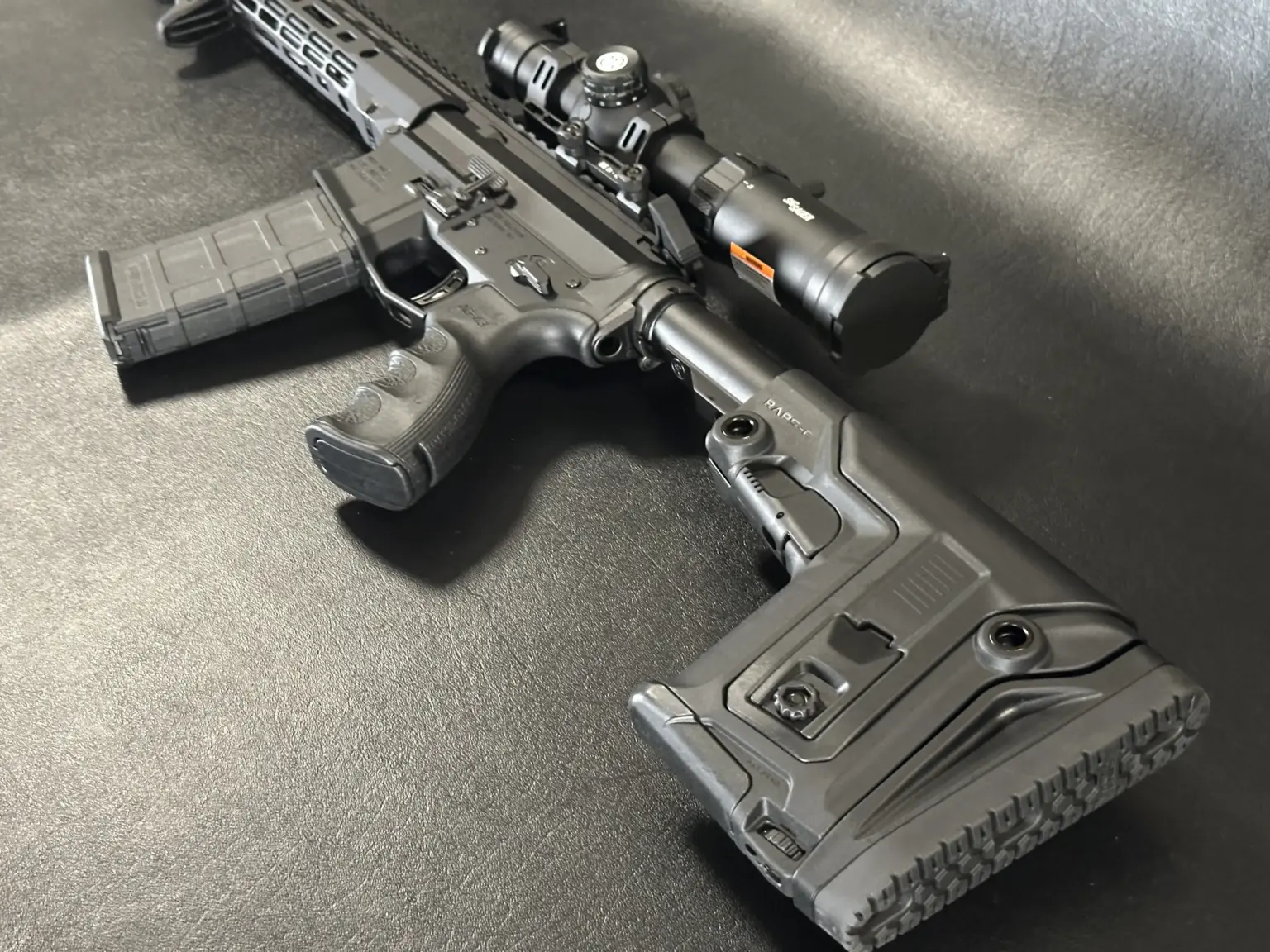
At an indoor range one winter night, two nearly identical 9mm carbines told a story. The first had that clank of a heavy mass shuttling back and forth and a crisp snap to the shoulder. The second felt like a steadier push, tracking flatter on steel. Same ammo, same shooter. The difference lived entirely inside the receivers.
That difference is the operating system. It decides how a self-loader stays closed when pressure is high, how it opens when pressure is safe, and how much weight and motion it takes to get there. If you buy pistol-caliber carbines, collect classic autoloaders, or run suppressors, understanding what happens between bang and bolt hold-open pays off.
Action type shapes what you feel and maintain. It affects:
These differences show up on the timer, at the cleaning bench, and in long days on the range.
Every self-loading action chases the same goal: keep the breech closed until pressure drops, then cycle reliably. The big families differ in how they achieve that timing.
In blowback, the cartridge case pushes the bolt open. There is no mechanical lock; delay comes from bolt mass, spring force, and friction. Variants add ways to delay the first motion.
Recoil-operated guns use the firearm’s recoil energy. Barrel and bolt may move together briefly before unlocking. In contrast, gas operation taps propellant gas to push a piston or carrier and cycle the action.
How it works: A heavy bolt and spring resist rearward case thrust until pressure falls, then the bolt runs back, extracts, ejects, and returns.
On the shoulder: Often a sharper impulse for a given caliber because a heavy mass stops and starts each cycle. In 9mm, it is manageable but shows up as longer splits compared to delayed systems.
Tradeoffs: Simple and economical with few parts. Weight lives in the moving group, and suppressors can drive more gas out the ejection port because there is no true mechanical delay.
How it works: The barrel is fixed. Rollers and angled surfaces put the bolt head at a mechanical disadvantage so the carrier accelerates first while the bolt face stays closed a tick longer. It is like gearing without gears, letting pressure drop before extraction. A clear overview of how this differs from direct blowback is in The Armory Life’s comparison.
On the shoulder: Typically a smoother push with lighter reciprocating parts than straight blowback in the same caliber. Many shooters notice flatter tracking and less bolt slap.
Tradeoffs: Geometry matters. Roller angles, locking piece profile, and tolerances set the delay and reliability window. Well executed, it runs cleanly and suppresses well for pistol calibers. Poor geometry narrows ammo tolerance.
How it works: A lever with unequal arms and a fixed fulcrum splits momentum between a light bolt head and a heavier carrier. Force on the bolt transmits through the lever, accelerating the carrier more and the bolt head less at first. Forgotten Weapons has an excellent visual explainer: How Lever Delay Works.
On the shoulder: Sits between straight blowback and roller delay. Done well, it feels lighter than blowback without adding a gas system.
Tradeoffs: Sensitive to lever ratio, fulcrum placement, and wear. As reference material notes, reliable function is bounded by ammo and arm parameters like bullet weight, charge, barrel length, and wear. At rifle pressures, designers often add extraction aids such as chamber fluting, and some early delayed concepts flirted with ammunition lubrication. These details are why lever-delay shows up less often in new designs, even though it has worked in subguns, rifles, and light machine guns.
How it works: Barrel and bolt lock together at firing and move rearward a short distance. A cam or link unlocks them, the bolt continues to cycle, and the barrel returns forward.
On the shoulder: A predictable, linear feel with a locked breech during the high-pressure phase. Often more forgiving across ammo types than straight blowback when springs are matched.
Tradeoffs: More moving parts and timing to maintain, and typically a moving barrel or locking block to keep in spec.
How it works: Barrel and bolt remain locked and travel rearward together a longer distance before separating to extract and eject. The sequence relies on springs and precise timing.
On the shoulder: A longer, rolling impulse because a lot of mass moves far. Distinct rhythm that some shooters love and others find languid.
Tradeoffs: More motion and timing tolerance to keep right.
How it works: A small amount of propellant gas is tapped from the barrel to push a piston or carrier, cycling the action with the barrel fixed.
On the shoulder: When tuned, a short push and quick reset. Adjustable systems make suppressor use straightforward.
Tradeoffs: Adds parts and routes hot carbon into the gas path. In return, designers gain control of timing that scales well across calibers and conditions. This is a big reason gas pistons are the most commonly chosen solution in modern service rifles.
How it works: Uses the firearm’s rearward recoil and a spring-mass in the bolt group to delay opening. The bolt head resists briefly while a spring compresses, then the action unlocks.
On the shoulder: Clean-running feel with a fixed barrel. Timing is all in spring rates and mass.
Tradeoffs: Ammo windows are defined by that mass-spring setup. Execution and maintenance matter.
These terms sound alike but differ mechanically. A roller-locked design is a locked-breech short-recoil system that uses rollers as locking elements. A roller-delayed design has a fixed barrel, and rollers act as a delay mechanism that slows the bolt’s initial movement. For a practical breakdown of why that difference changes recoil feel and gun weight, see the Recoil guide: Ultimate Roller Delayed Guide.
Suppressors: Straight blowback often vents more gas at the ejection port when suppressed because the action opens on pressure alone. Delayed systems usually perform better with equal calibers, thanks to true mechanical delay. Gas guns give you an adjustment knob to close ports and run softer when suppressed.
Cleanliness: Blowback keeps most fouling in the receiver and on the bolt face. Gas systems move it into the gas circuit and carrier. Delayed systems split the difference. None is maintenance-free.
Ammo tolerance: Blowback sensitivity tracks directly with bolt mass and spring rate. Delayed systems widen the window using geometry, but they still have sweet spots. Recoil-operated and gas actions, when sprung and ported correctly, tend to accept broader load ranges. Reference material and design notes consistently point out that lever-delay and other delayed-blowback systems are more sensitive to ammo, barrel length, and wear than gas or locked-breech designs.
In relative terms, if you cannot or do not want simple blowback, gas operation is generally the most forgiving to build and run, followed by short-recoil locking, with the various delayed blowback schemes being more sensitive to geometry, ammo, and production quality. This matches why gas pistons dominate modern service rifles.
Operating systems are the personality inside a self-loader. On paper they are all ways to control the first millimeters of bolt travel. On the line they become the difference between a carbine that works with you and one you fight. If you want to anchor the basics, start with the blowback overview. For why roller delay feels different than straight blowback, see The Armory Life comparison and Recoil’s roller-delayed guide. For the less common but elegant lever-delay, the diagrams at Forgotten Weapons make the mechanics click.
Available
View Item
Available
View Item
Available
View Item
Available
View Item
Available
View Item
Available
View ItemA practical, collector-minded look at Remington’s Model 8 and 81. Calibers, long recoil explained, police conversions, and what to check before you buy.
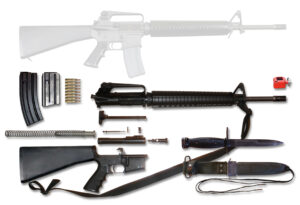
A collector’s look at Colt’s SP1 and early Sporters, from slickside uppers and pencil barrels to the rollmarks and small changes that hinted at the A2 era.

A practical, story-driven guide to reading JM vs REP barrel marks, understanding pre-safety 336s, Micro-Groove and Ballard-style rifling, and the smart checks to make before you buy.