
Cycle a Tikka bolt once and the feel makes sense. Smooth, unshowy, and predictable. That character was born in a Finnish tool shop and refined in Sako’s Riihimäki factory, where today’s T3 and T3x are built.
Origins and Sako integration: the timeline that matters
Tikka began in Tikkakoski, shifting from tools to firearms work more than a century ago. By 1918 they were making gun components, and in the early 1920s they acquired machinery to produce barrels. Volume production accelerated in 1972, teeing up deeper collaboration with Sako. In 1981 Tikka and Sako worked on a prototype and Tikka’s modern rifle series began; by 1989, production had moved to Sako’s Riihimäki plant. Today Tikka rifles are manufactured by Sako in Finland, and Sako sits under Beretta. The brand’s own line is simple: quality rifles without superfluous bells and whistles, built for accuracy and reliability.
Sources: SSAA review and history; official Tikka site.
Design DNA: simple, accurate, dependable
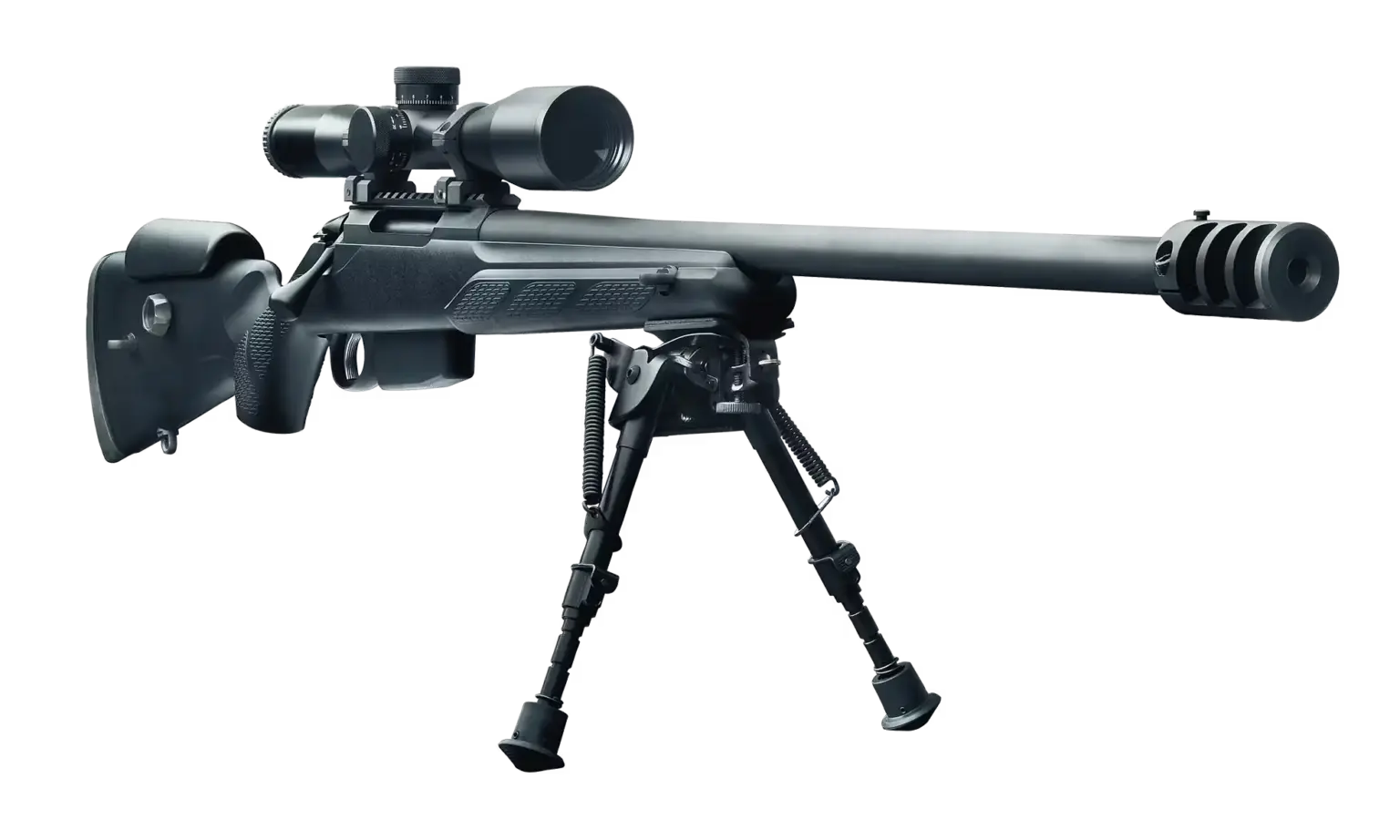
Strip away the marketing and you land on a short list that has stayed consistent: a rigid action, good barrels, a clean single-stage trigger, and controls that work in the cold. Modern Tikkas use cold hammer-forged barrels, a two-lug bolt with a 70-degree lift, and a detachable single-column magazine built from fiberglass-reinforced polymer. Triggers are adjustable roughly 2 to 4 pounds and many models offer an optional single-set trigger. None of it is flashy. All of it helps you shoot well.
Before the T3: the lineage that set the tone
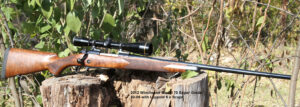
Collectors point to the M55 and M65 as the start of the modern Tikka feel. That family carried through the M558 and M658, then M590 and M690, and into M595 and M695. The variations span stocks, barrel profiles, and magazines, but the through line is Finnish machining and practical ergonomics that punch above their price class. Early rifles were built at Tikkakoski before production consolidated at Sako’s Riihimäki factory.
- 1918: components; early 1920s: barrel machinery (SSAA)
- 1972: volume production accelerates (SSAA)
- 1981: joint prototype with Sako; rifle series begins (SSAA; Tikka)
- 1989: Tikka production moves to Sako in Riihimäki (SSAA)
- 2003: Tikka T3 launched (Wikipedia)
- 2016: T3x refresh (Wikipedia)
- 2020: one-millionth T3/T3x produced (SSAA)
2003: T3 launch and what changed
When Sako introduced the T3 in 2003, the brief was straightforward: streamline production without sacrificing the accuracy and feel shooters expected. The T3 was developed by a Sako team led by Kari Kuparinen and offered a wide range of stock, sight, caliber, and barrel options out of the gate. What mattered to owners was how it ran. The bolt felt smooth from day one, the barrels were consistent, and the rifles tended to group well without drama.
Source: Tikka T3 on Wikipedia.
2016: T3x upgrades that stuck
The T3x update in 2016 was not a reinvention. It was a set of small, useful improvements:
- Larger ejection port to make single-loading easier
- Steel recoil lug in place of aluminum for long-term durability
- Metal bolt shroud in place of polymer
- Reworked stock surfaces for better grip in wet or cold conditions
Crucially, many T3x parts retrofit to the original T3. That means a well-priced T3 can be brought close to T3x spec with targeted upgrades.
Factory details that show up on target
Tikka emphasizes consistent barrels and a clean trigger, then backs it with a factory 1 MOA accuracy guarantee across the T3x line when proper ammunition is used. Barrels are cold hammer-forged in-house, threaded into the receiver with a sturdy engagement, and hand-crowned. Wooden-stocked models free-float the barrel. The bolt runs on two locking lugs with a 70-degree lift; the handle is removable for service or knob swaps. The single-stage trigger has vertical grooves and is easily adjusted through the magazine well to about 1 to 2 kg. Magazines are single-column, fiberglass-reinforced, and use a flush front latch to resist accidental drops. These are quiet choices that matter in the field.
Model lines in real terms
T3x is a family built on shared core parts, then split by stocks, barrels, and intended use:
T3x Hunter. Walnut stock and traditional lines with modern machining, and a free-floated barrel in wood-stocked models.
T3x Forest. Another walnut option with a different stock profile. Most buyers choose by how the stock meets the cheek and hand.
T3x Lite. The workhorse synthetic. Fiberglass-reinforced polypropylene stock, weather friendly, with blued or stainless actions and many regional variants. Left-hand versions are common enough to buy without a hunt.
T3x Varmint / Super Varmint. Heavier barrels for stability over long strings. Super Varmint adds features tailored for small-target and long-distance work.
T3x TACT A1. The chassis model with adjustable, folding stock and the mounting real estate precision shooters want.
Source for model family: official Tikka site.
Calibers and barrel lengths: quick hits
Offerings vary by region, but the range runs from .223 Rem class up through 6.5 Creedmoor and into .300 Winchester Magnum territory. Factory barrel lengths commonly include 406 mm, 510 mm, 570 mm, 600 mm, and 620 mm, depending on model and chambering.
Source: Tikka T3 on Wikipedia; SSAA review.
Tactical and specialist variants
T3 and T3x actions also underpin dedicated tactical models. Notable examples include the T3 Tactical PN/GN used by law enforcement in France and the T3 TAC used by the Indian Navy MARCOS. The family also includes the T3x Arctic/C19 lineage in the broader brand tree.
Source: Tikka T3 on Wikipedia.
Buyer notes: T3 vs T3x and what to check
- Upgrades. T3x brought a steel recoil lug, metal bolt shroud, and a larger ejection port. Many of these parts retrofit to a T3, so a clean T3 plus a few parts can be a great value.
- Trigger first. Most T3/T3x triggers adjust to a crisp 2-pound break. Try a careful adjustment before chasing aftermarket units.
- Stocks and fit. Synthetic stocks are tougher than they look, but face-to-comb fit matters. If you run large objectives, consider a riser or a stock change.
- Magazines. Factory single-column mags are robust. Capacities of 3, 5, 6, or 10 depend on model and caliber.
- Left-hand actions. Southpaws have real choices in the T3x line, which keeps prices and availability sane (SSAA).
- Inspect smart. Expect honest wear on bolt handles and mags. Be cautious of over-torqued screws, bent bases, or home-polished feed ramps.
Where this leaves collectors and buyers
The pre-T3 rifles deliver classic Finnish feel. The T3 unified the platform for modern production. The T3x fixed small things that matter over years of use. All of it is built by Sako in Finland, now under Beretta, with a factory accuracy guarantee that mirrors what shooters see on paper. Pick the stock that fits, the barrel that suits your pace, and a chambering you actually shoot. The rest is Finnish machinery doing what it was built to do.