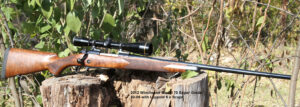

I remember the rifle because it should not have shot that well. Blued steel, thin sporter barrel, basic glass, and groups that stacked into one ragged clover. On the next bench, a heavy tube with the kind of hardware that usually draws a crowd. It printed fine, but no better than fine. Same ammo. Same wind. Different results.
When that happens, I think about the part that does the real work. Not the stock. Not the trigger. The barrel. More specifically, the rifling inside it. If you are choosing between cut, button, and hammer-forged barrels, curious about 5R versus traditional grooves, or wondering how stress relief, contour, and the crown matter, this is a straightforward map through what counts.
Rifling basics: lands, grooves, twist
Rifling is the helical pattern inside the bore that spins the bullet so it flies point-forward. The raised portions are lands. The depressions are grooves. Land diameter is measured across the tops of the lands, groove diameter across the bottoms of the grooves. That geometry and the twist rate determine how a bullet engages the bore and stabilizes. For a quick manufacturer primer on how rifling and twist work together, see Savage’s overview on rifling and twist rates.
How rifling is made: five mainstream methods
Barrel makers rely on a handful of proven ways to create that spiral. American Rifleman summarizes five in common use:
- Cut rifling
- Button rifling
- Broach rifling
- Cold hammer forging
- ECM, or electrolytic machining
Cut rifling
Cut rifling is the carve-it-in approach. A single-point cutter removes a tiny curl of steel on each pass until the grooves reach depth. It is slow by design, which is why it shows up in custom work. Savage notes that cut rifling allows fine control over groove dimensions and unusual twists, with shops typically stress-relieving after rifling to keep blanks straight and stable.
Button rifling
Button rifling pushes or pulls a superhard tungsten carbide button through the bore. The button carries the reverse of the groove pattern and displaces steel to form the rifling in one pass, often free-rotating so the helix angle on the tool sets the twist. That single stroke is why buttoning dominates modern production: it is fast, repeatable, and delivers very uniform bore and groove dimensions when done well. Because metal is being moved, reputable shops stress-relieve after rifling to relax the steel. The result can be extremely accurate tubes when the process is controlled. See overviews from American Rifleman and 80 Percent Arms.
Cold hammer forging
Cold hammer forging starts with a short, oversized blank over a hard mandrel carrying the negative of the rifling. Power hammers work the outside of the blank, swaging the steel down around the mandrel while lengthening it. In one operation you can form the bore, rifling, and even a chamber or exterior profile. The outcome is tough, consistent barrels at scale. As American Rifleman points out, hammer-forged barrels are common on high-volume center-fire hunting rifles and pistols where consistency and strength are prized, and they are less common on match or varmint barrels where many shooters favor cut or button for ultimate tiny-group potential.
Broach and ECM
Broach rifling uses a long, multi-tooth tool that cuts all grooves at once. ECM shapes the bore electrolytically without tool contact. Both are in use, typically to meet specific production goals. As with every method above, execution matters more than the label.
Cut vs button vs hammer-forged: what you actually see on target
From the bench and the factory floor, the differences tend to look like this:
- Cut rifling is chosen for specialty twists and exacting control. Expect longer lead times and makers who emphasize post-rifling stress relief and careful dimension checks.
- Button rifling dominates American production because one controlled pass can yield outstanding dimensional uniformity. That uniformity is a big reason so many buttoned barrels shoot extremely well. Most shops stress-relieve after rifling to keep things straight.
- Hammer-forged barrels are tough and consistent at volume. They are everywhere on hunting rifles and service pistols. In precision niches you see fewer of them, reflecting a long-running belief that cut and button hold a small edge in raw group size. Many hammer-forged barrels still outshoot most of us.
There is no universal winner. Excellent barrels are made every day by all three methods.
Groove profiles: Enfield, polygonal, ratchet, 5R
Rifling differs by shape as well as twist and depth. You will see conventional Enfield-style square shoulders, hybrid and ratchet shapes, polygonal forms with more rounded transitions, and the five-groove family often called 5R. American Rifleman illustrates these common types well in their profile overview.
What is 5R? In short, five grooves instead of an even number, so a land does not sit directly across from another land. The lands are more gently sloped than sharp square shoulders. Advocates point to two theoretical perks: bullets may engrave more gently, reducing jacket deformation, and cleaning can be easier because there is no tight 90-degree corner for carbon to pack into. Those claims are commonly repeated by manufacturers and retailers, such as 80 Percent Arms.
Reality check. Apples-to-apples results rarely show a clear on-target accuracy or barrel-life advantage for 5R over good conventional rifling. Experienced makers in the precision world have said they do not see a reliable difference in accuracy or life between 5R and square-shouldered patterns. If 5R cleans a bit easier for carbon in your kit, take the win. If your conventional barrel shoots tiny knots, you are not missing a secret.
The constant across profiles is uniformity. The more consistent the bore and groove sizes over the full length, the more uniform the twist, and the straighter the blank, the more forgiving the barrel will be.
Stress relief: calming a barrel after the hard work
Rifling works the steel hard. Cutting makes repeated passes. Buttoning moves a lot of metal in one go. Hammer forging cold-works the blank down around a mandrel. Any of it can leave residual stress that tries to show itself as the barrel heats and cools.
Good shops bake stress relief into their process. Savage describes stress-relieving after rifling to help maintain straightness and dimensional accuracy. Retailers discussing button rifling note the same point: post-rifling stress relief reduces the risk of unwanted movement in service. It is standard housekeeping for a shop that wants its tubes to stay straight.
Barrel contours: weight, stiffness, heat
Contour is simply the outside shape and diameter profile. Heavier tubes add mass and stiffness, often sitting steadier on bags and feeling less twitchy about heat during strings. Lighter contours carry easier and balance quicker. Pick the contour that matches the rifle’s real life, from miles on a sling to hours on a bipod.
Crowns: the small detail worth a glance
The crown is the finished edge at the muzzle where the bullet exits. You will see flush, recessed, or gently radiused styles. You do not need to be a crown connoisseur. Just look under good light. Clean, even, and free of dings or burrs is what you want. On a new rifle it is a quick quality check. On an old one it hints at how it was treated.
Accuracy in the real world: priorities that matter
Accuracy is a stack of decisions. Rifling method is one of them, but not always the biggest. Over and over, the same fundamentals show up:
- Uniform bore and groove size and finish from breech to muzzle
- Twist that advances at a uniform rate along the whole path
- Straight blanks that stay straight after stress relief
- Quality chambering that is true and smooth
- Ammunition that fits the twist and the bore
Against those priorities, profile debates tend to fade. Execution rules.
Buyer takeaways
- Need an unusual twist or custom spec? Cut-rifled barrels are a common path. Expect longer lead times and a shop that talks about stress relief and measurement.
- Want repeatable, high-quality production without breaking the bank? A button-rifled barrel from a maker that stress-relieves after rifling is a safe bet.
- Want a tough, high-volume workhorse? Hammer-forged barrels are common on hunting rifles and pistols for good reason. Judge the specific rifle by how it shoots.
- Do not chase groove shapes as magic. 5R can be nice. So can conventional Enfield-style lands and grooves. Look for uniformity and a maker with a reputation for accuracy.
- Pick a contour that suits how the rifle will live. Light to carry, heavy to settle. Either can be right.
- Glance at the crown. Clean and even beats fancy and dinged every time.
For a straight-ahead manufacturer perspective on rifling and twist, Savage’s explainer is a good start. For a broad survey of methods and profiles, American Rifleman lays out the landscape clearly.
The punchline from that day at the benches still holds. The thin hunting rifle did not care about anyone’s theory. Its barrel was straight, uniform, and finished with care. That is what you feel when you hold one that is right, and that is what you are hunting for when you pick the next one.