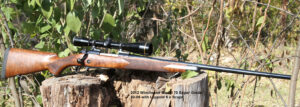

Every so often, a bolt gun shows up that feels familiar before you even check the rollmark. Smooth bolt, clean machining, honest accuracy. Sometimes it says Weatherby. Sometimes it says Howa. The overlap is not an accident. Here’s how that partnership started, how to read the marks, and what the modern Howa lineup looks like today.
Industrial roots and post‑war restart
Howa’s firearms story begins in heavy industry. In 1936, Showa Heavy Industries was established. In 1941, Toyoda Loom Works merged with Showa to form Howa Heavy Industries, which built military small arms and components during WWII, including Arisaka Type 99 rifles, parts for the Type 38, artillery, machine guns, ammunition, and aircraft parts. In 1945, the firm became Howa Machinery. Weapons work resumed only after 1952, when policy shifts during the Korean War allowed production to restart.
Howa’s own corporate timeline hits these milestones clearly and is a good quick reference for dates and products. See Howa’s history page at Howa History.
Early exports and the 1967 Golden Bear
Howa’s first bolt‑action sporting rifles reached the United States in limited numbers in 1959. The bigger breakthrough came in 1967 when Howa presented the Golden Bear at a Chicago show. About 3,000 Golden Bears were exported to the U.S., and they made an impression for build quality and performance.
Weatherby and the OEM connection
In 1970, Weatherby engaged Howa to produce Mark V rifles. Production of the Mark V later moved back to the U.S. in 1994. The collaboration didn’t end there. Howa continues as the OEM manufacturer of Weatherby Vanguard barreled actions, which is why a new Vanguard and a Howa 1500 feel related in all the right ways.
The 1500 timeline and key tech
Howa’s modern sporting line took shape from the Golden Bear platform and, by 1979, the Model 1500 was being exported under the Howa name. A few milestones matter for buyers:
- 1968: Refinement of the Model 300 design.
- 1977 to 1989: Development of a new 5.56 rifle culminated in Japan’s Type 89 adoption in 1989.
- 2011: Introduction of the H.A.C.T. two‑stage trigger for a lighter, crisper, creep‑free pull.
- 2015: Launch of the M1500 Mini Action, maximizing bolt actions for small‑cartridge footprints. Mini Actions are roughly 12 percent shorter than standard short actions.
Factories, partners, and roles today
Who does what, and where:
- Howa Machinery (Japan) machines the barreled actions.
- Legacy Sports International (Reno, NV) imports Howa rifles and barreled actions and assembles many U.S.‑market configurations under the Howa USA banner. Warranty and stateside support also run through Legacy Sports.
- Weatherby sources Vanguard barreled actions from Howa, then finishes and brands the complete rifles as Weatherby Vanguards.
For model info, features, and warranty registration, start at Howa USA.
Marks, proofs, and import stamps
What to expect on rifles in the U.S. market:
- Howa branding: Howa‑marked rifles typically carry “HOWA” and “Made in Japan” on the action or barrel, plus model and chambering on the barrel. Serial numbers are on the receiver.
- Importer marks: U.S.‑imported rifles must show the importer and city. On Howa 1500s brought in by Legacy Sports International, look for an importer stamp on the barrel. Placement and format have varied by run.
- Weatherby Vanguard: Vanguards wear Weatherby marks and model designations. The receiver won’t say Howa, but the barreled action is manufactured by Howa.
- Proofs: Japan is not part of the CIP system, so you will not see European proofhouse stamps on U.S.‑market Howas. Some overseas markets add country‑specific marks after import. A German‑language fan site, howa1500.de, notes that it is not an official source, but it is a reminder that markings and packaging can vary by country.
Practical tip for used buys: photograph both sides of the barrel near the receiver, the receiver ring, and the underside of the action. Those angles capture most markings you may need to research later.
Why the 1500 and Vanguard shoot well
Howa’s barreled actions lean on consistent processes and simple, robust geometry:
- Cold hammer forged steel barrels with consistent bores and smooth internal finish.
- One‑piece receiver with integral recoil lug for alignment and bedding.
- Forged steel bolt with two locking lugs.
- Reliable M16‑style extractor and ejector.
- Tool‑less bolt and firing pin takedown for easy maintenance.
- Three‑position safety.
- Strict headspace control; bolt faces trued and square to the chamber.
Legacy Sports advertises a SUB‑MOA guarantee on Howa M1500 rifles of 1 inch or less for 3 shots at 100 yards with premium factory ammunition. Note this applies to centerfire M1500 models, not rimfires.
Current product lines and recent updates
The Howa 1500 remains the foundation, with Legacy Sports packaging it across classic stocks, lightweight builds, and full chassis offerings. Recent highlights for shoppers include:
- Super Deluxe Walnut and Walnut rifles for traditionalists.
- Chassis and carbon packages for adjustability and weight savings.
- Mini Action options for compact cartridges.
- New for 2026: the Fence Line series adds Cerakote finishes, threaded muzzles, and included radial brakes on base‑model 1500s, in Mini, short, and long actions. Howa has also added .25 Creedmoor across several lines and .22 ARC in the Mini Action, alongside 6mm ARC, 350 Legend, and 6.5 Grendel.
Howa’s current catalog and specs are kept up to date at Howa USA.
Choosing between a 1500 and a Vanguard
Under the stock, both rifles start with a Howa‑made barreled action. The differences you feel are usually in stocks, finishes, triggers, and how the packages are configured.
- Ergonomics: Weatherby stocks have the Weatherby look and feel. Howa offerings range from walnut to modern chassis. Shoulder both if possible.
- Triggers: Early 1500s used a two‑stage design; current rifles feature the H.A.C.T. trigger. Vanguards are tuned to Weatherby’s specs. If you care about break and reset, handle them side by side.
- Barrels and lengths: Both lines offer multiple profiles and lengths. Pick based on your use case, not just the name on the stock.
- Aftermarket: The 1500 enjoys strong aftermarket support; many Vanguard parts cross over or have equivalents. Confirm fit by generation before ordering.
Collector notes and practical tips
- Golden Bear (1967): Roughly 3,000 imported. Scarcer than later 1500s and a clean snapshot of Howa’s early U.S. presence.
- Weatherby collaboration: Japanese‑made Mark Vs from the 1970s and long‑running Vanguard production tell the OEM story in a tidy pair.
- Paper trail: Keep photos of serials, importer stamps, and configuration details. Patterns emerge by year and model, which helps verify originality.
Closing
If you suspected your Vanguard and your buddy’s Howa 1500 share a heart, you were right. The steel comes from the same Japanese maker, shaped by decades of disciplined manufacturing. Learn the marks, know the timeline, and you can buy with confidence, whether you prefer a classic walnut stock or a modern chassis that’s ready for optics and rails.