
Remington Model 8 and 81: Browning’s Long Recoil Sporting Rifles
A practical, collector-minded look at Remington’s Model 8 and 81. Calibers, long recoil explained, police conversions, and what to check before you buy.

Call us any time at: (833) 486-6659
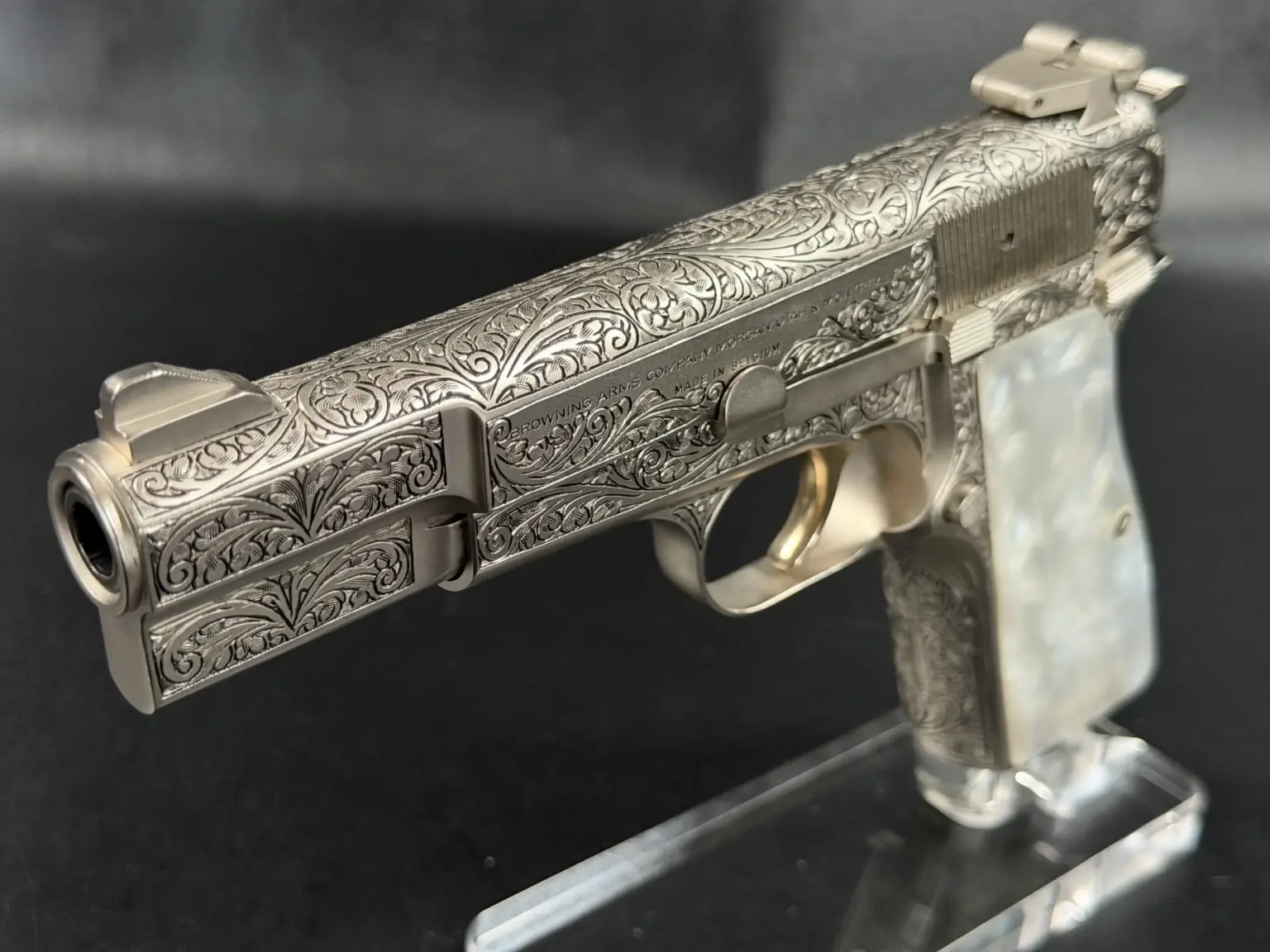
There are pistols that flash and fade, and then there are pistols that start conversations at every gun show table. The Browning Hi‑Power sits squarely in the second camp. Walk past a pre‑war FN with a tangent sight and stock slot, then stop at a late‑war Inglis with the hump‑backed slide, and you’ll find yourself comparing milling cuts and roll marks like you’re reading a family photo album. It is a pistol that tells its story in small details. That’s where the collector’s fun lives.
This guide is for the buyer who wants the short answers without losing the thread of history. We’ll move from the pre‑war GP‑35 through the remarkable Inglis contracts in Canada and into the later Mk III era. Along the way, we’ll cover how clones fit into the picture and, most importantly, how to judge originality in the field.
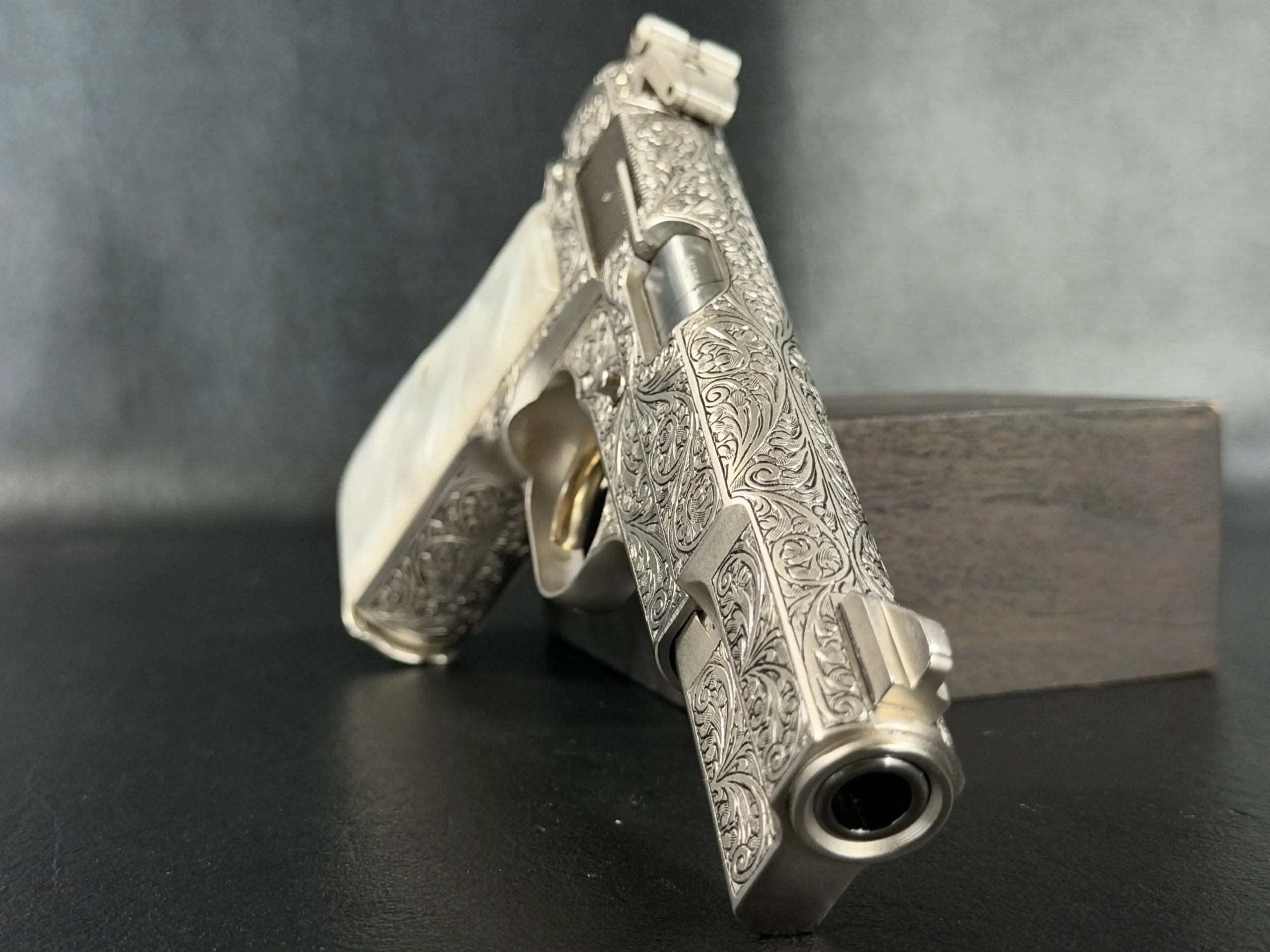
Every Hi‑Power conversation starts with two names. John Moses Browning lit the fuse. Dieudonné Saive carried it across the finish line at FN Herstal, whose roots reach back to 1889 in the Belgian city of Herstal. Browning died in 1926 before the pistol was finalized, but Saive’s engineering and that famous double‑stack magazine made the concept real by the mid‑1930s. The pistol entered the world as the GP‑35, short for Grande Puissance, French for high power. That name nodded at its then‑generous 13‑round capacity in 9×19, nearly twice what many contemporaries carried.
It is a single‑action, hammer‑fired semi‑automatic that feels slimmer in the hand than its capacity suggests. Fieldstripping is straightforward. The controls are familiar. It is the kind of design that feels natural after ten minutes on the bench. That’s part of why the Hi‑Power traveled so far across the globe so quickly. If you want a broader look at how this blueprint changed the way later handguns were shaped, see our overview on how the Browning Hi‑Power shaped modern handgun design.
Pre‑war Belgian Hi‑Powers are the darlings of many collections for good reason. The finish is typically deep and even. Machining is clean. Features you’ll often see on early examples include a tangent rear sight with a long slide cut and a slot in the frame for a detachable shoulder stock. That stock was a familiar idea at the time, drawing on turn‑of‑the‑century pistols that promised carbine‑like utility in a compact package. Not everyone loved the concept in practice, but it left an unmistakable footprint on the pistol’s silhouette.
World War II scattered that tidy world. Belgium fell under German occupation and FN’s Hi‑Power production was pressed into service for the occupiers. The pistol now appeared in German records under a new name and a new code.
Under occupation, the Hi‑Power continued to roll out of Herstal, but in German service it wore a different badge. The designation was Pistole 640(b). Photographs and accounts from the period place these pistols in the hands of units that prized a robust 9 mm sidearm. Sources point to use among Waffen‑SS and Fallschirmjäger formations. Put a wartime German‑marked pistol next to a pre‑war commercial FN and the changes in markings and finish become a window into the times.
Meanwhile, a second thread of the story was weaving itself in North America. As the FN plant faced occupation, plans for the Hi‑Power were transferred to the United Kingdom, and from there the Canadians at John Inglis and Company in Toronto were tooled up to build the pistol for Allied use. That effort hit its stride late in 1944 and continued through September 1945. By March 1945, Inglis Hi‑Powers were already being issued, including during Operation Varsity, the airborne crossing of the Rhine.
The Inglis pistols follow the same core design, but they carry their own personality and clues. Markings, sight configurations, and even the shape of the slide in some runs make them immediately recognizable if you know what to look for. After the war, Canada made per‑pistol payments back to FN, acknowledging the original design work that had made the project possible in the first place. For a deeper specification overview and production history, the Inglis Hi‑Power page is a handy reference while you handle a candidate pistol.
Inglis produced two primary configurations. One was built to meet the requirements of a Nationalist Chinese contract. That version kept the adjustable tangent rear sight and included a slot for a detachable shoulder stock. The stock served as a holster, much like the setup familiar to Chinese troops from the Mauser C96 they called the Box Cannon. If you have ever wondered why a mid‑century service pistol had a carbine option hanging off the back, the Chinese affection for stocked pistols is a big part of the answer. If you want a readable historical snapshot of how that came together, The Armory Life’s overview captures the flavor of the period.
The second Inglis configuration was tailored for British and Commonwealth service. It traded the tangent sight for a simpler fixed rear sight and typically deleted the stock slot. Many of these pistols wore a distinctive hump‑backed slide contour in the rear section that sets them apart at a glance. Of all Hi‑Power variants, that hump is largely unique to these Inglis fixed‑sight pistols and makes identification easier across a crowded table.
Markings on wartime Canadian pistols are a rich subject on their own, but there are a few high‑level guides that help buyers sort the wheat from the chaff:
If you are building a quick authenticity picture from a phone photo, the trio of the sight type, stock slot, and the serial pattern will get you surprisingly far. Then you can drill into the more granular details in person.
Once the war dust settled, production returned to Herstal. The Hi‑Power’s appeal did not fade. It remained a popular military and police sidearm for decades, and it would continue evolving through incremental changes that reflected the priorities of later users. You will hear terms like Mk I, Mk II, and Mk III used to distinguish later commercial and service iterations. The Mk III name points to a late production evolution with modernized features compared to earlier postwar runs. The core look and feel stays unmistakable, and the pistol’s single‑action heart remains the same.
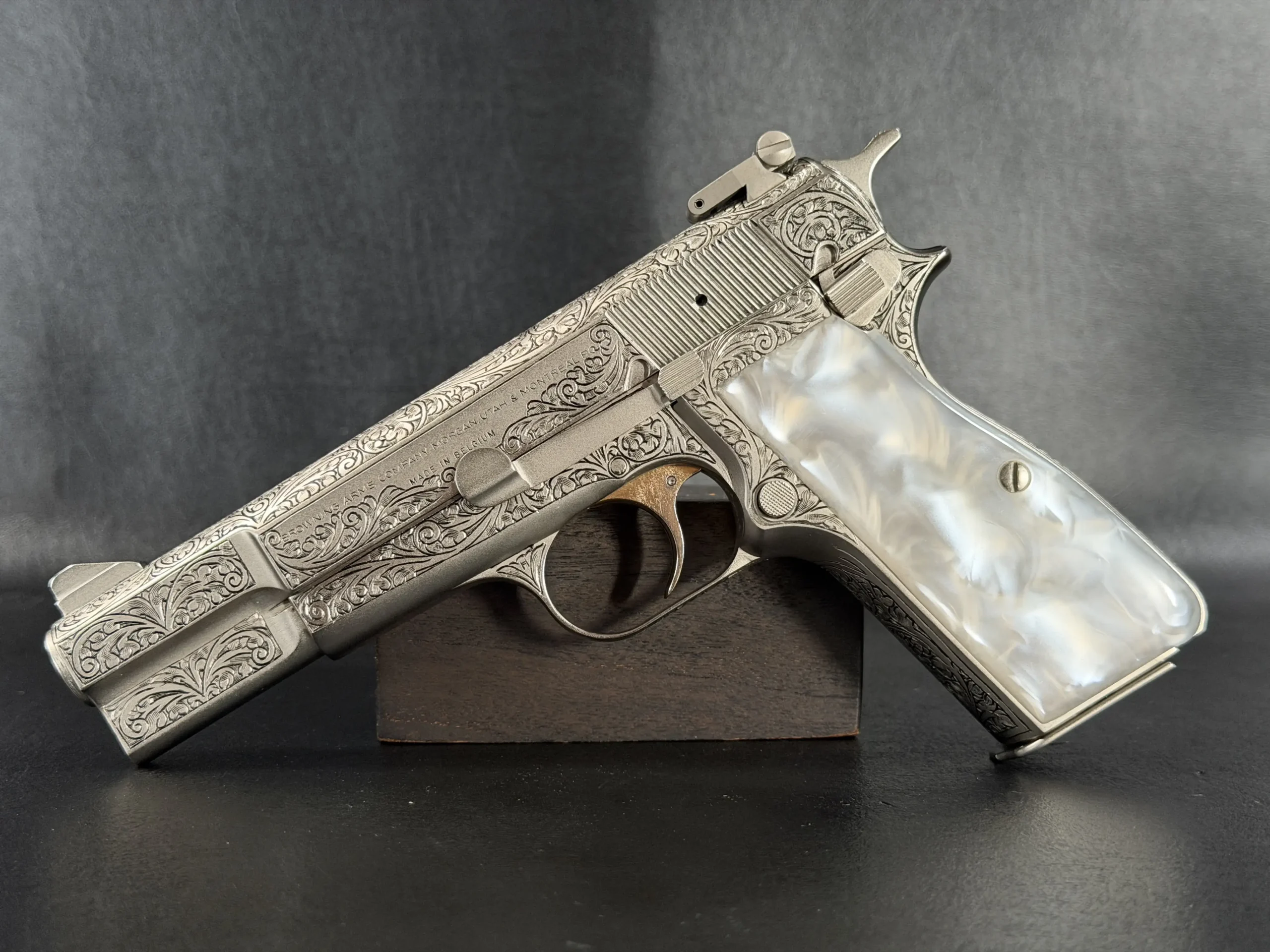
Success breeds imitation, and the Hi‑Power is no exception. After the war, FN’s own production sat alongside licensed and unlicensed copies in a handful of countries. Licensed manufacture took place in Argentina. Elsewhere, makers in Hungary, Israel, and Indonesia produced close copies of the pattern, some under their own brand identities. Among the more visible examples is the Hungarian FEG PJK‑9HP, a straightforward take on the original layout.
Clones range from faithful to interpretive. Some are dimensionally close and accept a wide range of standard parts, while others diverge in small but meaningful ways. Finish quality and markings vary widely. None of that is inherently good or bad. For a practical range gun, a solid clone may scratch the itch at a friendlier price. For a collection that leans on wartime stories and factory provenance, the originals speak in a different voice. Knowing which bucket a gun belongs to will make your buying decisions much simpler.
Judging originality is part art, part homework, and part feel. The Hi‑Power rewards a methodical approach. Here is a practical way to work through a candidate, from pre‑war survivors to Mk‑marked postwar pistols and Inglis wartime guns.
Pick up the pistol and confirm the basics fit the supposed era and pattern. If the seller claims a pre‑war FN, look for a tangent rear sight and the long slide cut that accompanies it, and check for a stock slot in the frame. If the gun is said to be an Inglis fixed‑sight service pistol, that hump‑backed slide should raise your confidence rather than your eyebrows. If the story is a Chinese‑contract Inglis, you want the adjustable rear sight and the stock slot combination to be present.
On FN pistols, the slide legends and proofs should be crisp and consistent with Belgian production. On Inglis pistols, look for the maker’s details on the slide and track the serial format. The six‑character serial with T in the second position is a sign you are in the right neighborhood for Commonwealth issue. Chinese‑contract guns should display the CH indicator in their serials. Tie that to the correct sight and stock configuration and you have the beginnings of a coherent picture.
British and Commonwealth designations can clear up mixed messaging. Fixed‑sight Inglis service pistols line up with Pistol No 2 Mk 1 style designations. Tangent‑sight pattern guns accepted into Canadian service after the Chinese contract shifted track with Pistol No 1 Mk 1 style designations. The No 1 versus No 2 split mirrors the sight difference. It is common to see these stamps on the frame, and they are worth a careful look.
Occupation‑era FN pistols with German service history will be marked differently from pre‑war commercial guns. The Pistole 640(b) designation ties them to that chapter. Finish and small parts changes under wartime pressure are not unusual. That is part of their charm, but it pays to be conservative with claims and focus on what the metal shows you rather than stories it has collected along the way.
Cycle the slide. Check for solid lockup. Inspect the feed ramp and breech face for honest wear versus machine marks buried under fresh polish. A parts marriage can look good in photos but feel wrong in the hand. The Hi‑Power’s ergonomics are a reference point. If something feels off, it often is.
After eighty plus years of service life across multiple continents, many Hi‑Powers are not museum‑pure. Sights, safeties, and small springs may have been replaced. An Inglis with a later commercial FN slide on top is not unheard of. That does not make a pistol worthless, but it should be reflected in the price and how you describe it. For originality, you are always looking for consistency. If the serial format and Commonwealth nomenclature say Service Inglis, but the rear of the slide has no hump and the sights are tangent, pause and sort out whether it is a parts swap or a misread story.
Hi‑Powers have been carried in weather, in web gear, and in leather for longer than most of us have been around. Expect holster burn on high spots and a touch of silver at the muzzle on honest guns. On pre‑war FNs, original blue tends to be on the deeper side. A thin, matte finish with sharp buffing lines around the markings can be a sign of a later refinish.
Refinishes are not the end of the world unless you are targeting the top rung of originality. A good shooter‑grade Hi‑Power with a clean bore and a correct set of features is a wonderful way to get to know the pattern without the anxiety of a mint example. Just be accurate with your descriptions and price expectations.
If you have spent time with a 1911, the Hi‑Power feels like a natural progression on the workbench. The magazine is generous without feeling brick‑like in the hand. The controls are friendly. It carries well. It shot across the lines of World War II, finding its way into the holsters of British airborne troops and covert operators, and, during occupation, into German service as the Pistole 640(b). It crossed the Atlantic as a set of plans and took shape in a Canadian factory. It kept going long after peace returned to Europe, through later iterations that are commonly grouped under Mk I, Mk II, and Mk III labels.
It is easy to get romantic about old guns. This one makes it hard not to. But the collector’s job is to keep one foot in the romance and one foot in the evidence. When you pick up a Hi‑Power, read what the metal is telling you. The sight picture. The serial logic. The maker’s line on the slide. The feel of the slide tracks. It will usually line up into a story you can explain in a sentence or two. Those are the pistols that stick around in your safe.
If you want to zoom out and understand why so many modern pistols look and feel the way they do, the Hi‑Power is a great starting point. It was born from the hands of two great minds in Herstal and refined in the pressure cooker of the 20th century. That alone earns it a spot in any conversation about important sidearms. And if you happen to find one with the right marks and the right features at your next show, well, you may find it hard to put down.
Available
View Item
Available
View Item
Available
View Item
Available
View Item
Available
View Item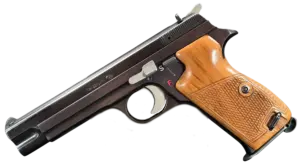
Available
View ItemA practical, collector-minded look at Remington’s Model 8 and 81. Calibers, long recoil explained, police conversions, and what to check before you buy.
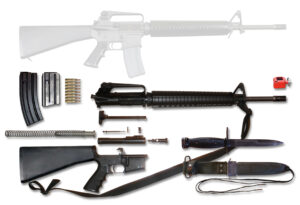
A collector’s look at Colt’s SP1 and early Sporters, from slickside uppers and pencil barrels to the rollmarks and small changes that hinted at the A2 era.
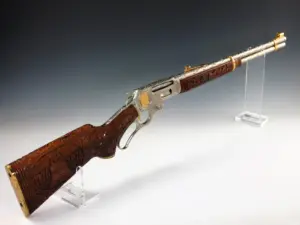
A practical, story-driven guide to reading JM vs REP barrel marks, understanding pre-safety 336s, Micro-Groove and Ballard-style rifling, and the smart checks to make before you buy.