
Remington Model 8 and 81: Browning’s Long Recoil Sporting Rifles
A practical, collector-minded look at Remington’s Model 8 and 81. Calibers, long recoil explained, police conversions, and what to check before you buy.

Call us any time at: (833) 486-6659
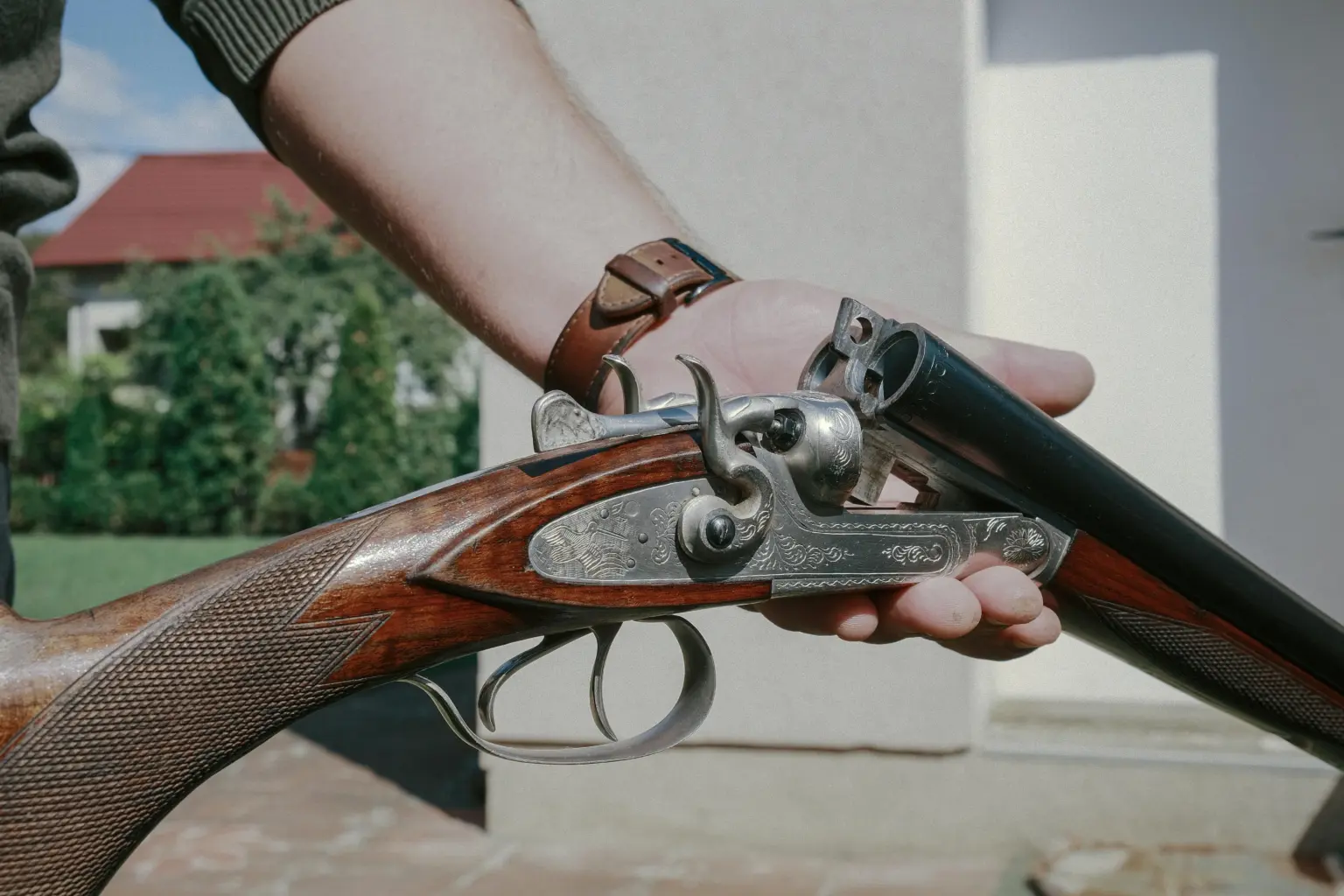
If you love side-by-sides but still feel fuzzy on what separates a tough field boxlock from a refined sidelock, or why some doubles feel magic while others just feel heavy, this is the plain-English walkthrough. We will cover actions, ejectors, regulation, and the small tells that separate good from great.
Both actions do the same job, but they do it in different places.
Boxlock: The fire-control parts sit inside the action body. The classic hammerless pattern most of us meet in the wild is the Anson & Deeley layout from the 1870s. It is compact, inherently strong, and requires less finicky inletting of the stock. Less wood is cut from the head, which helps durability, and servicing tends to be straightforward. For a quick visual primer on the parts and terms, see the Shooting Sportsman action-terms guide.
Sidelock: the working parts live on removable side plates, left and right. That layout gives engravers a big canvas and, when done well, can deliver a glassy trigger pull and a certain liveliness. There is more metalwork and more inletting in the stock, which means more hours to build and more time to overhaul. From the gunsmith bench perspective, price at a given quality level tends to climb faster with sidelocks, while boxlocks offer exceptional value, especially older English boxlocks or well-made German and Basque guns. That tracks with the shop-floor view in Game & Gun’s sidelock vs. boxlock comparison.
You do not shoot a schematic. You shoot feel.
Well-executed sidelocks often earn their reputation for crisp, light triggers and graceful balance. Good boxlocks carry their weight close to the hands, shrug off hard weather, and can be very steady over a long day. Either action can be superb or mediocre. Shoulder the gun, dry-fire both barrels, and mount it a few times. The one that vanishes in your hands usually wins.
Open a double and something has to lift the shells.
Extractors lift both shells so you can pluck them out. Simple, clean, and hulls stay in your hand.
Ejectors are spring-powered and selective. Open the gun, and only the fired shell flips clear while the unfired shell lifts. That speeds reloads without flinging live rounds. Many ejector setups show two split pieces at the extractor face; extractor-only systems are often a single piece.
On budget-minded doubles, makers sometimes trade features to hit a price. Ejectors add parts and timing work, and poor barrel regulation can creep in when costs are squeezed. Outdoor Life’s Weatherby Orion SxS review walks through those give-and-take decisions plainly.
A side-by-side hinges on a pin. Closing brings the breech face against the barrels and engages the bites or lugs through a top lever.
On a used gun, it should close with modest pressure and a positive, even feel as the lever returns near center. If it needs to be slammed or the lever parks far right with play at the hinge, there is work hiding there. With the forend off, you can feel cocking resistance and sense ejector tension. Those small signals say a lot about care and timing.
Two barrels must shoot to the same place at a practical distance. Set dead parallel, patterns may drift apart downrange. Set to converge too quickly, patterns can cross early. The sweet spot depends on the gun’s intended use.
How to check: at a fixed distance, mount naturally and shoot each barrel at the same small mark with the same load. Repeat. You are not chasing tight groups, just the centers of each pattern. A little offset is normal. You want both barrels close enough that the gun behaves the same regardless of which trigger you pull. Poor regulation is a common reason two “identical” guns feel very different on paper.
Grip shapes change hand posture and how the gun moves.
Fore-ends matter too. A splinter keeps the lead hand close to the barrels for a lively feel. A beavertail spreads heat and adds front-end stability. These are tendencies, not rules, but they are useful when comparing two guns on the same rack.
Quality shows up in small places:
Then do the simple carry test. Hold it one-handed for a minute. Does it feel like it wants to live there all morning? The best doubles do.
Different days, different strengths. In broad strokes, and in line with working-bench experience at shops that see both every day:
Entry into fine doubles is usually kinder with a boxlock. Value for money can be remarkable with older English examples and well-made German or Basque guns. If you want another angle on practical tradeoffs, Shotgun Life’s overview of sidelocks vs. boxlocks covers handling and durability in plain terms.
Running costs matter. A boxlock strip-and-service is typically faster. A full sidelock overhaul takes more hours. Plan for:
Pick a gun with local support and budget for care. Simpler does not always mean better, but it usually means cheaper to keep right.
Learn what is happening inside the action, decide how you want your empties to leave, and make sure both barrels agree on paper. Then let your hands decide. Buy the one that disappears when you mount it and makes you smile when you snap it closed. That is the point.
Available
View Item
Available
View Item
Available
View Item
Available
View Item
Available
View Item
Available
View ItemA practical, collector-minded look at Remington’s Model 8 and 81. Calibers, long recoil explained, police conversions, and what to check before you buy.
A collector’s look at Colt’s SP1 and early Sporters, from slickside uppers and pencil barrels to the rollmarks and small changes that hinted at the A2 era.
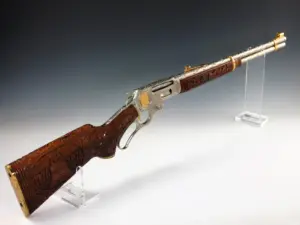
A practical, story-driven guide to reading JM vs REP barrel marks, understanding pre-safety 336s, Micro-Groove and Ballard-style rifling, and the smart checks to make before you buy.