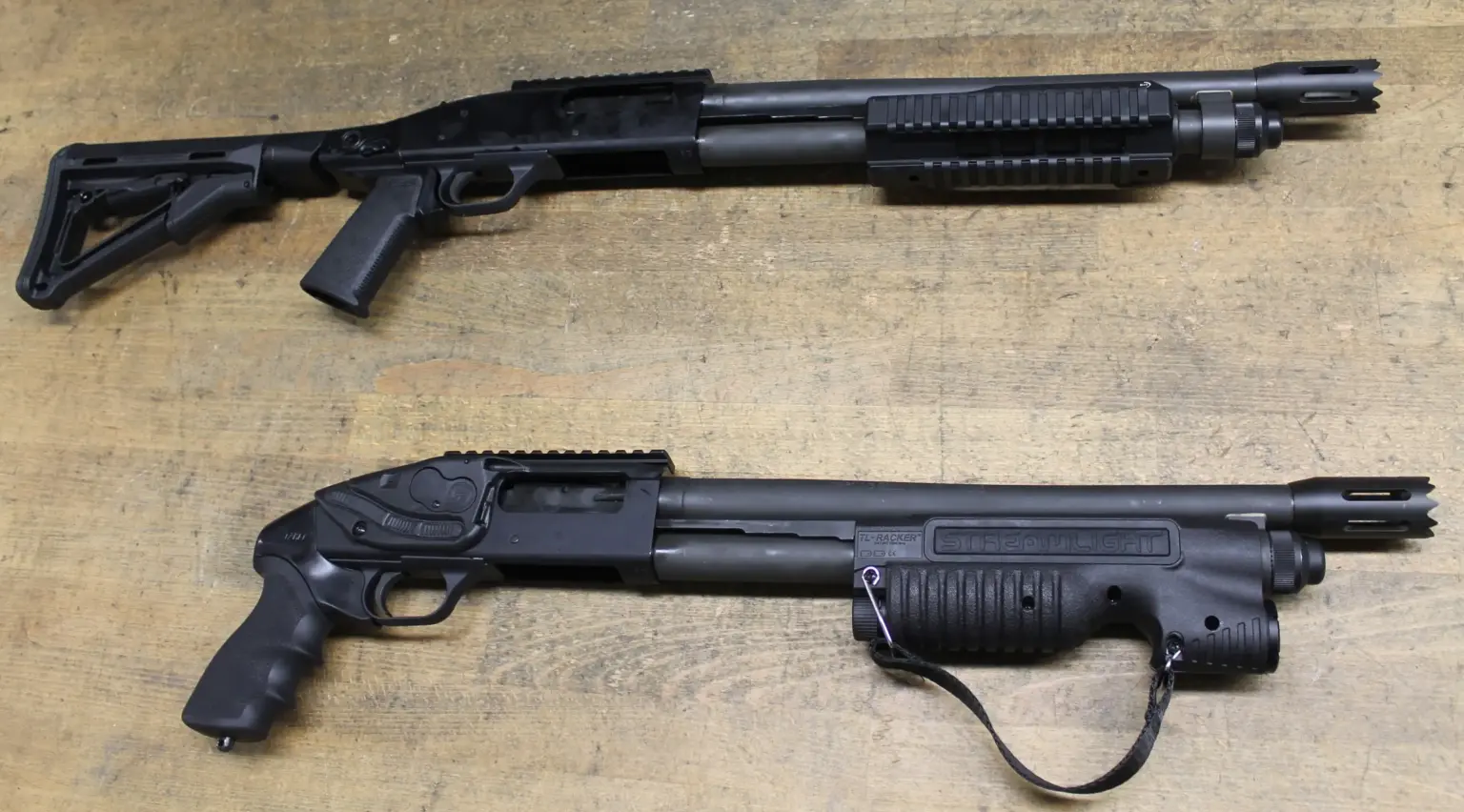
The first Mossberg 500 that rode behind my truck seat taught me a simple lesson. Clean it, feed it, and it just keeps working. That workhorse streak runs through Mossberg’s history: smart, practical ideas that stick.
Here’s a crisp walk from the Model 500 to today’s bolt guns and optics-ready pistols, with the milestones that matter to buyers and collectors.
The pump that made Mossberg a household name
In August 1962, the first Model 500 left the line. The design prioritized reliability, simple controls, and steel-to-steel lockup. It didn’t just sell; it moved into basements, cruisers, duck boats, and deer camps.
By 1979, Mossberg was building 500s under government contract as combat-duty-rated pump shotguns. Over time, Mossberg’s pump guns would be trusted across every branch of the U.S. Military, after meeting demanding mil-spec testing standards. For context, see Mossberg’s law enforcement overview of that lineage.
The family kept growing. In 1987, the Model 590 arrived, a 9-shot, duty-leaning variant. By 1997, the 590A1 followed, built to an even tougher mil-spec configuration with features tailored for service environments. For everyday shooters, the 500 and 590 series remained the same at heart: durable, easy to support, and ready to adapt.
Fast forward to 2014. Mossberg released mil-spec Model 500 shotguns for the commercial market and partnered on a Magpul-branded series, answering civilian demand for the same hard-use features seen on duty guns.
If you want the short version for buyers: the 500 and 590 platforms stay relevant because parts are plentiful, barrels and stocks swap easily, and the action keeps running when the day turns gritty.
Official law enforcement lineage
From shotguns to bolts
Shotguns headline the story, but Mossberg never forgot bolts. In 1996, they reintroduced a bolt-action shotgun, the Model 695, for hunters who wanted slug accuracy in a simple package. That same year, Viking stocks showed up, signaling attention to fit and durability.
In 1998, the catalog added fiber-optic sights and a .50-caliber muzzle-loading barrel option, along with fresh camo patterns. Small moves, big signal: Mossberg kept nudging usability forward.
Modularity and the MVP idea
Early in the 2010s, Mossberg rolled out the MVP bolt-action rifle, notable for feeding from standard AR and M14 magazines. That single idea connected a classic bolt gun to America’s most common mag formats. In 2015, Mossberg expanded the line with new MVP models, broadening roles and calibers.
Modularity spread on the shotgun side, too. The 2012 Flex system lets owners quickly change stocks, forends, and recoil pads, making one gun wear multiple hats in a single week.
See the 100 Years timeline
The Patriot arrives
In 2015, the Patriot rifle hit the market with a redesigned bolt action, a box magazine, and multiple stock and barrel finishes. It became the foundation for packages like the Night Train and positioned Mossberg as a serious value in modern bolt guns.
The formula was straightforward: a clean, user-friendly action, sensible features, and enough model depth that a new hunter or a practical shooter could match rifle to task without leaving the family.
Shockwave: the compact that shook the rules
In 2017, the 590 Shockwave landed and turned heads. It delivered a compact, easily stored, 14-inch-barreled pump-action firearm that provided a factory alternative to traditional short-barreled shotguns in many jurisdictions.
Classification varies by state and local law, so do your homework before buying. As a historical note, the Shockwave was a watershed moment that pushed the long-running pump design into a new size class and sparked industry-wide imitators.
Side paths that show the through line
- 1994: The Model 590 Mariner Line Launcher system appears for maritime use, proving the 500/590 architecture could handle odd jobs at sea.
- 1998: Fiber-optic sights and a .50-cal muzzle-loading barrel option join the catalog, alongside new Mossy Oak and RealTree camo patterns.
- 2012: The JM Pro Series competition models arrive on the semi-auto side, tuned for the speed game.
- 1988: The 835 Ulti-Mag debuts, the first firearm chambered for 3.5-inch shells to hit the market, a boon for dedicated turkey and waterfowl hunters.
Each step points at the same target: practical innovation that lasts.
Pistols the Mossberg way
Mossberg’s pistol timeline surprises some folks. In 2014, the company released five pistols in the 715 family, lightweight rimfire handguns that echoed the styling of the 715 series and made low-recoil training easy.
As the broader market shifted toward slide-mounted micro red dots, Mossberg followed in recent years with pistols featuring optics-ready configurations. The goal is the same as the one you see throughout the catalog: add utility without adding fuss.
Check current pistol listings
Buyer’s notes
Pump shotgun picks
For a home-defense and range crossover, a 500 or 590 with an 18.5 to 20-inch barrel and simple sights is hard to beat. If compact storage is the priority and your laws allow it, the Shockwave offers pump reliability in a small footprint. For field use, prioritize barrel options and a stock that truly fits.
Bolt rifle choices
For classic hunting, the Patriot line covers the bases with sensible features and broad caliber coverage. If you want a practical rifle that shares magazines with your AR or M14-pattern mags, look at the MVP. The value is the consistency of a bolt gun with logistics that match your existing gear.
Pistols and optics
If a red dot is on your wish list, look for models that ship optics-ready from the factory. Factory cuts and plates simplify setup and keep the slide clean.
Collector’s notes
- Model 500 and 590 variants are tied to military testing and adoption. Mil-spec builds and duty features tend to draw a crowd.
- Model 590A1 examples reflecting the upgraded service configuration.
- 2014 mil-spec Model 500 releases for the civilian market.
- 2011-era 500 Chainsaw variants for their distinctive form factor.
- Early MVP rifles that feature AR/M14 Mag compatibility.
- Patriot-based Night Train packages.
- 1988 835 Ulti-Mag: the 3.5-inch shell milestone.
- 1996 Model 695 bolt-action shotgun as a curveball in the slug-gun story.
- 1994 590 Mariner Line Launcher, a true specialty outlier.
- 2017 first-year 590 Shockwave, the launch that started a new size class.
As always, confirm markings and configurations before paying a premium, and be wary of aftermarket parts presented as factory. If a serial-number range or production run matters, get documentation from a credible source.
Where do they go from here?
Look back and a pattern emerges. Mossberg built its name on dependable pumps, returned to bolt guns with purpose, and adapted pistols to modern optics without drama. The MVP solved a real problem. The Patriot brought honest accuracy to a broad audience. The Shockwave rethought size within the rules.
If you buy to use, that consistency cuts through the noise. If you collect, it gives you clean signposts to follow.
For a quick tour of the milestones mentioned here, Mossberg’s own timeline is a solid starting point.
100 Years of Mossberg | Law Enforcement lineage | Background on O.F. Mossberg & Sons