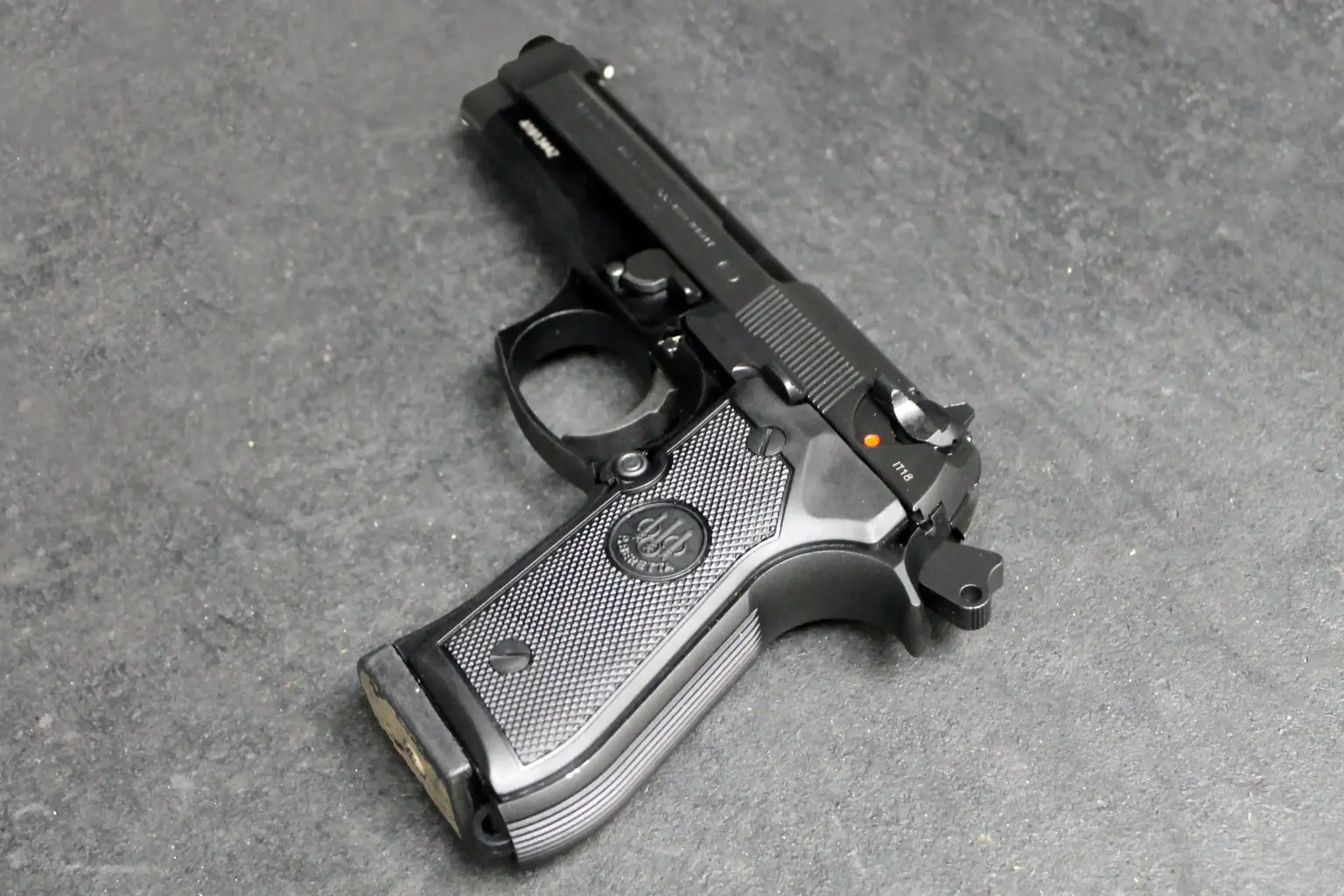
Pick up a Beretta service pistol and you can feel two stories at once. One is modern, stamped in alloy and polymer, shaped by procurement trials and range feedback. The other is older, layered in steel and smoke, coming out of Gardone Val Trompia, the Italian valley where Beretta has been shaping barrels and reputations since the 1500s. That overlap is why the 92 became the M9, why the PX4 and APX followed, and why so many police holsters and military belts around the globe have carried a pistol wearing the Trident.
A centuries-old start that still matters
Beretta is widely documented as the world’s oldest continuously operating firearms manufacturer. Records go back to 1526, and the company’s roots are deep in barrel making from Gardone Val Trompia. That matters more than as a trivia line. Consistent control of steel and heat, and the habit of proofing and documenting what leaves the factory, set a tone that carries into later handguns. When the brand moved into service autos, those patterns of making, testing, and refining followed along.
Simple blowbacks that earned trust: 1915, 1934, 1935
Beretta’s early service autos were not high-capacity 9 mm double stacks. They were simple blowbacks created to arm soldiers and police with something that worked every time. The World War I era Model 1915 started that story, and the interwar M1934 and M1935 made it stick. Chambered in .380 ACP (9 Corto) and .32 ACP, they were straightforward pistols with the kind of mechanical honesty that users remember. Pull the trigger, they run. They sacrificed power and capacity for size and rugged simplicity, which matched Italian military and police needs of the time.
Those pistols built a behavioral reputation for Beretta: make it simple, make it durable, and if a conscript or patrolman gets only basic familiarization, the gun will still get through the day. That ethic shows up again and again as the company heads toward the modern 9 mm service format.
The M1951 Brigadier pivots to modern 9 mm
Postwar, the world shifted toward 9×19 as a service standard. Beretta’s answer was the M1951 Brigadier, and this is where the brand’s service pistol DNA really congeals. The M1951 brought two big ideas that would define later designs: an open-top slide and a Walther-style falling locking block.
The open-top slide is exactly what it sounds like. Instead of an enclosed ejection port, the top of the slide is largely open. That gives empties a big window to exit, which helps keep stovepipes and oddball ejection failures at bay. The locking block separates the barrel from the slide’s violent back-and-forth while keeping slide mass low. That yields a smooth recoil impulse and less reciprocating weight. For service use, less muzzle dip and quicker sight return are not academic points, they are practical advantages.
The M1951 was a single-stack 9 mm, but it traveled far. It saw export sales, licensed and unlicensed copies, and service in places as varied as Egypt and Iraq, where Helwan and Tariq pistols kept the general architecture alive. For Beretta, the M1951 proved that open-slide plus locking-block worked in a true 9 mm service role, and it served as a bridge to the pistol that would make the name a household word in the States.
The 92 series arrives: why the architecture won agencies
By the mid 1970s, Beretta put the lessons together in the 92. Picture the M1951 concept grown up: now with double-stack magazines, an aluminum frame to keep weight reasonable, and double-action/single-action operation so a long first pull gives way to shorter single-action shots. The open-top slide stayed, and the locking block stayed. Those choices were not fashion. They were engineering carried over because it worked.
Agencies noticed because the 92 ticked the right boxes. Capacity mattered in the late Cold War period, and double-stack 9 mm was a selling point on crowded streets and in NATO briefings. Ejection reliability mattered for training and for ugly days on the job. A low-mass slide and smooth cycling brought fast follow-up shots. The DA/SA trigger fit many training models that favored a heavier first pull for holster safety while still rewarding skill with clean single-action breaks.
Early 92s wore a frame-mounted safety. The 92S, made to address law enforcement feedback, moved the safety and decocker up onto the slide. That layout would become the Beretta look that most shooters picture when you say 92. Italian police and Carabinieri adoptions gave the 92S and its descendants home-field credibility.
From 92S to 92FS: safety, firing-pin block, and slide-retention lessons
As the 92 crossed the Atlantic for U.S. trials, Beretta added parts that agencies were asking for. The 92SB introduced a firing-pin block. That was not about marketing. It spoke to duty demands for drop safety and agency liability comfort. The 92F followed in the early 1980s, and then the 92FS refined a rare but headline-grabbing issue from high-pressure proof and extreme round count testing: slides that fractured on test guns. Beretta answered with a reinforced slide-retention setup. The 92FS hammer pin was enlarged and shaped so that if a slide ever cracked at the ejection port, it could not fly rearward into the shooter. It is the kind of unglamorous change that wins procurement officers and armorers, because it shows the maker is listening to hard-use data.
During these evolutions, the safety placement debate never really went away. Some shooters like the slide-mounted safety and decocker because it is easy to reach with the thumb as the slide goes forward. Others prefer decocker-only setups so the lever springs back up and does not risk staying in the safe position accidentally. Agencies made that call based on their training doctrine. Beretta provided both answers, including the 92G decocker-only flavor that many departments and certain military branches favored.
M9 adoption and beyond: U.S. production, M9A1, M9A3, and field takeaways
In 1985, the Beretta 92F became the M9 after the XM9 trials. That contract turned Beretta from a respected European sidearm maker into a name on the lips of American recruits. U.S. production ramped at Beretta USA to support the program, first in Accokeek, Maryland, and later transitioning to Gallatin, Tennessee, as the company shifted domestic manufacturing in the mid 2010s. A service pistol is only as good as the supply chain behind it. Standing up stateside capacity meant parts, spares, and complete pistols could flow where they were needed without waiting on transatlantic logistics.
Collectors and armorers who handle a lot of 92s will point out M9 vs 92FS nuances. Markings are the first tell. Sight picture often is too. Many M9s used a post-and-dot front and rear rather than the commercial three-dot pattern. Dust cover profiles changed across eras. Small-part finishes can differ. If you are a buyer chasing a specific variant, these are not trivia points, they are identification tools.
Service feedback created the M9A1. Initially pushed by the Marine Corps, it added a rail on the dust cover for lights, a checkered frontstrap for grip, and updated parts with better corrosion resistance. As training and accessory use evolved, that rail was not optional anymore. The later M9A3 proposal brought a threaded barrel, modular backstraps, and improved sights. Even when the U.S. military moved to a new pistol across many units, those changes captured what users were asking for.
Field time taught some other lessons that owners should keep in mind. Magazine reliability matters as much as the pistol itself. During dusty deployments, finish and supplier differences on magazines became a real-world issue. Coatings that feel slick at the bench can turn into grit magnets in talc-like sand. Many users and agencies stuck with Beretta factory mags or trusted makers like Mec-Gar when performance really counted.
Cougar, Px4, and APX: widening the service lane
Beretta never let the 92 be the only path. The 1990s brought the Cougar series with a rotating barrel. The idea was to spread recoil impulse and reduce muzzle rise differently than the locking block system. The concept later moved to production under Stoeger in Turkey, keeping the mechanical family alive for budget-conscious buyers and agencies.
The Px4 Storm took the rotating barrel and dropped it into a polymer frame, putting Beretta in the mainstream of modern duty pistols that traded metal frames for lighter, modular-feeling shells. The Px4 family found police and military users where the combination of manageable recoil and modern ergonomics hit a sweet spot.
Then came the APX, announced in 2017, a striker-fired design with a modular chassis. Beretta entered it into the U.S. MHS competition, and while another pistol won that contract, the APX broadened the brand’s service lineup for the striker-fired era. Interchangeable backstraps, sight options, and a serialized internal chassis reflected what agencies were now asking for: adaptability without a gunsmith.
Factories, proofing, and finishes: how Beretta builds them
All of this rests on how Beretta makes things. The company controls major processes in-house. Barrels are forged or hammer forged, finished with care, and mated to slides that carry the Bruniton protective finish on many duty models. Italian-made pistols bear Banco Nazionale di Prova proof marks and date codes, the little stamped stories that collectors love to decode. U.S.-made pistols carry their own rollmarks and proofing per domestic standards, with the Accokeek and later Gallatin plants sustaining supply to U.S. customers and contracts.
Manufacturing depth is not a marketing bullet. It is why Beretta could respond quickly with updates like the 92FS slide retention change, or shift to corrosion-resistant parts when agencies asked. When a maker controls the barrels, the finishing tanks, and the machining centers, running changes do not have to wait for a vendor to retool.
What agencies actually wanted: decocker-only, rails, sights, grips
As the 92 family matured, variants tell a quiet story of user preferences:
- 92G decocker-only. Many agencies preferred a lever that drops the hammer safely and springs back up, so there is no chance of a pistol being holstered on safe accidentally.
- Brigadier slide. A beefier slide that adds weight up top. Some units and competition-minded shooters liked the flatter recoil pulse and durability feel.
- Centurion. Shorter slide and barrel, full-size frame. Easier to carry, same mags, same grip.
- Vertec. Straighter backstrap, accessory rail, and a sight setup ready for changes. A different grip angle than the classic 92 hump, which some hands prefer.
- Elite and Elite II. Tweaked sights, triggers, and barrels for shooters who wanted a more refined duty-capable setup out of the box.
- 92X and 92X RDO. Recent models that blend legacy feel with modern demands like optic-ready slides and modular grip panels.
Add in the M9A1 and M9A3 features, and a theme appears. Agencies asked for controllable triggers tailored to their training, for decocker-only options to simplify handling, for lights and optics as standard kit, and for grips that fit a broader range of hands. Beretta kept answering that call with production variants rather than one-off customs.
Collector’s corner: variants, markings, codes, and trade-ins
For collectors and buyers hunting specific models, details matter. A few practical pointers:
- Early versus later magazine release. The first 92 models used a heel release at the bottom rear of the grip, a common European style. Later models moved to a button behind the trigger guard. That change is a quick way to spot early guns and to understand holster and magazine compatibility.
- 92S police lineage. Many 92S pistols came through as police trade-ins. Agency marks and import stamps can add interest or detract from value depending on your taste. Expect some honest holster wear and look closely at bore and locking block condition.
- Italian proofs and date codes. If your pistol was made in Gardone, the proof marks tell you when it was tested and that it passed through the official Italian proof house. Decoding the letters is part of the fun and helps with year-of-manufacture questions.
- M9 contract markings. Pistols marked for U.S. military contracts have their own appeal. Differences in sights, rollmarks, and finishes on small parts are part of the identification game. Be cautious of mixed upper and lower assemblies on surplus or rebuilds if originality is your goal.
- U.S. versus Italian build. Collectors sometimes prefer one over the other. Both are quality pieces, but rollmarks, proof marks, and certain small changes across years make for a rich field of variations.
- Transitional features. Grip profiles, dust cover shapes, and slide markings shifted across production runs. Take a notebook to the gun show. Photos and serial notes help you avoid buying the wrong variant by mistake.
If you are aiming for a particular model, buy the pistol, not the story. Look for clean, unmolested examples, and take agency import stamps as a feature, not a flaw, unless you are chasing a very specific clone of a catalog gun. On the M1951 side, exports and licensed copies like the Helwan and Tariq make for an interesting sub-collection, but know parts and magazines are not always plug-and-play with Beretta originals.
Buyer’s practicals: parts, mags, maintenance, and support
Service pistols live or die by support. On that score, Beretta owners are in good shape.
- Parts and springs. Recoil springs are a wear item. Replace them on a regular schedule based on your round count and ammo. If you pick up a used 92, consider refreshing the recoil spring and checking the locking block. Later-generation locking blocks are designed for better longevity than early examples. For heavy users, a small bin of springs and a spare block is cheap insurance.
- Magazines. Reliability starts with good mags. Factory Beretta and trusted aftermarket makers like Mec-Gar have strong reputations. Coatings matter in dusty conditions, so match your magazine choice to your environment rather than just the range bench.
- Holsters and sights. One advantage of the 92 family is the deep ecosystem. Duty holsters for railed and non-railed variants are common. Sight cuts vary slightly across some models, so verify compatibility before ordering night sights or fiber sets.
- Training and levers. If your pistol has a slide-mounted safety, drill the lever motion as part of your draw and holster work. If it is a decocker-only G model, confirm your lever returns up as designed after each use. Consistency beats novelty here.
- Ammo choices. The 92 series and later Berettas run well on standard pressure 9 mm. If you live on a diet of hot loads, keep an eye on springs and locking blocks. The guns will tell you how they feel if you listen.
If you are leaning toward a Beretta as a duty or home-defense pistol, the practical attraction is simple. You get an architecture with decades of agency feedback behind it, a factory network that still makes parts and variants, and a training community that knows the platform well. If you are collecting, the variety of markings, models, and national origins offers real depth without the need to chase rare, fragile prototypes.
Why Beretta keeps showing up on duty belts
Brands do not earn a service pistol reputation on looks or slogans. They earn it by making a design that runs in gritted-up field pistols and in the hands of rookies. Beretta’s path is remarkably consistent. Start with a strong manufacturing base. Build simple, reliable pistols when that is what the time calls for. Evolve into a 9 mm architecture that emphasizes feeding and ejection reliability, manageable recoil, and training-friendly triggers. Listen to procurement feedback and change hardware when the data says you should. Keep variants on the shelf that match how agencies actually work.
From the Model 1915 and the M1934 and M1935, to the M1951 that taught big lessons, to the 92 series that grew into the M9 contract and then spun off a family tree of models, to the Cougar, Px4, and APX, the through line is clear. Beretta built its service pistol standing by making design choices that serve users first, then sticking with them long enough to refine the rough edges.
Compliance reminder
Magazine capacity limits and features such as threaded barrels vary by jurisdiction. Laws change. Before you buy, ship, or modify, check your current local and state rules and follow any import marking and compliance requirements that may apply to surplus or police trade-in pistols.