The Hi-Power Feels Familiar For A Reason
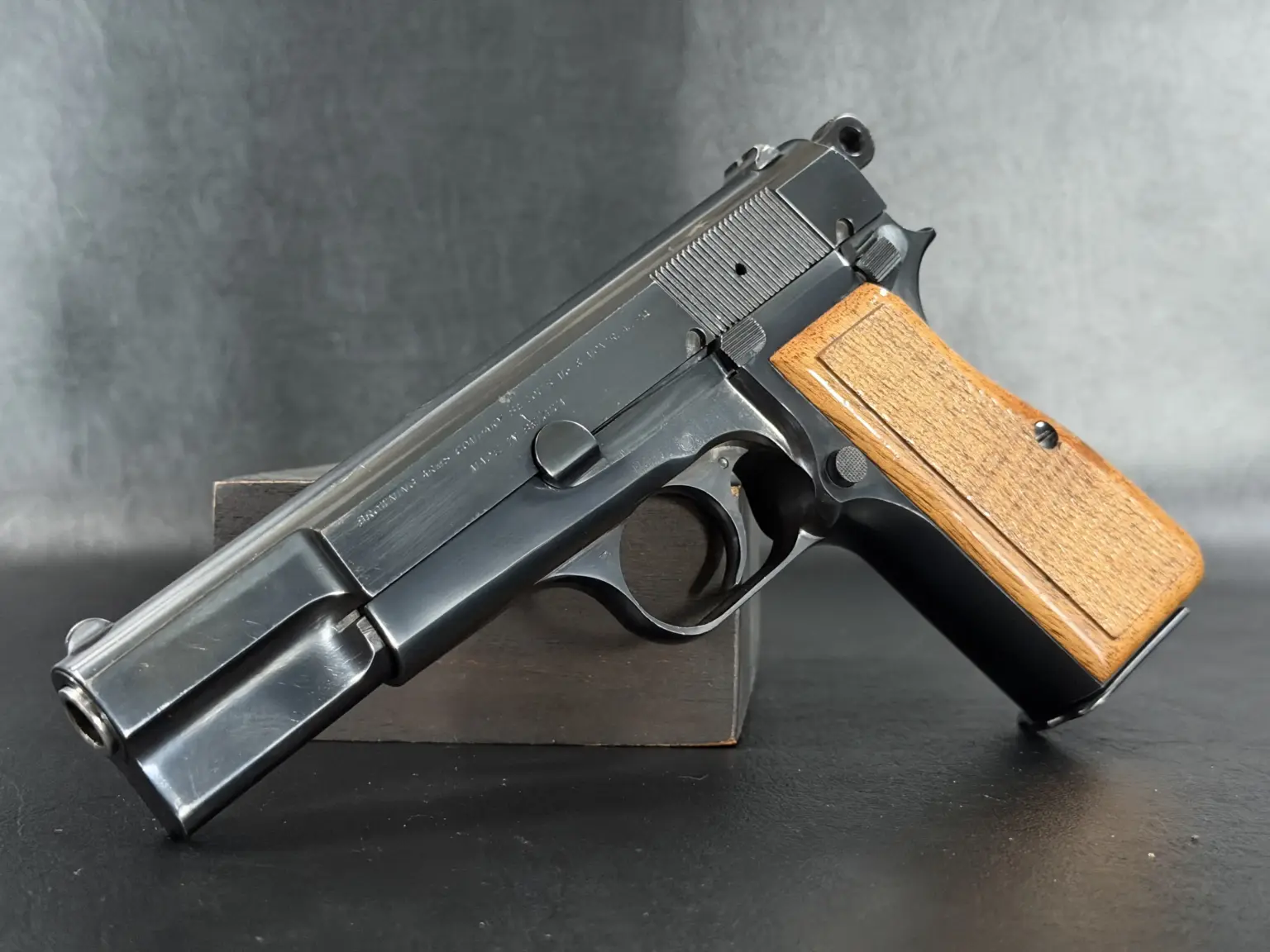
The first time you pick up a Browning Hi-Power, something clicks. The grip fills the hand without feeling bulky. The controls land right under the thumb. Even the way the slide racks has a certain smooth, steel-on-steel honesty. It feels familiar because so many modern handguns were shaped around the same ideas, even when they do not look like it anymore.
Ask ten shooters what the Hi-Power is famous for and most will say capacity. That is true, but it is only the start. The pistol that FN introduced in the 1930s managed to bundle a new magazine concept, a refined short-recoil system, and a control layout that trained generations of hands. If you shoot a polymer striker pistol today, you are still living with choices the Hi-Power normalized long before polymer frames were a glimmer in a designer’s eye.
Where It Came From: Browning, Saive, and a French Challenge
The Hi-Power’s story begins between the wars, when the French military asked for a new service pistol. John Browning, already famous for the 1911, took the brief seriously but passed away in 1926 before the project was finished. Dieudonné Saive at FN carried it the rest of the way. Saive’s fingerprints are everywhere on the final pistol, which arrived as the GP-35, also known to most of us as the Hi-Power.
That handoff matters. Browning had moved away from the 1911’s swinging link and was refining his short-recoil ideas. Saive added the big leap that would define the gun’s legacy: a staggered-column, or double-stack, 9mm magazine that would feed reliably and still allow a grip normal people could hold. Pair that with a clean safety and slide stop layout and you get a pistol that feels like it came from the future, even when you are holding a pre-war example.
The Big Idea: A Double-Stack 9mm That Actually Worked
Capacity alone was not new. People had tried stuffing more rounds into handguns before. The trick was making a 9mm service pistol that held more ammunition without turning into a brick, and then getting it to run with the ammunition of the day.
Saive’s magazine design solved it. The stack is staggered at the bottom to keep thickness in check and then guided at the top so rounds present correctly to the feed ramp. If you have ever handled a good Mec-Gar Hi-Power magazine, you can feel the geometry doing its job. The follower is stable, the spring rate is honest, and the top lips control the cartridge enough to prevent the nose dives that can plague cheaper double-stacks.
That magazine let the Hi-Power carry more 9mm than the common service pistols it replaced. It also set the stage for what many police and military forces came to expect from a duty pistol. By the late 1970s, the term Wonder Nine became shorthand for high-capacity 9mm pistols with modern features. The Hi-Power was the ancestor that proved the concept decades earlier.
Ergonomics That Taught The World How A High-Cap Pistol Should Feel
There is a running joke that some double-stack grips feel like a two-by-four. The Hi-Power feels like a handshake. The front-to-back distance is modest, the curve of the backstrap is friendly, and the sides are slim. Many shooters who struggle to reach the trigger on thick-gripped pistols are surprised by how natural the Hi-Power feels.
It is easy to give the magazine all the credit for that, but look at the frame and you can see the work. The relief cuts under the trigger guard help the hand come higher. The tang is short on early guns, which is why some folks get bitten by the ring hammer, but the overall set of lines puts the bore in a comfortable place above the hand. Plenty of later pistols learned from that balance, even if they eventually took different paths with longer beavertails or more aggressive texturing.
Grip panels matter too. Early wood panels are slim and sit flush. Later synthetic panels on military contracts are meatier. Swapping panels transforms how the gun prints under a cover garment and how it feels under recoil. That is a small lesson the Hi-Power taught the market early on: user-tunable feel without changing the core mechanics.
The Linkless Browning Cam And The Modern Short-Recoil Family Tree
If you strip a Hi-Power and look under the barrel, you will see a cam track machined below the chamber. Under recoil, the barrel and slide move together a short distance, the cam pulls the barrel down out of lock, and the slide continues rearward to extract and eject. It sounds simple because it is, once you have seen it. This is where Browning’s late work and Saive’s execution paid off.
Most modern service pistols use some version of this linkless cam short-recoil system. Different makers shape the barrel hood, the cam, and the locking surfaces differently, and today you will see a lot of weapons that lock up against the front of the ejection port instead of use multiple lugs. Still, if you squint at the kinematics, you recognize the family resemblance. The Hi-Power helped normalize that path. It offered a clean, strong cycle in 9mm with parts that could be made in quantity and serviced in the field.
Reliability with ball ammo was one of the Hi-Power’s early strengths. Many later pistols took the same core idea and pushed it to run a wider diet, including the expanding bullets law enforcement favored in the late 20th century. When buyers ask why some pre-1980s Hi-Powers are picky with hollow points, this is the mechanical context. Later variants improved the feed geometry, a sign of the platform evolving while keeping the same bones.
Controls That Became The Default
Pick up a modern metal-frame pistol with a slide stop on the left and a button mag release behind the trigger guard, and you will feel like you know your way around a Hi-Power. The control layout became normal because it works.
The thumb safety location supports what many call Condition One carry, cocked with the safety on. That approach did not start with the Hi-Power, and it is not the only way people ran it, but the fact that the safety is in a spot you can ride with your thumb is a big advantage. Later safeties got larger and ambidextrous. Early ones can feel like a thin shelf. Either way, the message stuck: give the shooter a safety they can reach without shifting the grip.
The mag release sits where most of us expect it today. The slide stop is usable without a gorilla thumb. Takedown requires lining up notches and pressing out the slide stop, a move so familiar that even very new shooters tend to figure it out once they watch it done once. Plenty of later pistols changed the details, or added decockers for double-action systems, but the Hi-Power’s map of the left side of the frame became a standard template.
Sights, Stocks, And The Shoulder-Stock Era
Pre-war and wartime Hi-Powers often wear a tangent rear sight that can be adjusted for long distances and a slot in the back of the frame for a wooden stock-holster. That pairing reflected how some forces wanted a sidearm to double as a very compact carbine. It looks charming today, and for collectors it is a window into the expectations of the era.
Most later commercial Hi-Powers went to fixed, simpler sights. Through the years, the sight picture improved. If you handle a Mark II or Mark III era gun, you usually get clearer, bolder sights than on the earliest pistols. Some modern clones go further with dovetailed, replaceable front sights and rear notches that pop in bright light. As always, the market learned. Today we expect a pistol to ship with sights you can actually see against a steel plate at 25 yards. The Hi-Power helped nudge the industry that direction, one revision at a time.
The Magazine Disconnect And The Forever Trigger Debate
Nothing splits a Hi-Power crowd like the magazine disconnect. The part keeps the gun from firing when the magazine is out. It was a design requirement at the time. It also adds friction to the trigger, which many shooters feel as a heavier, slightly grittier pull.
There are two practical takeaways here for buyers. First, a good Hi-Power trigger exists, even with the disconnect. Clean parts and proper springs help a lot. Second, many people remove the disconnect to improve the feel. Before you make changes, check your local laws and your warranty. If you decide to modify, work with a qualified gunsmith. Also understand what you are trading away and why that part was present in the first place.
The debate itself is part of the Hi-Power’s legacy. It pushed later makers to think about how to manage safety requirements without ruining the user interface. Some went to double-action systems with decockers. Others improved firing pin blocks and trigger bars. Still others stuck with single-action but adjusted the geometry. The conversation the Hi-Power started never really ended.
Fieldstripping And Service Life
Fieldstripping a Hi-Power is straightforward. Lock the slide back, verify empty, line up the takedown notch with the slide stop, push the slide stop out, and off it comes. The recoil spring is not captive and the barrel lifts out easily. Many modern pistols are even simpler, but the Hi-Power showed how a serious service sidearm could come apart for cleaning without special tools or a table full of pins.
As with any steel service pistol, prolonged use leaves a trail. Things to watch include the cam surfaces under the barrel, the slide stop hole in the frame, and the locking lugs. Excess peening, cracks, or odd wear patterns tell a story. A healthy Hi-Power can go a very long time, especially if it is fed quality magazines and fresh springs. The parts are out there. Springs from reputable makers, extractors matched to your type of slide, and well made magazines keep the platform honest.
From War To The Wonder Nine Wave
The Hi-Power wore a lot of uniforms. It served in Europe, Africa, the Middle East, the Americas, and Asia. That global service did more than add history. It offered years of institutional feedback on how a high-capacity 9mm sidearm behaves in real conditions. The ways in which later designs borrowed from it are not always obvious, but they are present.
Consider the late 1970s and 1980s, when police and military organizations moved to 9mm pistols with higher capacity. The Smith and Wesson 59 family, the Beretta 92 series, the SIG P226, and the CZ 75 all chased similar goals with their own approaches. The ingredients they normalized included high capacity, a short-recoil tilting barrel, a controllable grip for a double-stack, and a control scheme most right-handed shooters could run without thinking hard. That set of expectations was already sitting inside the Hi-Power.
Did every feature come straight from the Browning? No. Each of those pistols put its own stamp on the formula. Some went to double-action first shots to satisfy certain policy preferences. Others added slide-mounted levers or moved safeties onto the frame in different ways. Still, when you line them up, you see the family portrait. A modern service pistol is usually a short-recoil 9mm with a double-stack magazine, generous ejection port, and user-friendly controls. Before that became a checklist, the Hi-Power made it feel normal.
Polymer Era, Same DNA
When polymer frames and striker-fired systems swept across the market, the conversation changed again. Triggers grew consistent across shots, frames got lighter, and rails for lights became common. But even these new pistols built on the ground the Hi-Power prepared.
Capacity expectations set by the Hi-Power became the baseline. A 9mm sidearm holding a handful of rounds was no longer going to impress. The linkless short-recoil core stayed, shaped to new materials and new locking surfaces. Ergonomic priorities, like a grip that steers the hand into a high hold and a mag release your thumb can find without hunting, remained. There is a direct line from that Belgian steel classic to a duty-ready, polymer pistol sitting in a holster today.
What To Look For If You Are Buying
Maybe you want a classic Browning-marked pistol. Maybe you are eyeing a faithful clone or a modernized version with better sights and a friendlier beavertail. The good news is that the market offers all of those. Here is how I approach them without getting lost in rollmarks.
Originals and FN-Made Guns
Original FN and Browning commercial pistols have a finish and feel that collectors love. Pre-war and wartime guns can have tangent sights and a stock slot. Post-war commercial pistols tend to have fixed sights and smoother edges. In the 1960s, FN changed from an internal extractor to an external one. Later Mark II and Mark III versions brought improvements in sights, feed ramp geometry, ambidextrous safeties, and, in some cases, firing pin safety parts. Exact features vary by year and market, so handle the gun and confirm.
When inspecting, look for:
- Wear on the barrel cam surfaces and locking lugs
- Peening at the slide stop hole in the frame
- Slide to frame fit that is smooth without gritty spots
- Extractor condition that matches the type of slide
- Hammer bite potential if you have larger hands and a ring hammer
- Feed reliability with your intended ammunition
Magazines matter. Reputable modern magazines breathe new life into older pistols. Many shooters favor current production magazines from known makers to get reliable 13-plus capacity and strong springs.
Clones and Licensed Variants
Over the years, several countries produced Hi-Power pattern pistols under license or as close copies. You will see Argentine FM, Canadian-made pistols from the wartime period, and various European and Middle Eastern makers. Some Hungarian and Bulgarian pistols follow the pattern closely with small departures. Parts interchange can be good but not universal. If you are mixing frames, slides, and small parts from different sources, test before you trust.
The upside is value. You can experience the platform for less money than a mint commercial Browning rollmark demands. The downside is variability. Inspect the small parts fit and the feed ramp work with care. Stick with good magazines and fresh springs and many of these pistols run well.
Modern Takes
Several companies now build new-production Hi-Power style pistols. Some chase the classic look and feel. Others add modern features like improved sights, reshaped hammers to reduce bite, slightly enlarged beavertails, and revised feed ramps for modern hollow points. One major maker even reintroduced the concept with a fresh frame design, giving you Hi-Power lines with modern manufacturing twists. If you want a shooter more than a collector piece, these modern pistols are worth a hard look.
As always, handle before you buy if you can. Check the trigger feel with the magazine inserted and removed. See how the safety clicks on and off. Verify sight picture and whether the front sight is replaceable. If you plan on defensive carry, consider sights, support, and whether the pistol is throated for the ammunition you plan to use. If you plan on keeping it as a range companion, comfort in hand and magazine availability might matter most.
Collector Notes Without The Mythmaking
Collectors love details, and the Hi-Power universe is full of them. Tangent-sight pistols with matching stock-holsters have their own following. Wartime pistols from Belgian and Canadian lines carry markings that tell stories. Post-war commercial runs changed small features over time, which lets dedicated collectors trace eras by extractor style, safety levers, or finishes.
Here are a few broad, useful threads to pull, without pretending that every serial range can be summarized in a paragraph:
- Pre-war and early wartime pistols often have tangent sights and stock slots. They are charming and feel very 1930s. Condition and originality matter a lot for value.
- Post-war commercial pistols became the classic carry guns many Americans know. Markings changed, extractors moved from internal to external in the 1960s, and overall fit and finish are usually excellent.
- Mark II and Mark III era guns represent factory attempts to modernize. Expect better sights, more tolerant feed ramps, and sometimes additional safety parts.
- Licensed and close-copy pistols can be great shooters and interesting in their own right. They also let a new collector get into the pattern without spending like a museum.
As always, verify small parts before you shoot a rare or early example. If you do not know the last time springs were changed, start there. Avoid home-brew trigger work. The Hi-Power is forgiving, but it is a real firearm with a real safety system. Use a gunsmith for any fitting that touches sear, hammer, or safety parts.
Why It Still Matters
Spend time with a Hi-Power and you start noticing echoes in everything else you shoot. A modern compact striker pistol might look different, but it aims for the same goals the Hi-Power proved viable long ago: decent capacity in a package most hands can hold, a short-recoil system that will feed all week, and controls that live where your thumb expects to find them.
For buyers, the decision is simple and personal. If you want a steel single-action 9mm with a grip that feels right, the Hi-Power pattern remains one of the easiest to love. If you want a classic to collect, the field is wide, from pre-war tangent-sight beauties to late commercial guns that still come out of the safe on weekends. If you want a modern shooter with classic lines, current production fills that niche nicely. None of these require you to think about investments or crystal balls. They are about shooting, history, and the pleasure of a design that keeps making sense.
That is how the Hi-Power shaped modern handgun design. Not with one trick, but with a bundle of choices that turned into habits. A magazine that taught the world more rounds do not have to mean a thicker grip. A short-recoil system that kept running decade after decade. Controls you can learn once and carry across platforms. It is not just a classic. It is a pattern other pistols still follow, even when they try hard not to show it.