
The first time a P7 clicked for me, I was in a dim little indoor range, juggling ear pro and curiosity. I wrapped my hand around the short, slab-sided grip, squeezed the front strap, and felt the striker cock with a subdued mechanical snick. The trigger was there, yes, but the pistol already felt awake in my palm. A few magazines later the front of the frame was getting warm, my groups looked better than they had any right to, and I finally understood why people won’t shut up about these things.
If you’re sorting through listings labeled PSP, P7M8, P7M13, and P7M10 and trying to keep the heat shield and trigger guard changes straight, you’re in the right place. Let’s walk the P7 family from the beginning, talk about what makes it different, and get practical about buying one you’ll actually enjoy.
What the squeeze-cocker really does
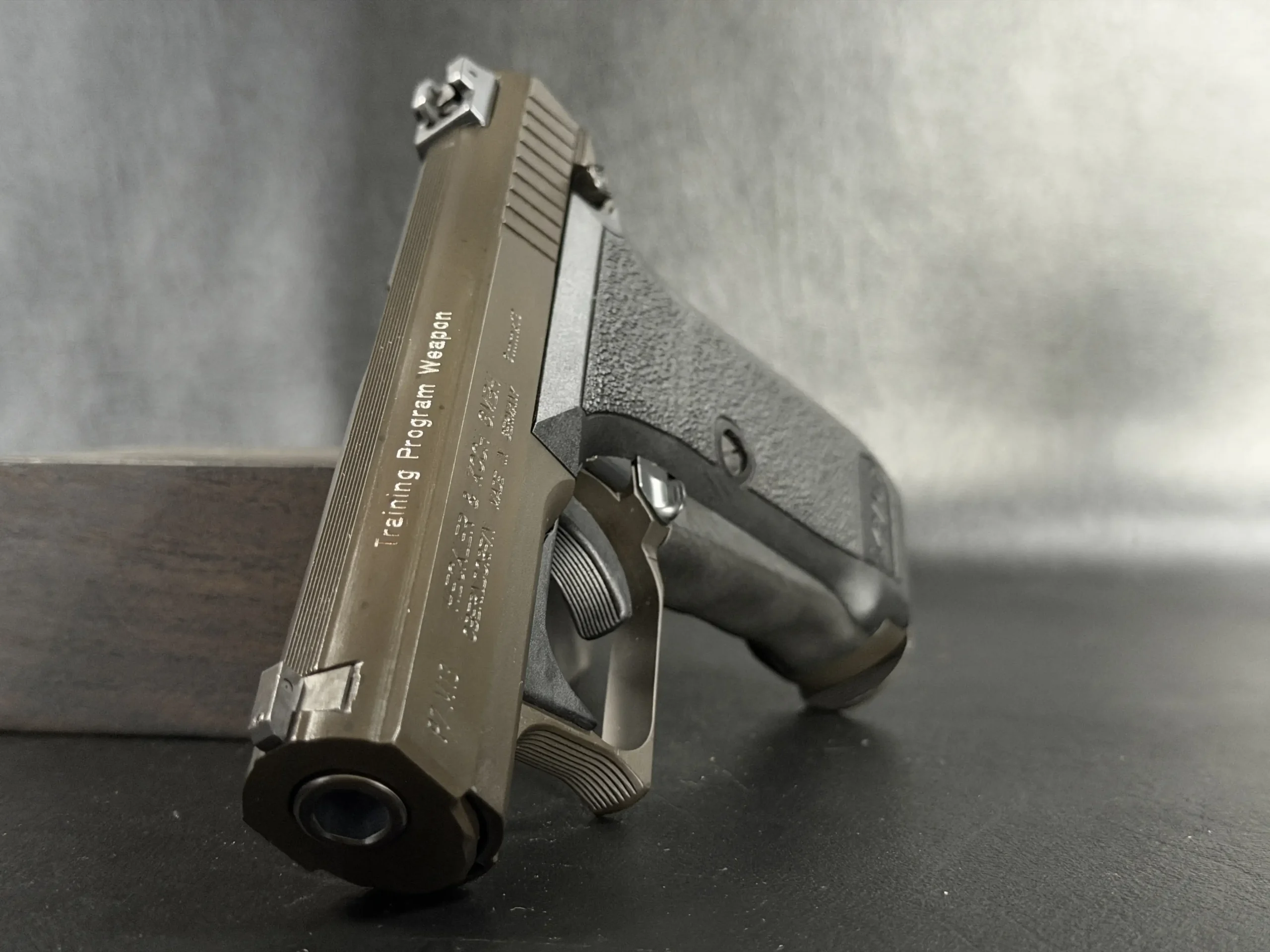
The P7 is known as the squeeze-cocker for a reason. Instead of a fixed front strap, there’s a sprung cocking lever that you compress as you establish your grip. Do that and the striker cocks. Relax it and the gun decocks. It is simple in concept but feels unique the first time you try it.
American Rifleman explained the mechanics clearly: that front lever initially takes roughly 13 pounds of squeeze to cock, but only about a pound and a half to keep it depressed once the spring is over its hump. The lever does a lot of jobs at once. It cocks and decocks the pistol, functions as a kind of grip safety, and even serves as a slide release. There is no manual safety lever cluttering the frame. You get a slide stop, a magazine release, and a takedown latch. That is about it.
For new shooters it may sound like extra work. In practice, because you use three fingers and you’re already gripping the pistol, it becomes natural with a little range time. The system is also what makes holstering and administrative handling so confidence-inspiring. If you relax your grip, the gun is decocked. If you need the gun ready, squeeze and it is live.
Gas-delayed blowback and why the gun gets hot
On top of the control scheme, the P7 runs a gas-delayed blowback action. That means it taps propellant gas into a cylinder under the barrel to interact with the slide during recoil and slow initial opening. You can see the gas system’s presence in the front of the frame, and you can feel its effects after a few magazines. The location of that cylinder concentrates heat right where your trigger finger rests and where your support hand tends to hover.
Early P7s, sold as the PSP or Police Service Pistol, earned a reputation for getting hot near the front grip area during long strings. Later models added a visible fix we’ll talk about below. Regardless of variant, the gas system is a big part of the P7’s personality. It contributes to the pistol’s distinctive shooting manners and explains some of the changes H&K made over time.
PSP to P7M8: the big updates
Heckler & Koch developed what became the PSP in 1976, and series production began at the end of 1979. The pistol spread through German police services and special units, including GSG 9, and found its way to other agencies abroad. Over time, shooter preferences and the American market pushed a round of updates that defined the later family members.
The original PSP framed the baseline. It has a heel-style magazine release at the rear of the magazine well, European style, and a sleek, slim trigger guard without a heat shield. Capacity is eight rounds in a single-column magazine in 9 mm Luger. The barrel is just under four inches at 3 7/8, and H&K was an early adopter of polygonal rifling in this model.
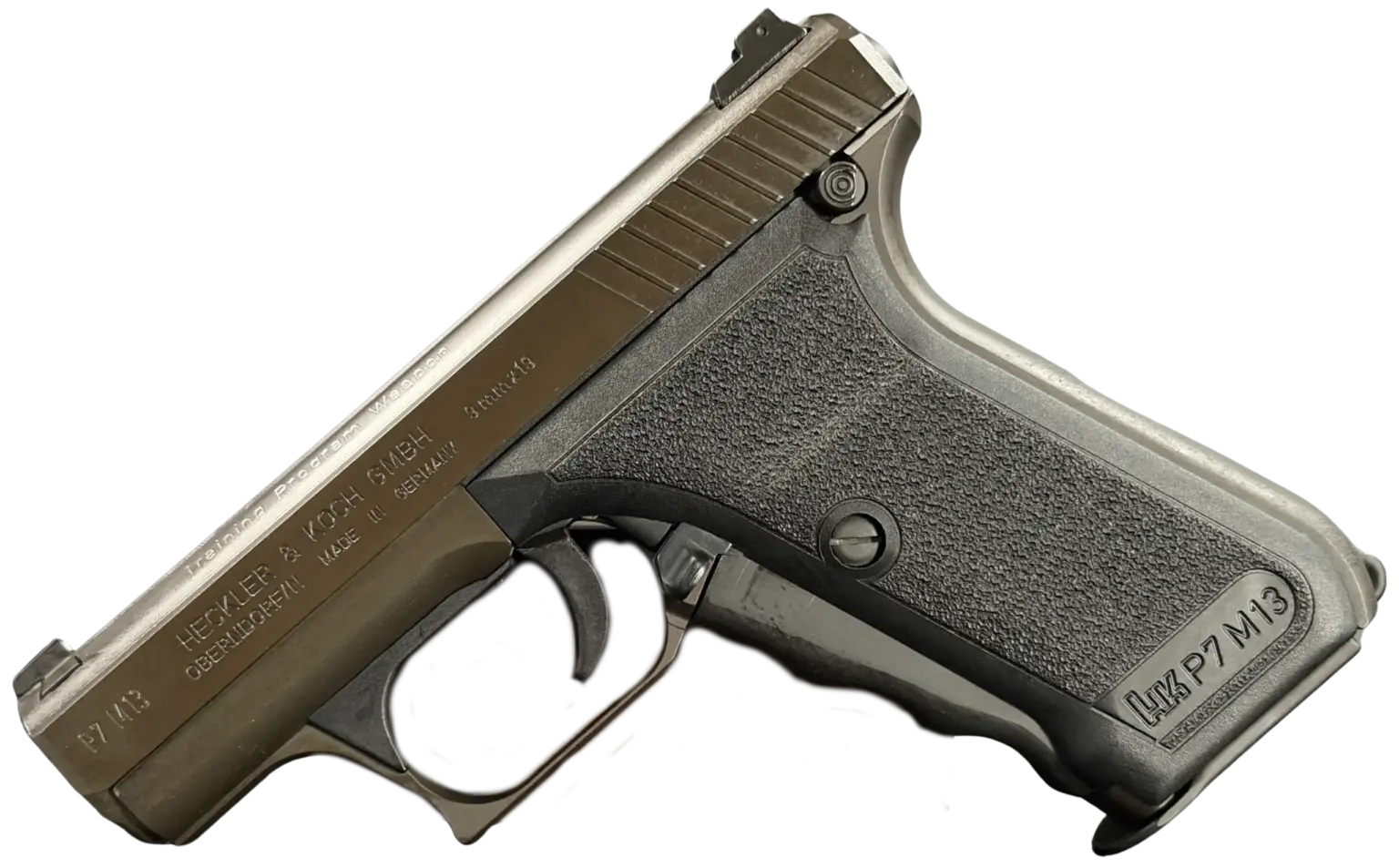
By the early 1980s H&K rolled out the P7M8. This is the version many American buyers picture. It kept the eight-round single-stack format but moved the magazine release to an ambidextrous lever at the rear of the trigger guard. That change required a revised frame and different magazines. It also introduced a very practical change up front: a synthetic heat shield molded into the top of the trigger guard to protect your finger from the gas system’s hot spot. The M8 also brought small internal updates like changes to the firing pin and its bushing, and a lanyard attachment replaced the old heel catch area.
Functionally, the M8 feels like the “mature” P7 most of us know. You still squeeze to cock, you still get that short, natural point, and you get the more familiar magazine release location that many shooters prefer.
P7M13: more rounds and a thicker waistline
Some buyers wanted more capacity than eight rounds without giving up the squeeze-cocker system. That is where the P7M13 comes in. As the name says, it is a double-stack version holding 13 rounds of 9 mm Luger. The change required a fatter grip frame and a corresponding slide profile tweak to clear the wider magazine.
Dimensionally, you feel it right away. Where the PSP and M8 have a slim width of about 29 mm, the M13 spreads to roughly 33 mm. It also grows a touch in height. For some hands that added girth is a feature. For concealed carry, it is a trade-off. The squeeze-cocker and gas system are identical in concept, and you still get the ambidextrous trigger-guard magazine release and the heat shield.
P7M10: the .40 S&W heavyweight
When .40 S&W took off, H&K adapted the P7 to the higher pressure, snappier cartridge. The P7M10 is the result. It shares the general look and control layout of the M13 but carries the .40 S&W chambering and a correspondingly robust build. The frame gets thicker, the slide gets blockier, and the scale tips accordingly. The P7M10’s listed mass is about 1,250 grams, or roughly 44 ounces, which puts it well above its 9 mm siblings in hand and on the belt.
The M10 wears the same ambidextrous magazine release lever and heat shielded trigger guard profile seen on the M8 and M13. Width follows the double-stack pattern at around 33 mm, and the overall height grows as well. It is an impressive piece if you like the idea of a P7 with more authority, and it shows how far H&K could stretch the original concept.
A quick word on the K3 and other outliers
You will occasionally run into P7 variants outside the main service pistols. One you may see is the P7K3, which was offered in small calibers like .22 LR, .32 ACP, and .380 ACP. Unlike the 9 mm and .40 service models, the K3 uses a straight blowback action. That is a different mechanical animal, though the overall look and squeeze-cocker control remain familiar. There were also prototypes and special models that rarely appear on the market, but for most buyers and collectors the PSP, M8, M13, and M10 form the core of the story.
Magazines, releases, and what fits what
It helps to think of P7 magazines in families that match the frames. The original PSP and the later P7M8 are both single-stack 9 mm pistols with eight-round magazines, but the release systems are different. The PSP has a heel catch at the magazine well. The M8 relocates the release to a pair of levers at the trigger guard. That change required a redesigned frame and magazine, so you shop for PSP mags for a PSP and M8 mags for an M8.
The P7M13 uses a wider double-stack magazine specific to that model. It retains the same ambidextrous trigger-guard release design seen on the M8. As you would expect, an M13 mag is not something you swap into a single-stack frame. The P7M10 follows the double-stack pattern in .40 S&W with its own dedicated magazines.
From a buyer’s perspective, verify the magazine type that comes with the gun and the correct release function. With the slide locked back on an empty mag, squeeze the cocking lever and watch it send the slide forward as designed. Then try the magazine release you have, heel or trigger-guard lever, and make sure it positively releases the mag without drag.
Sights, barrels, and the P7 shooting experience
The P7 kept its barrel practical. The standard service barrel is 3 7/8 inches, and H&K applied polygonal rifling early on in the design’s life. That detail, paired with the P7’s firm lockup and consistent trigger feel, helps the pistol shoot better than many expect from such a compact package.
Triggers on these guns are their own thing. Because the striker is cocked by the squeeze lever and released by the trigger, the break can feel a little spongy compared with a crisp single action. You adjust quickly. Once you do, the short sight radius and clean presentation let you shoot precise groups without a lot of fuss.
Recoil in 9 mm is friendly. What you are more likely to notice is the way the gun encourages you to press the front strap, prep the trigger, and break the shot as one motion. It is a different rhythm, and once it sets in, you tend to shoot the P7 fast and clean.
Proofs, date codes, and markings to look for
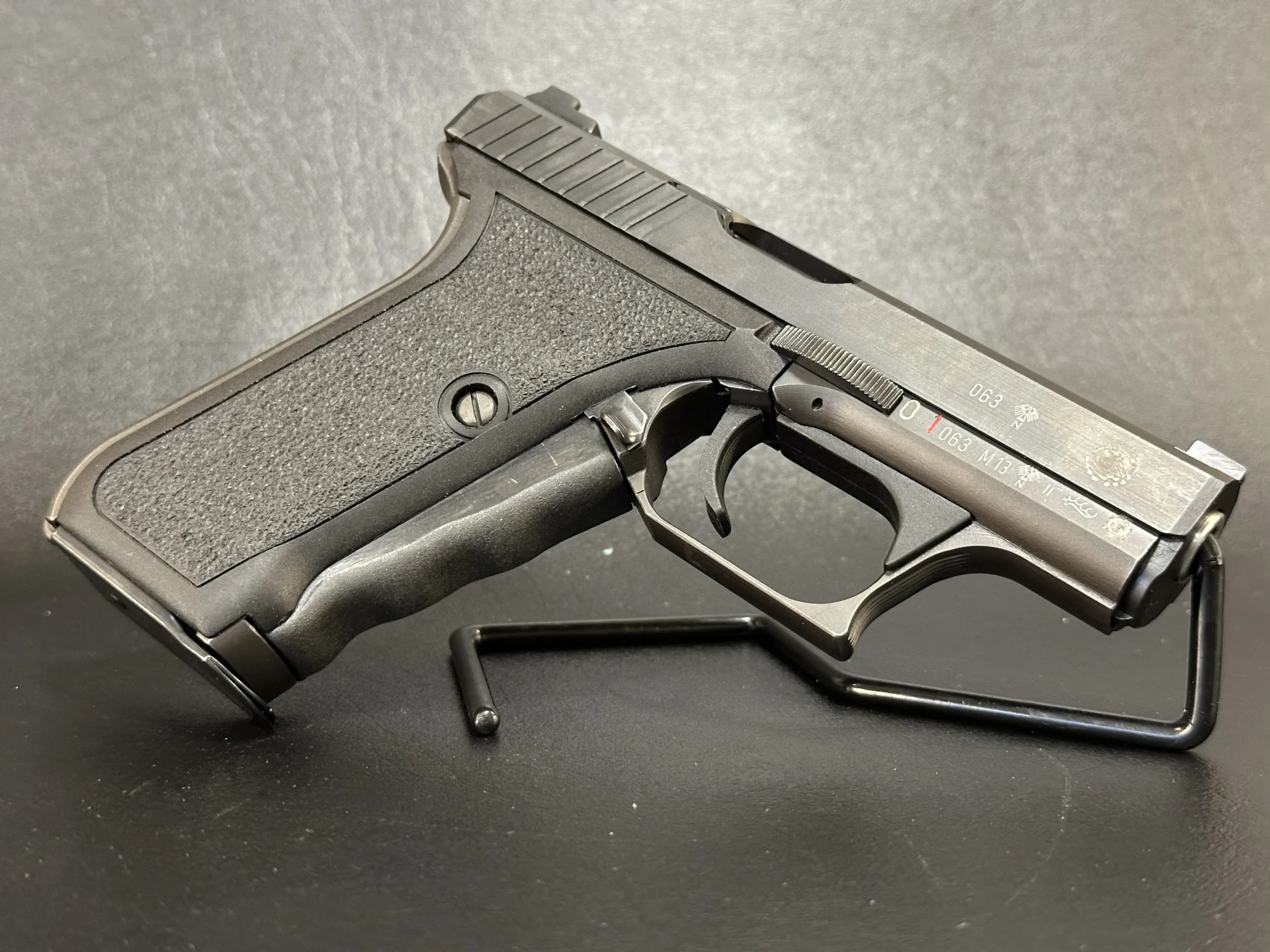
German proof houses and H&K’s own marks give you useful clues about the gun in your hand. You will find proof marks and a two-letter date code on the frame or slide area. A common example floating around is a code like KF, which indicates a mid-1990s pistol, specifically 1995. Placement can vary slightly by model and import batch, but the format is consistent across the family. If you are shopping online, ask for a clear photo of the proof and date area so you know what era you are getting.
Models in later configurations show the visual changes called out earlier. An M8 or M13 will have that unmistakable plastic heat shield in the top of the trigger guard. A PSP will have a clean, steel guard without it and a heel catch at the magazine well. Take in the little things too, like the front-cocking serrations or lack thereof, and the presence of a lanyard attachment where the heel catch once lived on updated frames.
Range notes: heat, cadence, and handling
The gas system sits right under the forward grip area. That means heat, and the gun does not hide it. On a PSP, you will feel warmth creep into the front of the frame after a few magazines of brisk shooting. The later M-series pistols add a polymer heat shield molded into the trigger guard that does a very good job of keeping your finger out of the hot zone. If you are running drills that chew through a box or two without much pause, you will still feel the front of the gun warming.
Cadence is part of the P7’s charm. You establish grip pressure as you present the gun, and the squeeze lever simply stays depressed while you fire. If you relax your hand, the pistol decocks immediately. That can lead to an occasional dead trigger for those new to the system who relax between shots without meaning to. It goes away with a little practice. Departments that adopted the P7 saw the same thing on the training range. Experienced shooters mastered the technique, while officers who shot rarely sometimes struggled with keeping the lever compressed through a string. There were reports of both failures to fire and mishaps as a result of unfamiliarity, which is not surprising for a system that asks for consistent grip pressure under stress.
As a carry gun, the P7 feels unusually safe to holster and move with. You holster with your hand off the lever, decocked. If you have to draw in a hurry, your grip makes the gun ready. That balance of readiness and mechanical safety is the heart of the P7 concept, and it is why so many professionals and civilians kept faith with the model for decades.
Buyer tips: picking the right P7 for you
When you are choosing among PSP, P7M8, P7M13, and P7M10 examples, the right answer is going to come from your hands and your use case. Here is a simple way to frame it.
- Prioritize concealment and a slim profile, with classic looks and a heel release you do not mind learning. Consider a PSP.
- Want the updated controls without extra bulk, and plan to carry or run classes. Look at a P7M8 with the ambidextrous trigger-guard release and heat shield.
- Prefer higher 9 mm capacity and have medium to large hands. The P7M13’s double-stack frame and wider grip may be the ticket.
- Set on .40 S&W and do not mind weight. The P7M10 is the most robust of the line.
Whichever path you pick, evaluate the details:
- Heat shield and trigger guard. On M8, M13, and M10 pistols, check the plastic heat shield for cracks and secure fit.
- Magazine type and count. Make sure the gun includes the correct magazines for its variant, and that they drop free and lock back as they should.
- Squeeze-cocker feel. Dry-handling tells you a lot. The initial squeeze should be firm, and it should take very little effort to keep depressed once cocked, as described by American Rifleman.
- Proof and date codes. Ask for clear photos of the marks. Two-letter codes identify year of proof, for example KF signifying 1995.
- General wear. Look for honest holster wear on service pistols, clean sights, and a healthy bore with polygonal rifling still sharp.
As for models and dimensions, the PSP and P7M8 are the slimmer pair at about 29 mm wide, while the P7M13 and P7M10 ride at about 33 mm. Heights vary slightly too, with the M10 the tallest of the bunch. You can see those differences laid out on the P7 page that summarizes variant dimensions. If grip circumference is your make-or-break, handle an M13 before you commit, and compare directly with an M8 or PSP if you can.
Pulling back from the spec sheet, there is a reason the P7 inspires such loyalty. H&K gave us a pistol that does not feel like anything else. The manual of arms is logical once it is in your bones. The gas system has quirks, but it brings strengths too. The M-series updates were thoughtful responses to real complaints. And when you settle the sights and press, the gun simply shoots. For buyers and collectors who appreciate that kind of clarity, any of the core variants can be the right one. The trick is knowing which set of trade-offs fits you, and now you do.