
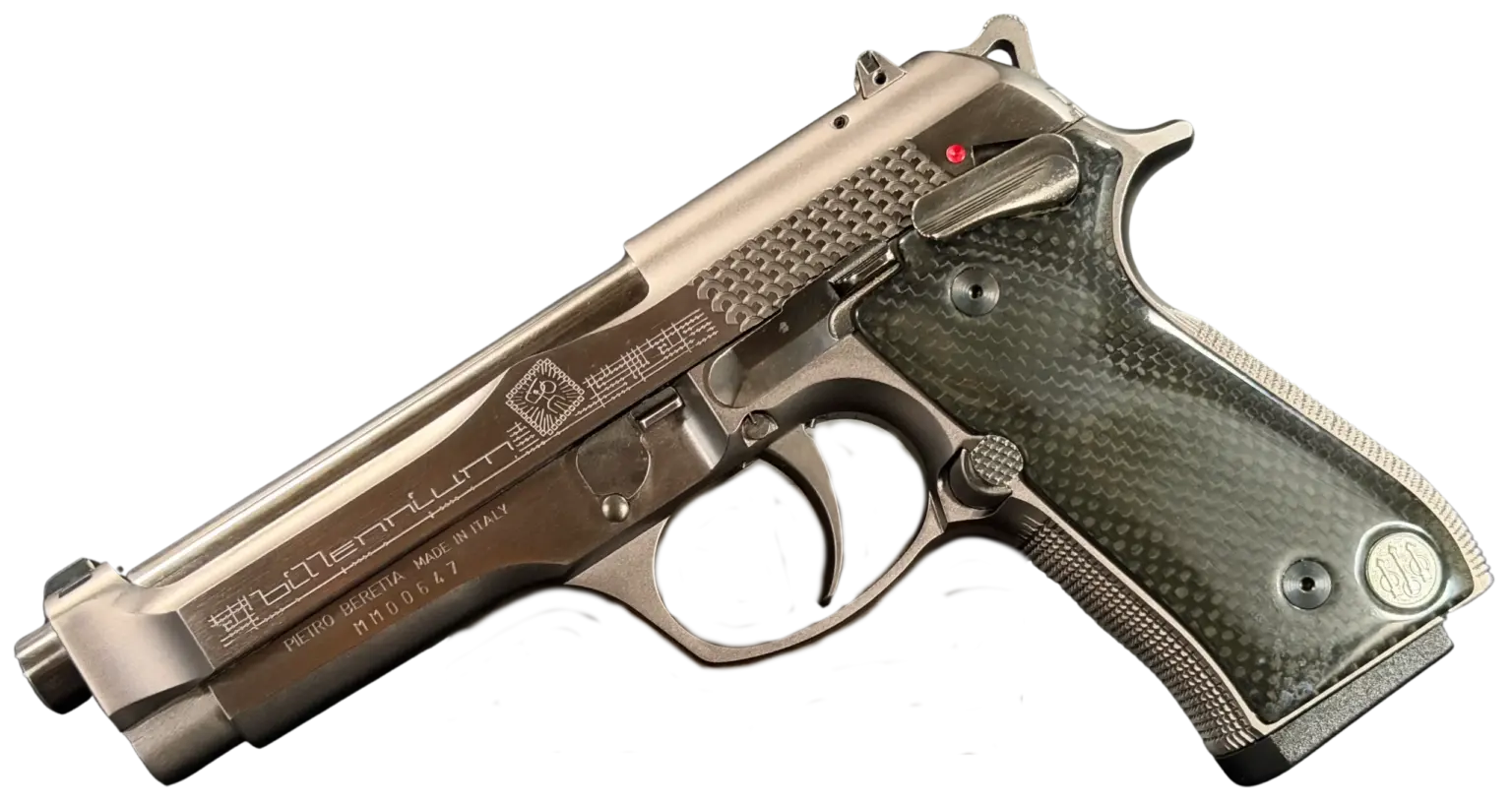
The first Beretta 92 I shot belonged to a sheriff’s deputy who swore you could spot a 92 person by their grin after mag one. He was right. The 92’s smooth recoil and straight-line feed make new shooters look good and old shooters relax. But shopping the family can feel like alphabet soup. G, D, S. Brigadier, Elite, Centurion, Vertec. Then there are the small marks that matter to collectors and careful buyers.
This guide is a plain-English decoder, tuned for shoppers and enthusiasts. If you want broader background on the 92’s rise, our overview of Beretta across the centuries sets the stage. For an official reference while you read, keep the 90 Series manual straight from Beretta handy, and the Beretta 92 on Wikipedia for model context.
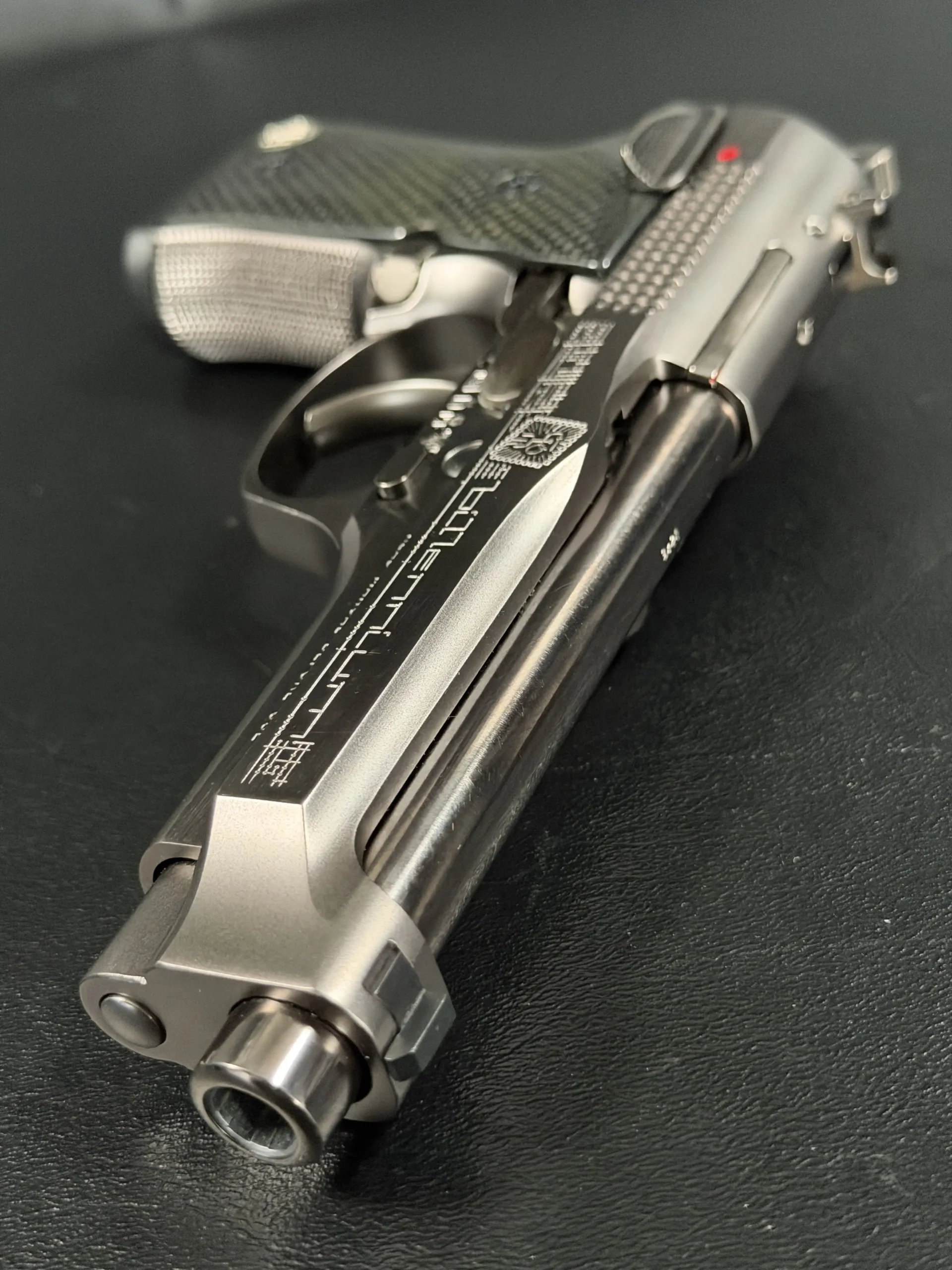
Start at the trunk: 92, 92S, 92SB, 92F or 92FS, and the M9
Beretta launched the Model 92 in the mid 1970s with a double stack 9 mm magazine, an alloy frame, and the open top slide heritage from the M1951. Reliability comes from two hallmarks that persist across the family: that open slide and a direct feed path lining the top round straight to the chamber.
Early 92s wore a frame mounted safety and a European heel style magazine catch. Law enforcement feedback pushed Beretta to move controls and add features. The 92S shifted the safety decocker to the slide and kept the heel release. The 92SB brought the push button mag release behind the trigger guard, ambidextrous levers, a firing pin block, and other refinements.
From there we get the 92F and the 92FS. If you are comparing the U.S. military M9 to the commercial 92FS, for practical purposes they are the same pistol with different rollmarks and occasional contract cosmetics. Parts interchangeability is the point. See NRA Shooting Illustrated’s M9 vs 92FS comparison for a clean rundown.
Hard numbers from Beretta put the classic full size 92FS around 8.5 inches overall with a 4.9 inch barrel, roughly 34 ounces unloaded, 1.5 inches wide, and 5.4 inches tall. Standard magazine capacity is 15 rounds in 9 mm, with compacts at 13 and a Type M single stack compact at 8.
What the letters mean: F vs G vs D vs S
Controls drive how the gun feels to run. Decide here first.
- Type F 92F or 92FS: DA or SA with a slide mounted lever that decocks and can stay down as a safety. Up is fire, down is decock and safe.
- Type G 92G: Decocker only. The lever drops the hammer then returns to the fire position. No manual safety.
- 92D: Double action only. No safety or decocker levers on the slide. A consistent long, smooth trigger press every time.
- 92S: Marks the move from a frame safety to a slide safety decocker, with a heel magazine release.
Slides that change the feel: Standard, Brigadier, Elite
Top end profiles are more than cosmetics. They change balance, sight return, and holster fit.
- Standard slide: The profile you picture when you think M9. Lightest of the three and the classic balance most 92FS and M9 pistols use.
- Brigadier slide: A heavier, beefed up slide with more mass toward the muzzle. The extra steel moderates slide velocity and can soften how the sights return.
- Elite family: Performance leaning variants born from the Brigadier idea. Details vary by model, but expect upgraded sights and handling touches oriented to duty and sport use.
Sight note for shoppers: many classic 92FS slides have an integral front sight, while Brigadier, Vertec, and many Elite variants typically use dovetailed fronts. That difference affects how easily you can change sights.
Sizes that matter: Full, Centurion, Compact, Vertec
Size names describe slide and frame pairings that affect concealment, sight radius, holsters, and how the gun prints.
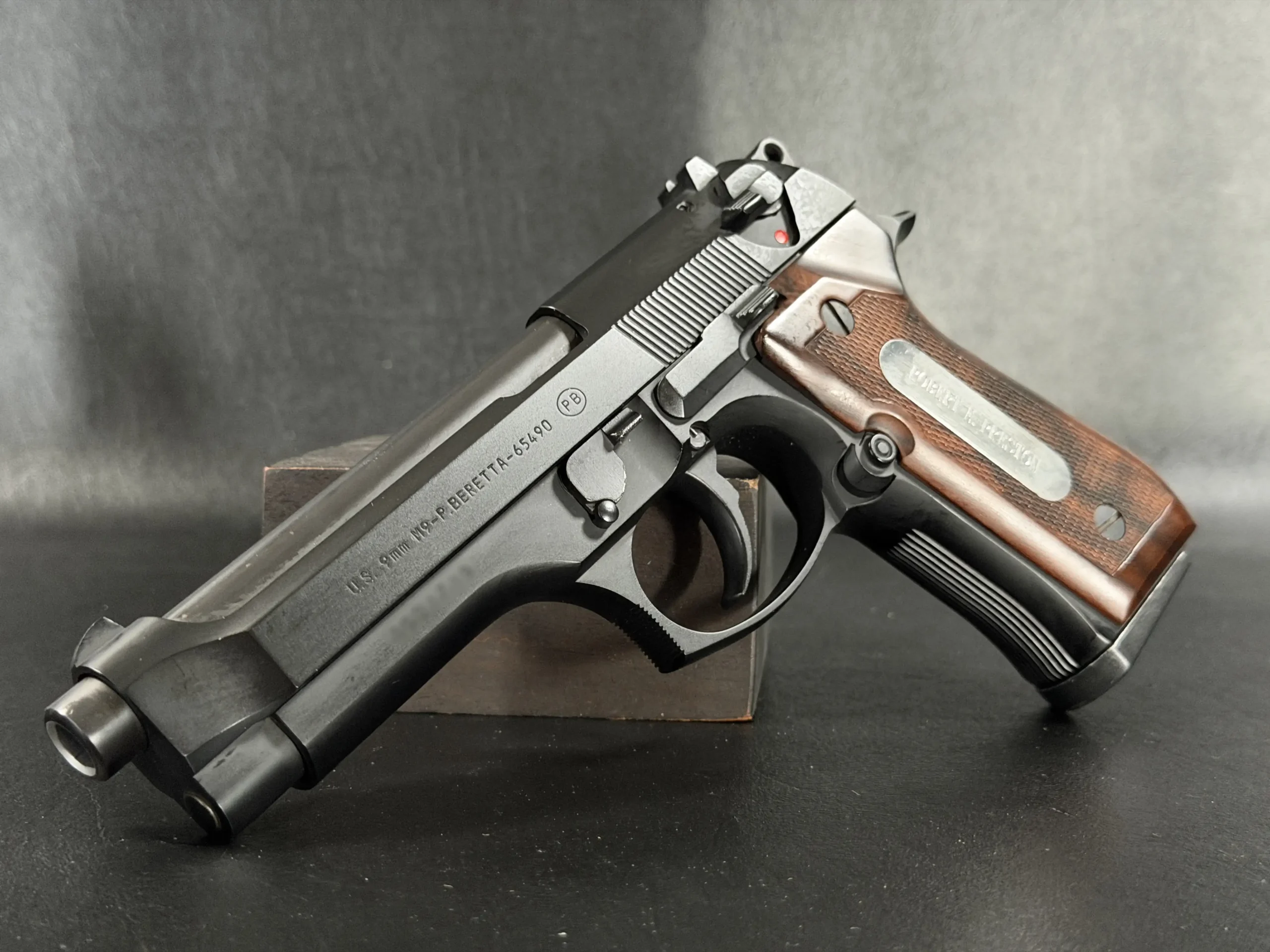
- Full size 92FS or M9: 4.9 inch barrel, about 8.5 inches overall. The duty size baseline for ergonomics and parts.
- Centurion: Shorter top end on a full size grip. Roughly 4.3 inch barrel and 7.8 inches overall, with full capacity.
- Compact: Shorter slide and shortened grip. The 92FS Compact is generally 13 rounds in 9 mm with similar top end length to the Centurion.
- Compact Type M: Single stack compact with an 8 round magazine for a thinner profile.
- Vertec length: Slightly shorter overall than full size with a roughly 4.7 inch barrel and updated ergonomics compared to the classic 92 profile.
Modern rails and optics: 92A1, M9A1, M9A3, and A4
If you want lights, accessory rails, or modern optics options, the later branches of the family deliver.
- 92A1 and M9A1: Add an accessory rail and updates oriented to duty use, including sand resistant magazine designs.
- M9A3: A further evolution with rail and modernized features, and provisions oriented toward contemporary accessories.
- M9A4: Builds on the concept with current slide and sight features for contemporary setups.
For current availability and specs, use the official catalog at BerettaUSA as your baseline.
Magazines: capacities, compatibility, and smart buys
Magazine support is a big reason the 92 family remains relevant.
- Standard 92 and 98 series: 15 round double stack magazines in 9 mm are the baseline for full size frames.
- 92FS Compact: 13 round double stack magazines. Full size mags will function with some overhang or with a sleeve.
- Compact Type M: 8 round single stack magazines specific to that model.
- .40 S and W 96 series: 11 round double stack magazines for full size, 9 round for compact.
Quality extended 18 to 20 round magazines exist and generally run well in current 9 mm 92s. For carry or duty, stick with current production factory magazines or proven OEM suppliers and test with your load. Later military adapted models included sand resistant magazine designs for field conditions.
Locking blocks: what matters and how to inspect
The 92’s short recoil system uses a locking block to cam the barrel in and out of lockup with the slide. It is different from tilting barrel designs, and it gives the 92 its signature recoil feel and feed reliability.
Beretta iterated the locking block over decades to improve durability. You will see talk of early versus later blocks. The practical takeaways for buyers and high volume shooters:
- Visual cues: Later factory blocks are a revised pattern supplied in current Beretta locking block kits. Earlier patterns differ in geometry around the locking lugs.
- Service life mindset: Treat the locking block like a wear item. If round count is unknown, starting with a fresh factory locking block kit and recoil spring is inexpensive insurance.
- Inspection points: With the gun clear, look closely at the locking lugs for cracks or sharp peening and at the cam surfaces for galling. Cycle the slide slowly and feel for any hitch as the barrel unlocks.
- Parts source: Use Beretta’s current production kits for your model. The 90 Series manual covers the component in detail and is the best reference for disassembly and checks.
Marks that tell stories: date codes, proofs, and import stamps
Italian made 92s typically carry proof house marks and a small code indicating the year of proof. U.S. imported pistols also bear importer information. Here is a compact cheat sheet so you know where to look and what you are seeing:
- Italian date code format: A small two letter code indicating the year of proof. Commonly found on the frame near the trigger guard area or on slide flats. Verify the letters against a reputable proof mark chart before you buy.
- Proof house marks: Expect Gardone Val Trompia proof symbols together with Beretta maker marks appropriate to the period. Matching style and placement between slide and frame can hint that parts are original to the gun.
- Importer stamps on surplus and trade ins: U.S. law requires the importer name and location on the firearm. On many 92S police trade ins you will see a clearly engraved or laser marked importer line on the slide or frame. Large or high contrast markings can affect collector appeal but not function.
- Placement recap: Check the right side of the frame around the trigger guard, the dust cover, and slide flats for date codes and proofs. Look on the slide or frame for importer text if the gun is foreign made and sold in the U.S.
Buying used: a fast inspection checklist
Police trade ins and surplus 92 family pistols are a sweet spot for value. Here is the checklist I keep in my range bag:
- Slide to frame fit: With the gun clear, ease the slide in and out of battery. It should feel smooth. Rail finish wear is normal.
- Locking block: Inspect the lugs for cracks or sharp peening. Check cam surfaces for galling. Replace if in doubt.
- Barrel: Check the crown and feed ramp. The direct feed path is forgiving, but a dinged crown shows on paper.
- Extractor and firing pin block: Press the firing pin safety plunger. It should move freely under spring pressure. Inspect the extractor claw for chips.
- Trigger return and reset: Dry fire in DA with snap caps, then ride forward to feel the reset. A lazy reset can be a spring issue.
- Magazines: Inspect feed lips for symmetry. Confirm positive lock back. Budget for new springs on older mags.
- Marks and model: Confirm model designation, control type, and any date or import marks you care about.
Which 92 is right for you
- Range and home defense, classic feel: 92FS or M9 pattern. Abundant parts, magazines, and holsters. If you want a manual safety you can leave on, stick with Type F.
- Carry with DA or SA simplicity: 92G. Decock and reholster without managing a safety under stress. Consider Centurion or Compact top ends if concealment matters.
- Concealed carry, alloy frame: 92FS Compact or Compact Type M if you prioritize a thinner profile. Holster and magazine options narrow slightly for the Type M.
- High volume range work or recoil sensitivity: Brigadier or an Elite variant. The added slide mass and tuned features pay off over long strings.
- Want a slightly shorter full size without going compact: Vertec length variants with the roughly 4.7 inch barrel and updated ergonomics.
Living with a 92: parts, support, and simple upgrades
The 92 platform benefits from decades of institutional use, which means parts and armorer knowledge are easy to find.
- Recoil and trigger return springs: Replace on schedule, especially on a newly acquired used gun with an unknown history.
- Sights: Classic 92FS slides often have integral front sights. Variants like Brigadier, Vertec, and many Elites use dovetails. Choose accordingly if sight changes are on your list.
- Grips: The grip panels are easy to swap. A set that fits your hand will do more for your shooting than any cosmetic tweak.
- Magazines: Stock current production mags and label them by date. Rotate carry and range mags appropriately.
For model specific features and current factory options, start with the BerettaUSA catalog, then cross check specs and history with Wikipedia’s Beretta 92 page for broader context.
Specs to keep handy while shopping
- 92FS full size: about 8.5 inches long, 4.9 inch barrel, 34 ounces, 15 rounds in 9 mm.
- Centurion: about 7.8 inches long with a 4.3 inch barrel, still 15 rounds.
- Compact: similar top end to the Centurion, 13 rounds in 9 mm.
- Compact Type M: same compact slide, 8 round single stack magazine.
- Vertec length: roughly 8.3 inches with a 4.7 inch barrel.
I keep coming back to the 92 because, beyond the codes and the collector brain, they shoot like they want you to succeed. Decode the letters, pick the size that fits, and pay attention to parts and marks only as much as your goals require. The rest is range time, and that is where the 92 family has earned its place.