
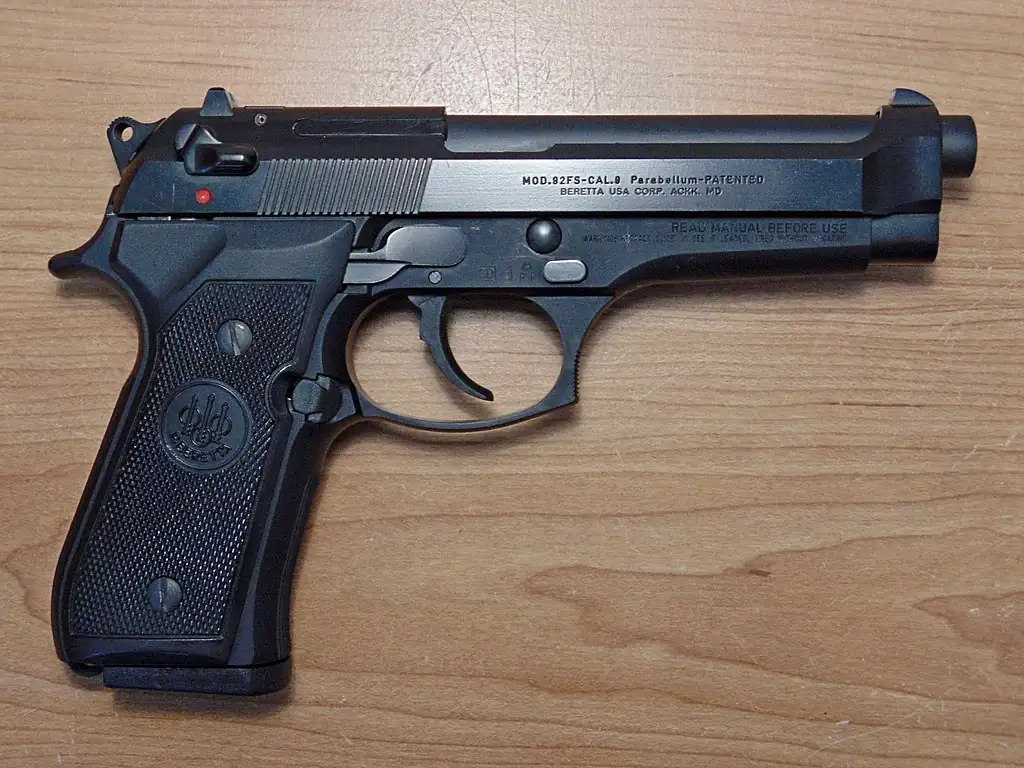
It starts, as it often does in northern Italy, with a hammer on steel. In 1526, a barrel maker in Gardone Val Trompia took an order for 185 arquebus barrels from the Republic of Venice. That document survives, and the name on it still moves a lot of guns today: Beretta. Five centuries on, the company that began as a forge in a valley of iron now runs lines that turn out pistols, over-unders, and gas autos for hunters, competitors, police, and soldiers. If you’ve ever handled a 92, a Silver Pigeon, or an A400 and wondered how they all connect back to that valley, this is the map.
Gardone Val Trompia roots (1526 to present)
The family that made those 1526 barrels kept making them, generation after generation, under the guilds and beyond them. The Beretta name passed from Bartolomeo to his son and onward while Europe changed governments and borders. The firm is still stewarded by the same family centuries later, a rarity noted in profiles of the brand. You can read a concise overview on the general Beretta history page.
For a long time, Beretta was known best for barrels. That changed in the 1800s as demand for military arms fluctuated and the family saw a future in civilian and sporting guns. Dealers were courted. Exports grew. The company modernized early and often, investing in power and machinery while keeping its footing in Gardone.
From barrels to complete guns
That pivot to complete firearms is a turning point for anyone trying to place an old Beretta in context. The barrels and locks of the earlier years gave way to full builds as 19th century leadership pushed toward sporting arms. The story carries into the postwar years, where the name “S55” becomes a marker. Introduced in 1955 as part of the S series of over-unders, it set the pattern many shooters now think of as the Beretta shotgun feel: low-profile boxlock actions that point naturally, with parts that interchange and a build process that minimizes hand fitting. The S guns would evolve into the 680s and 690s, Silver Pigeon and all.
If you’ve held a 686 and a 687 and noticed how familiar they feel, you’re not imagining it. The DNA goes back to those S guns that prioritized a trim, durable action with a reputation for shrugging off hard seasons. On the competition side, the 682E showed that a Beretta could sell for a modest sum compared to boutique target guns yet still carry medals from big stages. At the top of the clay world, DT10 and DT11 models extended that line for elite shooters, while the 680 family remained the everyday hero of clubs and fields.
Inside Beretta Uno and Due: modern + artisanal production
One useful modern detail is how Beretta splits shotgun production in Gardone. Two adjacent plants do different jobs. Beretta Uno is an ultra-modern facility where robots and CNCs hold tolerances that human hands cannot chase all day. Beretta Due houses artisans who file, fit, shape, and checker stocks and metal the old-fashioned way. The two buildings feed each other, and most shotgun manufacturing still takes place there for the global market. For current models and factory information, start with the official portals at Beretta and Beretta USA.
It’s a helpful mental picture when you’re shopping. The idea that a single company can build a field 686 and a DT11 under the same roofs makes sense when you realize the production floor is both a lab and a workshop.
Global footprint and the 92 story
Beretta is Italian by birth, but not only Italian anymore. For the American market, Beretta USA came online in 1977 to handle distribution, and some production moved stateside in the 1980s as demand grew. Today, 92-family pistols have been produced and assembled in the United States for years, first in Maryland and more recently in Gallatin, Tennessee, alongside ongoing Italian production. Not every Beretta you see is stamped with the same birthplace, and that is by design.
The 92 series also illustrates Beretta’s international reach. In the 1970s, a plant in São Paulo produced 92 pistols for the Brazilian military under contract. That ran through 1980, after which the plant was sold to Taurus, which continued making a variant of the 92 on the same tooling as patents expired. It is a reminder that a long-lived design can cross borders and even brands.
Proofs, rollmarks, and where a Beretta was born
Collectors and careful buyers look at markings first. On Italian-made guns, expect factory rollmarks naming Fabbrica d’Armi Pietro Beretta and usually Gardone Val Trompia. You will also find Italian proof-house stamps and date codes that confirm test and timing:
- Where to look: on over-unders, check the barrel flats and monoblock underside, plus the receiver water table. On pistols, look on the frame near the trigger guard, slide, and barrel hood.
- Common Italian marks: “PSF” indicates smokeless proof. You may also see CIP proof symbols and a Gardone/Brescia proof-house stamp.
- Date codes: Roman numerals were used into the mid 1970s, then two-letter codes began in 1975 (for example AA for 1975, AB for 1976). Match the code to a published chart to confirm the year.
- Importer marks: U.S. import regulations require the importer’s name and city on the gun, often on the frame, slide, or barrel. Factory U.S. manufacture or assembly will show a Beretta USA address line instead.
Build yourself a quick map when evaluating a used gun: model, family (92, 680, 690, A300, A400), country on the rollmark, importer if present, and any date codes or serial blocks that confirm a production window. It keeps you from guessing.
The 92 series in context
In pistol lore, the 92 is Beretta’s most recognizable silhouette. The open-slide profile, slide-to-frame relationship, and locking block define the look and feel. The 92 grew through multiple iterations, and the family continues today.
As a buyer, think in families more than in single letters. Early 92s, 92S variants, later 92FS patterns, and modern spin-offs share the core idea but differ in details that matter for holsters, sights, safeties, frames, and locking blocks. If your interest leans toward the nuances of frames and compatibility, see our Beretta 92 lineage and parts-fit guide.
If your 92 journey includes older imports, keep the Brazil chapter in mind for context. Some collectors like a clean arc of Italian production, others enjoy the story of how a design ends up in another maker’s catalog through a sale of tooling. Neither choice is wrong. The 92’s track record for service use and range life is long, and parts, magazines, and support are still broadly available.
The 680 and 690 over-unders
Ask a bird hunter what “Beretta” means, and you’ll often get two words: Silver Pigeon. That badge rides on the 680/690 family. These guns have a low-profile action, twin barrel lugs, and a reputation for handling that makes them feel lighter than they are when you’re swinging through a crossing shot.
The 680 line has been the backbone. The 690 series layers in refinements to stocks, forends, barrels, and furniture. For clays, the 682 variants carved out a following by making podiums without bespoke-gun prices. When the company pushed higher with DT10 and DT11 target models, it did so without abandoning the field-friendly 680s and 690s that most buyers actually carry. For a deeper dive, our 680/690 Silver Pigeon explainer walks through models and evolutions.
On the secondhand rack, 686 and 687 models are reliable buys if condition is honest. Inspect locking surfaces for peening or rounding, check ejector timing, and look at the hinge and forend iron for signs of hard use. The good news with 680-family guns is that parts and service knowledge are widespread.
A300 and A400 autos
Gas-operated semiautos are the other half of Beretta’s shotgun face. The A300 family has long been the no-nonsense worker that handles varied loads and weather without complaint. The A400 line is the more feature-rich sibling with design updates for recoil management and balance. Depending on trim, you’ll find options that take the A400 into waterfowl blinds, upland fields, and clay courses.
Choosing between them comes down to honesty about need. If you’re a high-volume clay shooter or a waterfowler who lives in waders six weeks a year, the A400’s refinements can earn their keep. If you hunt a few weekends each season and want a shotgun that will ride in the truck and shrug off a muddy morning, an A300 is hard to argue with. For a side-by-side look at features and use cases, see our A300 vs A400 comparison. Promotions and rebates change, so check the Beretta USA promotions page before you buy.
What modern manufacturing means for you
It’s easy to romanticize the past and ignore the machines that make modern guns run. In Gardone, the split between Uno and Due shows why that would be a mistake. Robots and CNC machining take on the repetition that demands micron-level consistency. Human hands do the fitting, finishing, and woodwork that still make a shotgun feel like something built for you.
For pistols like the 92, that philosophy means slides, barrels, and frames that interchange the way they should across large production runs. For over-unders, it means bite geometry and ejector timing that are consistent, followed by human inspection that catches the little things machines still miss. For gas guns, it means parts that hold tolerances through heat and fouling, which is what keeps them cycling when duck weather is trying to seize everything up.
There’s also a practical buyer angle. A company that has produced at scale for generations builds a service network by necessity. When you buy a 680-family over-under or a 92, you are not gambling on future parts availability. That doesn’t absolve you from checking a particular gun for wear, but it should give you comfort that you’re not buying an orphan.
Buyer and collector pointers worth keeping
All this history only helps if it turns into action at the counter or on the auction screen. Here’s how I translate it when I’m advising a friend.
- Start with the rollmarks. Note the model, the family (92, 680, 690, A300, A400), and the country of manufacture or assembly on the gun.
- Decode proofs and dates. On Italian-made guns, look on barrel flats and frames for proof symbols and date codes. Roman numerals appear on older guns, two-letter codes on newer ones.
- Match the story. If a seller claims Gardone manufacture, importer marks and proof stamps should not contradict that.
- On 92 pistols, understand the variant. Small differences affect holsters, sights, and parts. If you plan to change locking blocks or sights, confirm compatibility before you buy accessories.
- On 680/690 over-unders, check lockup tightness, hinge wear, ejector timing, and the condition of the stock head where it meets the action.
- On A300 and A400 autos, inspect the gas system for cleanliness and signs of neglect. If the gun has lived a hard waterfowl life, look under the forend for rust or pitting.
- Remember support. Beretta’s size and longevity mean you have a path to parts and service. That is worth more than a fancy grip cap.
If you enjoy the backstory as much as the shooting, there are other threads to pull: the move from barrels to complete guns, the rise of the S55 into the Silver Pigeon lineage, how a pistol contract in Brazil led to another company making a 92 variant on the same tooling, and the acquisitions that folded other famous shotgun names into the family. Each piece teaches you to read a Beretta with clearer eyes.
And it all loops back to that valley in Lombardy, where a shop began by making barrels for a republic that no longer exists, and somehow ended up building guns for a world that changes every year. Buyers benefit from that persistence. Collectors find stories in the proof marks and serial ranges. Everyone else gets to shoot a gun that feels balanced because people who care about steel and wood have cared for a very long time.
Ready to price a new purchase or verify what’s shipping now? Use the Beretta USA dealer locator and check current promotions on the official sites.