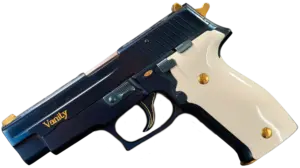

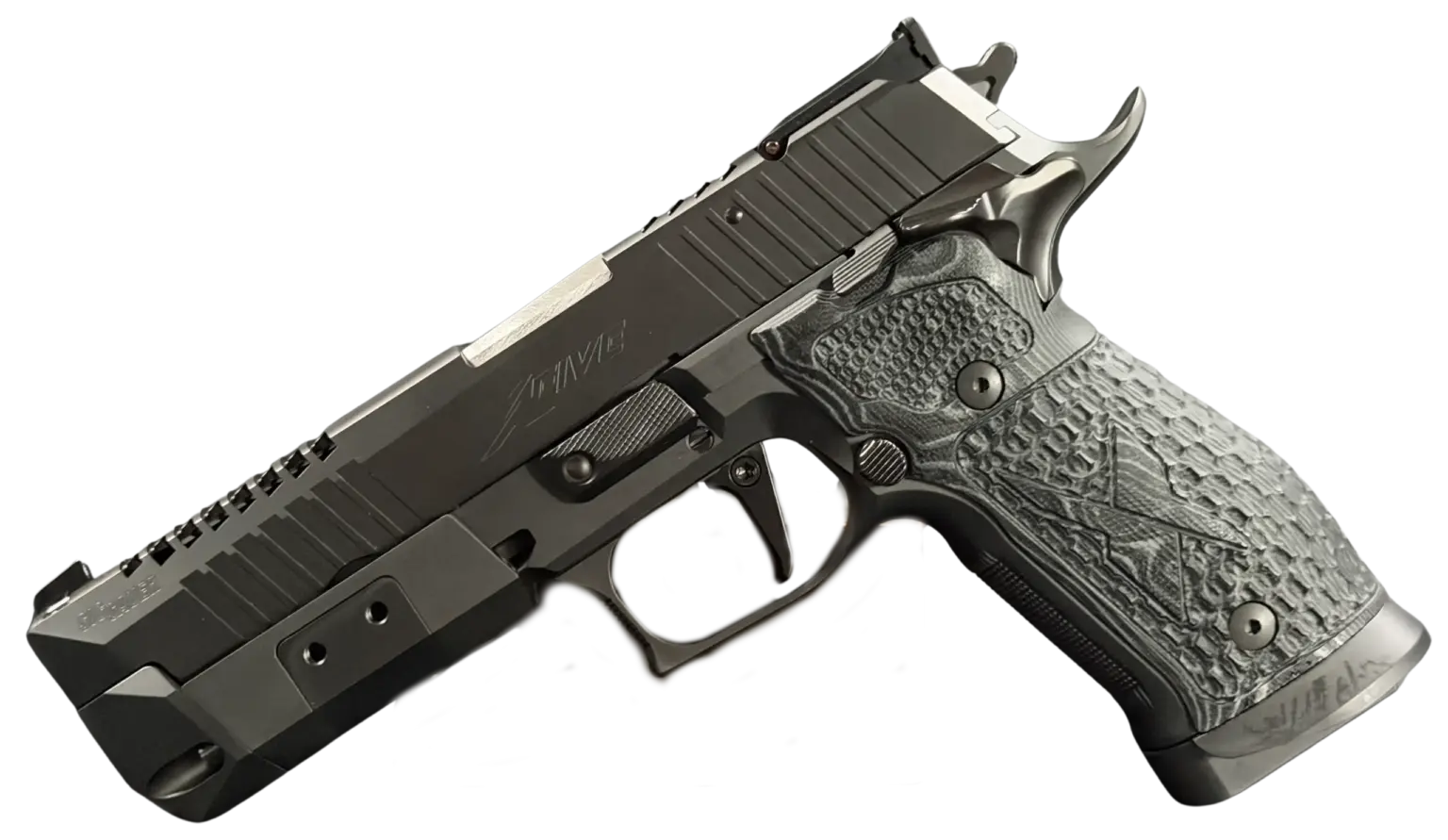
The first time I laid a P226, a true German-made P228, and a milled-slide P229 across the same bench, the conversation got loud in a hurry. One guy swore the P228 was the smoothest 9 mm compact ever built. Another argued the P229 fixed everything that needed fixing. Someone else wanted to know why his P229 felt heavier up top. Then a hand reached in and asked the question that always shows up around classic SIGs: what’s the deal with stamped versus milled slides, DA/SA versus DAK, and do those SRT triggers really change the gun?
If you’ve wondered the same things, this is the straight, collector-friendly walkthrough. No fluff, no mythology. Just how the P226, P228, and P229 relate to each other, what changed over time, how to read the markings, and which parts actually swap.
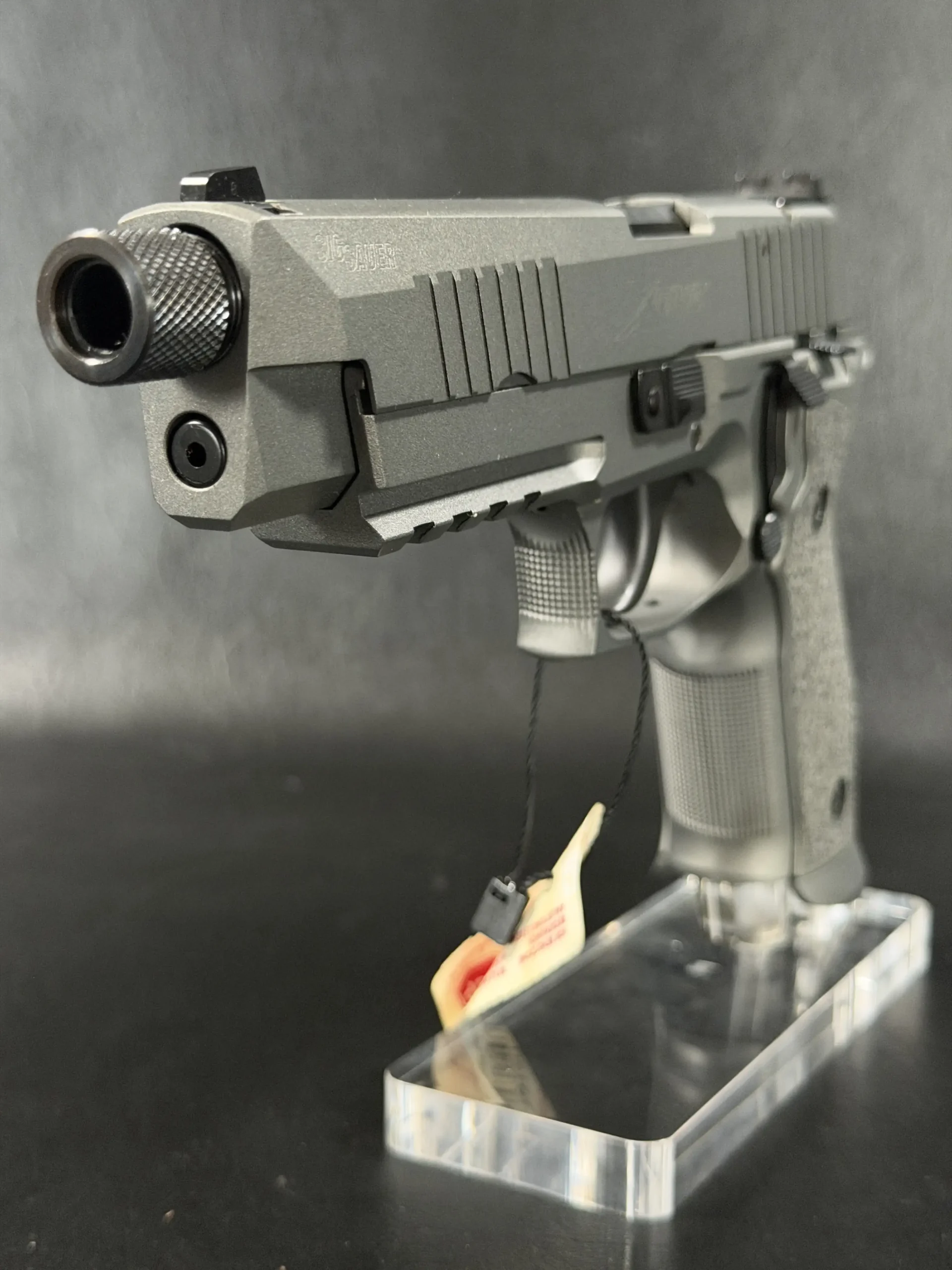
The trio in brief: P226, P228, P229
All three pistols are part of SIG’s classic, hammer-fired, alloy-frame family with the familiar decocker on the left side and a reputation for reliability. They share the same operating system and control layout. The differences are in size, caliber support, and how the slide is built.
P226: full-size duty pistol in 9 mm and other calibers across its long life. It set the pattern for the line and remains the benchmark for shootability in a service-size metal gun. Official specs vary across generations, but a typical P226 with magazine runs in the mid-30-ounce range and uses a 4.4-inch barrel, as listed on the public spec sheets for the model family.
P228: compact 9 mm built around a stamped or folded carbon-steel slide with a pinned-in breech block on an aluminum frame. It became the U.S. military’s M11 sidearm and is cherished today as one of the best-balanced compact SIGs. The classic P228 is 9 mm only.
P229: compact sibling that arrived later with a one-piece, CNC-milled stainless slide. It was engineered for higher-pressure .40 S&W and .357 SIG, then later offered in 9 mm. It’s close in size to the P228 but carries more slide mass and was the first production handgun offered in .357 SIG according to widely cited histories of the model series.
From a buyer’s seat, that’s the shape of it. The P228 is the lighter, stamped-slide 9 mm. The P229 is the sturdier, milled-slide compact that opened the door to .40 and .357 SIG. The P226 is the big brother that started the party.
Stamped vs. milled slides: what changed and why it matters
This is the fork in the road for the compact guns and the detail that drives a lot of the feel questions.
Stamped or folded slides, like the P228’s, are made from sheet steel that’s formed, then paired with a hardened breech block that’s pinned in place. The upshot is a lighter top end. That lighter slide cycles quickly and many shooters describe the recoil impulse as softer and the return to sights as faster on the P228 compared to its successors. Inside, the pinned breech block also simplifies service. The design is a big part of why the P228 earned a following among people who value balance above all else. A solid overview of that feel difference can be found in a published review that highlights why many shooters prefer the P228’s lighter slide.
Milled stainless slides, like the P229’s and later P226 runs, are machined from a single block of steel. When SIG rolled out the P229 in the early 1990s, the goal was straightforward: handle .40 S&W and the then-new .357 SIG without resorting to very stiff recoil springs. A heavier stainless slide did that job while keeping slide manipulation manageable. That added slide mass also changes the feel at the range. The gun tracks a touch differently. It’s not better or worse across the board, but it is different.
There is an interesting footnote between these worlds. Some late guns rollmarked P228R received accessory rails and switched to milled slides. They look like P228s, but mechanically they’re closer to a 9 mm P229. Collectors treat them as curiosities from a transitional period, and buyers should know what they are before they pay a classic P228 premium.
What about longevity or durability? Both slide types, when built to SIG’s spec, hold up very well in 9 mm. The move to milled stainless for the P229 was about accommodating the harsher slide velocities and pressures of .40 and .357 SIG. If you’re staying in 9 mm, the stamped-slide P228 is not a fragile flower. If you want caliber flexibility beyond 9, the P229 is where that story starts.
How they feel on the range: why the P228 still has fans
Set a true P228 and a 9 mm P229 side by side and start cycling them by hand. The P228’s slide is lighter, and that shows up in how the gun returns to target. Many shooters, myself included, find the P228 better balanced in 9 mm. It’s a touch quicker through the recoil arc and has a slightly softer, rounder impulse. That’s the sentiment you hear repeated by folks who have logged time on both versions, and it matches the way the stamped design behaves. The P229, on the other hand, has a planted, steady rhythm that some people prefer, especially when shooting hotter loads.
None of this is to say one is magically more accurate. Out of the box, both guns can be precise with good ammunition. What changes is the personality of the recoil cycle. If you like a lively compact, the P228 deserves a look. If you want the stoutness of stainless and the option of legacy .40 or .357 SIG, the P229 makes its case.
Triggers explained: DA/SA, DAO, and DAK
Classic P-series pistols came with several trigger systems across their production life. The big three you’ll see on P226, P228, and P229 are:
- DA/SA: traditional double action on the first shot, then single action after the slide cycles. A long, smooth first pull cocks and releases the hammer, followed by a shorter, lighter pull. The family uses a decocking lever to safely lower the hammer without touching the trigger.
- DAO: double action only. Every pull is long and consistent, with no single-action break after cycling. Less common on these three than DA/SA, but part of the catalog at different points.
- DAK: Double Action Kellerman. This is SIG’s light, smooth DAO system with two reset points. It keeps the consistent pull of DAO but trims the weight and offers an intermediate reset if you short-stroke under stress. Factory literature places DAK at a lighter pull than traditional DAO, with compact-class specs listing DAK around 6.5 pounds and DA/SA at roughly 10 pounds DA and about 4.4 pounds SA on similar models.
Which should you choose? For most buyers focused on these three pistols, DA/SA is the default because it preserves the classic SIG feel and the crisp single-action break. DAK has real merit for folks who want a consistent pull every time without a manual safety. If you’ve never run DAK, try one on the range before you pass judgment. The smoothness surprises people.
If you want to read it straight from the source, SIG’s Classic Line manual covers DA/SA, DAO, and DAK clearly and also calls out decocking and safety-system details. The same document includes supplemental notes for SRT-equipped guns. It’s worth a skim if you’re comparison shopping.
SRT: what it does and what it doesn’t
Short Reset Trigger, or SRT, is not a different action. It’s a parts set that shortens the reset distance after a shot on DA/SA guns. That means the trigger does not have to travel as far forward to reset for the next single-action shot. You still get a standard double-action first pull and a normal single-action break. The change lives in the reset feel and speed.
SIG’s own materials state the goal plainly: SRT gives a shorter amount of trigger travel before the trigger resets after firing. On the range it feels like this: fire, let the trigger move forward a bit, feel the click sooner, and press again. It can help speed up accurate follow-up shots without any change to the first-shot mechanics. It is not a drop in overall pull weight, and it is not a conversion to single action.
Not every classic P-series shipped with SRT. Some do, some do not, and many can be found with SRT retrofit kits installed. If a listing doesn’t say, ask for a clear photo of the hammer and sear area or simply confirm with the seller. And if you prefer the longer, classic reset, that’s perfectly valid. Plenty of excellent shooters run the standard system.
German, West German, and U.S.: reading the markings
Here’s where a lot of auction listings get creative. There is a difference between a West German gun, a German gun, and a U.S.-assembled gun with some German parts. The markings tell the story if you know where to look.
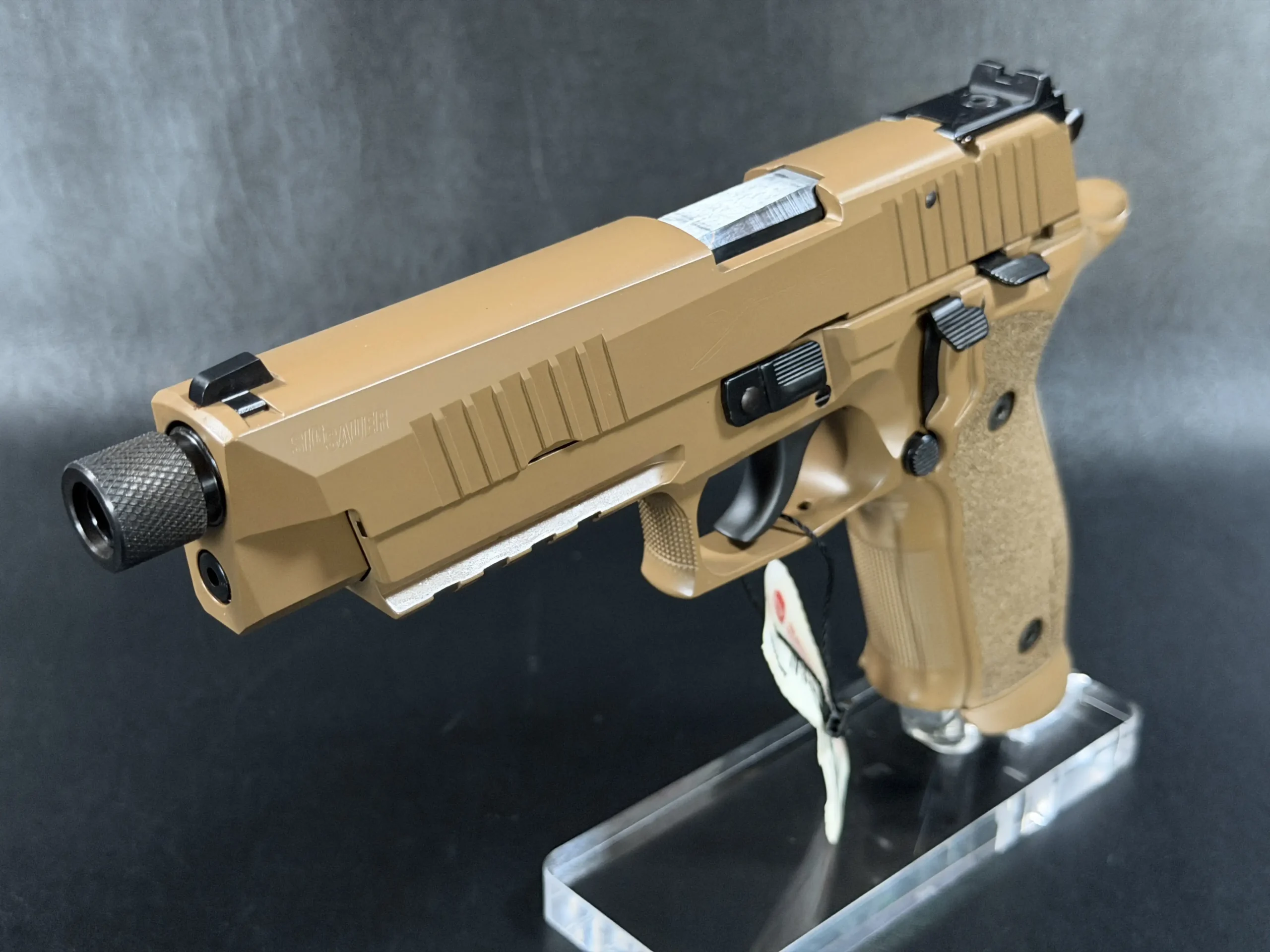
West German guns will wear a “Made in W. Germany” stamp on the slide. You’ll also see import marks from SIGARMS in Tysons Corner, Virginia on many of those early imports. Later, after reunification, the country-of-origin stamps change to “Made in Germany.” Those are signals that the guns came from Sauer’s facility in Eckernförde.
Then there are hybrids. For years, SIG shipped frames from Germany and completed assembly in New Hampshire with U.S.-made slides and barrels. Those pistols often show “FRAME MADE IN GERMANY” on the frame, with no mention of Germany on the slide or barrel and no German proof marks on those parts. That tells you very clearly what you’re looking at. It’s an American-assembled gun with a German frame, not a fully German-made pistol.
The takeaway for buyers is simple. If the seller says German made, check the slide and barrel for German proof marks and the right country-of-origin stamps. If only the frame mentions Germany, you’re looking at a hybrid. There’s nothing wrong with that. They shoot just as well. But price them for what they are.
Parts and compatibility that trip people up
Most shooters never fully detail strip a classic SIG. For those of us who do, a few notes will save some headaches and keep you from ordering the wrong parts.
Trigger bars: 801 vs. 473
On DA/SA P226, P228, and P229 pistols, you’ll encounter two main SIG trigger bars. The regular DA/SA trigger bar, often stamped 801, fits most frames. There’s also a highly polished “Super Finish” bar stamped 473. That 473 bar is intended for frames that are DAK capable. It can be used for DA/SA in those DAK-ready frames, but it does not play nicely in many older, non-DAK frames. The 801 has a split tail at the rear. The 473 does not. If you’re swapping bars, match the bar to the frame style. That small difference has tripped up plenty of home tinkerers.
SRT kits and controls
SRT components are specific to the classic DA/SA fire control system. The factory has published supplemental instructions for SRT-equipped pistols and notes the shorter reset in its model literature. If you’re converting or confirming parts, compare what’s installed to the factory diagrams and make sure you’re ordering the correct kit for the model and action type you have. A DAK pistol is a different animal internally and does not use SRT parts.
Slides, barrels, and the compact confusion
The P228’s stamped slide with pinned breech block is in a different family from the one-piece, milled stainless slide used on the P229. There are transitional guns and special runs out there, like the P228R with a milled slide, that blur the lines. As a rule, don’t assume top-end parts will swap across stamped and milled generations just because the guns look similar from the side. If you’re tempted to mix and match, verify compatibility by part number against the specific model, caliber, and generation you own before buying.
Buyer tips for each model
P226
For many buyers, a P226 is the first classic SIG. You’ll see an array of trigger systems and sights across production, plus later runs with milled slides and factory SRT. Decide up front if you want DA/SA or DAK. If you’re set on the shortest reset, seek out an SRT-equipped gun or budget for the correct factory kit. As always, confirm markings if the seller leans on the word “German.”
P228
If you want the classic compact feel, a true stamped-slide P228 is hard to beat. Confirm that you’re actually looking at a stamped-slide gun. Check the slide profile and look for the pinned breech block. If the pistol has an accessory rail and a stainless-looking slide, you might be staring at a P228R or a P229 in P228 clothing. That’s fine if priced fairly, but it’s not the same mechanical formula. Collectors care about this, and buyers should too, because it affects how the gun feels and what parts you’ll need down the road.
P229
The P229 is the compact SIG that handles legacy .40 and .357 SIG with ease and is still excellent in 9 mm. It uses the milled stainless slide and feels a bit more top-heavy in the hand compared to a stamped P228. If the listing mentions M11A1, know that this is essentially a milled-slide, 9 mm P229 wearing P228-style grips and often shipped with SRT from the factory. It’s a modern nod to the M11 idea rather than a continuation of the stamped-slide P228.
FAQ-style quick hits
What’s the practical difference between stamped and milled on the range? In 9 mm, it’s feel. The stamped P228 tends to have a quicker cycle and a softer impulse. The milled-slide P229 feels steadier and was built to handle higher-pressure calibers. Both can be very accurate.
Is DAK worth seeking out? It depends on what you want. DAK gives you a consistent pull every time with a lighter stroke than classic DAO and two reset points. If you like a traditional single-action break, DA/SA is your home. If you prefer a uniform press without a manual safety, DAK is worth a try.
Does SRT change the pull weight? No. It shortens the reset distance on DA/SA guns. The first double-action pull and the single-action break weight remain essentially the same. The difference is how soon the trigger resets for the next shot.
How do I tell a German-made SIG from a U.S.-assembled one? Look for country-of-origin stamps on the slide and barrel, and for German proof marks. If the frame says “FRAME MADE IN GERMANY” but the slide and barrel do not mention Germany and show no German proof marks, you’re probably holding a U.S.-assembled gun with a German frame.
Do P228 and P229 parts interchange? Some do, some don’t, and it often depends on the generation and caliber. The P228’s stamped slide assembly is a different architecture than the P229’s milled stainless. Don’t assume they swap. Verify by part number for your exact model.
Which trigger bar do I need? If your frame is DAK capable, the polished 473 bar pairs with it. Most other frames take the 801 bar. Check your frame and the markings on your existing bar before ordering.
Final thoughts from the bench
Collecting and shooting classic SIGs is a little like getting to know a family. The shared DNA is obvious, but the personalities are distinct. The P226 is the steady eldest sibling. The P228 is the balanced middle child that makes you grin when you hit the cadence just right. The P229 is the sturdy problem solver that broadened what a compact SIG could do.
For buyers, the real keys are simple: know your slide type, understand the trigger system you’re getting, learn to read the markings, and match any parts you buy to your specific frame and action. Do that, and you’ll end up with a classic that feels exactly the way you hoped it would when you first picked it up.
If you want to go deeper on factory terminology and specifications, SIG’s Classic Line manual lays out the DA/SA, DAO, and DAK systems and includes notes on SRT-equipped pistols. It’s a handy companion when you’re comparing listings or planning parts work.
And if you’re curious why so many folks still rave about the P228’s manners in 9 mm, there’s a thoughtful overview out there that captures the lighter-slide charm in plain language. Read it, then go handle a stamped-slide P228 and a milled-slide P229 back to back. Your hands will tell you the rest.
External resources: