
The first time a pile of Carcano clips clattered onto my bench, the owner asked the usual three: Which clip is right, why will not it group with modern 6.5 bullets, and what does Terni mean. If those sound familiar, you are in the right place.
From across the room the Carcano family looks simple. Up close, it is a tight core action hiding a lot of variation. This guide zeros in on practical ID and ownership: how to tell M91 long rifles from TS and Cavalry carbines, what changed with the M38 era, how 6.5 vs 7.35 really works, the clips that keep it running, the marks that tell the story, and the care that keeps them shooting.
What makes a Carcano a Carcano
The pattern is consistent: a straightforward bolt with a split bridge, Mauser-like locking, Salvatore Carcano’s rear safety knob, and a Mannlicher en bloc clip that is the magazine. Italy adopted the system in the early 1890s around the 6.5×52 cartridge, and the action architecture stayed essentially the same through World War Two. It did not need last-minute simplifications during wartime production, and it works better than its reputation suggests. For a concise overview, see Forgotten Weapons on the M91 and the general background on Carcano.
Two details matter to shooters and buyers:
- The clip is part of the feeding system. It locks in from the top and drops out the bottom when empty.
- Many 6.5 barrels use progressive twist rifling and expect a specific bullet length and diameter to shine.
Small mechanical note: if your bolt handle root does not sit perfectly against the rear bridge, a small visible gap is normal and preferable to a hairline scrape fit.
How the family is organized: M91 vs M38
Richard Hobbs’ tidy rule of thumb uses two parents:
- M91: introduced in 1891 around 6.5×52
- M38: introduced in 1938 around 7.35×51
Italy soon reverted to 6.5 in service, so many rifles with M38 styling are actually 6.5 and often labeled M91/38 in collector shorthand. If you hold a short rifle and need to know what it eats, start with this split, then confirm the chambering. Hobbs’ summary is laid out clearly here: Carcano model identification.
Field ID: quick tells at a glance
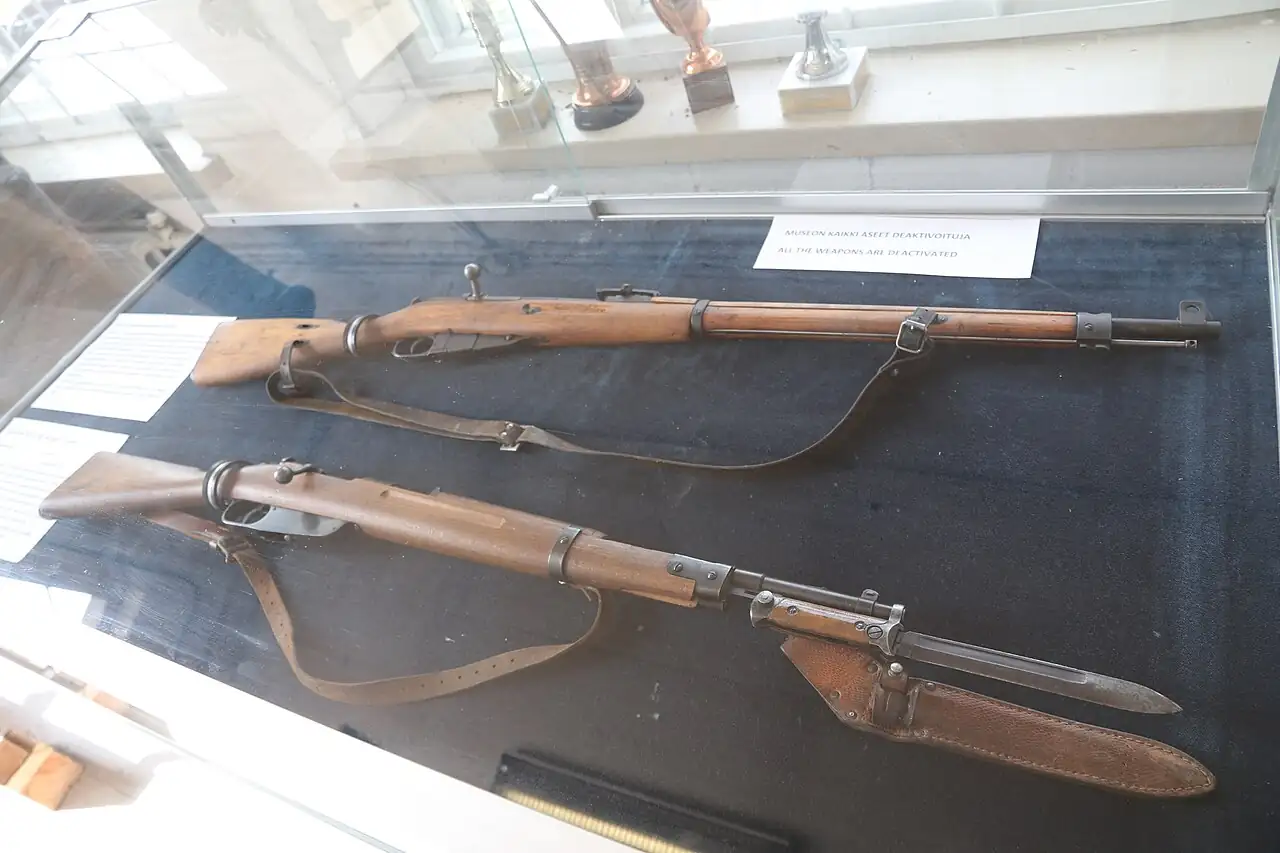
- M91 long rifle: full-length stock and handguard, long rear sight base, octagonal barrel shank ahead of the receiver ring.
- M91 TS (Truppe Speciali): carbine length, full stock to the muzzle, short barrel with a long rear sight base. Early TS has a perpendicular bayonet lug at the nose.
- M91 Cavalry: compact, full stock, integral side-folding bayonet hardware at the nose, single barrel band.
- M38 family: cleaner lines, simplified or fixed rear sights, shorter overall. Chamber may be 7.35 or 6.5 depending on date.
M91 long rifle: the original workhorse
Officially the Fucile Modello 1891, the classic long rifle set the pattern in 6.5×52 with a six-round clip. In the rack it shows a long fore-end with two barrel bands, a full handguard, and that distinctive octagonal shank. Many saw hard service, so expect worn wood and mixed parts. Focus your money on a straight stock with intact handguard, a decent bore, and a clean crown.
TS and the M91/24: Special Troops carbines
TS stands for Truppe Speciali, the branches that did not need a full-length rifle or a fixed bayonet. The Moschetto 91 TS is essentially a carbine-length M91 with its own front-end details. Early TS examples show the easy tell: a perpendicular bayonet lug that sticks out to the side. You will also see the short barrel paired with a longer rear sight base, which separates the TS from other short Carcanos at a glance.
After World War One, many worn long rifles were cut down into TS-pattern carbines, creating the M91/24. When conversion candidates ran out, Italy resumed TS production with standard bayonet lugs. TS carbines remained in production up to the 7.35 adoption in 1938 and, after Italy returned to 6.5 around 1940, continued again. Ian McCollum’s overview of these patterns is a handy visual aid: TS and M91/24 carbines.
Collector notes: conversions often show reused barrels with fresh crowns and a mix of parts. Sight base length, bayonet lug orientation, and a correct TS stock profile are the quick tells.
Cavalry carbines: the folder everyone asks about
The Moschetto Modello 91 da Cavalleria is compact and unmistakable thanks to its side-folding bayonet. Value lives in the nose cap hardware, spring, and latch being present and functional. As shooters they are lively, but the short sight radius demands careful alignment. If precision is the priority, a TS or long rifle is usually easier to shoot well. If you find a carbine with removed or swapped bayonet parts, inspect the nose cap and screws for mismatches.
M38 and M91/38: the 7.35 turn and back again
In 1938 Italy introduced a simplified short rifle in 7.35×51. Soon after, production returned to 6.5×52, creating many M38-style rifles in 6.5 that collectors commonly call M91/38. The actions are the familiar Carcano pattern. The important split is caliber, not cosmetics, so confirm chambering before you buy or shoot.
- Original M38 intent: 7.35×51.
- From about 1940, many short rifles were made or rebarreled in 6.5×52, often labeled M91/38.
6.5×52 vs 7.35×51: what fits and why it matters
Do not assume modern 6.5 bullets will work. The 6.5×52 Carcano typically wants about 0.268 inch bullets, not the common 0.264. You can make 0.264 shoot, but groups often suffer. The 7.35×51 uses bullets around 0.300 inch. Forcing 0.308 bullets into 7.35 is not just inaccurate, it is unsafe. Feed each rifle what it was built for.
Remember the progressive twist in many 6.5 barrels. They were designed around a long-for-caliber bullet at modest velocity. Match bullet length and diameter to the pattern and the results usually surprise skeptics.
Clips: types, fit, and easy fixes
The Carcano lives or dies by its clip:
- Six-round steel en bloc. Push straight down until it clicks into the receiver, and it should drop out the bottom after the last shot.
- If the clip chute is dirty or the clip is bent or soft, it may hang up. You can seat a full clip to push a stuck empty out.
- Original clips tend to be sturdier. Reproductions vary. Expect to pay roughly 10 to 15 dollars each and test them. Keep the good ones marked for that rifle.
If you have feeding issues, clean the magazine well, inspect the clip lips and spine for bends, and confirm the spring-loaded latch moves freely. Minor factory-to-factory clip variations exist, but clips are broadly interchangeable across M91 and M38 patterns.
Arsenal marks and dates: where to look
Stamps on the octagonal barrel shank flats and receiver tell the story:
- Arsenal name, with Terni commonly encountered. Others appear depending on period.
- A Gregorian year and often a Roman numeral marking the political calendar of the time.
- Serial on the barrel shank, often echoed on bolt and stock when matching.
- Inspector or proof marks, typically small letters or shields in circles, varying by factory and era.
Mismatched bolts are common. That is normal in surplus Carcanos. If you plan to shoot one, have headspace checked. It is cheap peace of mind.
Stocks and furniture: cues that help you ID
- M91 long rifles: long fore-end with two barrel bands and a full handguard.
- TS carbines: full stock to the muzzle, shorter overall, early perpendicular bayonet lug at the nose.
- Cavalry carbines: nose cap with folding bayonet hardware. Spring and latch condition drive completeness and value.
- M38 stocks: slightly trimmer lines with simplified barrel-mounted rear sights.
Check for oil-soaked wood around the action, wrist cracks, and repairs behind the recoil lug. Pull the handguard if you can and make sure bands and screws turn without chewing the wood.
Buyer checks: fast, practical, and to the point
- Bore and crown: dark is not fatal, but throat pitting shows on target. A clean, even crown helps a lot.
- Chambering: confirm 6.5×52 vs 7.35×51 by chamber marks and a careful look at the bore. Do not guess.
- Function: cycle a known-good clip. Smooth bolt travel, working safety knob, positive clip drop at empty.
- Stock integrity: look for cracks at the tang and front action screw. Loose bedding leads to wandering zeros.
- Matching parts: nice to have, not mandatory for a shooter. Pay for condition first.
If you enjoy comparing service rifles by era and feel, you may also like our piece on Arisaka Type 38 and Type 99 rifles.
Practical care: simple habits that matter
- Corrosive primers: treat older surplus as corrosive. Rinse the bore and bolt face soon after shooting, then clean and oil as normal.
- Bolt and safety: dried grease makes the rear safety stubborn. Strip the bolt, clean the firing pin channel, and lube lightly.
- Screws and bands: Italian action screws like to walk. A tiny touch of low-strength thread locker on the action screws helps without marring originality.
- Clips and well: most feeding oddities are dirt or bent clips. Brush the well and retire problem clips.
- Headspace: if the bolt does not match the barrel, get it checked before regular use.
On the range, use the correct bullet diameter and a sensible load for the barrel length. Progressive twist barrels often prefer longer, traditional bullet profiles. These rifles were built around a specific envelope and reward you when you stay in it.
Common questions
Are Carcanos accurate. With a decent bore and correct bullet diameter, many shoot perfectly well at iron-sight distances. Long rifles offer the friendliest sight picture. Short carbines demand steadier alignment.
Are clips hard to find. Not really. The trick is quality. Buy a handful, test, and keep the ones that feed and drop cleanly. Mark the good clips so they stay with that rifle.
Is the action strong. The Carcano served through two world wars with standard pressures. Use the correct cartridge and bullet diameter, avoid hot-rodding, and pay attention to condition and assembly.
Collectors who learn the quick tells for TS vs Cavalry vs M38, read the arsenal marks, and respect the 6.5 versus 7.35 split end up with satisfying rifles and fewer surprises. Set one up right, drop in a good clip, and the design makes sense the moment the bolt runs home.