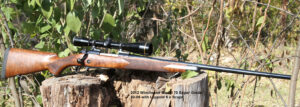

Mislabeling a PSL as a Dragunov still happens at shows and in listings. The rifles can look similar across a table, but the lineage and details are not the same. If you are buying or collecting, those differences matter.
Here is a clear, field-usable breakdown of true SVD lineage versus the PSL and where the Chinese NDM‑86 sits in the family, with quick ID checks, parts notes, and collector pointers.
What counts as a true SVD
The Soviet SVD Dragunov entered service in 1963 after several years of development. It was built to give each squad a marksman’s reach, not to replace dedicated sniper rifles. Hallmarks include a self-loading gas system, 7.62x54R chambering, a 10‑round detachable magazine, a skeletal stock, and optics as the primary sighting system.
The Izhmash Tiger is the civilian cousin most of us see in the United States. It traces directly to the SVD family. Typical Tiger details: 620 mm barrel, 1 in 10 twist, and chrome-lined bore and chamber. As a commercial model it often omits items like a bayonet lug, but the handling and optic interface mirror the service rifle closely.
For a side-by-side look at a military SVD, a Tiger, and China’s commercial variant, see Forgotten Weapons’ Dragunov variations overview.
NDM‑86: where it fits
The Chinese NDM‑86 descends from the Type 79/85 and was imported commercially, notably in 7.62 NATO. Mechanically and ergonomically it follows the Dragunov pattern and feels more like an SVD or Tiger than a PSL. If you are staying within true SVD lineage, the NDM‑86 sits on that branch of the tree.
PSL: the AK-based look‑alike
The Romanian PSL is the source of most confusion. It wears the right silhouette, uses 7.62x54R, and mounts optics on the side rail. Under the skin it is an enlarged Kalashnikov built on an RPK-style receiver, not a purpose-built Dragunov design.
Spotting tells: the SVD family includes a receiver cover release lever at the right rear of the receiver; the PSL lacks it. The ejection port geometry also differs. The PSL’s internals and magazine well follow AK logic, while the SVD/Tiger uses a milled receiver with its own magazine geometry. The Small Arms Survey identification sheet highlights these features.
Gas systems compared
SVD lineage uses an adjustable gas system. That adjustability helps manage fouling and cold weather and lets the rifle run smoothly across conditions. The trigger group is also straightforward to remove for maintenance.
The PSL keeps to AK roots with a non‑adjustable setup. Simpler is familiar and robust, but it shows limits with heavy loads, suppressors, or long strings where heat and over‑gassing can work against consistency. A thinner barrel also heats quickly, which does not help groups during sustained fire. For a nuts‑and‑bolts comparison, see Ronin’s Grips on Dragunov vs PSL.
Optics compared
Dragunov pattern rifles were designed around the optic. In service the PSO‑1 was standard, and commercial Tigers often wear the PSO‑1M2. The stock geometry, cheekweld, and eye relief work together for scope use.
Romanian PSLs commonly ship with LPS or TIP2 optics. They look right, but many owners report the PSO‑1M2 offers better optical quality and a more natural fit on the rifle. That subjective difference lines up with a lot of range feedback, including discussions on Saiga-12 forum threads.
Stocks and barrels
True SVD lineage uses the familiar skeletal stock and a long, narrow receiver profile. Tigers mirror that feel. Barrel spec typically runs 620 mm with a 1 in 10 twist. Chrome lining in both bore and chamber adds durability for field use and high round counts with minimal accuracy penalty in the rifle’s intended role.
PSLs use wood furniture that imitates the SVD silhouette, often with a thumbhole stock, but the balance and recoil rhythm feel more AK than Dragunov. It remains a serviceable designated marksman setup within its envelope.
Note for Tiger shoppers: receiver finish can look utilitarian. That is normal and less important than originality and correct configuration.
Magazines are not interchangeable
This trips up new buyers. SVD/Tiger/NDM‑86 magazines and PSL magazines do not interchange. The SVD family’s milled receiver uses its own mag geometry. The PSL’s RPK-based receiver uses a different pattern.
Visual cue: PSL mags often show an X‑shaped stamp on the sides. Russian and Chinese SVD-pattern mags usually have a waffle‑style stamp. Treat them as separate supply chains. Details and photos in Ronin’s Grips.
Accuracy and intended role
Remember the mission. The SVD was built to engage man‑sized targets out to roughly 800 meters with repeatable, controlled fire through an optic. In that role, Dragunov‑pattern rifles tend to deliver consistent out‑of‑box performance.
PSL accuracy varies more by build and ammo. Owner reports span roughly 1 to 4 MOA, with some rifles doing better and others worse depending on heat and load. That variability is echoed in user accounts, including the Saiga-12 forum thread. None of these rifles are benchrest queens, and they were not meant to be.
Maintenance and field handling
Both designs prioritize field serviceability. The SVD’s adjustable gas system and easy trigger group removal make upkeep straightforward. The PSL’s AK lineage means anyone familiar with Kalashnikovs will find disassembly second nature. For training large groups, PSL simplicity can be an advantage; for the full Dragunov experience, the SVD line shines.
Quick ID at the table
- Receiver tells: SVD pattern has a receiver cover release lever at the rear right; PSL lacks it.
- Magazines: waffle‑pattern bodies for SVD lineage, X‑stamped sides on PSL mags. Do not mix them.
- Stock silhouette: true SVD/Tiger stocks sit lower to marry with optics; PSL furniture mimics the look but balances differently.
- Barrel and features: Tigers commonly omit a bayonet lug; typical barrels are 620 mm with 1 in 10 twist and chrome lining.
- Markings to record: serial number with any prefixes or suffixes, selector markings, and factory stamps. See the Small Arms Survey SVD ID sheet for what to note.
Collector pointers
Value follows origin, configuration, and originality. On Tigers, documented production origin and correct parts and markings drive premiums. Military‑production lineage and solid provenance command the most interest. Original finish with honest wear generally beats refinish work.
On NDM‑86 rifles, chambering and correct configuration are the draw. Check markings and furniture against known patterns.
For PSLs, buyers often weigh them as shooters first. Accuracy varies by example, so ask for recent targets and ammo details instead of assuming the average applies.
Above all, do not pay Dragunov money for a look‑alike. The market draws a real line between true SVD lineage and RPK‑based marksman rifles. Price accordingly.
Doctrine and context
The SVD reflects a doctrine of putting a designated marksman in every squad. Other forces solved the same problem differently. The French FR F1 is a contemporary example of the squad marksman concept in a different package. Keeping that context in mind helps set realistic expectations for how these rifles were meant to be used.
Where to compare side by side
Start with Forgotten Weapons’ SVD, Tiger, and NDM‑86 comparison for visual differences, then dig into Ronin’s Grips for receiver and magazine geometry. Keep the Small Arms Survey ID sheet handy when recording markings.
Bottom line: if you want the Dragunov experience, buy within true SVD lineage. If you want a rugged, AK‑based marksman rifle in 7.62x54R, the PSL stands on its own merits. Know which one is in front of you.