
The first time you rack an Astra 400, you feel it. That spring fights back like a coiled animal, the slide gliding under pressure that seems out of proportion to the pistol’s size. Then you remember the cartridge it was built around and the design choice behind it. The Spanish answer in the 1920s was simple and stubborn: make a straight blowback big enough and spring it hard enough, and you can run a full-size service round without a locked breech. That stubborn streak built a family of pistols that served through a civil war, crossed borders on contracts large and small, and still show up today in holsters, collections, and range bags with a story to tell.
Basque iron: where Star and Astra took shape
Both brands grew in the Basque country, where metalworking and gunmaking had deep roots. Star was the house of Bonifacio Echeverria in Eibar, a town synonymous with Spanish handguns. Astra-Unceta y Cia’s center of gravity was further west in Biscay, with operations and partnerships extending across Eibar and Ermua. During the early 20th century, Basque workshops and factories supplied pistols for military, police, and commercial markets at home and abroad.
Politics touched everything in those decades. Under the Second Spanish Republic, the arms trade was more tightly supervised. In 1931 the government confiscated pistols chambered for Spain’s military cartridge, 9x23mm Largo, from factories in Vizcaya and Guipúzcoa, including hundreds of Astra machine-pistol variants. Exports required case-by-case approval. When civil war came, Astra’s plant fell under Basque control until the bombing of Guernica in 1937, and production shifted with the front lines and the factions that held territory.
Why 9mm Largo became Spain’s service heartbeat
Spain standardized on a long 9mm cartridge often called 9mm Largo. It traces back to Bergmann and the Campo-Giro, and it became the country’s service round through the 1910s and 1920s. The Largo sits longer than 9mm Luger and should not be confused with it. That extra case length and the service loading demanded a strong platform. Astra answered with a heavy slide and a stout spring in a straight-blowback design. Star moved in a different direction, drawing on the 1911 idea for a locked-breech pistol scaled to 9mm Largo.
That split in design philosophy defined the Spanish handgun scene for decades. If you wanted simple machining and toughness, Astra’s 400 family was your hunk of steel. If you wanted something that felt like a European take on the Colt, Star had you covered.
Astra’s straight-blowback flagship: Modelo 400 and its family
In 1919 the War Ministry began testing to replace the Campo-Giro. By August 1921, the Astra modelo 400 was selected as the new army sidearm. Chambered in 9mm Largo, the 400 was all business: a reinforced slide, a very strong recoil spring, and a simple blowback action built to take hard use. It was standard issue through the Spanish Civil War and, by war and contract, its reach extended well beyond Spain.
The 400’s extended family grew quickly:
- Astra 300. A compact offshoot chambered in 7.65 Browning (.32 ACP) and 9mm Corto (.380 ACP). It appealed to police, military branches like the Spanish Navy, and found users in the German Luftwaffe. It lacks the 400’s brute spring but shares its plain, purposeful look.
- Astra 600. Essentially a shortened 400 chambered for 9mm Luger to suit German requirements. It keeps the blowback system and stout spring, which is a mechanical curiosity for a 9mm Luger pistol and a hallmark of the design’s stubborn simplicity.
According to contemporary summaries, the 400 even saw German service during the Second World War, and Astra later built the 600 to answer that market directly. The 400’s run was substantial. Production continued into the postwar period, with about 106,175 pistols made. Even as the Spanish military adopted the Star Model A in 1946, Astra kept the 400 alive for private sales until roughly 1950, and surplus pistols were sold off to the civilian market through the late 1950s and early 1960s. For an overview of the model’s path from adoption to export, see the Astra 400 background.
The 400’s personality is unmistakable. It is heavy for its size, muzzle-heavy with that thick slide, and the spring can surprise newcomers. The upside is a pistol that digests its intended cartridge without a locked breech, a relative rarity for a service-size 9mm. That novelty makes it a favorite at the range today and a solid study piece for anyone interested in design tradeoffs.
Star’s Colt-flavored line: 1920, 1921, 1922, and the Model A
Star built its name with pistols that looked and felt closer to Browning’s locked-breech school. In the early 1920s, while the army fumbled trials that went nowhere, Spain’s Guardia Civil moved quickly. On November 4, 1920, a purchase of 9,017 Star pistols was authorized for the force. Those pistols, chambered in 9mm Largo, are known as the Model 1920. They carried a safety arrangement echoing earlier Star practices.
Star refined the pattern across a few short years:
- Model 1921. Closer to the Colt 1911 in spirit, it carried both a thumb safety and a grip safety.
- Model 1922. The grip safety disappeared, leaving the thumb safety to stand alone.
- Model 1931 (later known as the Model A). The mature expression of Star’s large-frame service pistol in 9mm Largo. After the war years, the Spanish military standardized on a Star pistol in 1946, replacing earlier Astra issue.
Collectors of Guardia Civil pistols will recognize the crowned GC monogram on frames and even on matching magazines. Those marks are a direct line to the procurement that helped cement Star’s early reputation. The aesthetics are familiar to anyone who has handled a 1911, but the Star is its own design. Parts do not swap with Colts, and the barrel hood and locking system are executed in a distinctly Spanish way.
Contracts and exports: from Guardia Civil to the Wehrmacht
Once Spain’s factories hit their stride, foreign sales became essential. Astra marketed pistols across Europe and the Americas between the wars. During the Civil War, Astra’s 400 pistols were produced for both sides at different points, a reflection of who controlled resources and territory. Smaller 300s flowed to the Spanish Navy and the German Luftwaffe, and the 400 itself found some use in Germany.
The pivot to 9mm Luger with the Astra 600 was pure export logic. Germany wanted a compact service pistol in its own cartridge. Astra answered with a shortened 400 chambered to suit. In the 400’s serial range, a block from 92851 to 98850 was set aside for Nazi Germany. Those details matter when you are thumbing through a rack. Serial blocks and markings can tell you which market a pistol was built for and sometimes even the standards it had to meet.
Star’s sales took a broader path, from domestic Guardia Civil contracts to overseas distributors looking for a rugged, affordable service-style pistol. Eibar’s makers were quick to tailor features to buyer requests. That flexibility carried through the 1920s and 1930s and continued after the war when surplus flowed and budgets were tight worldwide.
How contract specs shaped quality
Ask old hands in faraway surplus markets and you will hear a recurring theme: Spanish pistols could be superb or just serviceable, and the difference often came down to the contract. One recollection from southern Africa in the 1970s and 1980s sums it up plainly. If a big buyer, like a national defense force or a reputable distributor, wrote tight specifications for materials and fitting, the guns that arrived were first rate. If the order read more like a request for the cheapest batch that would function most of the time, results varied. Finish might be plain. Tolerances could be looser. On the firing line, some examples ran like champs, others felt rough around the edges.
For a collector, this anecdote is not a dismissal. It is a guide. Seek out pistols with clear contract provenance and complete markings. Learn the hallmarks of high-spec runs. When comparing two near-identical Astra 400s or Star Model As, the proof can be in the small details of fit, staking, polish, and even the quality of the magazines.
Buyer’s field notes: markings, chambers, springs, and magazines
Spanish autos have quirks and tells that help you buy smart. A short checklist keeps you out of trouble and helps you find the gems.
- Chambering check. 9mm Largo is not 9mm Luger. The barrels are marked, but markings can be faint. Confirm chambering before you order ammo or head to the range.
- Spring strength. On Astra 400 and 600 pistols, the recoil spring is famously strong. Make sure you can run the slide with control. If you cannot, consider a different example or a different model. Weak aftermarket springs can induce problems. A healthy pistol will feel stout but smooth.
- Serials and contracts. For Astra 400s, the serial block from 92851 to 98850 is associated with deliveries to Nazi Germany. Guardia Civil Stars often show the crowned GC monogram on the frame and on matching magazines. Documented contract markings boost collector interest and help explain finish and feature variations.
- Magazines matter. Original, correctly marked magazines are a big plus. A matching magazine with the GC emblem on a Star or the right floorplate pattern on an Astra can add value and peace of mind on the range.
- Finish and fit. Look for consistent machining, well-fit safeties, clean slide-to-frame movement, and rifling that is sharp rather than frosted. Spanish polishing and blue can be handsome, but some contract batches were left more utilitarian.
- Parts support. Extractors, firing pins, and springs still surface, but this is not like buying a current-production service pistol. Shop with the assumption that originality and condition will matter more than a future parts chase.
If you want to go deeper than general rules and truly sort variants, nothing beats a good reference shelf. Leonardo Antaris produced detailed volumes on both brands that show the differences between runs and explain the whys and whens. Ian McCollum’s review outlines what those books bring to the table for collectors and historians. It is worth a read: Book Review: Star Firearms and Astra Firearms.
The interwar clampdown and wartime production realities
Spain’s Second Republic tightened control over arms production in the early 1930s. Factories in the Basque provinces had long traditions of autonomy, and central oversight meant limits. The government seized guns chambered in the standard military 9x23mm Largo, including hundreds of Astra machine-pistol variants like the 901 and 902. Export permissions were not automatic anymore. Those constraints shaped what left the country and where it went.
When civil war erupted, geography and politics reshaped production again. Astra’s plant shifted hands and priorities. The 400 remained in production but for different customers depending on who controlled the region. In the years that followed, a slice of 400 production went to Nazi Germany, and the design eventually stretched into the 600 to meet German caliber preferences.
Beyond autos: Astra revolvers, U.S. import rules, and late-era changes
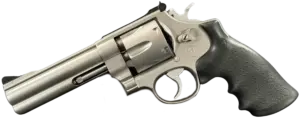
Postwar demand pressed Astra to broaden its catalog. In the 1950s, Astra made solid-frame, swing-out cylinder revolvers patterned along Smith and Wesson lines under the Cadix name. Those guns sold steadily until 1968, when the U.S. Gun Control Act tightened import criteria and stopped the flow on safety grounds. Astra answered by reworking the design. The Astra Model 357 arrived in 1972 with an improved internal mechanism to prevent accidental discharge. Exports to the U.S. resumed and continued for a couple of decades.
That revolver interlude matters for collectors of the autos because it shows how nimble and export-minded these companies were. When a big market closed a door, Astra reengineered and kept moving. The same mindset produced caliber and feature variants in the semiauto lines to match customer demands at home and abroad.
The long fade: consolidation and closure
By the 1990s, the market that had sustained Spain’s legacy makers was changing fast. State contracts shrank, police forces modernized, and international competition in service pistols and compact carry guns grew fierce. Astra-Unceta y Cia’s long run ended in 1997. Sources summarize the company’s fate simply as a merger with Star in the final period, but production ended and the historic Basque brands faded from the scene. However you tell it, the result is the same for buyers today. What exists is what exists. The trick is to find good examples, learn the markings, and keep them shooting carefully.
Why these pistols still matter
Spanish service pistols are a study in paths not often traveled. The Astra 400 proved that you could build a serious straight-blowback pistol around a full-size service cartridge if you were willing to make it heavy and spring it hard. The 300 and 600 show how a company extends a core idea across sizes and calibers for different users. Star’s line shows how Spanish makers interpreted Browning’s locked-breech template for their own cartridge and their own customers, trimming and adding features as buyers demanded.
They also carry the stories of contracts. Look closely at a Star with a crowned GC, or an Astra whose serial sits in that German block, and you are holding a piece of paperwork made steel. Those details are what make collecting Spanish pistols rewarding. You do not need a warehouse of examples to appreciate it. One or two well-chosen pieces can tell you plenty about the factories, the buyers, and the years they lived through.
For the range, a clean Astra 400 remains satisfying. It recoils straight, locks up with a clunk, and throws brass like a metronome when it is in tune. A Star Model A in good order feels familiar in the hand and points naturally. Just keep the chamberings straight, respect those recoil springs, and let the guns run at their own pace. And if you want to sort features and dates the way a factory foreman might have, keep an eye out for the Antaris books. They put fingerprints to the steel in a way that rewards any curious buyer.
Spanish makers may be gone from the catalogs, but their work is still here, still teaching. From Eibar to Guernica, from 9mm Largo to export-caliber experiments, Star and Astra built pistols that were products of their place and time. The metal remembers, and that is more than enough reason to pay attention when one crosses your bench.