
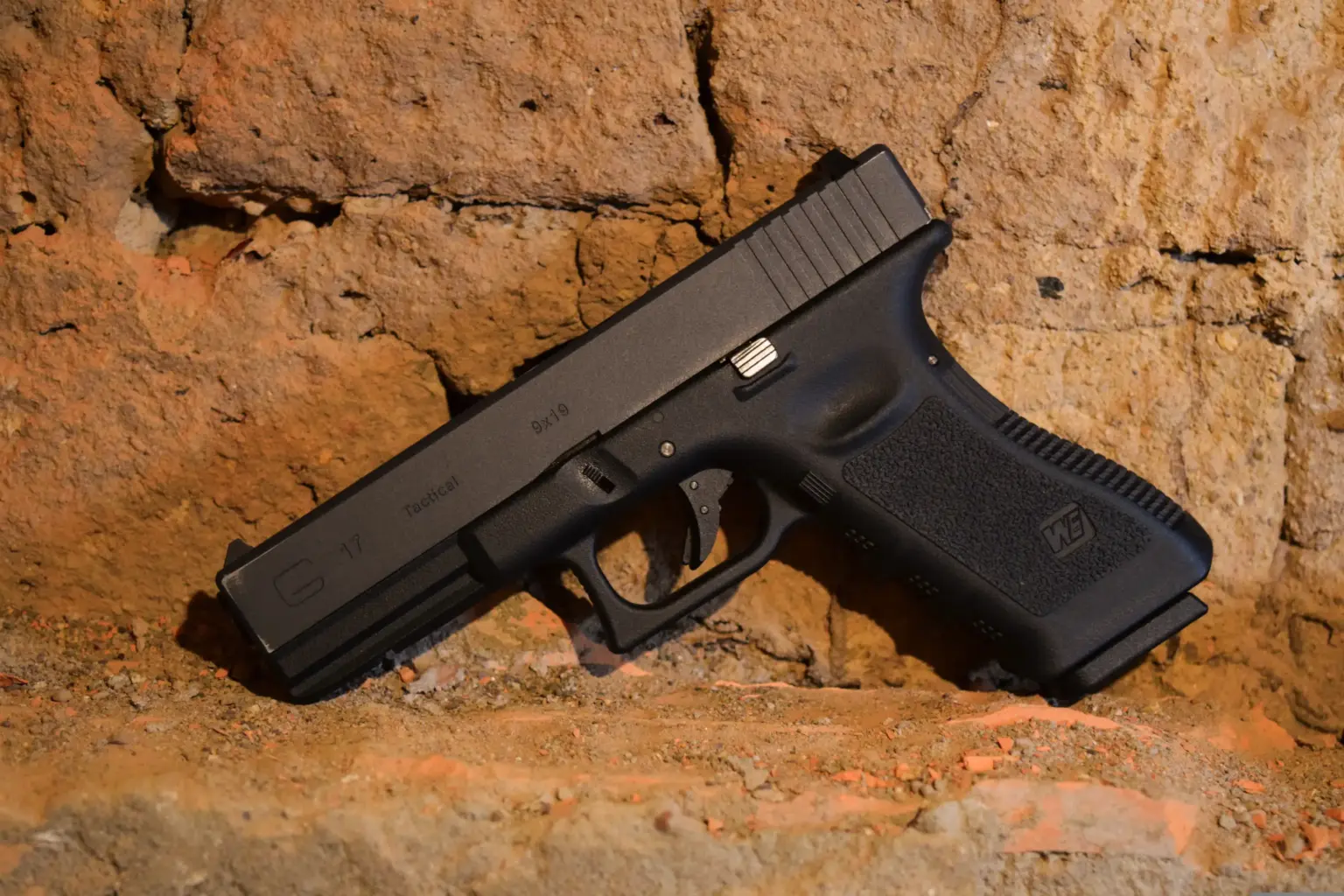
The first time I handled a true Gen 1 Glock 17, the frame felt like river stone. That smooth, fine pebble texture and the absence of finger grooves gave it away before I even glanced at the serial plate. It was an early import that had ridden in a duty holster long enough to tell a story without a word. If you spend any time in gun shops or on the secondary market, you run into Glocks with different frames, finishes, and small parts. They all look similar at a glance, but the details matter more than you might think.
Why generations matter
Glock did not release one pistol and call it a day. From the early 1980s through the present, the company refined frames, springs, finishes, and controls across five main generations. Some changes are subtle, like checkering patterns and magwell cuts. Others affect how the gun feels or what parts you can swap. If you buy, collect, or just want to make good decisions about used examples, understanding the timeline helps avoid surprises.
Glock’s official materials constantly circle back to reliability and a consistent shooting experience, and that reputation is earned through millions of pistols and decades of service use. The flipside is that the used market is vast. You will see pistols from every era, some box-stock and some modded. Knowing what you are looking at is half the fun and most of the value.
Quick ID: hallmark cues by generation
- Gen 1: smooth pebble texture, no finger grooves, no rail, early alphanumeric serials on slide, barrel, and a small frame plate.
- Gen 2: checkering on front and backstraps, small magwell front cutout, one-piece captive recoil spring, still no rail.
- Gen 3: finger grooves arrive, accessory rails become common on larger frames, huge aftermarket support.
- Gen 4: replaceable backstraps, dual recoil spring assemblies, larger mag release, many slides with a newer matte finish.
- Gen 5: grooves deleted, ambidextrous slide stop on many models, slightly flared magwell on many duty-size frames, revised barrel and finish.
Gen 1: the smooth frame era
First-generation Glock pistols are easy to spot once you know what to look for. The grip has a soft, uniform pebble texture. There are no finger grooves and no accessory rail, and the overall frame lines are clean. This pattern carried Glock from the early 1980s into the late 1980s.
When the Glock 17 started arriving in the United States, early imports carried alphanumeric serials stamped on the slide, barrel, and on a small metal serial plate set into the frame. Documented early Glock 17s entered with prefixes starting in the AF000 range in January 1986, followed by AH000, AK000, and AL000 series. Those early import runs are a collecting pocket of their own, and they give you a sense of how quickly the design took off once agencies and American buyers started paying attention.
Most Gen 1 guns you see will be standard size Glock 17s in 9 mm. There were long-slide variants like the 17L produced, and a few uncommon models in that era, but on the secondary market the bulk of true Gen 1s are 17s. The silhouette is familiar, yet the feel in the hand tells you it is from a different time in Glock’s development.
Gen 2: checkering, captive spring, and early expansion
By 1988, Glock started refining the frame. Second-generation pistols introduced more aggressive checkering on the frontstrap and backstrap, which added traction without changing the basic grip angle. A one-piece captive recoil spring assembly arrived, a small but meaningful change for service maintenance. You also see a small cutout at the front of the magwell and, on the frame, the now-standard metal serial number plate set at the bottom of the dust cover.
Model variety grew in this period. The compact Glock 19 became a standard offering and quickly developed a fan base. Subcompacts and long-slide versions broadened the line so that the platform covered duty carry, plainclothes roles, and competition with the same basic manual of arms. Subcompacts in this era typically lacked accessory rails, a trait that carried through for a while even as larger frames eventually gained them.
Gen 3: rails become normal, finger grooves arrive
Ask a handful of shooters what they picture when someone says Glock, and many will describe a Gen 3. This era cemented the modern look. Finger grooves showed up on the frontstrap, and accessory rails became common on duty-size frames, opening the door to lights without any aftermarket mounts. The core lock-up and takedown stayed familiar, which is part of why this generation developed such a large aftermarket around it.
From a user standpoint, Gen 3 is often where people pick a side on finger grooves. If your hand shape matches the cuts, you get repeatable placement. If not, the grooves can be a sore point. That debate carried forward into the next generation too.
Gen 4: backstraps, new finish, and mixed opinions
Gen 4 rolled in changes that addressed fit and recoil system life. Replaceable backstraps let shooters tailor grip reach. A revised recoil spring assembly went into most models, and the magazine release became larger. Finish is a talking point among folks who own a few examples. Many Gen 4 slides left the factory with a newer matte finish, while some early Gen 4s carried over the slightly glossier Gen 3 finish sometimes nicknamed the frying pan. Shooters often remark that the older finish wears a little differently, and some prefer it purely for how holster wear looks over time.
Not everyone loved the feel of Gen 4 triggers, and between the finger grooves and partial changes to small parts, this generation sometimes gets pegged as the least loved among the modern runs. Availability has also shifted. Gen 4 pistols have been largely discontinued in many markets, with some models retained for compliance-restricted states, which helps explain why you see so many of them on the used market now at friendly prices compared to factory-fresh Gen 5s.
Gen 5: the big reset in 2017
Glock made a visible jump with Gen 5 in 2017. The frame lost the finger grooves, which made a lot of hands happy. Controls and small parts saw updates, and the overall package felt like Glock listened closely to years of feedback.
What to look for in hand: many Gen 5 duty-size models have an ambidextrous slide stop, a slightly flared magwell to speed reloads, and revised barrel and finish updates compared to earlier generations. If you are sorting guns on a table at a shop, these cues make Gen 5 frames and slides easy to spot even before you read the model tag.
Models and form factors across the gens
It helps to understand how Glock divides size and purpose before you compare generations. The original small-frame double-stack lineup branches into five basic form factors built around the full-size Glock 17 idea:
- Standard size, like the Glock 17, designed for duty carry with full-length grips and higher capacity.
- Compact, like the Glock 19, a touch shorter in slide and grip for easier carry.
- Subcompact, shorter and lighter, often carried with two fingers on the grip below the guard. Many subcompacts, such as the G26, lack accessory rails even in later generations.
- Long-slide and competition-length variants that stretch the sight radius while keeping a standard frame.
- Specialized models that build on the same core, which include long slides and niche duty roles.
Earlier on, Glock offered short frame variants to reduce trigger reach on certain models. By the time Gen 4 arrived, replaceable backstraps made separate short-frame versions unnecessary, and you will not find SF-specific models in Gen 4 or Gen 5 lines because the modular grip panels cover that need. Slimline models like the G43, G43X, and G48 follow a different pattern and are best treated as their own family when you think about parts and accessories.
Parts compatibility in plain language
Buyers often ask what swaps and what does not. The short version is that Glock kept the core layout very consistent, but each generation changed enough small things that you should plan compatibility within the same generation whenever possible.
Magazines are the easiest place to start. Older mags typically have a single locking notch that plays fine with frames that have a fixed, left-side magazine release. Newer mags often have cuts on both sides so they can work with reversible or ambi releases. That means a current-production 9 mm magazine will usually feed and lock in many earlier frames, while a very early mag may not lock into the latest frames if the release is reversed.
Slides and barrels generally prefer to stay within their generation when you are talking about complete, working uppers. Later recoil spring assemblies are not a drop-in match for earlier slides without corresponding parts. Even if a component physically fits, mixing can lead to reliability gremlins that are not worth your time.
Trigger parts, slide stops, and small pins saw enough revision across generations that ordering parts by your exact model and generation is the smartest play. Sights are the main outlier. If your Glock uses the common sight dovetails, aftermarket front and rear sights tend to interchange across many models and generations, but always verify cut dimensions.
One last point for the compact and subcompact crowd. Subcompact frames sometimes lagged the larger frames on features like accessory rails. If you are thinking about lights or specific holsters, make sure your chosen generation and model actually has the frame cuts you need before you buy.
If you want to see Glock’s own overview material while you compare features, the official site has a concise generational snapshot under Glock pistols Gen1 to Gen5 (if the direct link does not resolve in your browser, try the Glock site search).
How to evaluate a used Glock
Most used Glocks have a lot of life left. They were built for service, and the design shrugs off holster time and range use. Still, the difference between a good buy and a project gun usually shows up in the small details.
Here is a simple walkthrough I use at the counter.
1. Confirm the basics
Check the model number and generation on the box and frame, then verify the serials on the slide, barrel, and frame match. On many guns you will find the serial on a small metal plate set into the frame, and on the slide and barrel as a roll mark or engraving. If they do not match, ask why. It might be a legitimate replacement part installed by a department armorer, or it might be a mix-and-match upper.
If you are looking at a Gen 1 or early Gen 2, note the serial prefix and importer marks. Early import series like AF through AL on Glock 17s tend to draw extra interest from collectors because they mark that first wave into the U.S. market.
2. Inspect the slide and barrel
Lock the slide back and look at the barrel hood and locking surfaces. A little finish wear is normal. Deep denting or peening on the hood or the lug tells you the gun either saw very high round counts or ran too long without fresh springs.
Look down the bore for crisp rifling and an even sheen. Dark corners at the lands can be normal, but heavy frost or pitting is not. On the breech face, check for smoothness. Drag lines from the firing pin aperture to the bottom edge suggest grit in the channel at some point. That is easy to fix but worth noting.
3. Recoil spring assembly and frame rails
Remove the slide and look at the recoil spring assembly. A captive unit should be straight and free of kinks. If you are handling a Gen 4 or later compact model, you will see a revised dual-spring setup. Worn assemblies are consumables, but a very tired spring is a hint the rest of the gun could use a refresh too.
Check the metal slide rails embedded in the frame. Bright edges are normal. Galling, chips, or a rail that sits unevenly in the polymer needs more attention. Glance at the locking block and trigger housing for cracks.
4. Trigger feel and reset
Dry fire with the seller’s permission. You are not looking for a match trigger. You are listening for a positive reset and feeling for a smooth pull without gravel. Gen 4 triggers can feel a touch heavier or stack differently than earlier examples. That is normal. A gritty or inconsistent pull suggests fouling under the connector or non-factory parts inside.
5. Sights and finish
Plastic factory sights get knocked around. Look for leaning rears or a front sight that turns. Many owners replace sights with steel or night-sight sets. If the tritium is very dim or dead, treat that as a wear item. On Gen 4s in particular, pay attention to finish type. The matte slides often show a different wear pattern than the older glossy finish. Neither is bad, but it can help explain why two otherwise similar guns look different.
6. Magazines and controls
Make sure the gun includes the right magazines for the generation. Newer reversible-release frames pair best with mags that have cuts on both sides. Insert and drop the mags a few times to feel for smooth locking and release. Test the slide stop for positive engagement on an empty mag. On later guns that have ambidextrous controls, check both sides.
7. Aftermarket parts and originality
Glocks wear aftermarket parts like jeans wear patches. Some changes are practical, like steel sights, extended slide stops, or a different connector. Others are cosmetic. None of that is automatically bad, but originality matters to collectors and it affects value on the margins. If you care about originality, ask the seller to confirm which parts are factory and whether the factory parts are included.
This mindset is not unique to Glock. Collectors of classic service pistols pay close attention to small parts and markings because they tell the story of a gun. If you want a deep example of how far that can go, our guide to M1911 and M1911A1 service pistols and small-parts ID shows how details affect collector interest.
Originality, mods, and what that means to value
On a working gun, tasteful changes are not a problem. Steel sights and a fresh recoil spring are upgrades in my book. A replaced barrel, trigger shoe, connector, or even a full upper can still be a great shooter, but a collector will usually pay a bit more for a gun that remains as it left the factory. If you are aiming for a Gen 1 or early Gen 2 with historical interest, factory-correct parts and period magazines help the story hold together.
Be careful with claims about factory night sights, rare variants, or special runs unless paperwork is there to back it up. On the other side of the table, do not discount a clean police trade-in with holster wear and a smooth trigger. Those are often the best buys in the case for someone who wants a dependable shooter.
Which generation fits which buyer
Choosing among generations comes down to how you shoot and what you value in the hand.
- If you want a piece of early Glock history, a true Gen 1 with the pebble frame and matching serials is a satisfying find. Expect to hunt a bit and verify what you are seeing.
- Gen 2 pistols hit a sweet spot for many buyers who like extra grip traction without finger grooves. The checkered front and backstraps are practical, and the frames feel trim.
- Gen 3 is everywhere for a reason. If finger grooves fit your hand and you want an endless aftermarket, it is an easy choice.
- Gen 4 gives you grip adjustability and a revised recoil system. The finish differences are something you can decide with your eyes.
- Gen 5 is the no-groove, modern control set that many shooters settled into right away. If you want current production feel, this is it.
Caliber and model size still rule the day. Think about your primary use first. A compact like the 19 covers the most ground for many people, while a standard 17 is the easiest to shoot well. Subcompacts carry light but give up sight radius and grip. Long slides reward range time. There is no wrong answer, just the right match for your purpose.
Final thoughts
From the smooth Gen 1 frames of the mid 1980s to the groove-free Gen 5s of today, the Glock story is steady refinement. The brand’s calling cards remain reliability and a simple manual of arms, which explains why so many used examples change hands every week. If you learn the cues of each generation, understand the basic parts compatibility, and give a used pistol a careful once-over, you will make confident choices and end up with a gun that does exactly what you want it to do.