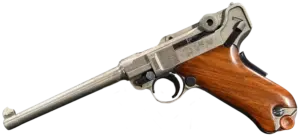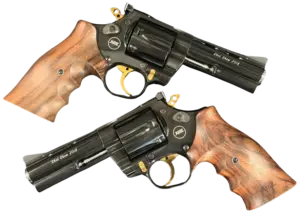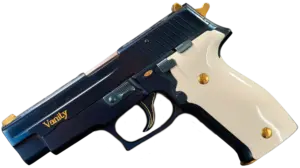

Lay three pistol slides on a bench and squint. They look the same. Now run a fingertip across the rails, check how the breechface meets the barrel hood, and cycle them slowly in a frame. One feels like a block of metal that learned manners. Another is tidy but shows a faint casting skin inside. The third glides, but the edges feel almost too perfect, like they were drawn by a computer and then sanded by a patient person. The differences are small, but they add up to how a gun behaves, wears, and even how it sounds when the slide slams forward.
This is a story about the paths metal takes to become a firearm. Not a fight between forging and casting, or a rant about powdered metal. Just the practical tradeoffs between forging, investment casting, MIM, billet machining, stamping, EDM, and broaching. And how surface finish, heat treat, and tolerances tie it all together when you are the one deciding what to buy, keep, or pass along.
Why process choice matters to buyers and collectors
Most of the arguments you hear about gun parts revolve around a single word. Forged. Cast. Billet. As if that one word seals the verdict. In real shops, the story is longer. Each process brings a different combination of strength, precision, finish, and cost. Makers mix and match, not to cut corners, but to hit a target design and a price their customers can live with.
As a buyer or collector, process tells you where a part shines and where it needs help from machining and heat treat. That matters for triggers and sears where geometry is destiny, for critical lugs and locking surfaces that live under stress, and for the small hardware we never notice until it breaks.
Forging: grain flow, muscle, and machining after
Forging takes heated metal and forces it into shape with dies and pressure. At its best, it refines grain flow and packs the material. University-level design notes put it plainly: forging produces the strongest metals used in industry and sits at the top of a basic strength comparison, ahead of billet machining and well ahead of casting. It is a heavy hitter for parts that see real stress.
That strength does not arrive with a mirror finish or tight dimensions right out of the dies. Tolerances out of forging are generous, often demanding follow-up machining where precision matters. One vendor source explains that typical drop-forging tolerances are much broader than MIM, and it can be tough to chase high precision during the forging step itself. The usual path is to forge near shape, then machine the critical features to size.
Forging can be open die for rough shapes or closed die for near-net parts that look a lot like the final piece. Expect scale to remove, parting lines to clean up, and surfaces that want a cutter before they can meet a go gauge. Done right, forging sets you up with excellent base material, then machining and heat treat finish the job.
Investment casting: wax trees and real design freedom
Investment casting starts with wax patterns, coats them in ceramic, melts out the wax, and pours metal into the shell. The result can carry fine detail and hollow sections that are hard to get any other way. It is a flexible route when shape complexity is high and you want to control unit cost without building a massive press line.
Compared to forging, investment casting usually holds tighter as-cast dimensions and leaves a smoother surface, though it is not a polish job straight from the mold. Casting has to account for shrink as metal cools. General references put common casting tolerances in the rough neighborhood of a few hundredths of an inch on features as cast. You machine where it matters, and you design around what the pour can do well.
There are tradeoffs. Pouring can induce turbulence. Sources that live in the powdered metal and casting world point out that porosity or even alloy separation can creep in if the gating and pour are not tuned. Good foundries understand that and work hard to avoid it, but it is part of the casting landscape. If you want a quick feel for how casting compares with other metal processes on tolerance control and finish, an investment casting versus forging comparison offers a broad view across common attributes.
MIM: tiny parts, big precision
Metal injection molding is easy to picture if you imagine plastic injection molding, then swap in fine metal powder bound with a polymer. You mold the part, remove the binder, and sinter it until the particles fuse. What you get is a near-net piece of metal with features that would make a machinist reach for a very small end mill and a strong cup of coffee.
How tight can MIM run? One vendor claims dimensional tolerances on the order of hundredths of a millimeter are achievable on the right geometry. A firearms case study gives more numbers for your toolkit. In a profile of a major maker’s MIM program, MIM parts ran at 95 to 100 percent of theoretical density depending on alloy, came out around a 32 RMS surface finish, and held about 0.005 inch per inch on dimensions, with very high consistency between parts. That same source notes the economic angle too. Once the mold is funded, millions of parts are realistic if the demand is there.
What does that mean on a pistol? Small, complex parts are the natural home turf for MIM. A safety lock detailed in that profile had a tiny internal diameter, a hex that ran deep, and a central pin. Traditional machining would have needed EDM to make it at all, and even then one-by-one output would not keep up. MIM made hundreds of thousands of them practical. You can read the original account of how Taurus adopted MIM for several handgun parts for the deeper story and the figures quoted here.
On raw strength alone, forged and wrought stock tends to win. One industry comparison frames MIM parts at roughly nine tenths of the strength you might see from a forging of the same alloy. That is a useful mental note, not a verdict. For small parts with complex forms and tight features, strength is only part of the equation. Dimensional control, surface finish, and the ability to repeat precisely can matter just as much. And remember, MIM pieces can and do get heat treated to meet their final spec.
Billet machining: accuracy without tooling
Billet is a shape of metal stock, not a magic process. It is a bar, plate, or block you clamp to a machine. The process is CNC machining, usually from bar or plate. The upside is clear. You get high accuracy, crisp features, and strong control of surface texture without building specialized dies or molds. It is great for prototypes, custom runs, and parts where you want to tweak a dimension without paying for new tooling.
The downside is not about quality. It is about time and chips. Every contour is cut, not formed. As quantities rise, cycle time and tool wear add up. One manufacturing explainer puts it bluntly: machining from billet handles low volume gracefully, but per-unit costs climb compared with forming processes as volume grows. Many makers still machine critical faces from billet or forged blanks, even when the rest of the part began as a casting or a MIM compact.
Stamping: fast, flat, and repeatable
Stamping uses flat stock and dies to produce shapes with speed and consistency. Think levers, small plates, and springs. When the geometry is friendly to sheet processing, stamping can hold tight dimensions and finish the faces well. Comparison charts from casting specialists list stamping near the top for tolerance control and surface finish in high-volume settings, with low unit cost once the tools are paid for.
The tradeoff is design freedom. Stamping loves flat parts that bend or draw within reason. Deep undercuts or thick, three-dimensional forms belong to other processes or to additional secondary steps.
EDM: cutting with electricity
EDM does not push a cutter through metal. It uses controlled sparks to erode material. Wire EDM makes razor-straight cuts through a part with a moving wire. Sinker EDM lowers a shaped electrode into the work to burn its profile. The killer feature is that EDM can cut extremely hard metals after heat treat and can generate internal corners and shapes that would snap end mills or demand tool diameters that are smaller than a human hair.
That strange little safety lock mentioned above is a good example. The source recounts that EDM was the only traditional way to machine that geometry as a single piece. It worked, but not at the output a firearm factory needs. MIM took the shape and ran with it. This is where processes complement each other. EDM is unbeatable for fixtures, dies, and some one-off or low-run firearm features. For mass production on small parts, MIM can take over when the geometry is right.
Broaching: profiles in one pull
Broaching is a cutting process that uses a tool with many teeth that increase in size along its length. Push or pull it through a hole and it leaves behind an internal profile that is true from one end to the other. Keyways, splines, and certain rectangular or otherwise non-round holes are classic broach work. The benefit is speed and repeatability. The caution is that broaches are purpose-built and not cheap. The geometry has to allow a straight path for the tool.
If you have handled parts with clean, sharp internal flats that look too consistent to be milled, you may have stared at a broach’s signature without knowing it. In firearm manufacturing, broaching and reaming often run hand in hand to get internal consistency where it counts.
Surface finish, explained
Buyers talk about finish two ways. Cosmetic finish is what your eye picks up at arm’s length. Surface finish is what your mating parts feel at zero distance. It is measured in microinches or micrometers as a roughness average or an RMS value.
Some useful anchors from real-world sources: MIM parts can come out of sinter around a 32 RMS finish on as-molded faces. That is already quite smooth compared to most as-cast or as-forged faces. Investment cast surfaces are generally in the good range visually, not polished but not rough like sand casting. Forged faces are often scaly and need cleanup. Stamped faces on the die side can be excellent, with consistent texture. EDM leaves a matte, pebbly texture that can be tuned with settings, and it is usually followed by stoning or polishing on critical faces.
Do not confuse surface finish with hardness. A part can be glassy smooth and still be too soft for its job. Which brings us to the quiet finisher.
Heat treat: the quiet finisher
Heat treatment is where alloys grow up. It sets hardness and toughness through controlled heat, hold times, and quench or temper cycles. Forged parts rely on heat treat to lock in their final properties. Cast and MIM parts also go through heat treat after the pour or sinter to hit their target strength and wear resistance. It is common for makers to machine certain faces, heat treat, and then finish grind or hone a surface so the dimension is dead on after any small movement from heat cycles.
From a buyer’s standpoint, heat treat quality is invisible in the glass case. You see it over time as locking lugs polish in instead of peening over, as sear tips hold an angle instead of rolling, and as springs flex without cracking. Makers publish specs for hardness where it matters. If a part’s performance matters to you, ask what heat treat it receives, not just how the blank was made.
Tolerances and consistency, by process
Tolerance is how much your part is allowed to stray from the print and still be in spec. Consistency is how often it actually lands there. Here is how the common processes line up in broad strokes, using figures and claims from the sources in this piece.
- Forging tends to hold broad net shape tolerances. Close features are usually machined after. One comparison pegs typical forging tolerances much wider than MIM. Designers count on post-forge machining where precision is needed.
- Investment casting usually holds tighter as-cast features than forging, but still leaves machining for critical fits. Some design notes place general casting tolerances in the ballpark of a few hundredths of an inch as cast, depending on size.
- MIM can run very tight on the right parts. Vendor claims push to hundredths of a millimeter. A firearms production story quotes 0.005 inch per inch held repeatably, with near fully dense parts.
- Stamping can be extremely repeatable at volume with great face quality, provided the part fits the sheet-metal playbook.
- EDM accuracy is excellent and shines on tiny radii and hard metals, but it is a machining step, not a forming process for mass production.
- Broaching repeats a profile fast, but it is married to the tool. Great for the right job, wrong for the wrong geometry.
Strength ranking follows a different logic. University notes put forging at the top, billet machining from wrought stock beneath it, and casting further down. A side-by-side from a MIM supplier places MIM parts at roughly nine tenths of forging’s strength, which is one more way to visualize the space. Use these not as absolutes, but as mental anchors when you weigh a design choice.
What it means at the gun counter
I have had folk ask me if a cast frame ruins a pistol, or if MIM in a fire control group is a red flag. Here is a calmer way to look at it. The process should match the job and be backed by good machining and proper heat treat. A cast frame with well machined rails and correctly heat treated locking areas can run for a lifetime. A forged small part with a bad cut on its working face will feel gritty and may chip regardless of its grain flow. A MIM sear with precise geometry and the right hardness can deliver a clean, predictable break.
When you handle a gun in person, focus on the features that reveal process and follow-through:
- Cycle the action slowly. Feel for consistent friction, not crunch or stutter. That tells you about surface finish where parts meet.
- Look at critical faces under light. Breechface, barrel hood, locking shoulders, takedown notches. Are the edges clean and square, or soft and torn?
- Test the trigger reset and break. Geometry lives here. A process that nailed the shape plus good heat treat will show up as a crisp break and clean reset.
- Ask which features are finish machined after forming. That is often where the magic is.
Cost, volume, and why makers mix methods
Every process comes with a bill and a calendar. Forging needs serious tooling and press time. Investment casting needs patterns, shells, and careful pours. MIM needs molds and sinter furnaces. Stamping needs dies and feed. EDM and broaching need dedicated tooling and time at a machine. Machining from billet needs time at a mill and wear on cutters.
That is why most modern guns are a blend. A maker might form a part for material strength, then machine for tolerance, then heat treat to lock in wear resistance. For small complex shapes, MIM can cut both cost and variability compared with whittling from bar stock. For flat features, stamping wins on volume. For the odd corner or post-heat treat tweak, EDM shows up. The point is not that one path is pure. The point is that the right mix makes a gun reliable, buildable, and priced so people can afford it.
The economics are spelled out clearly in the MIM case mentioned earlier. MIM does not always beat a simple turned or stamped part. But once a part gets complicated and the volumes climb, the mold cost spreads out, and the savings stack up. On the forging and casting side, a helpful rules-of-thumb chart shows that tooling for those routes is not cheap either, but unit cost falls fast when output is counted in the tens of thousands.
A quick shop-floor snapshot
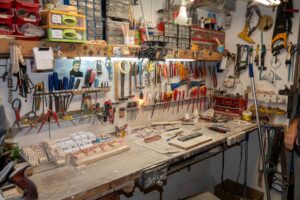
Picture a bin of small hammers for a new handgun. The first ones came off a CNC mill from billet, so the team could tune the geometry and get the trigger feel right. Those early parts looked perfect but took too long at the spindle. The engineers considered forging a near-net blank for strength, then finishing on the mill. They also sat with a MIM supplier to check whether the small cuts, radii, and needed hardness were a match for that process. Meanwhile, a test fixture for measuring sear engagement was made by wire EDM, so the measurements were repeatable to a few tenths every time. In the end, the team chose the path that met their strength target and gave them the best control over the two or three critical working faces. That is how the sausage is made. Pick the strengths of each process and spend your money where it moves the needle.
Final takeaways buyers can use
If you remember nothing else, carry these notes the next time someone waves a word at you as proof of quality.
- Forging brings excellent base material strength. It still needs smart machining and proper heat treat where parts meet and wear.
- Investment casting gives shape freedom and good as-cast precision. Design around shrink and finish the working faces.
- MIM shines on small, complex parts with tight features and can be very consistent. Strength is generally high, and heat treat matters.
- Machining from billet is about accuracy and flexibility, not magic. It is ideal for prototypes and lower runs.
- Stamping wins for flat parts at volume with very repeatable dimensions.
- EDM and broaching are precision cutting tools. They solve problems no other process can, at the cost of time and dedicated tooling.
- Surface finish and heat treat make or break real-world performance. You can often feel the difference in a slow hand-cycle.
Good guns are built from a set of choices more than from a single label on a spec sheet. When a maker respects what each process does well, you end up with parts that fit, wear, and work. And that is the truth hiding behind those three slides on a bench that looked the same at first glance.