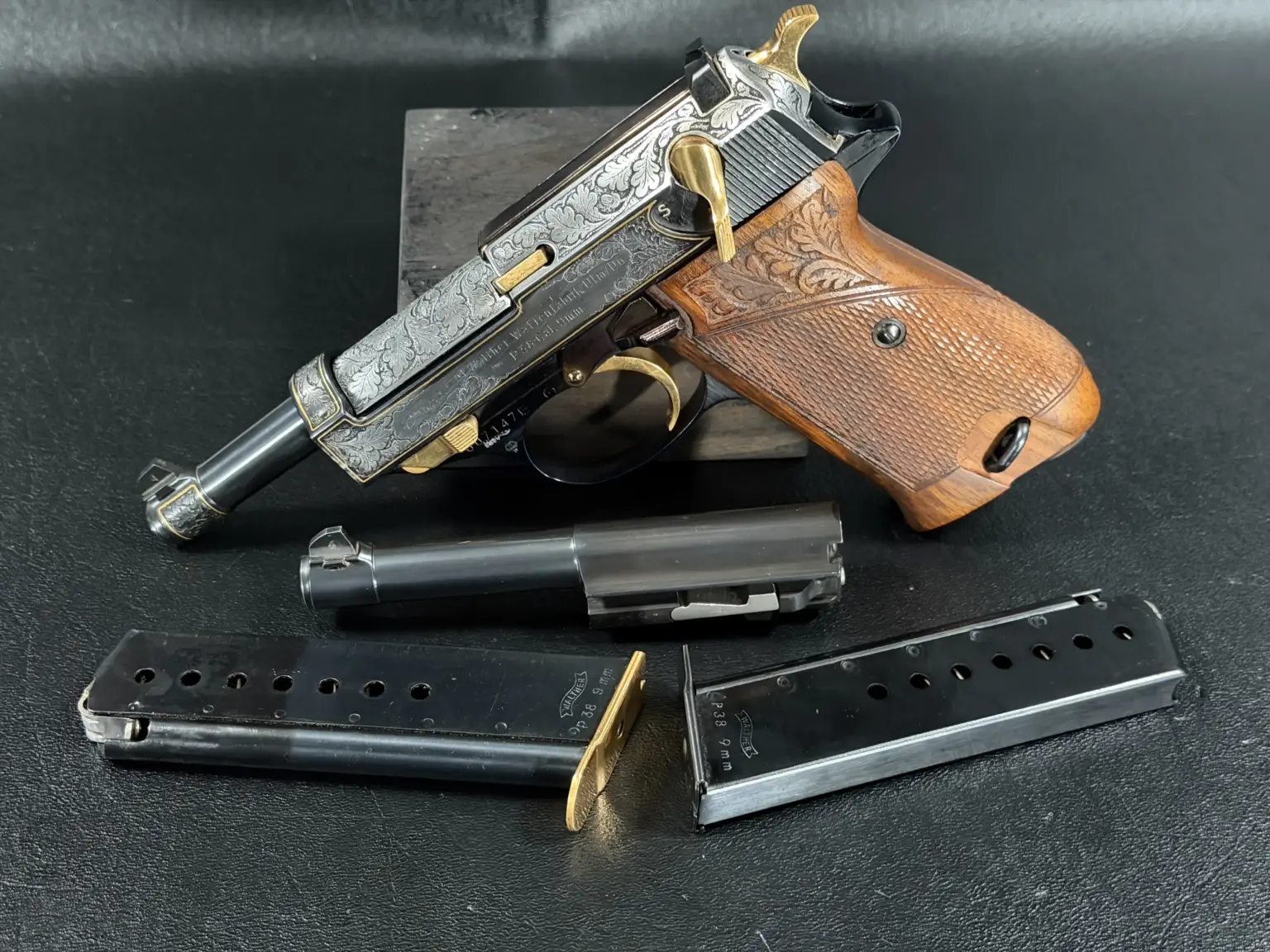
The first time you rack a Walther P38, you hear a light, springy clack as the open slide comes forward. The grip fills the hand better than its age suggests, the double action is long but civil, and the front sight hovers like a thin blade. Then the first shot breaks and the gun settles with a steady, level recoil. It is a service pistol born of hard lessons, and it still speaks a clear language on the range.
How the P38 Changed Service Pistols
Most folks know the P38 as Germany’s standard sidearm of the Second World War, but its real significance goes beyond uniforms and photographs. Walther’s design set the template for a feature we now take for granted in duty pistols: a safe double action first shot with a decocking safety. That means you can load, chamber, and carry with the hammer down, then bring the gun into action by pressing a long double action trigger. After that, the slide cocks the hammer for a lighter single action pull.
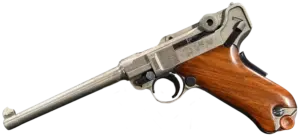
At the time, that was a sea change. The Luger P08 that came before it used a toggle lock, single action trigger, and a manual safety. It was elegant, but it wanted attention. The P38 was built to be carried ready, holstered long hours, and brought up fast with fewer steps. That set the stage for decades of DA/SA pistols from Europe and beyond.
From Luger to Walther: Why the Switch Happened
Between the wars, Germany wanted a sidearm that would be cheaper to make and easier to maintain than the Luger. Walther answered with a locked breech pistol that used a falling locking block under the barrel. If you have ever handled a Beretta 92, you have seen that idea carried forward. The P38’s slide is open on top, which helps ejection and reduces weight. Field stripping is straightforward, and there are fewer tight-fitting, finicky surfaces than the Luger needed.
The P38 also brought several safety features that were forward leaning for its day. The lever on the slide both decocks and blocks the firing pin. A loaded chamber indicator at the back of the slide gives a visual and tactile cue that there is a round under the extractor. The design aims to keep fingers out of trouble when lowering the hammer and carrying with a round in the pipe.
Other choices reveal its service-first mindset. The magazine release is at the heel of the grip, which slows reloads but reduces the chance of dropping a mag on the forest floor. The sights are fixed and thin. The grips started in checkered plastic and stayed simple. It is a pistol that tries to remove variables rather than invite them.
Wartime Production and What Those Codes Mean
During the war years, the P38 was built by multiple factories. If you look at the left side of the slide on a wartime gun, you will see a two or three letter maker code. Commonly, Walther-marked guns show an ac code, Mauser shows byf, and Spreewerk shows cyq. There are acceptance stamps and small eagles that track inspection and military acceptance. These small marks are a rabbit hole collectors never stop exploring.
Finish tells a story too. Early pistols often have a high polish blue. As the war dragged on, you see bluing get thinner, machining marks more visible, and phosphate finishes appear. Late examples can look almost gray and grainy with rough edges. None of that means the pistol will not run. It shows the pressure of mass production under lean conditions.
Numbers matter on these. Wartime pistols usually have matching serials on the frame, slide, and barrel, with the locking block often numbered as well. Mismatched parts are not rare given decades of use and arsenal maintenance. Matching parts and original finish usually bring more collector attention. Import marks added later for civilian markets will also affect the look and the price.
Postwar Life: The P1 and the Cold War Years
After the war, the P38 had a second life. In West Germany, Walther brought the design back with an alloy frame version that most folks call the P1. It kept the same operating system and the same general layout, but the frame was lighter. The Bundeswehr carried it for years, and plenty of police units did too.
Over time, the P1 received subtle updates. Later frames have a visible hex-shaped crossbolt above the trigger guard to strengthen a known stress area. Slides grew a bit beefier in the middle on later production. On the inside, small changes smoothed feeding and wear. Proof marks at Walther’s Ulm plant with the familiar antler tell you you are looking at postwar production. Date codes and eagle over N proofs help place a pistol’s age without guessing.
The P1 is a big reason the P38 pattern still matters for buyers right now. Surplus batches have rolled through dealer shelves for years, sometimes well used, sometimes almost unfired police trade-ins. They are a way to shoot a historic design without the wartime price tag. They are also a cleaner slate for regular range use, and you worry less about finish wear.
Shooting the P38 Today
On the line, the P38 has a distinct rhythm. The double action is long but not heavy by service standards, and it stacks gradually. The single action has some takeup and a clean break. Reset is audible and tactile. If you are used to striker guns, it is a different language but an easy one to learn in an afternoon.
Recoil is straight and friendly. The locking block design keeps the slide weight centered and the barrel sitting low in the slide window. Muzzle rise is modest, and the gun returns to target with a level feel. The sights are thin, classic European service sights. They print fine at 15 to 25 yards, and you can refine point of impact by drifting the front sight in its base if needed.
Ergonomics land in a sweet spot. The grip angle is natural and the frame is slim through the front strap. Controls are simple. The slide stop sits on the left side within easy reach for most hands. The decocker is also on the left, high on the slide. The heel release for the magazine is the one feature that feels dated in a speed drill, but it is positive and secure. Think deliberate, not rushed.
One honest quirk shows up with some hollow points. Feed geometry on older barrels and original magazines was built around ball ammo. Many P38 and P1 pistols will run modern jacketed hollow points, but test your pistol with what you plan to shoot. Some brands and ogive shapes feed better than others. New-production magazines with modern followers can help.
Ammo Choices and What the Gun Likes
If you own a wartime P38 or an early alloy-frame P1, it is smart to stick with standard pressure 9 mm. The design pre-dates the current alphabet soup of hotter commercial loads, and extra slide velocity is not a friend to decades-old springs and frames. Plenty of owners report good function with 115 grain and 124 grain FMJ or comparable standard pressure defensive loads. Avoid pushing into +P territory on older examples unless a qualified gunsmith has specifically cleared your individual pistol and you accept the added wear.
As with any surplus pistol, springs matter. Recoil springs take a set over time. If you see erratic ejection or sluggish return to battery, a fresh set of quality springs is a cheap fix and good insurance. Keep an eye on the locking block as well. It is the heart of the system and should be free of cracks, with intact locking lugs and no peening that deforms the edges.
Magazines, Parts, and Support
Original P38 and P1 magazines are single stack, eight rounders, with witness holes down the side. They interchange between P38 and P1 in most cases. Originals can be tight or worn after long service. Many shooters find modern production magazines from reputable makers offer smoother feeding and stronger springs while keeping the classic profile.
Parts support is better than you might guess for a design this old. Locking blocks, springs, extractors, and small pins are all out there from multiple sources. Grips are easy to replace if originals are cracked. Holsters are not a problem either. Old police flap holsters often trail the guns to market, and there are current production open-top options that fit P38 and P1 frames. Sights are mostly fixed, so do not expect a menu of modern tritium options. This is a range and duty relic, not a modular platform.
Collector Notes Without the Guesswork
Collectors know the rabbit holes. There are early patterns, mid-war shortcuts, and late-war rough finishes. There are differences in slide serrations, grip types, and small roll marks. Some guns come with paperwork from returning soldiers or police units, and that can add interest. Just be careful with stories that are long on drama and short on documentation. Provenance is real only when it is supported by solid paperwork and consistent markings.
Matching numbers matter if you care about collectibility. On wartime guns, check the frame, slide, barrel, and locking block. They should line up. Mismatched parts drop value but can be fine shooters. Original finish with honest holster wear is generally preferred over a refinish, but a professional refinish can still make a solid range companion.
Postwar P1 pistols invite a different kind of collecting. You can build a small set that traces the updates: early thin slide, later reinforced slide, frames with and without the crossbolt, and various police or military markings. They are usually more affordable, which lets you focus on condition, bore quality, and completeness. A clean P1 with two mags and a period holster makes a satisfying package that you will not be afraid to shoot.
Buying Guide: What to Check Before You Pay
You do not need a magnifying glass to buy a good P38 or P1, but a few focused checks pay off. Here is a concise checklist you can run at a counter or a show table.
- Locking block: look for cracks, peening on the lugs, and smooth movement during hand cycling.
- Slide and frame rails: check for chips, deep galling, or repairs. On alloy P1s, look closely at the frame web above the trigger guard and the slide stop cutout.
- Reinforcement on P1: later frames show a hex crossbolt above the trigger guard. It is a plus for hard users.
- Barrel and bore: sharp rifling, no deep pitting. A little frosting from surplus storage is common but heavy rust is a red flag.
- Decocker: with an empty chamber, ride the hammer with your thumb while actuating the lever. The hammer should lower safely without firing. If anything seems off, have a gunsmith inspect before live firing.
- Numbers and markings: if you care about collectibility, check that serials match and finish is consistent. Look for import marks that may be small along the frame or slide.
- Magazines: test insertion and ejection. Followers should move smoothly and lock the slide back.
- Trigger feel: a smooth double action and clean single action break suggest healthy internals.
Pricing moves with supply, condition, and markings. Wartime pistols with strong original finish and matching parts usually command more. Postwar P1s are usually the friendliest to a working budget. If a price seems too good, ask why. A non-matching gun with a bright bore and tight lockup can still be a wonderful shooter.
Lastly, remember the legal side is local. Magazine capacity, import features, and transfer rules change by jurisdiction. If you are unsure about any requirement, check your local and state rules or consult a qualified professional. A few minutes of homework beats surprises at the counter.
Living With a P38 or P1: Care That Makes a Difference
These pistols reward basic, steady care. Keep them cleaned and lightly lubricated, especially on the slide rails, barrel exterior where it contacts the slide, and the locking block surfaces. Grease on the rails is welcome for range use. Springs are cheap insurance. A fresh set of recoil springs and a firing pin spring can bring a sleepy surplus gun back to life.
Field stripping is simple. Drop the magazine, verify the chamber is empty, rotate the takedown lever on the frame, and the slide and barrel assembly come forward off the rails. The barrel and locking block lift out as a unit. Reassembly is the reverse. Do not overdo polishing on feed ramps or internals. The gun was built to run with service clearances and a little grit. Leave the geometry alone unless a qualified armorer is doing the work.
If you shoot an alloy-frame P1 often, keep an eye on the slide-to-frame fit and the frame around the trigger guard web. That reinforced crossbolt on later frames is there for a reason. Use standard pressure ammo, and the gun will likely outlast your interest in counting the groups.
Why It Still Belongs in a Modern Safe
Ask ten shooters why they keep a P38 or P1, and you will hear a mix of answers. Some love the link to history that actually runs, not just sits. Others appreciate the chance to practice a DA/SA trigger cycle that still shows up today in many service pistols. A few are drawn to the balance and the way the gun returns to target. I keep one because it explains, through feel, why the duty pistol took the path it did for the next half century.
For the buyer, a P1 offers a practical gateway to old-world service design without paying wartime premiums. For the collector, wartime codes and finishes offer endless study and quiet satisfaction when the pieces line up. For anyone who cares about how we got from early automatics to the service guns on belts today, the P38 is a missing puzzle piece that shoots as well as it teaches.
There are flashier pistols on the wall, and there are certainly lighter ones. Few combine history, engineering clarity, and downrange manners the way the P38 does. If you pass one at a shop and it feels right in the hand, do not be surprised. That is what it was built to do, and it still does it very well.