
The gun show table had three Lee‑Enfields lined up like a family portrait. On the left, a veteran SMLE with protective sight wings and a windage wheel. In the middle, a blockier rifle with a heavier barrel and a squarer magazine. On the right, a compact carbine with a cone flash hider that begged for a jungle trail. The tags said it plainly: No. 1 Mk III*, No. 4 Mk I, and No. 5 Mk I. The dealer shrugged when I asked about bolt heads and matching numbers, then said the five words that separate good buys from headaches: you should check for yourself.
This guide is that check. We will sort makers and wartime shortcuts, explain No. 4 mark differences, decode stocks and cartouches, talk bolt‑head sizes, touch import marks, and end with a hands‑on inspection list you can take to the table.
How we got here: from Lee‑Metford to SMLE to No. 4 and No. 5
The Lee action began in the 19th century, and cordite quickly forced a change from Metford rifling to deeper Enfield rifling. By 1895, the re‑designated Lee‑Enfield became the backbone of British service. Lessons from the Boer War led to a shorter, handier service rifle, and in 1902 the Short Magazine Lee‑Enfield (SMLE) arrived. The rifle was short, not the magazine.
On 26 January 1907 the SMLE Mk III was adopted with a fixed charger guide, simplified rear sight, and chambering tuned for the new Mk VII .303 spitzer cartridge. Production of No. 1 rifles surged in the First World War, not only at Enfield but also at Ishapore and Lithgow. The National Firearms Museum notes that over two million No. 1 rifles were made at Enfield from 1914 to 1918, and many remained in Commonwealth service into the 1950s (NRA Museums).
Development continued. Trials gave way to the No. 4 during the Second World War, and then to the distinctive No. 5 carbine. Across all models and marks, the Lee‑Enfield family exceeded 17 million rifles (overview).
Maker marks that matter
Learn a few stamps and the rifle starts talking:
- SSA and NRF on SMLE Mk III* rifles. These mark Standard Small Arms and National Rifle Factory assembly programs that used parts from multiple sources to boost WWI output (sources and marks).
- GRI and RFI on Ishapore rifles. GRI reads Georgius Rex, Imperator for the British Raj. After 1947, RFI denotes Rifle Factory, Ishapore (India marks).
- Butt‑socket makers on No. 1 rifles commonly include Enfield, BSA, LSA, SSA/NRF, Lithgow, and Ishapore. These sit prominently on the right side of the socket.
Wartime brought simplifications. The SMLE Mk III* deleted the magazine cut‑off and often the windage wheel. On many No. 4s a finely milled rear sight gave way to a sturdy two‑position flip. Read these as time stamps, not flaws.
No. 1 Mk III vs Mk III* at a glance
The No. 1 Mk III is the image most people hold for a Lee‑Enfield. Visual tells:
- Protective wings up front with a blade front sight and a U‑notch rear on the barrel.
- A fixed charger bridge for five‑round chargers.
- A 10‑round magazine intended to stay with the rifle.
- On Mk III rifles, a windage‑adjustable rear sight and a magazine cut‑off on the right side of the receiver body. The Mk III* deletes the cut‑off and typically the windage wheel. The asterisk is often read as “star.”
If you are unsure how the cut‑off worked or where it sat, the original training drawings show it clearly: the cut‑off pivots on a vertical screw on the right of the body and, when shut, holds cartridges down for single loading (Rifleman notes).
No. 4 makers and marks: who made what in WWII
For No. 4 rifles, makers and their typical identifiers you will see often include (manufacturer marks):
- ROF Fazakerley, often marked “Fazakerley” or with an “F” prefix on the left receiver wall.
- ROF Maltby, often seen with an “M” or “Maltby.”
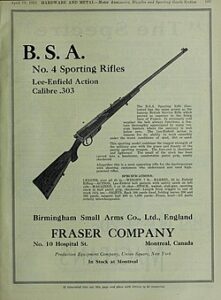
- BSA Shirley, commonly “M47C” or “BSA Shirley.”
- Long Branch, Canada, stamped “Long Branch” or “LB.”
- Savage, USA, usually an “S” and often marked “U.S. PROPERTY.”
These stamps help date features and set expectations for finish and sight type. They also explain why parts styles can vary even among the same mark.
No. 4 mark differences explained: Mk I, Mk I*, Mk 2, and conversions
Collectors look for four quick distinctions on No. 4s (No. 4 marks):
- Mk I has the original bolt release arrangement using a small catch at the rear of the bolt track.
- Mk I* adopts a simplified bolt removal method that deletes the small catch in favor of withdrawing the bolt head through a clearance notch.
- Mk 2 moves the trigger from being hung on the trigger guard to being hung from the receiver, which changes the feel of the pull and the fore‑end fit. Look for “No. 4 Mk 2” on the left wall.
- Mk I/2 and Mk I/3 are conversions that retrofit earlier rifles to later features during overhaul. Treat these as honest arsenal updates rather than oddities.
On No. 4s, the serial is on the rear of the bolt handle and the left receiver wall. Matching those two is ideal, but mismatches are common on long‑serving or overhauled rifles (BYSA manual).
No. 5 Mk I: what is correct, and how to spot conversions
The No. 5 Mk I is shorter and lighter, with a distinctive conical flash hider. It was produced late in WWII and shortly after, primarily by BSA Shirley and ROF Fazakerley (No. 5 overview).
Because real carbines bring a premium, cut‑down No. 4s and commercial “Jungle Carbine” conversions are common. Quick authenticity checks:
- Receiver lightening cuts. Correct No. 5 receivers have visible lightening cuts on the exterior walls. A straight‑sided No. 4 receiver with a short barrel is a red flag.
- Barrel profile under the handguards. No. 5 barrels are stepped and relieved to reduce weight, not simply cut short.
- Rear sight. The No. 5 wears an 800‑yard receiver sight. A No. 4 sight with 1,300‑yard graduations on a “No. 5” should make you pause.
- Buttplate. A correct No. 5 has a rubber buttpad with a steel backing plate and the proper sling swivel arrangement. Plain brass buttplates point to other patterns or later substitutions.
- Marking. The left receiver wall should be marked “No. 5 Mk I” by the maker. A “No. 4” that was re‑stamped is not a No. 5.
As with No. 4s, the serial on No. 5s is on the rear bolt handle and left receiver wall. Matching is nice to have, but safe headspace and correct pattern parts matter more.
Bolt‑head sizes: 0, 1, 2, 3 in the real world
No. 4 and No. 5 rifles use nominal bolt‑head sizes stamped 0, 1, 2, or 3. Higher numbers are longer in theory and were used by armorers to adjust headspace. In practice, wartime tolerances and later fitting mean sizes overlap, so a stamped “1” is not always shorter than a “2.” Treat the number as a guide, not a guarantee (BYSA on bolt heads).
Bottom line: check headspace on the rifle as configured, with proper .303 British gauges. If you do not have gauges, or if anything feels off, have a competent gunsmith check it before firing.
Barrels and sights: quick tells and correct patterns
Barrel profile and sight placement are easy model tells and also help catch alterations:
- No. 1 Mk III/Mk III*: Lighter barrel with the rear sight on the barrel. U‑type rear notch with graduations, often with a windage wheel on Mk III. Protective sight wings, a fixed charger bridge, and a magazine design refined from earlier Lee patterns (SMLE features).
- No. 4 Mk I/Mk 2: Heavier barrel and a receiver‑mounted rear sight. Early rifles often wear the finely adjustable leaf many call the Singer. Wartime rifles frequently have a robust two‑position flip sight. The spike bayonet adopted for the No. 4 earned the “pigsticker” nickname (No. 4 sights and bayonet).
- No. 5 Mk I: Receiver‑mounted sight graduated to 800 yards, short barrel with a conical flash hider, and a separate bladed bayonet developed late in the war (No. 5 notes).
If you like sight detail, the training manual illustrations for the SMLE and No. 4 sights are excellent bench companions (BYSA manual) (Rifleman page).
Stocks, cartouches, and common service stamps
Stock stamps are a travel diary. A few to recognize quickly:
- Broad Arrow and War Department marks indicate British acceptance, often alongside inspection ciphers.
- Sold Out of Service marks signal disposal from Crown ownership, commonly seen as opposed arrows.
- Foreign service marks appear. German Waffenamt stamps show up on captured rifles. In Southeast Asia, a Thai Chakri emblem is sometimes found on receivers or buttstocks.
Presentation‑grade wood exists but is the exception. For most rifles, focus on intact fore‑end wood, honest wear, and undisturbed cartouches.
Serial numbers, matching parts, magazines, and FTR realities
Where to look and what to expect:
- No. 1 Mk III/Mk III*: Serial on the rear of the bolt handle and on the receiver ring at the barrel shank. These two should match. The magazine was intended to stay with the rifle; numbering practices vary by period and factory, so a numbered or unnumbered magazine can both be correct.
- No. 4 and No. 5: Serial on the rear of the bolt handle and on the left receiver wall. These two form the core matching pair (BYSA serial locations).
Mismatched bolts are common after long service or arsenal overhauls. Do not panic, but do check headspace and function, and price accordingly. Also confirm the magazine pattern: SMLE and No. 4 magazines differ in shape, with the No. 4 showing more rounded edges in profile (magazine comparison).
Import marks: common styles, locations, and value impact
Most Lee‑Enfields imported to the United States carry post‑service importer markings. Typical examples include:
- A small, single‑line stamp on the barrel near the muzzle. Discreet and often preferred by collectors.
- A larger, multi‑line mark on the left receiver wall. Easy to read, sometimes called a billboard mark, and usually a value drag compared to a low‑visibility barrel stamp.
Import marks do not change how the rifle shoots, but size and placement can affect what buyers are willing to pay. Note the location in your records and factor it into condition and price.
What to inspect before you buy
Use this quick checklist at the table or bench. It keeps you focused on safety, shootability, and authenticity.
- Serials and bolt: Confirm the bolt handle serial matches the receiver in the correct locations for the model. Note the bolt‑head size on No. 4/No. 5, but treat it as guidance only.
- Headspace and lock‑up: Check with proper .303 British GO, NO‑GO, and FIELD gauges if possible. If in doubt, have a competent gunsmith verify before firing.
- Sights: On No. 1s, verify the rear sight leaf and, on Mk III, the windage wheel. On No. 4s, identify milled vs flip sights and confirm secure clicks or flips. On No. 5s, confirm the 800‑yard receiver sight.
- Barrel and crown: Strong rifling, minimal pitting, and a clean crown. Enfield rifling is deep by design. A loose bullet at the muzzle suggests wear.
- Stock integrity: Look for cracks around the draws and recoil shoulders, hairlines near sight bases, and splits at the toe. Tight timber around the king‑screw area is key.
- Cartouches and stamps: Broad Arrows, inspection ciphers, Sold Out of Service, and any foreign marks. Sanded wood that erases stamps lowers interest and value.
- Magazine and follower: Correct pattern for the model, with free follower movement and proper feed lip shape.
- Bolt serviceability: The bolt‑head should screw in and out without galling. Striker and extractor should move without binding. Forced‑together bolts are a walk‑away signal unless you plan a rebuild.
- Import mark: Note size and location. Barrel‑only marks usually bring stronger money than large receiver marks.
Closing thoughts and further reading
You do not need to memorize every tiny variation to buy well. If you can tell a Mk III from a Mk III*, read No. 4 maker and mark differences, spot a real No. 5, and remember that a stamped “2” on a bolt head is not a headspace certificate, you are ahead of the game. Slow down, let the stamps tell their story, and enjoy the chase.
For deeper background and visuals while you handle a rifle, these references are worth keeping open: the SMLE overview at Rifleman.org.uk (cut‑off and parts), the BYSA Lee‑Enfield manual (bolt heads, sights, serial locations), the NRA Museums page on the No. 1 Mk III (production context), and the general Lee‑Enfield summary on Wikipedia (models, marks, makers).