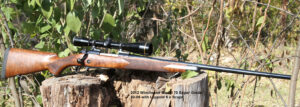

The first time you run a Tikka bolt, it tells you something. It slides like a drawer you adjusted just right, and it does it without drawing attention to itself. That smooth throw, the way a T3 or T3x seems to feed and eject with the drama dialed down, is not an accident. It is the sum of a century of Finnish gunmaking, a factory move, a handshake with Sako, and a modern production line that prizes consistency over flash.
If you are weighing a T3 or T3x, or you are trying to make sense of the model names and what changed through the years, this story will help you separate lineage from marketing. We are going to talk about where Tikka started, how Sako shaped the current line, what the actions and barrels bring to the table, and how the triggers and model trims differ in ways that matter in the field or on the bench.
From Tikkakoski to Tikka: barrels, Mosins, and a sportsman’s start
Tikka did not spring up as a glossy hunting brand overnight. It goes back to Oy Tikkakoski Ab, which began turning out gun components in central Finland right after World War I. Barrels followed soon after, and by the late 1920s the firm was supplying barrels for the Mosin Nagant rifles that armed Finland’s forces. According to the brand history, complete M27 pattern rifles rolled out of Tikkakoski up until about 1940. It is a surprising thread for many buyers who only know Tikka through deer camps and steel gongs, but it sets the tone: the company started out making parts that absolutely had to work, and it learned precision early.
As Finland got some breathing room after the war years, the company circled back toward sporting arms. By the late 1960s, rifles under the Tikka label were back, and a Tikka M77 shotgun appeared soon after. It was a period of trying on commercial clothes again, and it laid the groundwork for the brand identity that would follow. For a clear, readable overview of that arc, the American Rifleman profile is a worthy stop for context.
Those early efforts are important for buyers and collectors because they explain the two poles that still define Tikka: a utilitarian streak from military work, and a practical, accuracy-first ethos from the sporting side. You see both in the modern catalog.
American Rifleman’s history overview ties together the milestones that follow, and they are worth keeping in your head while you handle a T3x at the counter.
Sako steps in, Valmet merges, and the move to Riihimäki
The 1980s reshaped Tikka’s future. In 1983, Sako purchased Tikka. A few years later, in 1986, came a merger with Valmet, which was then state owned. Within roughly a year of that shuffle, the Tikka factory closed and production moved to Sako’s primary plant in Riihimäki, Finland. The Tikka label stayed put on the rifles built there, but the place and process changed. The move to Riihimäki and integration with Sako mattered because it pulled Tikka squarely into a quality culture that was already proven with Sako’s own rifles.
Today, Tikka rifles are built by Sako in Finland, and Sako itself is part of the Beretta family. The official line from the brand is straightforward: rifles built without fluff, with the focus kept on accuracy and function rather than decor. For our purposes, it means the same people and machines that cut and strike steel for Sako are in play when a Tikka barrel is made, and the quality system that underpins a more expensive rifle is the same one that checks a T3x.
Before the T3: the model families that set the table
A lot of buyers only meet Tikka at T3, but there were model families that refined ideas long before that. The M55 and M65 lines are part of that story. So are the later M590 and M690 pairs, followed by the M595 and M695 series. If you spot those designations on a rack at a local shop, you are not looking at errors on a tag. Those rifles carried the Tikka name through the 1970s, 1980s, and 1990s, refining the way actions were machined, triggers were tuned, and barrels were brought to print.
What ties those families to today’s T3 and T3x is not a single part you can swap. It is a set of lessons on smooth operation, repeatable headspace, and the way a hunting rifle should carry and balance. They were the runway that let the T3 take off as a global product instead of a regional one.
The T3 arrives, the T3x refines it
In 2001, a prototype for a new Tikka rifle platform was built under the guidance of Kari Kuparinen, who would go on to lead Sako’s R&D. A year later, the T3 launched. Depending on which data point you follow, you will see the series described as beginning in 2002 and produced from that point forward. The important part is that the T3 line standardized a lot of what had been learned, and it did it in a way that made rifles accurate out of the box and easy to configure for different roles without breaking the bank.
By 2016, the company rolled out a thoughtful refresh and called it T3x. Nothing radical, but enough that you could feel and see the changes. The upgrades addressed durability, ergonomics, and a couple of small but meaningful user requests. The proof that the formula worked is not just on internet groups. In March 2020, the Riihimäki plant built the one millionth T3 or T3x rifle, a milestone Sako marked publicly. That particular rifle was a T3x Lite Stainless in 270 WSM, an everyday seller, not a one-off celebratory build.
If you want to see the factory marking that moment and to catch the concise T3-to-T3x timeline in one place, The Firearm Blog’s coverage from 2020 is a handy reference, straight from Sako’s own announcement.
The millionth T3x and the T3 to T3x timeline offers that snapshot and the names behind it.
What changed from T3 to T3x
For buyers comparing a used T3 on one rack to a new T3x on another, here is what you will typically notice. These are the practical updates that landed with the T3x generation and are widely discussed among owners:
- Larger ejection port that makes single-loading more straightforward
- Steel recoil lug in place of the earlier aluminum component for better long-term durability
- Reworked stock surfaces for a more secure grip, especially in wet or cold weather
- Metal bolt shroud replacing the polymer unit from the earlier rifles
There is another buyer-friendly note here. Many of the T3x improvements can be retrofitted onto a T3. That means if you own an older rifle or spot one at a fair price, you can bring it close to current spec without rebuilding the whole gun. If you prefer to keep a T3 as it left the factory, that is fine too. The base rifles were and are solid.
Actions: why Tikka runs so smooth
Tikka actions have a reputation for gliding. That is not a poetic stretch, it is the most common first impression new owners volunteer. On the bench, the bolt feels like it is already broken in. In the field, that smoothness makes a quiet second shot easier when you need it. The machining is consistent, and the finish on bearing surfaces is refined enough that you do not get stuck fighting the handle when your focus should be on the sight picture.
The T3 and T3x actions are also well regarded by custom builders. It is not unusual to see a T3 action used as the foundation for a heavier precision build with a new barrel and a different stock. That is a vote of confidence in the geometry and consistency of the receiver, and it tells you something about what you are getting even if you never plan to change a thing.
From a user standpoint, feeding is typically boring in the best way. The T3x’s slightly enlarged ejection port helps with administrative handling, and the standard extractor and ejector setup has earned a reputation for getting empties out cleanly. If you run the bolt like you mean it, a Tikka tends to answer in kind.
Barrels: cold hammer forging and consistent accuracy
Barrels are one of the real strengths of the line. Tikka barrels are cold hammer forged in house at the Sako facility in Finland. The short version is that a long steel blank is forcibly formed over a mandrel under heavy pressure, creating the rifling as it is worked. Done right, the process produces uniform bores and long service life.
Owners and reviewers often point out that T3 and T3x rifles shoot well with common factory loads. That is not a guarantee of a specific group size in your hands, but it is fair to say that the barrels are the reason many of these rifles wear the “accurate for the price” label so comfortably. Some of the same machines that work on Sako-branded barrels are reportedly used for Tikka, and that trickle-down is visible on paper at the range.
If you are choosing between trim levels, do not overthink the barrel at the counter. Look at profile, length, and whether you prefer stainless or a blued finish for your climate. The fundamental blank quality is strong across the board.
Triggers: what buyers should expect
The Tikka single stage trigger is one of the quiet wins of the platform. Out of the box, most shooters describe it as clean and predictable, with no gritty take-up and a break that does not surprise in a bad way. On many models you can adjust pull weight within a practical range. If you plan to tune yours, follow the manual carefully and keep your local laws and any match rules in view. The stock unit is good enough that a lot of hunters and field shooters never feel the need to change it.
Where triggers get interesting for buyers is in use case. If you are setting up a carry-all-day deer rifle, a slightly heavier, consistent break is your friend. If you are leaning into precision steel or paper, the same clean break with a bit less weight can help. Tikka gives you room to find your preference without forcing you into an aftermarket solution on day one.
Model lines in plain language
The modern T3x family spans a lot of jobs without splintering into confusing micro SKUs. Here are the trims you will run into most often and what they aim to do:
T3x Lite. This is the everyman of the line. It is a practical hunting rifle that carries well and does not clutter the stock with dependence on hard-to-find accessories. If you want to top it with a straightforward scope and get to work, this is where most people start. Weight stays sensible, and the accuracy is very often better than owners expect at the price.
T3x Lite Stainless. Mechanically similar to the Lite, but with stainless steel in the places that matter for weather resistance. If you hunt in a salt-heavy coastal climate or you are simply committed to low maintenance, this trim is attractive. It was also the configuration of the one millionth T3x built in 2020, which says something about how common and trusted it is.
T3x Hunter and other wood stocked variants. If you are drawn to a classic look and feel, you can still have it without giving up the modern action and barrel. Wood brings warmth and balance to the line, though it will ask you to be a bit more careful with dings and moisture.
T3x CTR. This is a precision leaning trim that typically adds a heavier barrel, features that support steady position shooting, and a magazine arrangement suited to range work. It is a natural step if you want to move from a pure hunting rifle toward a crossover that can shoot matches or punch steel on weekends.
T3x TAC A1. This is where the chassis crowd lives. Think an adjustable stock system for fit, a forend that accepts accessories, and a setup tailored for positional shooting and repeatable adjustments. Plenty of owners use TAC A1s for both long range practice and hunting where weight is not a deal breaker.
T3x UPR and Arctic. These trims clue you into the breadth of the catalog. The UPR caters to users who want a more competition oriented stock without going full chassis. The Arctic and the related C19 designation show the platform’s reach into roles that demand ruggedness and reliability in real cold. You will not see those every day at the local shop, but they exist and they are neat windows into what the action and barrel can handle.
The recurring theme across these variants is that you are not getting a new rifle every time, just a different application of the same core strengths.
Modern manufacturing and how Tikka keeps tolerances tight
Since the late 1980s, Tikka rifles have been built at Sako’s Riihimäki plant. That matters. The facility is set up for repeatable machining and in-house barrel making, which means there is less variation creeping in from vendor to vendor. It also means the people who check barrels and actions all day, every day, are using the same gauges and the same standards no matter what trim is on the receiver.
Buyers sometimes wonder how a rifle at this price can feel so finished. The answer is not magic steel. It is process control and smart commonality. By keeping core parts consistent across trims and by hammer forging barrels in house, Sako can hold tolerances without having to restart the clock for every small change. That efficiency trickles down as value for the customer without a lot of flash.
One more point is worth noting. The T3 and T3x were built in large numbers. That millionth rifle celebrated in 2020 was not the peak, it was a mile marker on a road that continues. High volume, when paired with good QC, tends to sand off rough edges and drive small improvements that never make a big announcement. You see that in these rifles.
Buyer tips for new and used T3 and T3x
Here is how I think about picking a T3 or T3x and getting the one that suits the way you shoot.
Start with the job. If your goal is a rifle you can shoulder quickly in the woods and carry all day, a T3x Lite in a sensible caliber is hard to argue against. If you want to stretch distance and practice from barricades or prone, lean toward a CTR or TAC A1. Think in terms of use case first, then trim, and let caliber preference filter within that.
Pay attention to the generation. If you are looking at a used T3 in good shape at a helpful price, remind yourself of the T3x updates. A steel recoil lug and a metal bolt shroud are nice upgrades, and a larger ejection port is convenient if you single load during load workups. Many of those updates can be added later if you decide to keep the older rifle. That flexibility makes a used T3 attractive for buyers who like to tinker. If you prefer a rifle that is all set from the start, a new T3x gives you those refinements without a second thought.
Look closely at the barrel. Not for exotic markings, just for the things that matter: crisp rifling at the crown, no obvious damage to the muzzle, and clean threads if the barrel is cut for a brake or suppressor. Tikka barrels are a strong point, so verifying condition on a used rifle is worth the extra minute.
Work the action. You are buying a Tikka in part for how it feels. Cycle the bolt with the rifle level and tipped up slightly, and do it with a bit of speed. It should be smooth and decisive. Any scraping or hitching is a red flag that calls for a closer look at lubrication, debris, or potential damage.
Mind the stock fit. The T3x brought better gripping surfaces. If you shoot gloved or in wet weather, those little changes matter. If you are drawn to wood, handle a Hunter trim and pay attention to how the comb and grip agree with your hands. Comfort usually shows up in your groups later.
Triggers are worth a quick check. Dry fire with safe handling and feel the break. It should be clean and consistent. If you plan to adjust, stick to the manufacturer’s guidance and resist the urge to go too light for the role. You can always revisit after some range time.
Collector notes without the sales pitch
Collectors tend to explore two ends of the Tikka story. On one side are the early Tikkakoski products and the M27s that connect the brand to Finland’s military history. Those rifles, when they surface with the right markings and in honest condition, tug at the historian in all of us. On the other side, among modern pieces, interest often follows unusual trims or limited runs within the T3x line, plus the professional-use variants that show up less often in civilian channels.
If you are collecting Tikka with a historical eye, documentation matters and condition trumps most tales. If you are collecting within the T3x universe, let your interests guide you. A clean TAC A1 with its original kit or a lightly used Lite Stainless from a meaningful year might speak to you more than a rarer configuration you will never shoot. Either way, be honest about what you want from the rifle: a story to hold, or an excuse to get to the range.
There is no need to romanticize the brand to enjoy it. The real story is already good. A company that started by making parts at a critical time ended up, after a set of mergers and a factory move, building one of the most consistently accurate and widely used bolt guns on the market. That smooth bolt you felt at the start is not a trick. It is a century of lessons working quietly in your hands.